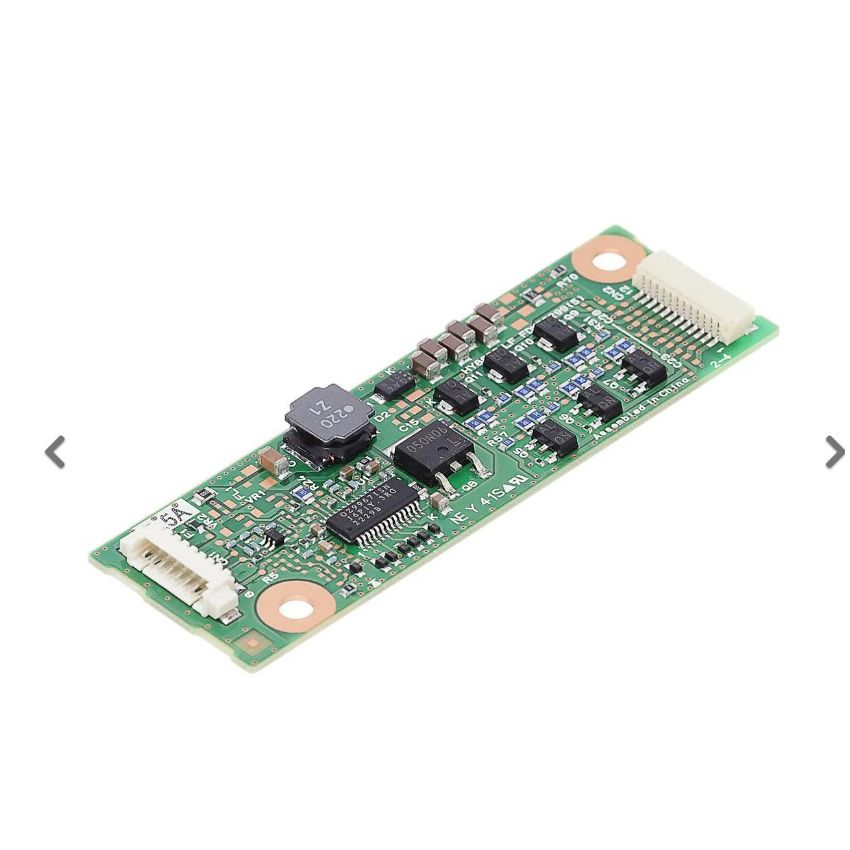

104PW03F LED Lighting Development Tools LED Driver Board NEC
38 people are viewing this right now
In Stock
SKU
104PW03F
£149.99
Safe Checkout, Guaranteed

Safe Checkout, Guaranteed
Unlock the full potential of your LED lighting projects with the 104PW03F LED Driver Board from NEC. This development tool is designed to streamline the process of prototyping, testing, and implementing advanced LED lighting solutions. The 104PW03F board provides a versatile platform for experimenting with different LED configurations, dimming techniques, and control algorithms. Engineered by NEC, a renowned leader in electronics innovation, this LED driver board delivers exceptional performance, reliability, and ease of use. Its compact design allows for seamless integration into existing development environments, while its comprehensive feature set enables you to explore a wide range of LED lighting applications. This board is a one-stop solution, offering all the necessary tools for your LED lighting system needs.
Whether you're developing energy-efficient lighting systems for residential, commercial, or industrial use, the 104PW03F board provides the flexibility and control you need to achieve your goals. Its advanced control capabilities allow for precise adjustment of LED brightness and color temperature, enabling you to create customized lighting effects. The integrated protection features safeguard your LEDs from overcurrent, overvoltage, and overtemperature, ensuring their longevity and reliability. Imagine creating dynamic lighting displays, developing smart lighting systems that respond to environmental conditions, or optimizing energy consumption in LED lighting applications. This NEC LED Driver Board is essential for lighting engineers, hobbyists, and students. The 104PW03F simplifies the process of implementing dimming functions, color mixing, and other advanced features.
The board's intuitive interface allows for easy configuration and control, even for those with limited experience in LED driver design. It supports various communication protocols, enabling seamless integration with microcontrollers and other control systems. Its open-source design allows for customization and expansion, making it a valuable tool for both research and development. The board is also RoHS compliant, ensuring it meets environmental standards. Don't let the complexity of LED driver design hold you back. The 104PW03F LED Driver Board from NEC empowers you to bring your LED lighting ideas to life.
With its comprehensive features, ease of use, and reliable performance, this development tool is an essential addition to any LED lighting engineer's toolkit. Start developing innovative LED lighting solutions today with the optimal LED driver board. Click 'Add to Cart' now and light the way to your next great innovation using NEC's 104PW03F board.
| Product Name | 104PW03F LED Lighting Development Tools LED Driver Board NEC |
|---|---|
| SKU | 104PW03F |
| Price | £149.99 |
| 104PW03F LED Lighting Development Tools LED Driver Board NEC Color | As per image |
| Category | LED Stripes |
| Brand | Nikko Electronics ltd |
| Product Code | 104PW03F |
| Availability | Yes |
Shipping cost is based on order value. Just add products to your cart and use the Shipping Calculator to see the shipping price. We want you to be 100% satisfied with your purchase. Items can be returned or exchanged within 30 days of delivery.
The NEC 104PW03F LED Driver Development Board is engineered for broad compatibility, allowing developers to experiment with a wide array of LED configurations. It supports various LED types including high-power single LEDs, multi-LED series strings, and parallel arrays, making it ideal for diverse lighting projects. Its versatile output stage can be configured to drive constant current or constant voltage loads, depending on the specific LED requirements. This flexibility enables seamless prototyping for applications ranging from general illumination and backlighting to specialized industrial or automotive lighting. Engineers can readily connect different LED modules and assess their performance characteristics, ensuring optimal integration and functionality within their target systems. The board's design facilitates easy connection of external LED loads, streamlining the testing and validation process for various LED technologies and forward voltage requirements.
The NEC 104PW03F LED Driver Development Board provides a robust platform for exploring sophisticated dimming techniques and control algorithms crucial for modern LED lighting. It typically supports both Pulse Width Modulation (PWM) and analog dimming methods, allowing developers to assess the advantages of each for specific applications. With PWM, users can experiment with different frequencies and duty cycles to achieve precise brightness control and smooth transitions, mitigating flicker. Analog dimming capabilities enable linear control over LED current. The board's architecture facilitates the implementation and testing of custom control algorithms for dynamic lighting effects, color mixing (when used with external RGB/RGBW LEDs and appropriate control signals), and adaptive lighting scenarios. This empowers engineers to innovate in areas like human-centric lighting, energy-efficient smart lighting, and specialized industrial lighting systems requiring granular control over light output characteristics.
The NEC 104PW03F LED Driver Development Board is designed with specific power parameters to ensure stable and reliable operation during development. While exact specifications may vary, a typical LED driver development board of this caliber would accept a common DC input voltage range, often between 12V and 24V, suitable for most benchtop power supplies. Its output driving capabilities are optimized for a range of LED loads, providing configurable constant current output up to a certain amperage (e.g., 0.35A to 1A or more, depending on the integrated driver IC) and supporting a maximum forward voltage for LED strings. This allows developers to power various LED configurations, from single high-power emitters to series strings of multiple LEDs. Understanding these input and output specifications is critical for proper power supply selection and for matching the board's capabilities with the intended LED load, preventing damage and ensuring accurate performance evaluation during prototyping.
To significantly accelerate project timelines, the NEC 104PW03F LED Driver Development Board typically comes with a comprehensive suite of development resources. This often includes detailed user manuals, schematic diagrams, and datasheets for the onboard components, providing essential technical insights. Many NEC development boards are supported by example code, software development kits (SDKs), or firmware libraries, particularly if they incorporate a microcontroller or programmable logic, facilitating rapid prototyping and software integration. These resources enable engineers to quickly understand the board's functionalities, configure its settings, and integrate it into their existing development environments. Access to application notes or reference designs further assists in overcoming common design challenges and exploring best practices for LED lighting applications, ensuring a smoother and more efficient development cycle from concept to functional prototype.
Yes, robust protection features are a critical aspect of the NEC 104PW03F LED Driver Development Board, ensuring both the longevity of the board itself and the safety of the connected LEDs during the often unpredictable stages of development. It typically integrates essential safeguards such as overcurrent protection (OCP) to prevent damage from excessive LED current, and short-circuit protection (SCP) to guard against faults in the LED load. Thermal shutdown (TSD) or over-temperature protection is also commonly included, monitoring the driver IC's temperature and shutting down operation if it exceeds safe limits. Some advanced boards may also feature open-circuit protection (OCP) for LED strings, preventing high voltages if an LED string becomes disconnected. These integrated protections are invaluable for minimizing risks during experimentation, allowing developers to focus on innovation without constant concern for component failure due to unforeseen electrical conditions.
The NEC 104PW03F LED Driver Development Board is designed for seamless integration with external microcontrollers and control systems, offering various communication interfaces. Common interfaces typically include GPIO (General Purpose Input/Output) pins for basic on/off control or direct PWM input for dimming. More advanced digital communication protocols such as I2C (Inter-Integrated Circuit), SPI (Serial Peripheral Interface), or UART (Universal Asynchronous Receiver/Transmitter) are often present, enabling sophisticated control over the LED driver's parameters, status monitoring, and even configuration of multiple boards. These interfaces allow developers to connect the board to a wide range of microcontrollers, single-board computers, or custom control logic, facilitating the creation of intelligent and networked LED lighting solutions. The availability of these standard communication options significantly enhances the board's utility as a flexible development tool for complex lighting control systems.
The compact design of the NEC 104PW03F LED Driver Development Board is a key advantage, specifically engineered to facilitate seamless integration into diverse development environments and custom enclosures. Its optimized footprint ensures it occupies minimal space on a crowded workbench or within a prototyping breadboard setup, allowing for more organized and efficient experimentation. For projects requiring custom enclosures or form factors, the board's small dimensions simplify mechanical design and placement, making it easier to fit into tight spaces. This compact nature is particularly beneficial for creating proof-of-concept prototypes that closely resemble the final product's physical constraints. The thoughtful layout of connectors and mounting points further aids in quick integration, reducing the time and effort typically associated with incorporating development hardware into existing or new system designs, thereby accelerating the overall product development lifecycle for LED lighting solutions.