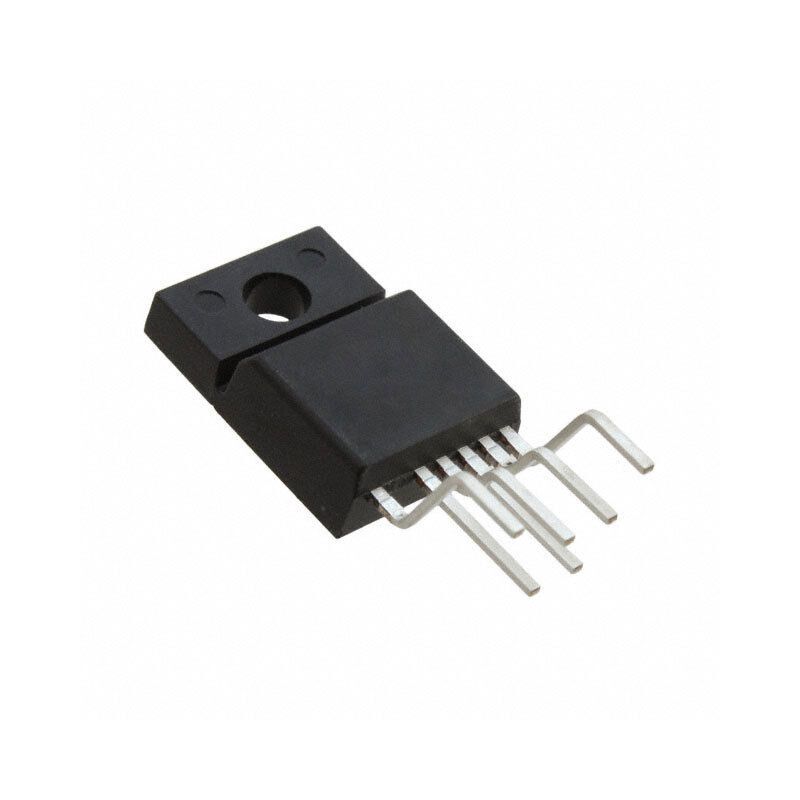


1N5374B Zener Diode 75V 5W Axial
27 people are viewing this right now
In Stock
SKU
191659311502
£3.33
Safe Checkout, Guaranteed

Safe Checkout, Guaranteed
The 1N5374B is a robust and highly reliable Zener diode designed for voltage regulation and protection in a wide range of electronic circuits. This diode features a Zener voltage of 75V and a power dissipation rating of 5W, making it ideal for applications requiring stable voltage regulation and overvoltage protection. The 1N5374B is packaged in an axial lead configuration, facilitating easy installation and soldering in both through-hole and point-to-point wiring applications. Its robust construction ensures long-term reliability and consistent performance even under demanding operating conditions. The 1N5374B Zener diode is commonly used in voltage regulator circuits to maintain a stable output voltage despite variations in input voltage or load current. Its precise Zener voltage and low dynamic impedance ensure accurate voltage regulation.
The diode is also used in overvoltage protection circuits to protect sensitive electronic components from damage caused by voltage spikes or surges. When the voltage exceeds the Zener voltage, the diode conducts, clamping the voltage and preventing it from rising further. The 1N5374B can be used in power supply circuits to provide a stable reference voltage for regulation and control. It is also used in transient voltage suppressors (TVS) to protect electronic equipment from lightning strikes and other high-energy surges. This Zener diode is suitable for use in industrial equipment, consumer electronics, and automotive applications. Its high power dissipation rating allows it to handle significant surge currents without failure.
The 1N5374B meets industry safety standards, providing peace of mind for both designers and users. Its ease of use and availability make it a popular choice for both hobbyists and professional engineers. This Zener diode is a direct replacement for older diode models, offering improved performance and reliability. Its compact size and axial lead configuration make it easy to integrate into existing designs. The 1N5374B is a cost-effective solution for voltage regulation and overvoltage protection in a variety of electronic circuits. It simplifies circuit design and improves overall system performance.
The Zener diode is highly stable over a wide range of operating temperatures, ensuring consistent performance even in harsh environments. It is an essential component for any designer seeking a reliable and high-performance voltage regulation solution. Don't compromise on the safety and performance of your electronic circuits. Order your 1N5374B Zener diode today and experience the benefits of reliable voltage regulation and overvoltage protection. Buy the 1N5374B now and ensure your projects have the protection they need. Click to purchase and start building with confidence.
Invest in superior voltage regulation now!
| Product Name | 1N5374B Zener Diode 75V 5W Axial |
|---|---|
| SKU | 191659311502 |
| Price | £3.33 |
| 1N5374B Zener Diode 75V 5W Axial Color | As per image |
| Category | Diodes |
| Brand | Nikko Electronics ltd |
| Product Code | 191659311502 |
| Availability | Yes |
Shipping cost is based on order value. Just add products to your cart and use the Shipping Calculator to see the shipping price. We want you to be 100% satisfied with your purchase. Items can be returned or exchanged within 30 days of delivery.
The 1N5374B Zener Diode 75V 5W Axial is specifically designed for applications requiring robust voltage regulation and overvoltage protection at higher power levels. Its 75V Zener voltage makes it suitable for stabilizing power supplies in circuits operating at or around this voltage, such as industrial controls, telecommunications equipment, and automotive systems where a stable reference is critical. Unlike lower-power Zeners (e.g., 1N47xx series), the 1N5374B Zener Diode 75V 5W Axial can dissipate up to 5 watts, allowing it to handle significantly larger load currents or absorb higher transient energy without failure. This high power rating makes it ideal for regulating the output of unregulated power sources, providing a stable reference in higher-current biasing circuits, or acting as a secondary overvoltage clamp in conjunction with primary protection devices. Its axial package also allows for easy integration into existing through-hole designs.
Operating the 1N5374B Zener Diode 75V 5W Axial at or near its maximum 5W power dissipation requires careful thermal management to prevent overheating and ensure long-term reliability. The primary consideration is providing an adequate heatsink or ensuring sufficient ambient airflow. As an axial component, it typically dissipates heat through its leads and body. For continuous operation at high power, mounting the leads to large copper pads on a PCB, or even attaching the body to a metal chassis or dedicated heatsink, can significantly improve thermal performance. The device's thermal resistance (junction-to-ambient or junction-to-lead) specified in the datasheet is critical for calculating the maximum allowable ambient temperature for a given power dissipation. Exceeding the maximum junction temperature can lead to premature failure or shifts in the Zener voltage. Always ensure the operating environment allows for efficient heat transfer away from the 1N5374B Zener Diode 75V 5W Axial.
The reverse leakage current (Ir) of the 1N5374B Zener Diode 75V 5W Axial is an important characteristic for precision applications, representing the small current that flows when the diode is reverse-biased below its Zener voltage. While specific values vary by manufacturer and datasheet, 5W Zener diodes generally exhibit lower leakage currents compared to general-purpose rectifier diodes. However, Ir typically increases exponentially with temperature, which can affect the efficiency of low-power circuits or battery-operated devices. The voltage stability, or temperature coefficient (T.C.), of the 1N5374B Zener Diode 75V 5W Axial describes how its Zener voltage (Vz) changes with temperature. For higher voltage Zeners like the 75V 1N5374B, the temperature coefficient is typically positive, meaning Vz increases with rising temperature. Designers should consult the manufacturer's datasheet for precise Ir and T.C. specifications to account for these variations in temperature-sensitive applications or when designing for wide operating temperature ranges, potentially incorporating compensation techniques if high precision is required.
The maximum Zener current (Izm) for the 1N5374B Zener Diode 75V 5W Axial is directly derived from its maximum power dissipation rating (Pz_max) and its nominal Zener voltage (Vz). The relationship is given by the formula Izm = Pz_max / Vz. For the 1N5374B Zener Diode 75V 5W Axial, with Pz_max = 5W and Vz = 75V, the theoretical maximum Zener current is 5W / 75V = approximately 66.67 mA. It is crucial to note that this is a theoretical maximum under ideal conditions (e.g., infinite heatsink). In practical applications, the actual maximum continuous current will be limited by thermal considerations and the derating curve provided in the datasheet. Operating continuously at Izm without adequate thermal management will likely cause the junction temperature to exceed its maximum rating, leading to device degradation or failure. Designers should always include a safety margin and consider the ambient temperature and heatsinking capabilities when determining the maximum operating current.
While the 1N5374B Zener Diode 75V 5W Axial is primarily designed for continuous voltage regulation, its 5W power rating provides a degree of capability for transient voltage suppression (TVS), especially for moderate energy pulses. When used for TVS, the diode acts as a clamp, shunting excess current away from sensitive components when the voltage exceeds its Zener breakdown. However, it's important to differentiate it from dedicated TVS diodes. Dedicated TVS diodes are optimized for very high peak pulse power (e.g., hundreds or thousands of watts) for very short durations (microseconds), often exhibiting a 'snapback' characteristic for faster clamping. The 1N5374B Zener Diode 75V 5W Axial will have a significantly lower peak pulse power rating than a purpose-built TVS diode, typically specified for non-repetitive surge current in its datasheet (e.g., for 8/20 µs or 10/1000 µs waveforms). For robust protection against severe transients like lightning strikes or large inductive load dumps, dedicated TVS diodes or arrays are generally more suitable. The 1N5374B Zener Diode 75V 5W Axial is better suited for clamping smaller, less energetic transients or providing secondary protection.
Connecting multiple 1N5374B Zener Diode 75V 5W Axial units in series is a common technique to achieve higher Zener voltages than a single device provides. When connecting them in series, the total Zener voltage will be the sum of the individual Zener voltages, and the power dissipation rating remains that of a single device (5W for the 1N5374B Zener Diode 75V 5W Axial) for the series string. However, several critical considerations arise. Firstly, Zener diodes have tolerances (e.g., ±5%), meaning individual diodes may not break down at precisely 75V. This can lead to uneven voltage distribution across the series string, with some diodes breaking down earlier and dissipating more power, potentially leading to thermal runaway or premature failure. To mitigate this, it's often recommended to match Zener diodes for closer Vz values or to use parallel resistors across each diode to help equalize the voltage drop. Secondly, the temperature coefficient of each diode will add up, potentially leading to a larger overall voltage shift with temperature. Careful design and component selection are paramount for reliable series operation.
The recommended Zener test current (Izt) for the 1N5374B Zener Diode 75V 5W Axial is a crucial parameter specified in its datasheet, as it's the current at which the diode's nominal 75V Zener voltage is precisely measured and guaranteed. Operating the 1N5374B Zener Diode 75V 5W Axial at or near this Izt provides the optimal balance between voltage regulation, dynamic impedance (Zzt), and power dissipation. The dynamic impedance is typically at its minimum around Izt, indicating the best regulation performance (smallest change in Vz for a given change in Iz). While the datasheet will provide the exact Izt, for a 5W 75V Zener, it will be a fraction of its maximum current (Izm of ~66.67mA), likely in the range of 10-20mA, depending on the manufacturer's optimization. Designing your series current through the 1N5374B Zener Diode 75V 5W Axial to be close to the specified Izt ensures that you achieve the best possible voltage stability and regulation characteristics for your application, maximizing the performance of this robust component.