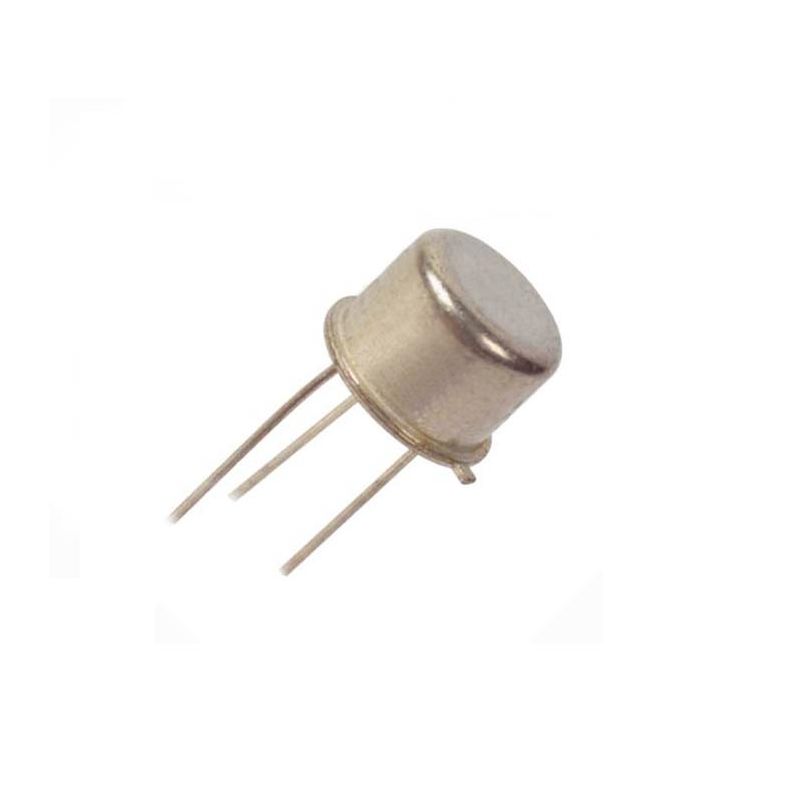


2N3637 PNP High-Voltage Transistor (TO-39)
36 people are viewing this right now
In Stock
SKU
191534087485
£6.71
Safe Checkout, Guaranteed

Safe Checkout, Guaranteed
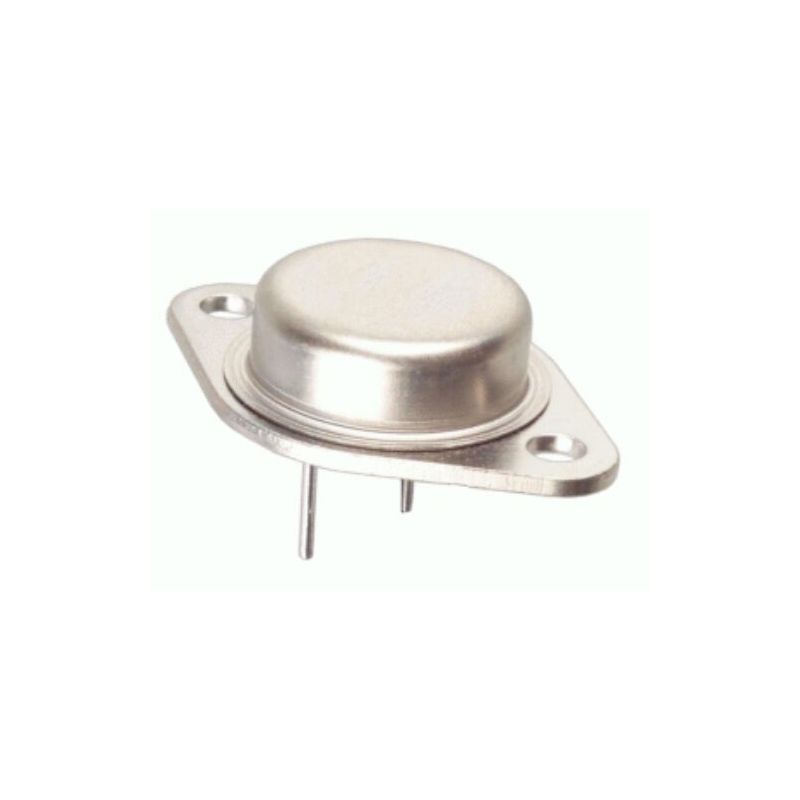
Discover the robust performance and reliability of the 2N3637 Transistor, encased in the classic TO-39 package. This versatile transistor is a fundamental component in a wide range of electronic circuits, renowned for its exceptional switching characteristics and amplification capabilities. Designed for both low-power and medium-power applications, the 2N3637 is a staple in analog circuits, signal processing, and amplification stages. Its rugged construction and TO-39 metal can package provide excellent thermal stability, enabling it to operate reliably even under demanding conditions. The 2N3637 is a PNP transistor, meaning it controls current flow based on a negative voltage applied to its base. This characteristic makes it ideal for use in complementary circuits alongside NPN transistors, offering designers flexibility in creating sophisticated circuit topologies.
The TO-39 package, a through-hole design, simplifies prototyping and allows for easy integration into breadboards and perfboards. This makes the 2N3637 particularly well-suited for hobbyists, students, and engineers working on experimental or small-scale projects. The transistor exhibits excellent linearity, providing accurate and predictable amplification. Its high gain ensures that even small input signals are amplified effectively, making it suitable for pre-amplifiers and sensitive signal detection circuits. Furthermore, the 2N3637 offers a low saturation voltage, minimizing power loss and maximizing efficiency. This is especially important in battery-powered devices and energy-conscious designs.
Beyond its technical specifications, the 2N3637 is valued for its durability and long lifespan. Its robust construction ensures that it can withstand harsh operating conditions, including temperature variations and mechanical stress. This makes it a reliable choice for industrial and automotive applications where dependability is paramount. The 2N3637 isn't just a transistor; it's a building block for innovation. Its versatility and reliability make it an essential component for anyone involved in electronics. Whether you're designing audio amplifiers, switching circuits, or control systems, the 2N3637 provides the performance you need to succeed.
Unleash the power of analog circuitry with the 2N3637 Transistor. Experience the reliability and performance that comes from a legacy of engineering excellence. Its TO-39 package offers ease of use and compatibility, while its robust design ensures long-lasting operation. Don't compromise on quality or performance. Choose the 2N3637 for your next project and witness the difference it can make. Order your 2N3637 Transistor TO-39 today and embark on a journey of electronic discovery.
Supplies are limited, so don't miss out!
| Product Name | 2N3637 PNP High-Voltage Transistor (TO-39) |
|---|---|
| SKU | 191534087485 |
| Price | £6.71 |
| 2N3637 PNP High-Voltage Transistor (TO-39) Color | As per image |
| Category | Transistors |
| Brand | Nikko Electronics ltd |
| Product Code | 191534087485 |
| Availability | Yes |
Shipping cost is based on order value. Just add products to your cart and use the Shipping Calculator to see the shipping price. We want you to be 100% satisfied with your purchase. Items can be returned or exchanged within 30 days of delivery.
The 2N3637 PNP High-Voltage Transistor (TO-39) is specifically engineered for high-voltage environments, boasting a Collector-Emitter Voltage (Vceo) rating of up to 175V. This makes it an exceptional choice for designers working on power supplies, deflection circuits, and high-voltage inverters where lower-voltage silicon transistors would fail. One of its primary advantages is the combination of high breakdown voltage with a relatively high current handling capability of 1A continuous collector current. In switching applications, the 2N3637 PNP High-Voltage Transistor (TO-39) offers rapid transition times, minimizing switching losses and improving overall circuit efficiency. Its PNP polarity allows for simplified high-side switching configurations in DC-DC converters. Furthermore, the metal-can TO-39 package provides superior hermetic sealing compared to plastic alternatives, protecting the semiconductor die from moisture and atmospheric contaminants, which is critical for maintaining long-term reliability in industrial high-voltage systems. When compared to modern surface-mount equivalents, this transistor retains its popularity in through-hole designs due to its robust Safe Operating Area (SOA) and ease of heat sinking in demanding thermal environments.
For engineers designing balanced push-pull or class-AB amplifier stages, the 2N3637 PNP High-Voltage Transistor (TO-39) is most frequently paired with the 2N3501 NPN transistor. This complementary pair is highly regarded in the industry for their matched electrical characteristics, including similar gain-bandwidth products (fT) and breakdown voltages. Using the 2N3637 PNP High-Voltage Transistor (TO-39) alongside its NPN counterpart ensures symmetrical signal amplification, which is vital for reducing total harmonic distortion (THD) in high-fidelity audio drivers or precision instrumentation amplifiers. The pairing is particularly effective in driving high-voltage loads or acting as a level shifter in complex analog circuitry. Because both devices share the TO-39 metal can package, they exhibit similar thermal mass and dissipation properties, allowing for more predictable thermal tracking when mounted on a common heat sink. This thermal tracking is essential for preventing thermal runaway in power stages. When selecting the 2N3637 PNP High-Voltage Transistor (TO-39) for complementary use, it is recommended to verify the hFE (DC current gain) grouping to ensure the closest possible match with the NPN device across the intended operating current range, typically between 10mA and 500mA.
The TO-39 package of the 2N3637 PNP High-Voltage Transistor (TO-39) offers significant thermal advantages over standard plastic-encapsulated transistors like the TO-92. The metal header and cap of the TO-39 serve as a more efficient thermal conductor, allowing heat generated at the junction to be dissipated more effectively into the surrounding air. The 2N3637 PNP High-Voltage Transistor (TO-39) can typically handle a power dissipation (Pd) of up to 1 Watt at an ambient temperature of 25°C, and significantly more if a clip-on or bolt-on heat sink is applied to the metal case. This robustness is critical for medium-power applications where a plastic transistor might suffer from junction overheating or package degradation over time. Additionally, the TO-39 package provides a lower junction-to-case thermal resistance (RθJC), which allows the 2N3637 PNP High-Voltage Transistor (TO-39) to operate at higher current levels without exceeding the maximum junction temperature of 200°C. For designers working in aerospace, industrial automation, or high-end audio, the mechanical stability and heat dissipation capabilities of this metal package ensure that the transistor maintains its performance specifications even under continuous high-load conditions that would cause thermal drift in less robust packages.
The 2N3637 PNP High-Voltage Transistor (TO-39) is characterized by a high gain-bandwidth product (fT), typically ranging from 50 MHz to 200 MHz depending on the specific operating conditions and collector current. This high frequency response makes the 2N3637 PNP High-Voltage Transistor (TO-39) suitable not just for DC applications, but also for high-speed switching and RF amplification in the low-to-medium frequency range. In terms of switching dynamics, the device features relatively low output capacitance (Cobo), usually around 10pF, which is vital for minimizing the time constant in high-speed pulse circuits. When utilized in a saturated switching mode, the 2N3637 PNP High-Voltage Transistor (TO-39) exhibits fast turn-on and turn-off times, allowing it to be used in PWM (Pulse Width Modulation) controllers and high-speed level translators. However, engineers should note that switching speeds are influenced by the base drive current; providing a sharp, well-defined base pulse is necessary to fully leverage the speed of the 2N3637 PNP High-Voltage Transistor (TO-39). Its ability to maintain high speed while switching voltages up to 175V distinguishes it from many general-purpose PNP transistors that sacrifice speed for voltage rating.
Yes, the 2N3637 PNP High-Voltage Transistor (TO-39) is a premier choice for the repair and restoration of vintage electronic equipment, particularly high-end audio amplifiers, laboratory power supplies, and early industrial controllers. Its broad voltage rating and standard TO-39 footprint allow it to replace a wide variety of obsolete PNP transistors that share similar current and voltage specifications. Because the 2N3637 PNP High-Voltage Transistor (TO-39) is a JEDEC-registered component, its performance parameters are well-defined and consistent across different manufacturers, ensuring that the restored circuit operates as originally intended. When using the 2N3637 PNP High-Voltage Transistor (TO-39) as a replacement, it is important to verify the pinout, as the TO-39 package typically uses a triangular lead configuration (Emitter, Base, Collector) with the collector connected to the metal case for thermal efficiency. This 'case-connected collector' feature is a common trait in vintage high-performance transistors, making the 2N3637 PNP High-Voltage Transistor (TO-39) a mechanically and electrically compatible upgrade. Its superior reliability and modern manufacturing tolerances often lead to improved circuit stability and longevity compared to the original components being replaced.
The 2N3637 PNP High-Voltage Transistor (TO-39) is rated for a maximum continuous collector current (Ic) of 1.0 Ampere, making it a versatile medium-power device. In pulsed applications, it can handle even higher peak currents, provided the duty cycle and thermal limits are strictly managed. A critical performance metric for this device is its Collector-Emitter Saturation Voltage, Vce(sat). At a collector current of 100mA and a base current of 10mA, the 2N3637 PNP High-Voltage Transistor (TO-39) typically exhibits a Vce(sat) of less than 0.5V, and even at its full 1A rating, the saturation voltage remains impressively low. This low saturation voltage is beneficial because it reduces the power dissipated by the transistor when it is in the 'on' state, thereby increasing the efficiency of the overall circuit and reducing the heat sinking requirements. For designers, this means the 2N3637 PNP High-Voltage Transistor (TO-39) can effectively drive relays, solenoids, and small motors without significant voltage drops across the junction. Understanding these current and saturation limits is essential for ensuring the 2N3637 PNP High-Voltage Transistor (TO-39) operates within its safe operating area, especially in high-voltage switching environments.
The DC current gain, or hFE, of the 2N3637 PNP High-Voltage Transistor (TO-39) is designed to remain relatively stable across a broad range of collector currents, which is a hallmark of a well-engineered general-purpose transistor. Typically, the hFE for the 2N3637 PNP High-Voltage Transistor (TO-39) ranges from 100 to 300 when measured at a collector current of 10mA. As the collector current increases toward the 1A limit, the gain does begin to roll off, but it maintains sufficient magnitude to remain useful in power-driving stages. This linearity in gain is particularly important for analog amplification and signal processing, as it reduces non-linear distortion. When the 2N3637 PNP High-Voltage Transistor (TO-39) is used in a linear regulator or an audio driver, the predictable hFE allows for more accurate biasing and feedback loop design. Designers should consult the datasheet's 'hFE vs. Ic' curves to precisely calculate the required base drive current for their specific operating point. By selecting the 2N3637 PNP High-Voltage Transistor (TO-39), engineers benefit from a component that provides a reliable and consistent gain profile, ensuring that the final circuit performance meets the calculated design parameters without excessive variation between individual units.