

2N5459 N-Channel JFET TO-92
41 people are viewing this right now
In Stock
SKU
191011082842
£2.99
Safe Checkout, Guaranteed

Safe Checkout, Guaranteed
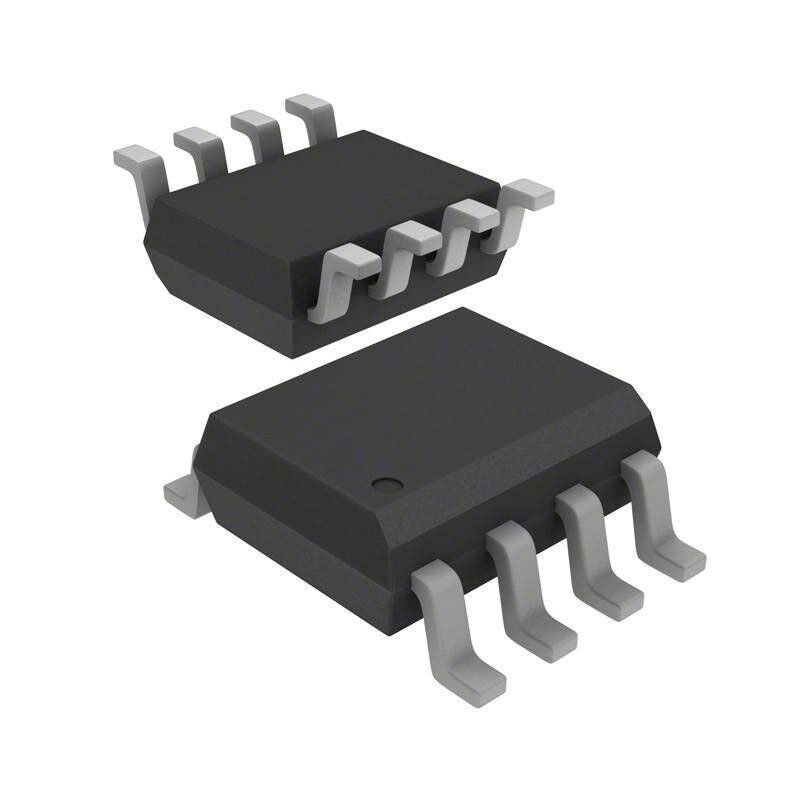
The AD1855JRS is a high-performance, multi-channel audio DAC (Digital-to-Analog Converter) integrated circuit, meticulously engineered for superior audio fidelity in a compact SSOP-28 (Shrink Small Outline Package) SMD (Surface Mount Device) package. This integrated circuit is a cornerstone component for audio systems demanding exceptional dynamic range and low distortion, making it ideal for professional audio equipment, high-end consumer electronics, and automotive audio applications. At its core, the AD1855JRS leverages advanced sigma-delta modulation techniques to achieve a remarkable signal-to-noise ratio (SNR) and total harmonic distortion plus noise (THD+N) performance. This ensures a clean, transparent, and immersive listening experience, free from unwanted artifacts and noise. The multi-channel capability of the AD1855JRS allows for versatile audio processing, supporting various surround sound formats and multi-zone audio systems. Its precise channel separation and minimal crosstalk contribute to a wide and accurate soundstage, enhancing the realism and enjoyment of audio content.
Designed for ease of integration, the AD1855JRS features a flexible digital interface that supports industry-standard audio formats such as I2S, left-justified, and right-justified. This simplifies connectivity with a wide range of audio processors, microcontrollers, and digital signal processors (DSPs). The device also incorporates advanced power management features, optimizing power consumption and minimizing heat dissipation. This is particularly crucial in portable and energy-sensitive applications. The SSOP-28 SMD package offers a compact footprint, enabling designers to create space-efficient audio solutions without compromising on performance. Its surface mount design facilitates automated assembly, reducing manufacturing costs and improving reliability.
The AD1855JRS is not just a component; it's an investment in audio excellence. Whether you're designing a high-end home theater system, a professional recording studio interface, or an audiophile-grade portable player, this integrated circuit delivers the performance and reliability you need to achieve your audio goals. Its robust design, coupled with its exceptional audio specifications, makes it a preferred choice for audio engineers and enthusiasts worldwide. Unlock the full potential of your audio designs with the AD1855JRS. Experience the difference that high-quality audio conversion can make. Upgrade your audio system today and immerse yourself in a world of pristine sound.
Order your AD1855JRS now and elevate your audio experience to new heights. Explore the possibilities and redefine your perception of sound quality. Don't settle for anything less than the best – choose the AD1855JRS for unparalleled audio performance.
| Product Name | 2N5459 N-Channel JFET TO-92 |
|---|---|
| SKU | 191011082842 |
| Price | £2.99 |
| 2N5459 N-Channel JFET TO-92 Color | As per image |
| Category | Transistors |
| Brand | Nikko Electronics ltd |
| Product Code | 191011082842 |
| Availability | Yes |
Shipping cost is based on order value. Just add products to your cart and use the Shipping Calculator to see the shipping price. We want you to be 100% satisfied with your purchase. Items can be returned or exchanged within 30 days of delivery.
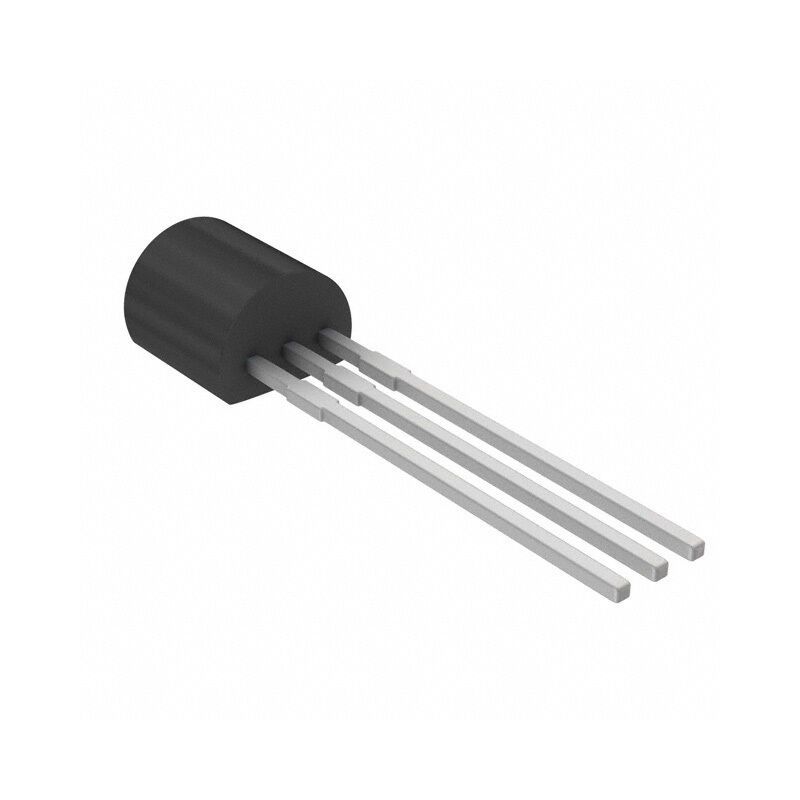
The 2N5459 N-Channel JFET TO-92 is a popular choice for amplifier stages due to its specific electrical characteristics. Key parameters include the Gate-Source Cutoff Voltage (Vgs(off)), which typically ranges from -2.0V to -8.0V, defining the voltage at which the device turns off. The Zero-Bias Drain Current (Idss) is another critical specification, indicating the drain current when Vgs = 0V, with a typical range of 4.0mA to 9.0mA for the 2N5459. These values are fundamental for setting the quiescent operating point (Q-point) in common-source amplifier configurations. Furthermore, the Forward Transconductance (gfs or gm) is essential, as it dictates the voltage gain of the amplifier stage, often specified around 3000-6000 µS. Designers also consider the input capacitance, which is typically low, making the 2N5459 N-Channel JFET TO-92 suitable for high-impedance input stages and low-noise preamplifiers where signal integrity is paramount. Understanding these parameters is vital for optimizing gain, linearity, and overall performance in audio and RF amplification circuits.
The 2N5459 N-Channel JFET TO-92 is highly versatile and finds common application in several fundamental circuit configurations. It is frequently used in common-source amplifiers, where its high input impedance (typically in the megohm range) makes it ideal for buffering sensitive signals and driving subsequent stages without loading the source. This characteristic is particularly advantageous in audio preamplifiers and instrumentation where signal integrity and minimal signal loss are critical. Another common use is as a voltage-controlled resistor (VCR) in AGC (Automatic Gain Control) circuits or voltage-controlled oscillators (VCOs), leveraging its drain-source resistance modulation by the gate voltage. Additionally, the 2N5459 N-Channel JFET TO-92 excels in impedance matching applications, converting high-impedance sources to lower-impedance outputs, making it invaluable in sensor interfaces and RF front-ends. Its inherent low noise characteristics further enhance its suitability for these demanding roles, ensuring clean signal processing.
The 2N5459 N-Channel JFET TO-92 is renowned for its excellent low-noise performance, making it a preferred component in sensitive amplification stages, particularly in audio and instrumentation applications. JFETs inherently exhibit lower 1/f noise (flicker noise) compared to bipolar junction transistors (BJTs) at low frequencies, contributing to a cleaner signal floor. The typical equivalent input noise voltage (en) for the 2N5459 N-Channel JFET TO-92 is in the range of a few nV/√Hz at 1 kHz, and its equivalent input noise current (in) is extremely low, often in the fA/√Hz range. These characteristics are crucial for preamplifiers, microphone inputs, and sensor interfaces where even minute amounts of added noise can degrade system performance. To maximize noise performance, designers often operate the 2N5459 N-Channel JFET TO-92 at optimal drain currents, typically around its Idss or slightly below, and ensure proper shielding and grounding to prevent external noise coupling. Its low gate leakage current also contributes to a quiet input.
Thermal management is a critical design consideration for the 2N5459 N-Channel JFET TO-92 to ensure long-term reliability and stable operation. The TO-92 package is a small, plastic through-hole package, which inherently has a limited ability to dissipate heat. The maximum power dissipation (Pd) for the 2N5459 N-Channel JFET TO-92 is typically specified around 350mW at an ambient temperature of 25°C. Exceeding this limit can lead to an increase in junction temperature, potentially causing parameter drift, reduced lifespan, or even catastrophic failure. Designers must calculate the power dissipated by the JFET (P_D = Vds * Id + Vgs * Ig) and ensure it remains well below the maximum rating, especially in applications with varying ambient temperatures. For optimal performance, it is recommended to operate the 2N5459 N-Channel JFET TO-92 with a significant derating factor, particularly if it's placed in an enclosed space or subject to higher ambient temperatures. Adequate PCB layout with copper planes can also help in minor heat spreading.
While primarily designed for amplification and high-impedance input stages, the 2N5459 N-Channel JFET TO-92 can technically be used for low-power switching applications, though it has specific limitations compared to dedicated switching transistors like MOSFETs. In a switching context, a JFET operates by varying its gate-source voltage to control the channel's resistance between the drain and source. When Vgs is 0V, the channel is fully open (low Rds(on)), and when Vgs is sufficiently negative (Vgs(off)), the channel is pinched off (high Rds(off)). The main limitation of the 2N5459 N-Channel JFET TO-92 for switching is its relatively higher on-resistance (Rds(on)) compared to power MOSFETs, which can lead to greater power dissipation in the 'on' state for higher currents. Furthermore, JFETs are voltage-controlled devices, and their switching speed is influenced by parasitic capacitances, which can be slower than optimized switching devices. Therefore, the 2N5459 N-Channel JFET TO-92 is best suited for low-frequency, low-current switching where its high input impedance can be an advantage, rather than high-power or high-speed switching applications.
The 2N5459 N-Channel JFET TO-92 is characterized by a specified range for its key parameters, Vgs(off) and Idss, which are critical for proper circuit design and biasing. The Gate-Source Cutoff Voltage (Vgs(off)) typically falls within -2.0V to -8.0V. This parameter defines the negative gate-source voltage required to completely turn off the JFET, stopping the drain current. The Zero-Bias Drain Current (Idss) range for the 2N5459 is commonly specified between 4.0mA and 9.0mA, representing the maximum drain current when the gate-source voltage is 0V. These wide ranges necessitate robust biasing techniques in circuit design to accommodate device variations. Designers must implement self-bias or current-source biasing to ensure the operating point (Q-point) remains stable and within the desired region despite these variations. Failing to account for these ranges can lead to inconsistent circuit performance, incorrect gain, or even non-functional circuits across different 2N5459 N-Channel JFET TO-92 units. Characterizing individual devices or using adjustable biasing is often recommended for precision applications.
Ensuring stable operation of the 2N5459 N-Channel JFET TO-92 across varying temperatures is crucial, as JFET parameters like Idss and Vgs(off) can exhibit temperature dependence. The most common and effective biasing technique is **self-bias**, which uses a source resistor (Rs) to create a negative Vgs voltage. As drain current (Id) increases with temperature, the voltage drop across Rs increases (Id * Rs), making Vgs more negative, which in turn reduces Id, thus creating a negative feedback loop that stabilizes the operating point. Another robust method is **current-source biasing**, where a constant current source (often implemented with a BJT or another JFET) sets the drain current, making the operating point highly independent of the 2N5459 N-Channel JFET TO-92's inherent variations and temperature effects. While fixed-bias (setting Vgs directly) is simpler, it is highly sensitive to parameter variations and temperature, making it generally unsuitable for critical applications. For optimal stability, especially in precision circuits, a combination of self-bias with careful selection of Rs to achieve a desired operating point, or the use of active current sources, provides the best temperature compensation for the 2N5459 N-Channel JFET TO-92.