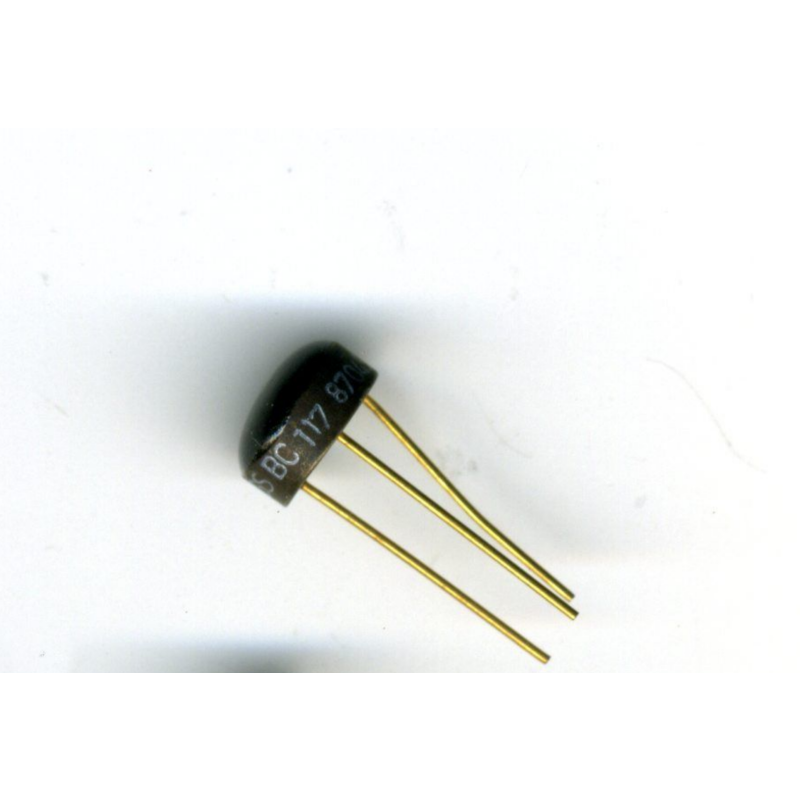


Opto-Integrated Circuit DIP-4
27 people are viewing this right now
In Stock
SKU
191890269427
£6.50
Safe Checkout, Guaranteed

Safe Checkout, Guaranteed
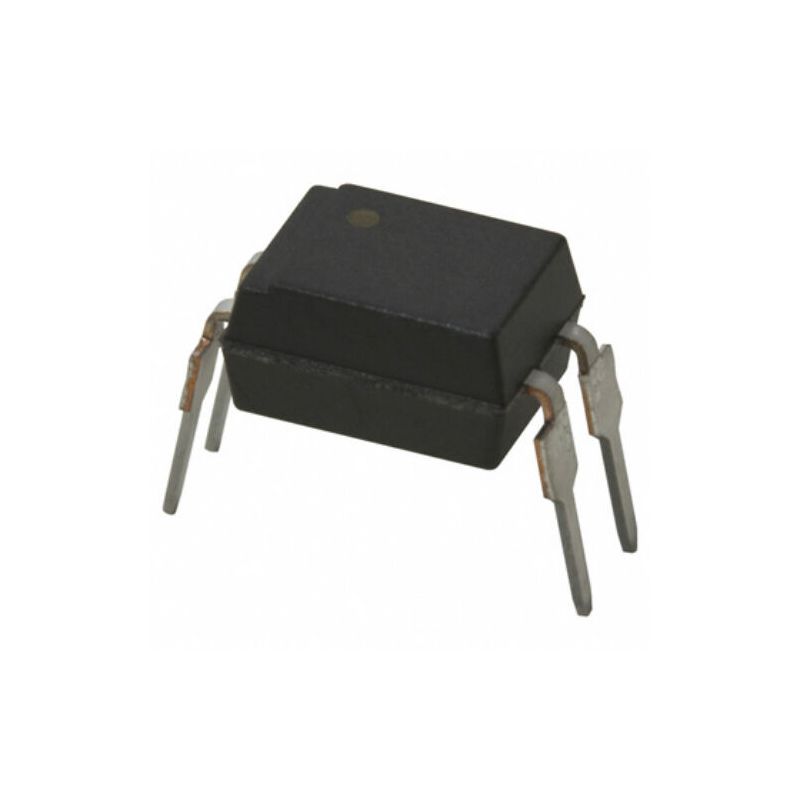
The 2N7004 Opto Integrated Circuit in a DIP-4 package combines the functionality of an optocoupler with integrated circuitry for enhanced performance and isolation in a compact design. This device provides electrical isolation between input and output circuits, protecting sensitive components from voltage spikes and noise. It's ideal for applications requiring galvanic isolation, such as industrial control systems, power supplies, and data communication interfaces. The DIP-4 package allows for easy insertion and soldering onto printed circuit boards, simplifying the assembly process. This opto-integrated circuit features a high isolation voltage, ensuring reliable protection against high-voltage transients. Its low input current requirement makes it compatible with a wide range of control signals.
The integrated circuitry enhances the device's performance, providing faster switching speeds and improved signal integrity. With its compact size and robust design, the 2N7004 is suitable for both through-hole and prototyping applications. The 2N7004 offers a wide range of isolation characteristics, making it suitable for applications with safety requirements. Its small footprint and reliable operation make it a preferred choice for designers. The opto-integrated circuit provides a cost-effective solution for implementing isolation in electronic systems. The 2N7004 is designed for low power applications which allows for a cost effective solution.
The DIP package allows for easy prototyping and through hole solutions. Optocouplers, galvanic isolation, input/output isolation, and DIP-4 package are related keywords. Its versatility allows it to be used in different opto-isolation projects. Upgrade your isolation design with the 2N7004. Order today and ensure that your circuit is protected from high voltage spikes and interference. Don't let noise compromise the performance of your circuit; choose the 2N7004 for reliable isolation and superior performance.
| Product Name | Opto-Integrated Circuit DIP-4 |
|---|---|
| SKU | 191890269427 |
| Price | £6.50 |
| Opto-Integrated Circuit DIP-4 Color | As per image |
| Category | Integrated Circuits |
| Brand | Nikko Electronics ltd |
| Product Code | 191890269427 |
| Availability | Yes |
Shipping cost is based on order value. Just add products to your cart and use the Shipping Calculator to see the shipping price. We want you to be 100% satisfied with your purchase. Items can be returned or exchanged within 30 days of delivery.
The Opto-Integrated Circuit DIP-4 is engineered to provide robust electrical isolation, a fundamental requirement for safeguarding sensitive electronics in harsh industrial environments. While the exact isolation voltage would be specified in the datasheet, opto-integrated circuits of this caliber typically offer several kilovolts (kV) of isolation, often ranging from 2.5kV to 5kV RMS. This high isolation voltage ensures a galvanic barrier between input and output circuits, effectively preventing high-voltage transients, ground loops, and common-mode noise from propagating across different sections of a system. This protection is critical in industrial control systems, for instance, where PLCs or microcontrollers might interface with high-voltage motors or noisy power lines. Without adequate isolation provided by components like the Opto-Integrated Circuit DIP-4, voltage spikes could damage control circuitry, lead to data corruption, or even pose safety hazards. Its high isolation rating ensures reliable and safe operation, making it indispensable for system integrity and longevity.
The integrated circuitry within the Opto-Integrated Circuit DIP-4 significantly elevates its performance beyond that of a basic, discrete optocoupler. Standard optocouplers typically consist of just an LED and a phototransistor. The 'integrated circuitry' in this product implies additional components like Schmitt triggers for noise immunity, output buffers for higher drive capability, or even specialized logic gates for specific functions (e.g., open-collector, totem-pole outputs). This integration leads to several benefits: improved common-mode transient immunity (CMTI) for better noise rejection, faster switching speeds for high-frequency data communication, and enhanced signal conditioning to deliver cleaner output signals. Furthermore, it can simplify circuit design by reducing external component count, saving board space, and potentially lowering overall system cost. This makes the Opto-Integrated Circuit DIP-4 a more robust and versatile solution for demanding applications requiring superior signal integrity and reliability under challenging conditions.
The Opto-Integrated Circuit DIP-4 is designed with a low input current requirement, which is a significant advantage for system designers. Typically, the input LED current (IF) required to activate the output can range from a few milliamperes (mA) down to sub-milliamperes, depending on the specific model and current transfer ratio (CTR). This low input current characteristic means the Opto-Integrated Circuit DIP-4 can be directly driven by a wide array of control signals, including those from low-power microcontrollers, FPGAs, or even battery-powered devices, without needing additional buffering or high-current drive stages. This simplifies the interface circuit design, reduces power consumption, and extends battery life in portable applications. Its compatibility spans from standard logic levels (TTL, CMOS) to various sensor outputs, making the Opto-Integrated Circuit DIP-4 highly versatile for integration into diverse electronic systems where power efficiency and direct interfacing are crucial considerations.
The Opto-Integrated Circuit DIP-4 offers superior advantages in applications demanding reliable galvanic isolation combined with integrated signal processing. It particularly excels in environments where magnetic isolation or digital isolators might fall short or be less cost-effective. For industrial control systems, it provides robust isolation for PLC I/O modules, motor drive interfaces, and sensor signal conditioning, protecting sensitive control logic from high-voltage spikes and ground loops. In power supply feedback loops, the Opto-Integrated Circuit DIP-4 ensures safe regulation while maintaining isolation between primary and secondary sides. For data communication interfaces, it can isolate RS-232/485 lines or CAN bus networks, preventing noise propagation and ensuring data integrity. Its compact DIP-4 package, coupled with integrated circuitry, simplifies PCB layout and assembly, making it an ideal choice for space-constrained designs that require high reliability and enhanced performance in demanding electrical environments.
The output configuration of the Opto-Integrated Circuit DIP-4 is crucial for seamless integration into a larger system. Depending on the specific variant, the integrated circuitry can provide several output types, commonly including open-collector, open-drain, totem-pole (push-pull), or even Schmitt-trigger buffered outputs. An open-collector/open-drain output requires an external pull-up resistor to define the logic high level, making it suitable for interfacing with different voltage domains or driving multiple loads. Totem-pole outputs provide active high and low drive, offering faster switching speeds and higher current sourcing/sinking capabilities, ideal for direct connection to logic gates or microcontroller inputs. Schmitt-trigger outputs offer hysteresis, which significantly improves noise immunity and ensures clean switching even with noisy input signals. Understanding the specific output configuration of your Opto-Integrated Circuit DIP-4 is vital for correctly sizing pull-up resistors, ensuring proper voltage level compatibility, and maximizing system performance when interfacing with microcontrollers or other digital logic.
The DIP-4 (Dual In-line Package with 4 pins) configuration of the Opto-Integrated Circuit DIP-4 offers significant advantages for both assembly and long-term board reliability, particularly in through-hole applications. Its simple, symmetrical pinout allows for easy manual or automated insertion onto printed circuit boards, reducing assembly time and minimizing the risk of incorrect orientation compared to more complex surface-mount packages. For prototyping or low-volume production, the DIP-4 package simplifies soldering, making it accessible even for hobbyists or engineers without advanced SMT equipment. From a reliability standpoint, through-hole components like the Opto-Integrated Circuit DIP-4 generally offer stronger mechanical connections to the PCB, making them more resilient to vibration and thermal cycling. This robustness is highly valued in industrial environments where equipment may be subjected to harsh physical conditions, ensuring the long-term integrity and performance of the Opto-Integrated Circuit DIP-4 within the system.
Yes, the Opto-Integrated Circuit DIP-4 can be effectively utilized for high-speed data communication, especially when compared to basic optocouplers. The 'integrated circuitry' often includes optimizations for faster switching times, such as output buffers or specialized logic that reduces propagation delays and rise/fall times. To achieve optimal performance in high-speed applications, several parameters must be carefully considered. Key among these are the maximum data rate (or bandwidth) specified in the datasheet, the propagation delay (tPLH, tPHL), and the common-mode transient immunity (CMTI). Lower propagation delays and higher CMTI values are indicative of better high-speed performance and noise rejection. Additionally, selecting appropriate external components, such as termination resistors for data lines or pull-up resistors for open-collector outputs, is crucial to minimize signal reflections and ringing. Designers should also pay attention to parasitic capacitance on the PCB traces to maintain signal integrity, ensuring the Opto-Integrated Circuit DIP-4 delivers its full potential in high-frequency data transfer scenarios.