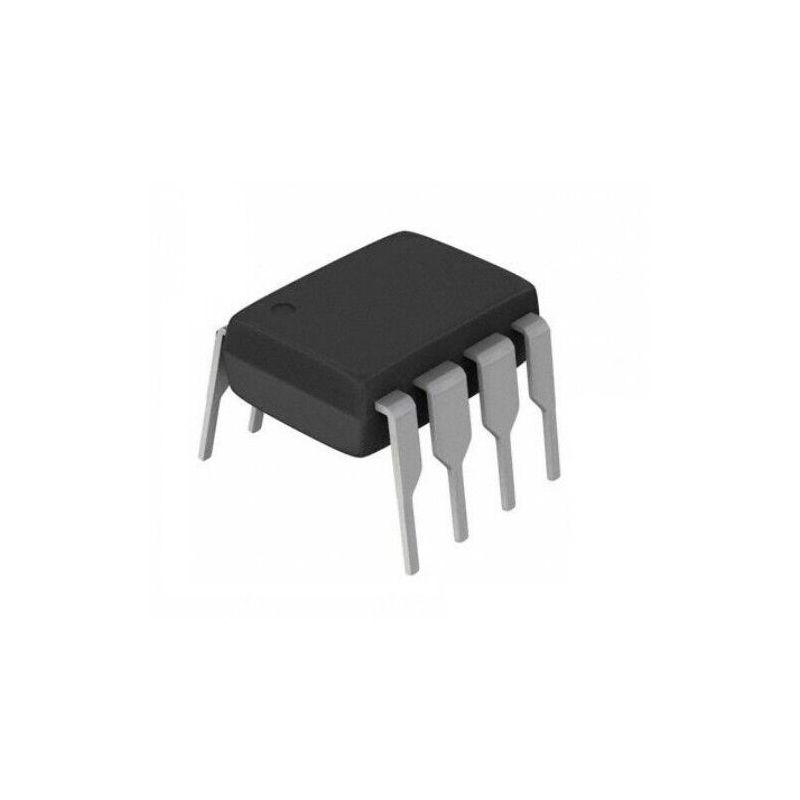


2N5061 SCR TO-92
43 people are viewing this right now
In Stock
SKU
190963219940
£2.99
Safe Checkout, Guaranteed

Safe Checkout, Guaranteed
The 2N5061 is a silicon controlled rectifier (SCR) housed in a TO-92 package, designed for a wide array of low to medium power switching and control applications. This lot includes two individual 2N5061 transistors, providing a convenient and cost-effective solution for prototyping, repairs, and small-scale electronic projects. The 2N5061 SCR is known for its reliable performance and ease of use, making it a popular choice among hobbyists, students, and professional engineers alike. Its primary function is to act as an electronic switch that can be triggered by a small gate current, allowing it to control much larger currents in a circuit. This characteristic makes it ideal for applications such as phase control, motor speed control, and overvoltage protection. The TO-92 package is a through-hole mounting style, which simplifies the process of soldering and breadboarding, making it accessible for users with varying levels of experience.
Key specifications of the 2N5061 include a forward voltage rating, gate trigger current, and holding current, all of which contribute to its overall performance and suitability for specific applications. When selecting an SCR like the 2N5061, it's crucial to consider the voltage and current requirements of your circuit to ensure optimal operation and prevent damage to the component. The 2N5061 is particularly well-suited for applications where precise control and reliable switching are essential. Its compact size and robust design make it a versatile component for various electronic projects. Whether you're building a light dimmer, a temperature controller, or a simple timer circuit, the 2N5061 provides the necessary functionality to achieve your desired results. The inclusion of two transistors in this lot offers added value and flexibility, allowing you to experiment with different circuit configurations or have a spare on hand for future projects.
The 2N5061's ability to handle moderate power levels, combined with its ease of integration, makes it a valuable addition to any electronics toolkit. Explore the possibilities and unleash your creativity with this reliable and versatile SCR. Don't miss out on this opportunity to enhance your electronic projects. Add this lot of two 2N5061 transistors to your cart today and experience the difference in performance and reliability!
| Product Name | 2N5061 SCR TO-92 |
|---|---|
| SKU | 190963219940 |
| Price | £2.99 |
| 2N5061 SCR TO-92 Color | As per image |
| Category | Transistors |
| Brand | Nikko Electronics ltd |
| Product Code | 190963219940 |
| Availability | Yes |
Shipping cost is based on order value. Just add products to your cart and use the Shipping Calculator to see the shipping price. We want you to be 100% satisfied with your purchase. Items can be returned or exchanged within 30 days of delivery.
The 2N5061 SCR TO-92 is a Silicon Controlled Rectifier, not a transistor, designed for robust switching and control applications in low to medium power circuits. Its primary function is to act as a unidirectional electronic switch, which, once triggered by a small gate current, latches into an 'ON' state and conducts current from anode to cathode until the anode current drops below a holding current or the voltage across it reverses. This characteristic makes the 2N5061 SCR TO-92 ideal for applications requiring controlled power delivery, such as phase control in lamp dimmers, motor speed control, heater control, and various power switching functions. It's also frequently used in overvoltage protection circuits, crowbar circuits, and alarm systems, providing reliable and cost-effective solutions for design engineers and hobbyists alike.
When incorporating the 2N5061 SCR TO-92 into your designs, critical parameters include its repetitive peak off-state voltage (VDRM), which typically ranges from 30V to 200V for the 2N5061 series, indicating the maximum voltage it can block in the off-state without triggering. The on-state RMS current (IT(RMS)) is also crucial, specifying the maximum continuous current the device can handle in the ON state, usually around 0.8A for the 2N5061, with a peak surge current (ITSM) for non-repetitive events. Understanding these limits is vital to prevent thermal runaway and permanent damage. Always ensure your operating voltage and current levels remain well within the datasheet specifications of the 2N5061 SCR TO-92, applying appropriate derating for temperature variations and specific application stresses to ensure long-term reliability and performance.
The 2N5061 SCR TO-92 is triggered into its conducting (ON) state by applying a positive voltage pulse to its gate terminal with respect to the cathode. The critical gate characteristics for reliable operation include the gate trigger current (IGT) and gate trigger voltage (VGT). IGT specifies the minimum gate current required to reliably turn ON the SCR, typically in the microampere range for the 2N5061, while VGT is the corresponding gate voltage. It's important to provide a gate pulse that meets or exceeds these minimum values to ensure consistent triggering. However, care must also be taken not to exceed the maximum gate current (IGM) or gate power dissipation (PGM) to avoid damaging the gate junction. A short, sharp pulse is generally preferred over a continuous DC signal for triggering the 2N5061 SCR TO-92 to minimize gate power dissipation once the device latches ON.
A key characteristic of the 2N5061 SCR TO-92 is its latching behavior; once triggered and conducting, it cannot be turned off by simply removing the gate signal. To turn off or commutate the 2N5061 SCR TO-92 in a DC circuit, the anode current must be reduced below its holding current (IH) or the voltage across the anode and cathode must be reversed for a sufficient duration. Common forced commutation methods include momentarily opening the anode circuit, shunting the anode current around the SCR, or applying a reverse voltage pulse to the anode-cathode terminals, often achieved using a capacitor discharge. This distinction is crucial for DC applications where controlled turn-off is required, as improper commutation can lead to continuous conduction, making the 2N5061 SCR TO-92 appear to be 'stuck on' and preventing proper circuit operation. Understanding these methods is essential for designing effective SCR-based control systems.
Yes, the 2N5061 SCR TO-92 is highly effective in AC power control applications, particularly for phase control. In AC circuits, the SCR naturally commutates (turns off) when the AC voltage crosses zero and the anode current drops below the holding current, provided the gate signal is removed. A single 2N5061 SCR TO-92 provides half-wave control, as it only conducts during one half-cycle of the AC waveform. For full-wave AC control, two 2N5061 SCRs can be connected in an anti-parallel configuration, or a single TRIAC (which functions like two anti-parallel SCRs) might be used for simpler designs. Important considerations for AC applications include designing a proper gate triggering circuit synchronized with the AC line, and often including a snubber network (RC series circuit) across the anode and cathode to protect the 2N5061 SCR TO-92 from high dv/dt (rate of change of voltage) transients that could cause spurious triggering, ensuring stable and reliable operation.
Thermal management is crucial for the long-term reliability and performance of the 2N5061 SCR TO-92, especially when operating at higher currents or elevated ambient temperatures. As current flows through the SCR in its ON state, power is dissipated as heat, primarily due to the on-state voltage drop (VT) across the device. This power dissipation (P_diss = VT * IT(RMS)) raises the internal junction temperature (TJ). Exceeding the maximum allowable junction temperature can lead to irreversible damage or premature failure. For the TO-92 package of the 2N5061 SCR TO-92, which has a relatively high thermal resistance, careful consideration of ambient temperature and load current is necessary. While its current rating for the TO-92 package typically doesn't require external heatsinks for many applications, ensuring adequate airflow and proper PCB layout to dissipate heat is vital. For continuous operation near its maximum current ratings, derating curves from the datasheet should be meticulously followed to prevent thermal breakdown and maximize the device's lifespan.
The 2N5061 SCR TO-92 typically follows a standard pinout for its package type, which is crucial for correct circuit assembly and PCB layout. When viewed from the front (flat side with markings), the common pinout for many TO-92 SCRs is Gate (G), Cathode (K), Anode (A) from left to right. However, it is absolutely imperative to consult the specific manufacturer's datasheet for the exact 2N5061 SCR TO-92 variant being used, as pinouts can sometimes vary between manufacturers or even within product families. Incorrect pin orientation will lead to non-functional circuits or potential device damage. During PCB layout, ensure the traces for the gate drive, anode, and cathode are routed cleanly, minimizing trace lengths for high-current paths (anode-cathode) to reduce parasitic inductance and resistance. Proper spacing and clearances should also be maintained for safety and to prevent unintended coupling, ensuring optimal performance and reliability of the 2N5061 SCR TO-92 in your circuit.