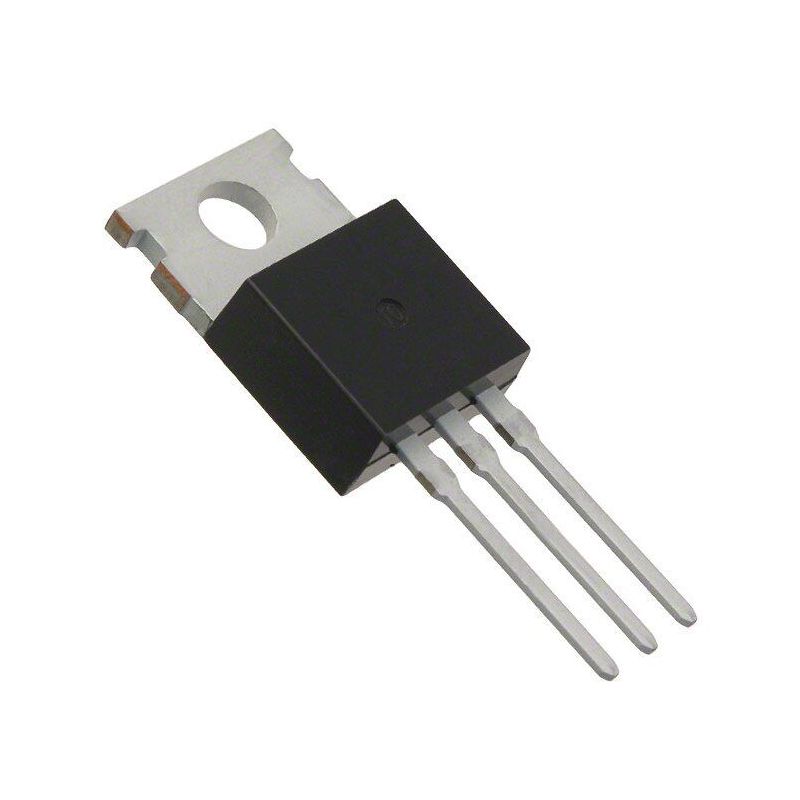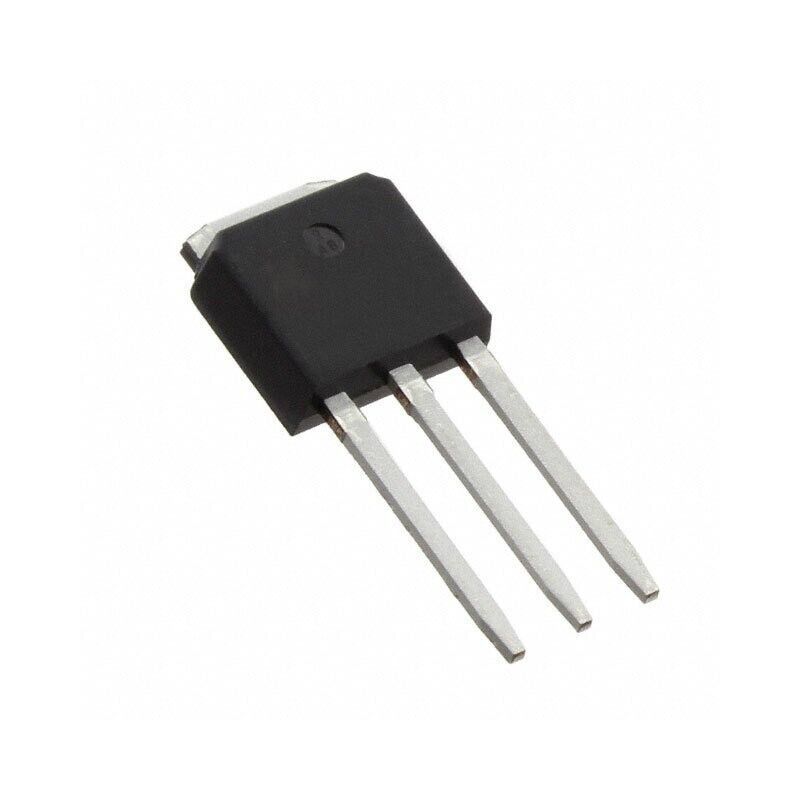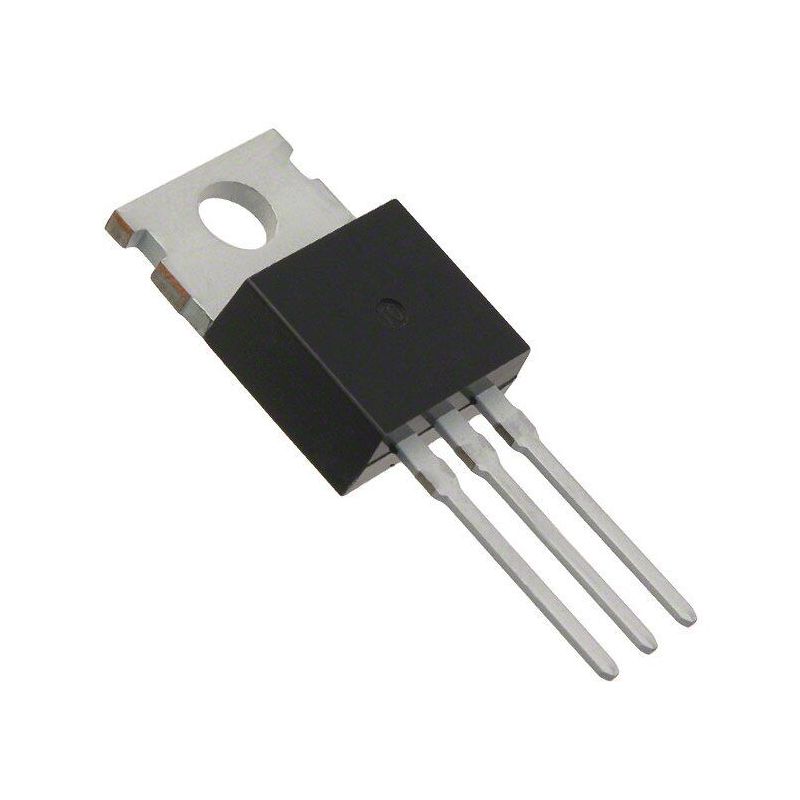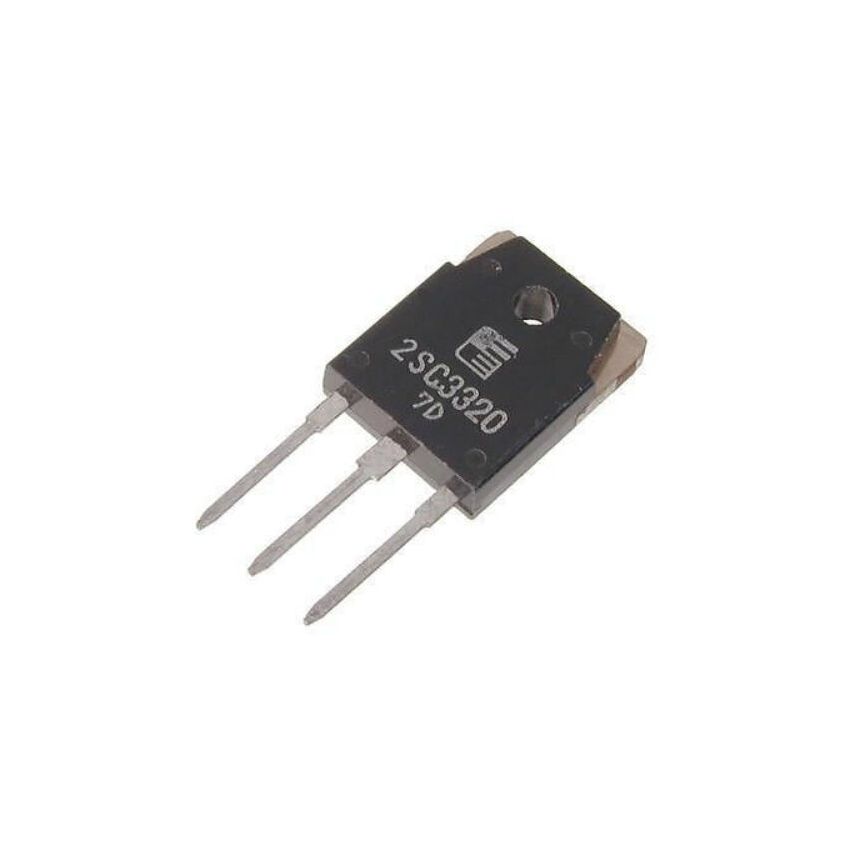

Fuji 2SC3320 NPN High-Frequency Transistor
24 people are viewing this right now
In Stock
SKU
191282514694
£7.99
Safe Checkout, Guaranteed

Safe Checkout, Guaranteed
The 2SC3320 is a high-performance NPN silicon epitaxial planar transistor manufactured by Fuji Denki Semiconductor, designed for use in a variety of high-frequency amplifier and oscillator applications. Renowned for its excellent linearity, high gain, and low noise characteristics, the 2SC3320 is a popular choice for RF (Radio Frequency) and IF (Intermediate Frequency) amplifier stages in communication equipment, television tuners, and other high-frequency circuits. This transistor is specifically engineered to deliver superior performance in demanding applications where signal integrity and stability are crucial. Its advanced design minimizes unwanted noise and distortion, ensuring a clean and reliable amplified signal. The 2SC3320 features a high transition frequency (fT), enabling it to operate efficiently at high frequencies. This is essential for RF and IF amplifier applications, where signals are processed at frequencies ranging from several megahertz to several gigahertz.
The transistor also boasts a high current gain (hFE), ensuring efficient amplification of input signals with minimal power dissipation. Fuji Denki Semiconductor's commitment to quality ensures that the 2SC3320 meets the highest standards of performance and reliability. The transistor undergoes rigorous testing to ensure it operates flawlessly under various conditions. The 2SC3320 is available in a compact package, making it easy to integrate into existing circuit designs. Its standardized pinout simplifies the assembly process and reduces the overall system cost. The transistor operates over a wide temperature range, ensuring stable performance in various environmental conditions.
Its ability to withstand high temperatures makes it suitable for use in demanding applications. In communication equipment, the 2SC3320 is commonly used in the RF and IF amplifier stages to amplify weak signals received from antennas. In television tuners, it serves as a high-frequency amplifier to enhance the signal quality and improve the picture clarity. Whether you are designing a new communication system or upgrading an existing television tuner, the 2SC3320 offers a high-performance and reliable solution. The 2SC3320 is perfect for RF amplifier design and high-frequency signal processing. Its superb signal amplification is key to quality performance.
Get your 2SC3320 today to upgrade your electronics capabilities. Experience high-frequency amplification like never before. Explore its potential in RF signal amplification.
| Product Name | Fuji 2SC3320 NPN High-Frequency Transistor |
|---|---|
| SKU | 191282514694 |
| Price | £7.99 |
| Fuji 2SC3320 NPN High-Frequency Transistor Color | As per image |
| Category | Integrated Circuits |
| Brand | Nikko Electronics ltd |
| Product Code | 191282514694 |
| Availability | Yes |
Shipping cost is based on order value. Just add products to your cart and use the Shipping Calculator to see the shipping price. We want you to be 100% satisfied with your purchase. Items can be returned or exchanged within 30 days of delivery.
The Fuji 2SC3320 NPN High-Frequency Transistor is a specialized component engineered specifically for high-frequency environments where signal purity is paramount. In television tuners and RF communication equipment, the transistor must handle high-frequency oscillation and amplification without introducing significant phase noise or harmonic distortion. The Fuji 2SC3320 NPN High-Frequency Transistor features an epitaxial planar construction that provides a stable gain-bandwidth product, making it an ideal drop-in replacement for original equipment manufacturer (OEM) parts that have reached their end-of-life. Technicians prefer this specific model because its parameters, such as collector-base capacitance and transition frequency, are tightly controlled during the manufacturing process by Fuji Denki. This consistency ensures that the RF stages remain in alignment after repair, avoiding the need for complex recalibration of the surrounding LC circuits. When sourcing the Fuji 2SC3320 NPN High-Frequency Transistor for vintage or high-precision gear, its proven track record in low-noise IF (Intermediate Frequency) and RF (Radio Frequency) stages makes it a reliable choice for maintaining the original performance specifications of the device.
The transition frequency, or fT, of the Fuji 2SC3320 NPN High-Frequency Transistor is a critical specification for engineers designing or maintaining high-frequency oscillators. In these applications, the fT represents the point where the common-emitter current gain drops to unity, and for a transistor to oscillate effectively at a specific frequency, its fT must be significantly higher than the operating frequency. The Fuji 2SC3320 NPN High-Frequency Transistor is designed with a high fT to ensure that it maintains sufficient gain at VHF and UHF bands. This allows for rapid switching and stable oscillation without the parasitic losses common in general-purpose transistors. By using the Fuji 2SC3320 NPN High-Frequency Transistor, designers can achieve a more stable frequency output and a cleaner waveform, as the transistor's internal capacitances are minimized to prevent unwanted phase shifts. This makes the Fuji 2SC3320 NPN High-Frequency Transistor exceptionally useful in local oscillator circuits for receivers where frequency drift must be kept to an absolute minimum to ensure reliable signal locking and demodulation.
Thermal stability is vital when deploying the Fuji 2SC3320 NPN High-Frequency Transistor in high-gain Intermediate Frequency (IF) stages, as fluctuations in temperature can lead to shifts in the transistor's operating point (Q-point) and gain (hFE). While the Fuji 2SC3320 NPN High-Frequency Transistor is designed for efficiency, high-frequency operation can generate localized heat within the semiconductor junction. To ensure long-term reliability, it is important to consider the collector power dissipation (Pc) limits specified by Fuji Denki. When the Fuji 2SC3320 NPN High-Frequency Transistor is used in compact communication equipment, designers must ensure adequate PCB copper pour or airflow to dissipate heat. Excessive heat not only risks thermal runaway but also increases the noise floor of the transistor, which can degrade the signal-to-noise ratio (SNR) in sensitive receiver circuits. Proper biasing and the use of emitter degeneration resistors can help stabilize the Fuji 2SC3320 NPN High-Frequency Transistor against thermal variations, ensuring that the amplification remains linear and the component operates within its safe operating area (SOA) even during continuous duty cycles in demanding environments.
Yes, the Fuji 2SC3320 NPN High-Frequency Transistor is highly regarded for its excellent linearity, which is a crucial requirement for wideband signal amplification in modern communication systems. Linearity refers to the transistor's ability to amplify an input signal without altering its waveform, thereby preventing the creation of intermodulation distortion (IMD). The Fuji 2SC3320 NPN High-Frequency Transistor achieves this through its advanced silicon epitaxial planar structure, which ensures a constant current gain over a wide range of collector currents. This characteristic is particularly important in applications like cable TV amplifiers or multi-channel radio receivers where multiple signals are processed simultaneously. If the Fuji 2SC3320 NPN High-Frequency Transistor were non-linear, these signals would interfere with each other, leading to cross-talk and signal degradation. By utilizing the Fuji 2SC3320 NPN High-Frequency Transistor, engineers can design amplifier stages that maintain high signal integrity and low total harmonic distortion (THD), ensuring that the output is a faithful and clean reproduction of the input across the entire high-frequency spectrum.
Choosing the Fuji 2SC3320 NPN High-Frequency Transistor over a generic NPN transistor is essential for RF front-end applications due to the specific optimization for high-frequency characteristics. Generic transistors often have high internal parasitic capacitances (like Cob) and low transition frequencies, which cause them to act as low-pass filters, effectively killing the RF signal. In contrast, the Fuji 2SC3320 NPN High-Frequency Transistor is engineered by Fuji Denki with low output capacitance and a high gain-bandwidth product. This allows the Fuji 2SC3320 NPN High-Frequency Transistor to amplify weak signals from an antenna with minimal loss and maximum efficiency. Furthermore, the noise figure (NF) of the Fuji 2SC3320 NPN High-Frequency Transistor is significantly lower than that of general-purpose components. In an RF front-end, the noise introduced by the first amplification stage is the most critical factor in determining the overall sensitivity of the receiver. Using a high-quality, application-specific part like the Fuji 2SC3320 NPN High-Frequency Transistor ensures that the system can detect faint signals that would otherwise be lost in the thermal noise of a lower-grade transistor.
To achieve the optimal noise figure (NF) with the Fuji 2SC3320 NPN High-Frequency Transistor, careful attention must be paid to the collector current (Ic) and the collector-emitter voltage (Vce). Typically, every high-frequency transistor has a 'sweet spot' where the noise generated by the base and collector currents is minimized relative to the signal gain. For the Fuji 2SC3320 NPN High-Frequency Transistor, this often involves operating at a relatively low collector current, as higher currents can increase shot noise. Engineers usually consult the manufacturer's characteristic curves to find the Ic value that yields the minimum NF for their specific operating frequency. Additionally, the source impedance matching is vital; the input circuit should be designed to present the optimal noise impedance to the base of the Fuji 2SC3320 NPN High-Frequency Transistor. By fine-tuning these biasing parameters, the Fuji 2SC3320 NPN High-Frequency Transistor can provide exceptionally quiet amplification, which is necessary for high-sensitivity applications like satellite down-converters, laboratory-grade signal pre-amplifiers, and advanced radio scanners where every decibel of noise reduction contributes to better performance.
While the Fuji 2SC3320 NPN High-Frequency Transistor is primarily optimized for linear amplification and oscillation in RF and IF stages, its high transition frequency and fast response times also make it suitable for certain high-speed switching applications. Because the Fuji 2SC3320 NPN High-Frequency Transistor is designed to handle high frequencies, it possesses low storage time and fast rise/fall times compared to standard switching transistors. This allows it to be used in high-speed pulse generators, digital-to-analog converter (DAC) output buffers, and high-frequency clock distribution circuits. However, when using the Fuji 2SC3320 NPN High-Frequency Transistor for switching, it is important to ensure that the peak collector current and saturation voltage (Vce-sat) meet the requirements of the digital or pulse circuit. The Fuji 2SC3320 NPN High-Frequency Transistor excels in low-power, high-speed logic interfacing where signal transition speed is more important than raw current handling. Its ability to switch rapidly without significant ringing or overshoot makes the Fuji 2SC3320 NPN High-Frequency Transistor a versatile tool in the kit of any engineer working with high-speed analog or mixed-signal electronics.