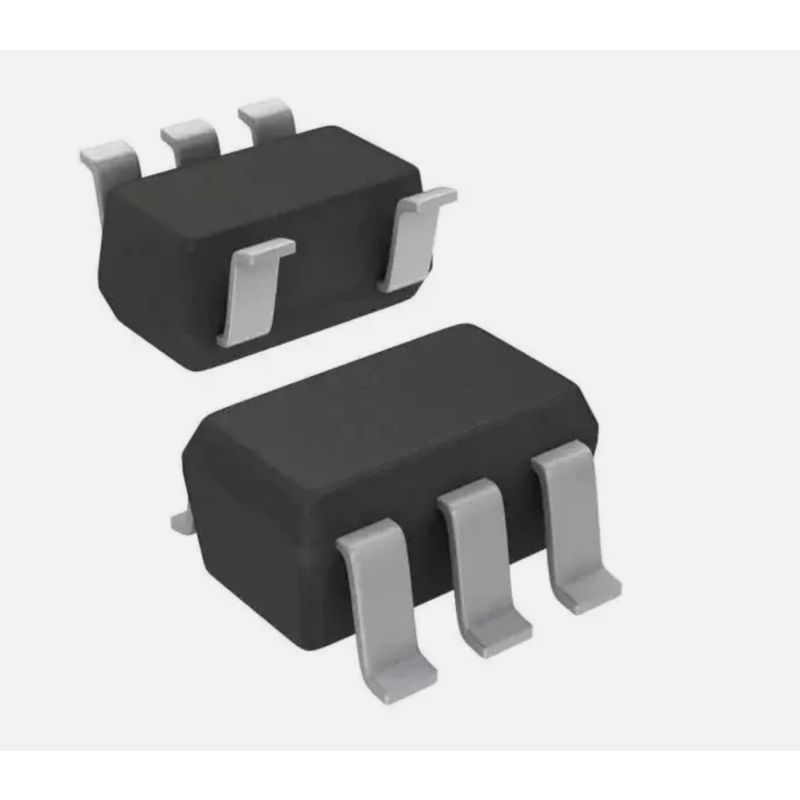


Sanyo 2SD330 NPN Power Transistor TO-220
50 people are viewing this right now
In Stock
SKU
191036700865
£4.75
Safe Checkout, Guaranteed

Safe Checkout, Guaranteed
The QGAH02094 is a specialized inverter transformer meticulously designed for use in Samsung LCD TVs. This critical component plays a pivotal role in powering the backlight system, which is essential for illuminating the LCD panel and producing a clear, vibrant picture. Engineered to meet the precise specifications of Samsung LCD TVs, the QGAH02094 ensures optimal performance, reliability, and compatibility. The inverter transformer's primary function is to convert the low-voltage DC power from the TV's power supply into the high-voltage AC power required to drive the cold cathode fluorescent lamps (CCFLs) or LED backlights. This conversion process is crucial for generating the intense light needed to illuminate the LCD panel effectively. The QGAH02094 is designed to deliver a stable and consistent high-voltage output, ensuring uniform brightness across the entire screen.
This is essential for providing a comfortable viewing experience and preventing flickering or dimming issues. Its precise design minimizes electromagnetic interference (EMI), preventing unwanted noise from affecting other components within the TV. This inverter transformer is built with high-quality materials and undergoes rigorous testing to ensure its durability and longevity. Its robust construction allows it to withstand the demanding operating conditions within an LCD TV, including high temperatures and voltage fluctuations. The QGAH02094 is specifically designed to match the electrical characteristics of Samsung LCD TVs, ensuring seamless integration and optimal performance. Its precise specifications guarantee compatibility with the TV's backlight system, preventing any issues with brightness, color accuracy, or overall picture quality.
This inverter transformer is an essential component for repairing or replacing faulty backlight systems in Samsung LCD TVs. Its reliable performance and precise specifications make it a preferred choice for technicians and repair professionals. Whether you are repairing a damaged LCD TV or upgrading its backlight system, the QGAH02094 inverter transformer provides the performance and reliability you need. Its precise design, robust construction, and seamless compatibility make it an indispensable component for any Samsung LCD TV repair. Invest in the QGAH02094 today and restore the vibrant picture quality of your Samsung LCD TV. Experience the difference that a high-quality inverter transformer can make.
Order now and bring your TV back to life. Don't compromise on quality – choose the QGAH02094 for superior performance and reliability. Upgrade your TV today and experience the difference that a quality inverter transformer can make. Secure your QGAH02094 now and ensure the long-lasting performance of your Samsung LCD TV's backlight system. Ensure bright, clear, and consistent picture quality with this essential component.
| Product Name | Sanyo 2SD330 NPN Power Transistor TO-220 |
|---|---|
| SKU | 191036700865 |
| Price | £4.75 |
| Sanyo 2SD330 NPN Power Transistor TO-220 Color | As per image |
| Category | Transistors |
| Brand | Nikko Electronics ltd |
| Product Code | 191036700865 |
| Availability | Yes |
Shipping cost is based on order value. Just add products to your cart and use the Shipping Calculator to see the shipping price. We want you to be 100% satisfied with your purchase. Items can be returned or exchanged within 30 days of delivery.
The Sanyo 2SD330 NPN Power Transistor TO-220 is characterized by several key electrical specifications critical for circuit design. Typically, these include a high collector-emitter voltage (Vceo) rating, often in the range of 60V to 80V, making it suitable for applications requiring moderate voltage handling. Its collector current (Ic) capacity is generally around 3A to 5A, indicating its capability to drive significant loads. The power dissipation (Ptot) in the TO-220 package, when properly heatsinked, can be substantial, often 30W to 50W, allowing it to handle considerable power. These specifications collectively position the Sanyo 2SD330 as a robust component ideal for power switching, voltage regulation, and amplifier stages where reliable current and power handling are essential. Always refer to the specific datasheet for precise values to ensure compatibility and safe operation within your design.
The Sanyo 2SD330 NPN Power Transistor TO-220 is widely utilized in various power electronics applications due to its robust characteristics and TO-220 package, which facilitates efficient heat dissipation. Common applications include power supply circuits, specifically in voltage regulation and DC-DC converters, where its switching capabilities and current handling are advantageous. It's also frequently found in audio amplifier output stages as a general-purpose power amplifier, delivering sufficient power for driving speakers. Motor control circuits for small to medium DC motors benefit from its ability to switch moderate currents. Additionally, it serves well in general-purpose power switching applications, such as driving relays, solenoids, or high-power LEDs. Its combination of moderate voltage/current ratings and a readily available package makes the Sanyo 2SD330 a versatile and cost-effective choice for many electronic designs requiring reliable power management.
Effective thermal management is crucial for the Sanyo 2SD330 NPN Power Transistor TO-220, especially given its power handling capabilities. The TO-220 package is designed for heat sinking, so attaching an appropriately sized heatsink is the primary recommendation. The heatsink should have a thermal resistance low enough to keep the junction temperature below its maximum rating, typically 150°C. Using thermal paste or a thermal pad between the transistor's metal tab and the heatsink significantly improves thermal conductivity. Ensure good airflow around the heatsink, and consider forced air cooling (fans) for high-power applications. Mounting torque for the screw should be sufficient to ensure good contact without damaging the package. Proper thermal management prevents thermal runaway, reduces performance degradation, and extends the operational lifespan of the Sanyo 2SD330, maintaining its reliability in demanding circuits.
The Sanyo 2SD330 NPN Power Transistor TO-220 is primarily designed as a general-purpose power transistor with characteristics optimized for moderate frequency switching and power amplification. While it can perform switching functions, its switching speed (rise and fall times) and storage time are typically in the order of microseconds. This makes it suitable for switching applications up to tens or a few hundreds of kilohertz, such as in linear power supplies, DC-DC converters, or motor control circuits where switching losses are acceptable. However, for high-frequency applications (megahertz range) like RF amplifiers or very fast SMPS designs, dedicated high-frequency switching transistors (like MOSFETs or specialized BJTs) with much faster switching times and lower parasitic capacitances would be more appropriate. The Sanyo 2SD330 excels in audio frequency applications, providing stable amplification and power output for speaker drivers.
Finding suitable equivalent or replacement parts for the Sanyo 2SD330 NPN Power Transistor TO-220 often involves matching its key electrical parameters: Vceo (collector-emitter voltage), Ic (collector current), Ptot (total power dissipation), and hFE (DC current gain). Common equivalents might include other general-purpose NPN power transistors in a TO-220 package from manufacturers like STMicroelectronics, ON Semiconductor, or Toshiba. Examples could be transistors from the 2N series (e.g., 2N3055 if higher power is needed, or similar 2SD series parts from other brands like 2SD882 if current is lower), or specific parts like the BD139/BD140 series (though these are often lower power). When selecting an equivalent, always check the full datasheet to ensure that all critical parameters, including switching speed, gain linearity, and thermal characteristics, meet or exceed the requirements of the original Sanyo 2SD330 in your specific circuit to maintain performance and reliability.
The typical DC current gain (hFE) of the Sanyo 2SD330 NPN Power Transistor TO-220 is a crucial parameter that indicates the ratio of collector current (Ic) to base current (Ib). For the 2SD330, hFE typically ranges from 40 to 200, though this can vary with collector current and temperature. This characteristic significantly impacts circuit design, particularly in biasing the transistor and determining the required base drive current. A higher hFE means less base current is needed to achieve a desired collector current, simplifying the driver stage. Conversely, a lower hFE would necessitate a larger base current. Designers must account for the variation of hFE across its operating range and temperature, often designing for the worst-case (lowest) hFE to ensure the transistor saturates or amplifies correctly under all conditions. For linear amplifier applications, the linearity of hFE across the operating range is also important for minimizing distortion.
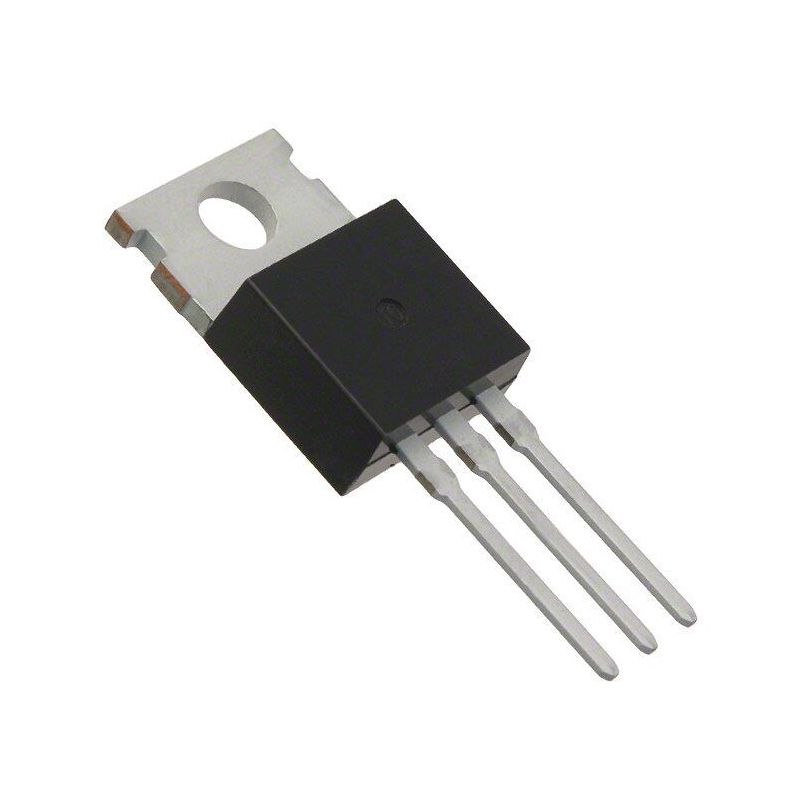
The standard pinout configuration for the Sanyo 2SD330 NPN Power Transistor in a TO-220 package, when viewed from the front with the leads pointing down, is typically Base-Collector-Emitter (B-C-E) from left to right. It's crucial to verify this against the manufacturer's datasheet as pinouts can occasionally vary even within the same package type. The metal tab on the back of the TO-220 package is usually connected to the Collector, which also serves as the primary heat transfer path. For mounting, the TO-220 package is designed for through-hole installation and often requires a screw to attach it to a heatsink. When mounting, ensure that the heatsink compound or thermal pad is correctly applied for optimal heat transfer. If the collector needs to be electrically isolated from the heatsink, an insulating mica washer or silicone pad must be used, ensuring proper electrical isolation while maintaining thermal conductivity. Avoid excessive mechanical stress on the leads during bending or soldering.