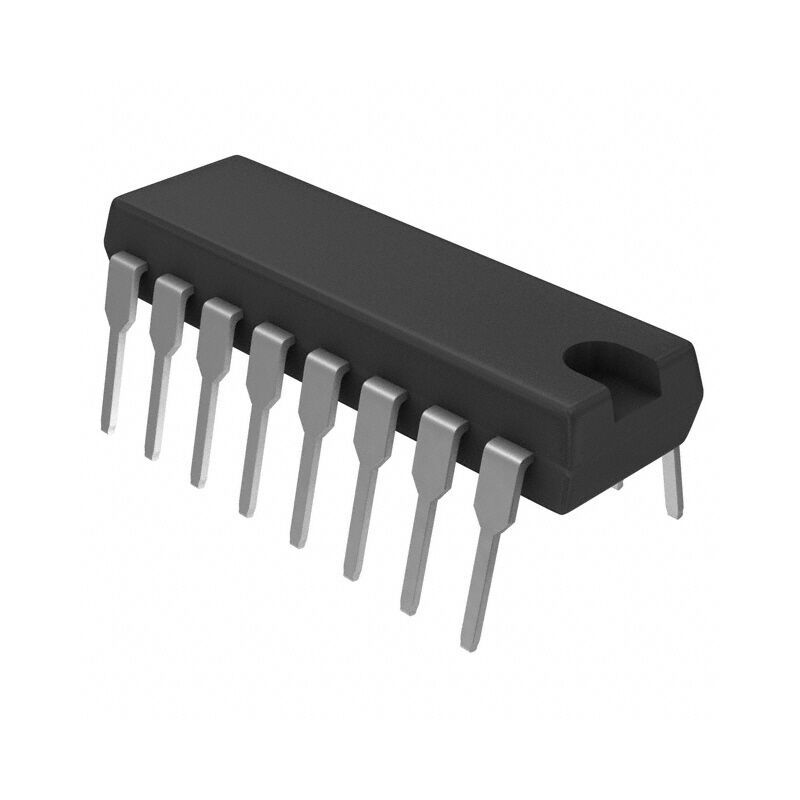


7485 4-Bit Magnitude Comparator IC DIP-16
24 people are viewing this right now
In Stock
SKU
191888043010
£3.99
Safe Checkout, Guaranteed

Safe Checkout, Guaranteed
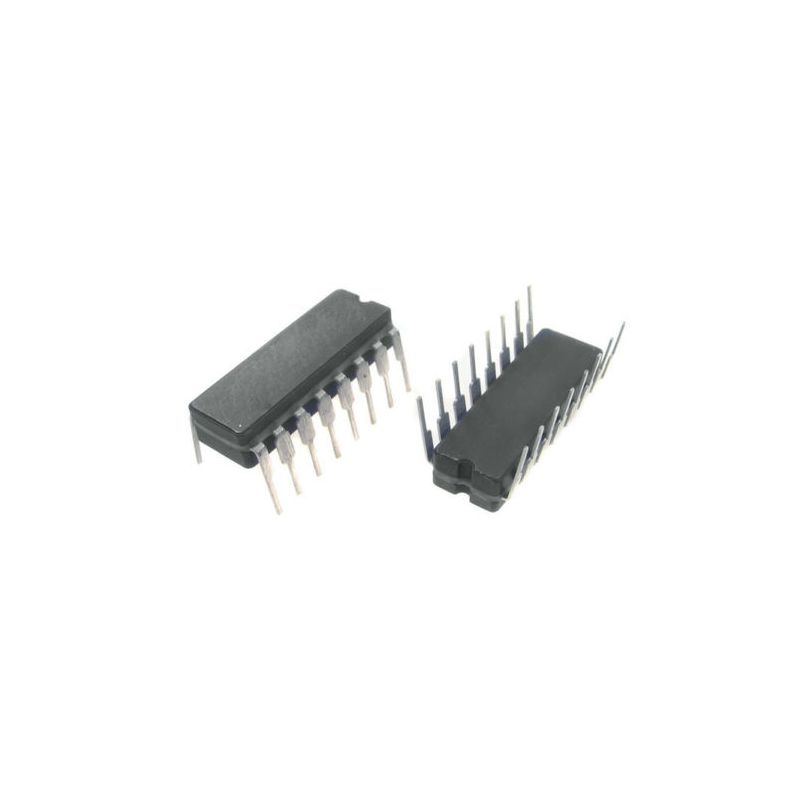
The 7485 Integrated Circuit is a high-speed 4-bit magnitude comparator designed for comparing two 4-bit binary or BCD numbers. Encased in a DIP-16 (Dual In-Line Package with 16 pins), this IC offers a reliable and efficient solution for digital comparison applications. This integrated circuit is specifically engineered to determine whether one 4-bit number is greater than, equal to, or less than another. It is widely used in digital systems for various comparison-based tasks, such as address decoding, data sorting, and control logic. The 7485 features three outputs that indicate the result of the comparison: A>B, A Its fast propagation delay ensures timely comparison results, enabling high-speed operation in demanding applications. Key specifications include a wide operating voltage range, high fan-out capability for driving multiple loads, and TTL compatibility for easy integration with other digital components. The DIP-16 package simplifies soldering and mounting on printed circuit boards (PCBs), simplifying the assembly process. This IC is an ideal choice for repairing or upgrading existing digital systems that require comparison capabilities, such as industrial control systems, computer peripherals, and data acquisition systems. It also serves as a crucial building block for developing new digital logic circuits. Whether you're working on a professional project or a personal electronics endeavor, the 7485 offers the performance and reliability you need. Consider this IC for applications requiring 4-bit magnitude comparison, such as address decoding, priority encoding, and control logic. Optimize your designs with this powerful component to achieve precise comparison results and system stability. The 7485 delivers exceptional value, combining high performance with ease of use and robust construction. Experience the difference that a high-quality magnitude comparator can make. Don't settle for subpar components – invest in the 7485 today and elevate your digital logic designs. Unlock the full potential of your digital projects with this dependable IC. Enhance system accuracy and reliability by incorporating this key component. Integrate this IC into existing control circuits or use it to build new designs. Add the 7485 Integrated Circuit to your cart now and experience the benefits of high-speed 4-bit magnitude comparison. Its reliability and ease of integration make it an indispensable asset for any electronics professional or enthusiast. Order now to take your projects to the next level and ensure optimal performance. Don't miss out on this opportunity to enhance your electronics toolkit. Order your 7485 today and compare quickly and efficiently. Reliable digital comparators for a variety of electronic projects.
| Product Name | 7485 4-Bit Magnitude Comparator IC DIP-16 |
|---|---|
| SKU | 191888043010 |
| Price | £3.99 |
| 7485 4-Bit Magnitude Comparator IC DIP-16 Color | As per image |
| Category | Integrated Circuits |
| Brand | Nikko Electronics ltd |
| Product Code | 191888043010 |
| Availability | Yes |
Shipping cost is based on order value. Just add products to your cart and use the Shipping Calculator to see the shipping price. We want you to be 100% satisfied with your purchase. Items can be returned or exchanged within 30 days of delivery.
The 7485 4-Bit Magnitude Comparator IC DIP-16 is inherently designed for cascading, allowing the comparison of N-bit numbers by connecting multiple units. To achieve this, the cascade inputs (A>B_in, A
The 7485 4-Bit Magnitude Comparator IC DIP-16, being part of the standard TTL (Transistor-Transistor Logic) family, typically operates on a VCC supply voltage of +5V. The acceptable operating range is generally between 4.75V and 5.25V for reliable performance. Regarding current requirements, the quiescent supply current (ICC) for a standard 7485 IC is relatively low, typically in the range of 20-30mA, depending on the specific manufacturer and operating conditions. However, it's crucial to consider the output drive current capabilities. Each output can typically sink around 16mA and source a smaller current (e.g., 400µA). When designing a circuit with the 7485 4-Bit Magnitude Comparator IC DIP-16, ensure your power supply can provide stable +5V and sufficient current to cover the IC's nominal draw plus any load currents connected to its outputs, especially if driving multiple gates.
Yes, the 7485 4-Bit Magnitude Comparator IC DIP-16 is fully compatible with both binary and BCD (Binary-Coded Decimal) inputs. The comparator performs a bit-wise magnitude comparison of the two 4-bit numbers (A and B) applied to its inputs, regardless of whether these bits represent a pure binary value or a BCD digit. For BCD comparison, users simply input the 4-bit BCD representation of each decimal digit. The 7485 4-Bit Magnitude Comparator IC DIP-16 will correctly determine if A is greater than, less than, or equal to B based on the standard binary magnitude comparison. When cascading multiple 7485 units for multi-digit BCD comparison, ensure that the BCD digits are correctly aligned and fed into the respective comparator stages, starting with the least significant digit. This flexibility makes the 7485 a versatile choice for a wide range of digital processing tasks.
The propagation delay is a critical performance parameter for the 7485 4-Bit Magnitude Comparator IC DIP-16, indicating the time required for an input change to propagate to an output. For a standard TTL 7485, typical propagation delays (tPLH and tPHL, from data inputs to outputs) can range from approximately 20ns to 40ns, depending on the specific transition and loading conditions. This delay directly impacts the maximum operating frequency of a digital system. In high-speed applications or synchronous designs, these delays must be factored into timing budgets to prevent race conditions or setup/hold time violations in subsequent logic. When cascading multiple 7485 4-Bit Magnitude Comparator IC DIP-16 units for larger comparisons, the total propagation delay accumulates, which can significantly affect the overall comparison speed. Designers must carefully consider these delays to ensure system stability and meet performance requirements for critical paths.
The 7485 4-Bit Magnitude Comparator IC DIP-16 is a standard TTL device, meaning it is designed for direct compatibility with other TTL components. Its input logic levels and output current capabilities are optimized for TTL environments. When interfacing with CMOS logic, particularly older 5V CMOS (like 4000 series) or modern lower-voltage CMOS (e.g., 3.3V or 1.8V logic), careful consideration is necessary. For TTL driving 5V CMOS, the TTL HIGH output may not meet the minimum HIGH input voltage requirement for some CMOS devices without a pull-up resistor. For CMOS driving TTL, a CMOS output might not be able to sink enough current to pull the TTL input LOW, potentially requiring a buffer or a current-limiting resistor. When interfacing the 7485 4-Bit Magnitude Comparator IC DIP-16 with lower-voltage CMOS, level shifters or voltage translators are typically required to ensure proper signal integrity and prevent damage due to voltage mismatches.
The 7485 4-Bit Magnitude Comparator IC DIP-16 features a comprehensive set of pins for its comparison function. It includes eight data inputs: A0, A1, A2, A3 for the first 4-bit number, and B0, B1, B2, B3 for the second 4-bit number. A0 and B0 typically represent the least significant bits. Additionally, there are three cascade inputs: A=B_in, A
The 7485 4-Bit Magnitude Comparator IC DIP-16 is a foundational component in various digital system applications due to its efficient comparison capabilities. It is widely used in address decoding within microprocessors and memory systems, where it compares a generated address with a predefined range to enable specific memory banks or peripherals. Data sorting and processing systems leverage the 7485 4-Bit Magnitude Comparator IC DIP-16 for ordering data sequences or filtering data based on magnitude. In control logic, it's essential for implementing conditional operations, such as setting alarm thresholds, determining priority in arbitration schemes, or controlling sequential operations based on numerical comparisons. Other applications include status monitoring, digital instrumentation, and building blocks for more complex arithmetic logic units (ALUs) where greater-than, less-than, or equality checks are fundamental operations. Its reliability and standard DIP-16 package make it a popular choice for both prototyping and production.