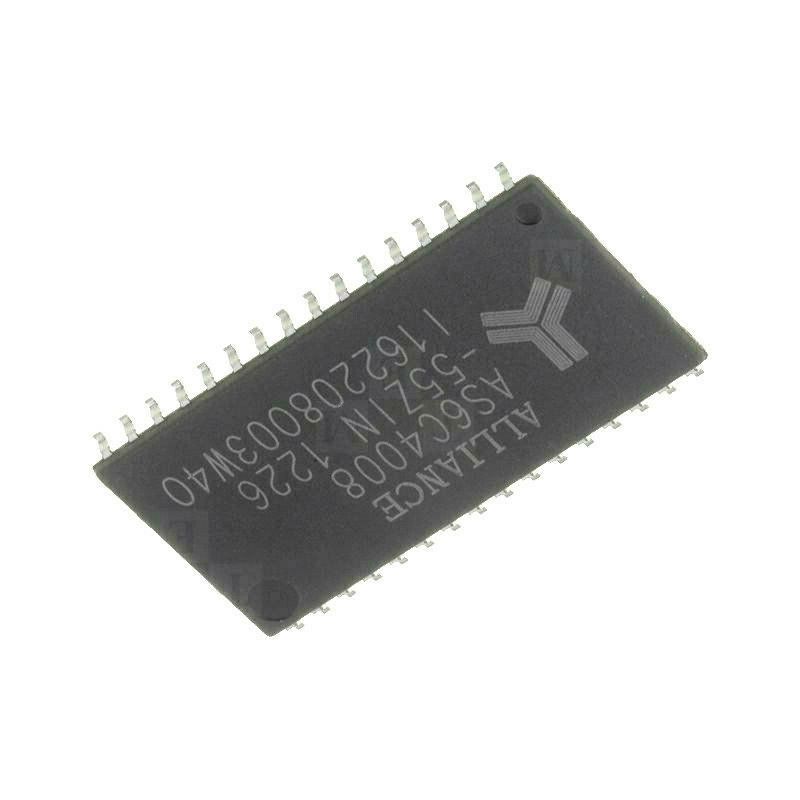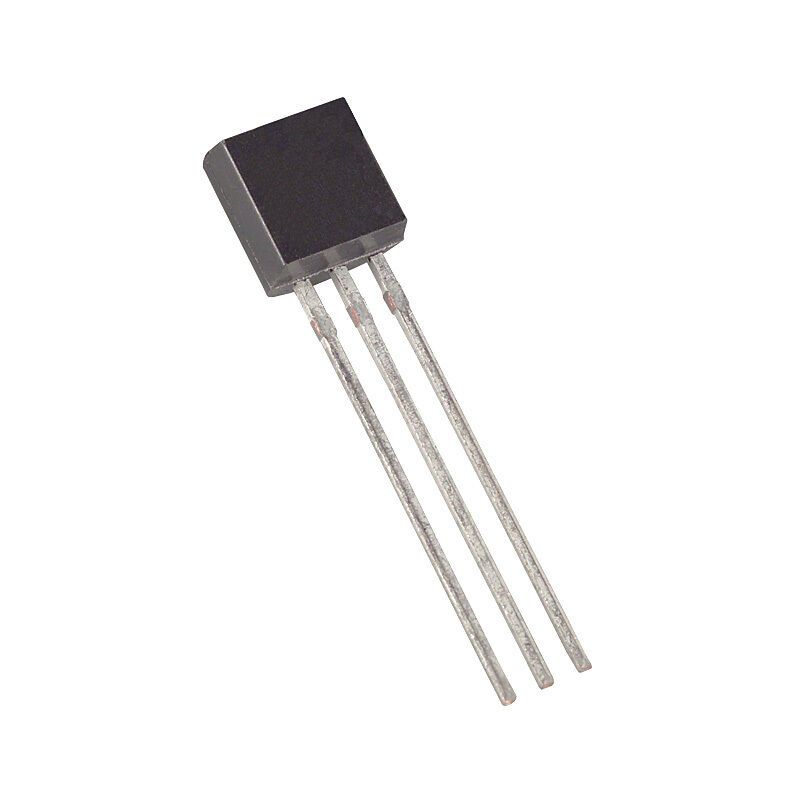


74HC4053D Triple 2-Channel Analog Multiplexer/Demultiplexer IC (16-SOIC)
40 people are viewing this right now
In Stock
SKU
191883977113
£1.94
Safe Checkout, Guaranteed

Safe Checkout, Guaranteed
The 74HC4053D is a versatile and widely used integrated circuit featuring a triple 2-channel analog multiplexer/demultiplexer. This IC is housed in a compact 16-SOIC (Small Outline Integrated Circuit) package and comes in a lot of two, providing you with redundancy or allowing for multiple circuit implementations. The 74HC4053D is designed to switch analog or digital signals based on a select input, making it ideal for signal routing, data acquisition, and audio signal processing applications. Its low on-resistance and fast switching speeds ensure minimal signal distortion and efficient signal transmission. The 74HC4053D operates with a wide supply voltage range, making it compatible with various logic families. Its low power consumption contributes to energy efficiency, which is crucial in battery-powered devices.
The 16-SOIC package allows for easy surface mounting, simplifying the assembly process and improving overall circuit density. This IC is particularly well-suited for applications requiring multiple signal selections or routing. Its triple multiplexer/demultiplexer configuration allows for simultaneous switching of three independent signals, increasing system efficiency. Typical applications for the 74HC4053D include audio mixers, signal selectors, data multiplexing, and analog signal processing. Its robustness and reliability make it a dependable component in both industrial and consumer electronics. Understanding the pinout and logic table of the 74HC4053D is essential for correct implementation.
Each multiplexer/demultiplexer section has its own select input, allowing for independent control of each channel. The enable input controls the overall operation of the IC, allowing for easy signal gating. The 74HC4053D's superior performance characteristics, combined with its compact size, make it an excellent choice for modern electronic designs. Its low on-resistance and fast switching speeds minimize signal loss and improve overall circuit performance. The IC's low power consumption makes it ideal for battery-powered applications. Furthermore, the 74HC4053D exhibits excellent linearity and low distortion, making it suitable for high-fidelity audio signal processing.
Its robust design and wide operating voltage range ensure stable performance even under varying conditions. If you are seeking a versatile and reliable analog multiplexer/demultiplexer for your signal routing applications, the 74HC4053D is an outstanding option. Its combination of triple multiplexer/demultiplexer configuration, low on-resistance, and compact 16-SOIC package make it a top choice for modern electronic designs. Enhance your circuits today with the 74HC4053D IC. Order now and experience the difference in performance and efficiency. Its superior specifications and compact form factor will ensure your circuits operate at their best.
Click here to purchase and elevate your electronic designs to new heights. With two ICs included, you'll have the flexibility to implement multiple designs or keep a spare for future projects. Don't miss out on the opportunity to optimize your circuits with this exceptional IC. Get yours today!
| Product Name | 74HC4053D Triple 2-Channel Analog Multiplexer/Demultiplexer IC (16-SOIC) |
|---|---|
| SKU | 191883977113 |
| Price | £1.94 |
| 74HC4053D Triple 2-Channel Analog Multiplexer/Demultiplexer IC (16-SOIC) Color | As per image |
| Category | Integrated Circuits |
| Brand | Nikko Electronics ltd |
| Product Code | 191883977113 |
| Availability | Yes |
Shipping cost is based on order value. Just add products to your cart and use the Shipping Calculator to see the shipping price. We want you to be 100% satisfied with your purchase. Items can be returned or exchanged within 30 days of delivery.
The 74HC4053D Triple 2-Channel Analog Multiplexer/Demultiplexer IC (16-SOIC) is highly versatile because it supports both single and dual power supply configurations. When your application involves bipolar analog signals (signals that swing above and below ground, such as audio), you can utilize the VEE pin. By connecting VCC to a positive voltage (typically 2V to 10V) and VEE to a negative voltage (up to -5V), the 74HC4053D can switch signals across a wide range without clipping. The total voltage difference between VCC and VEE should not exceed 10V for optimal performance. If you are only switching unipolar digital signals or positive-only analog signals, VEE can simply be tied to GND. This flexibility makes the 74HC4053D Triple 2-Channel Analog Multiplexer/Demultiplexer IC (16-SOIC) an excellent choice for operational amplifier circuits where dual-rail supplies are common. Always ensure that the control logic levels at the select pins are referenced to GND and VCC, regardless of the VEE potential, to maintain reliable switching logic.
In precision audio and analog signal routing, on-resistance (Ron) is a critical parameter. The 74HC4053D Triple 2-Channel Analog Multiplexer/Demultiplexer IC (16-SOIC) features a relatively low and consistent on-resistance across its operating voltage range. Typically, at a VCC of 4.5V, the Ron is approximately 80 to 120 ohms. While this is low for a CMOS switch, it is important to consider the load impedance it is driving. To minimize signal attenuation and maintain high linearity, the 74HC4053D Triple 2-Channel Analog Multiplexer/Demultiplexer IC (16-SOIC) should ideally drive high-impedance loads, such as the non-inverting input of an op-amp. Furthermore, the Ron flatness—the variation of resistance as the input signal voltage changes—is optimized in the 74HC4053D to reduce Total Harmonic Distortion (THD). This ensures that the audio signal remains clean and transparent, making this IC a staple in professional audio switching matrices and signal conditioning stages where maintaining the original waveform's fidelity is paramount.
Yes, the 74HC4053D Triple 2-Channel Analog Multiplexer/Demultiplexer IC (16-SOIC) is designed with internal circuitry that ensures 'break-before-make' (BBM) operation. This is a vital safety and performance feature in multiplexers. It guarantees that during a channel transition, the currently active switch is completely disconnected before the next switch is engaged. Without BBM functionality, two different input signal sources could be momentarily shorted together, potentially causing signal contention, transient spikes, or even damage to sensitive upstream drivers. The 74HC4053D Triple 2-Channel Analog Multiplexer/Demultiplexer IC (16-SOIC) implements a small propagation delay between the turn-off of one path and the turn-on of the other. This inherent timing margin protects your circuit’s integrity during high-speed switching operations. Engineers frequently specify the 74HC4053D for data acquisition systems and gain-ranging circuits specifically because this BBM architecture prevents unwanted charge injection or momentary loading of the signal source during the transition phase.
Compatibility between the 74HC4053D Triple 2-Channel Analog Multiplexer/Demultiplexer IC (16-SOIC) and low-voltage microcontrollers depends on the supply voltage (VCC) of the IC. When the 74HC4053D is powered at a VCC of 5V, the typical high-level input voltage (VIH) threshold is approximately 3.15V to 3.5V. This means a standard 3.3V CMOS output from a microcontroller might be on the edge of the logic-high threshold, potentially leading to unreliable switching or increased power consumption due to the input stages operating in the linear region. For robust industrial or commercial designs, if you are using a 3.3V MCU to control a 74HC4053D Triple 2-Channel Analog Multiplexer/Demultiplexer IC (16-SOIC) running at 5V, it is recommended to use a level shifter or choose the HCT version (74HCT4053) which has TTL-compatible inputs. Alternatively, if your analog signal range allows, running the 74HC4053D at 3.3V VCC will ensure direct logic compatibility with your 3.3V MCU pins without any additional components.
The 74HC4053D Triple 2-Channel Analog Multiplexer/Demultiplexer IC (16-SOIC) is capable of handling high-frequency signals, typically offering a -3dB bandwidth of around 180 MHz to 200 MHz depending on the specific manufacturer's silicon and the circuit load. This high bandwidth makes the 74HC4053D Triple 2-Channel Analog Multiplexer/Demultiplexer IC (16-SOIC) suitable for more than just audio; it can effectively route composite video signals, low-speed communication lines, and high-speed sensor data. However, at these high frequencies, parasitic capacitance (both pin-to-pin and switch-to-ground) becomes a significant factor. You must pay close attention to PCB layout, keeping traces short and using ground planes to minimize crosstalk between the three independent channels. While it is excellent for wideband analog switching, always verify the 'off-isolation' and 'crosstalk' specifications in the datasheet if you are working near the upper frequency limits to ensure that the signal from an inactive channel does not leak into the active signal path.
The 16-SOIC (Small Outline Integrated Circuit) package of the 74HC4053D Triple 2-Channel Analog Multiplexer/Demultiplexer IC (16-SOIC) offers a perfect balance between space efficiency and ease of assembly. Compared to older DIP packages, the SOIC footprint significantly reduces the required board real estate, which is crucial for modern, compact electronic devices. The 1.27mm lead pitch of the 74HC4053D Triple 2-Channel Analog Multiplexer/Demultiplexer IC (16-SOIC) is large enough to be easily handled by standard pick-and-place machines and can even be hand-soldered by experienced technicians during prototyping. Furthermore, the surface-mount design provides better thermal performance and lower lead inductance compared to through-hole equivalents, which contributes to the IC's high-frequency capabilities. Since this product comes in a lot of two, the 16-SOIC package allows you to implement redundant signal paths or multi-channel switching arrays in a very small area, making it ideal for dense data acquisition modules and portable instrumentation.
Absolutely. While often categorized as an analog switch, the 74HC4053D Triple 2-Channel Analog Multiplexer/Demultiplexer IC (16-SOIC) is an excellent bidirectional digital signal router. Because it uses CMOS transmission gates, it can pass digital logic levels from rail to rail (GND to VCC) with negligible delay. The propagation delay through the switch is typically less than a few nanoseconds, which is often much faster than the logic gates themselves. This makes the 74HC4053D Triple 2-Channel Analog Multiplexer/Demultiplexer IC (16-SOIC) ideal for multiplexing SPI, I2C (with careful consideration of pull-ups), or UART lines between different peripherals and a single MCU port. Since the device is bidirectional, it can act as both a multiplexer (selecting one of two inputs for one output) and a demultiplexer (directing one input to one of two outputs). The 'Triple' nature of the 74HC4053D means you can switch three independent lines simultaneously using three separate select signals, providing immense flexibility for complex bus management in digital systems.