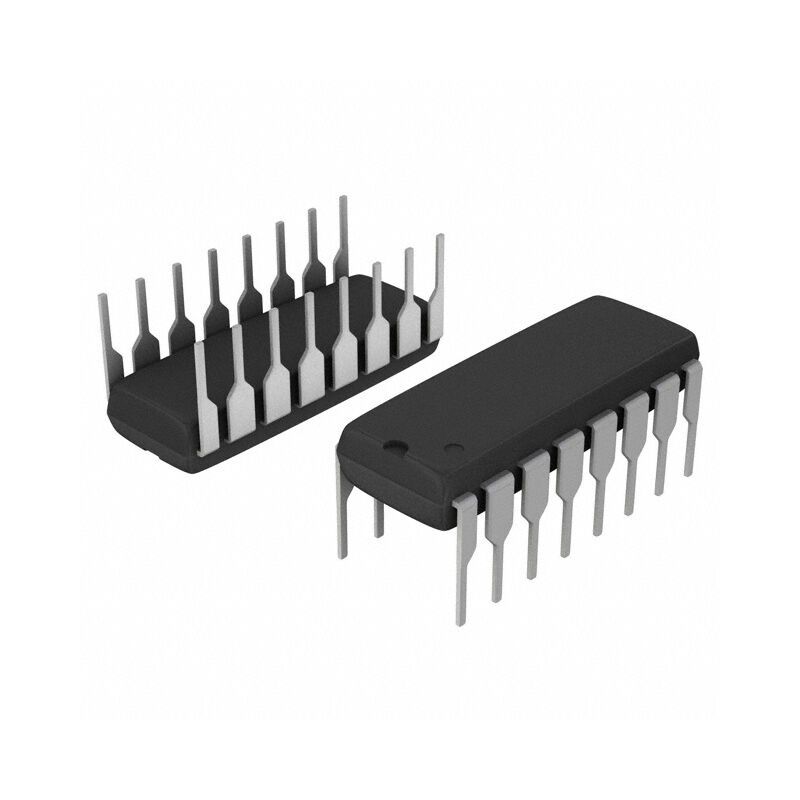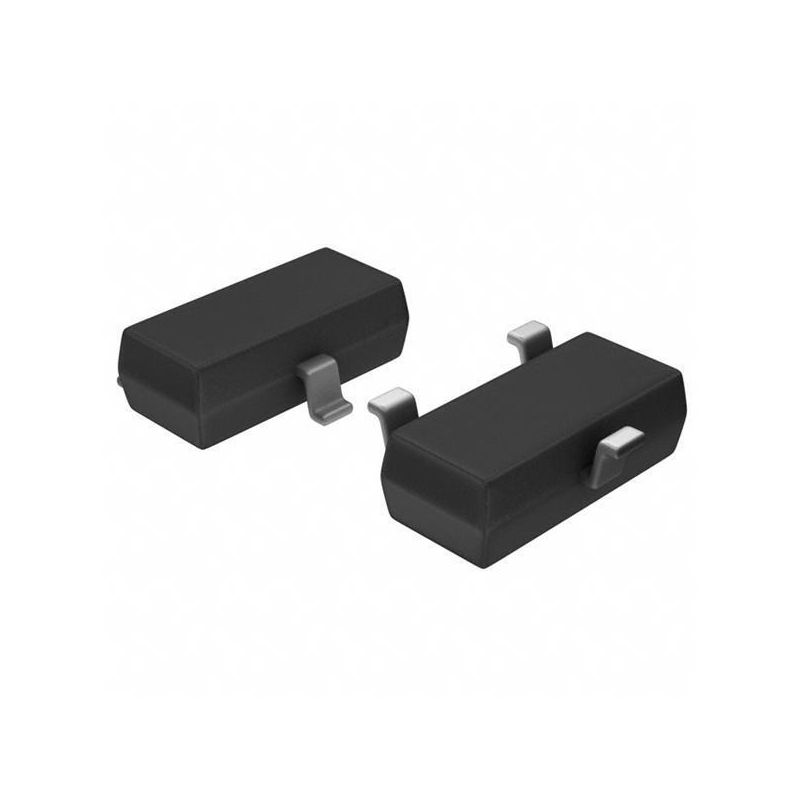


74HCT126 Quad Buffer with 3-State Outputs DIP-14 IC
35 people are viewing this right now
In Stock
SKU
191777985499
£2.47
Safe Checkout, Guaranteed

Safe Checkout, Guaranteed
The 74HCT126 Integrated Circuit, housed in a DIP-14 (Dual In-line Package with 14 pins), is a high-speed CMOS quad buffer/line driver with 3-state outputs. This IC provides four independent buffer circuits, each with its own enable input, making it incredibly versatile for a wide range of digital logic applications. Its 3-state outputs allow for connection to common buses, enabling multiple devices to share the same communication lines without contention. The DIP-14 package makes it easy to prototype and breadboard circuits, making it a popular choice for hobbyists, students, and professional engineers alike. Its robust design ensures reliable performance and compatibility with a variety of digital logic families. The 74HCT126 is commonly used as a buffer to increase the drive capability of digital signals, allowing them to drive longer lines or a larger number of devices.
It can also be used as a line driver to transmit signals over long distances. The 3-state outputs allow it to be used in bus systems, where multiple devices share the same communication lines. When a buffer is enabled, it passes the input signal to the output. When the buffer is disabled, the output is in a high-impedance state, effectively disconnecting it from the bus. The HCT designation indicates that it has TTL-compatible input thresholds, meaning it can be easily interfaced with TTL logic circuits. This makes it a drop-in replacement for older TTL devices in many applications.
This IC is a fundamental building block in many digital systems, from simple logic gates to complex microcomputer interfaces. It is suitable for a broad range of operating voltages, offering flexibility in system design. The low power consumption of the 74HCT126 makes it suitable for battery-powered applications. Detailed datasheets provide complete specifications for the 74HCT126, including its electrical characteristics, timing diagrams, and application notes. These resources enable designers to effectively utilize the IC's features and optimize its performance. The 74HCT126 can be used to implement address decoding circuits, memory interfaces, and data bus transceivers.
Its speed and versatility make it a valuable addition to any digital designer's toolbox. This IC is an industry standard for a reason. Ensure your digital signals are strong and clear. Add the 74HCT126 to your cart now and unleash the power of reliable signal buffering and driving in your electronic circuits!
| Product Name | 74HCT126 Quad Buffer with 3-State Outputs DIP-14 IC |
|---|---|
| SKU | 191777985499 |
| Price | £2.47 |
| 74HCT126 Quad Buffer with 3-State Outputs DIP-14 IC Color | As per image |
| Category | Integrated Circuits |
| Brand | Nikko Electronics ltd |
| Product Code | 191777985499 |
| Availability | Yes |
Shipping cost is based on order value. Just add products to your cart and use the Shipping Calculator to see the shipping price. We want you to be 100% satisfied with your purchase. Items can be returned or exchanged within 30 days of delivery.
The primary difference lies in the input logic level compatibility. The 'T' in the 74HCT126 Quad Buffer with 3-State Outputs DIP-14 IC signifies that the inputs are TTL (Transistor-Transistor Logic) compatible. While a standard 74HC series IC requires CMOS logic levels (where a logic 'high' is typically 70% of VCC), the 74HCT126 is designed to recognize a logic 'high' at just 2.0V, even when the chip is powered by a 5V supply. This makes the 74HCT126 Quad Buffer with 3-State Outputs DIP-14 IC an essential component for interfacing legacy TTL components or modern 3.3V microcontrollers with 5V CMOS systems. By using this specific IC, engineers can bridge different logic families without needing complex level-shifting circuitry. Additionally, while the input thresholds differ, the output of the 74HCT126 remains full CMOS, ensuring high noise immunity and rail-to-rail voltage swings when driving subsequent CMOS stages in your digital circuit design.
The 74HCT126 Quad Buffer with 3-State Outputs DIP-14 IC features four independent buffers, each controlled by an active-high Output Enable (OE) pin. This is a critical distinction from the 74HCT125, which uses active-low enables. When the OE pin for a specific gate on the 74HCT126 Quad Buffer with 3-State Outputs DIP-14 IC is pulled to a logic high state, the buffer is active, and the logic level at the input is passed directly to the output. Conversely, when the OE pin is pulled low, the output enters a high-impedance state, effectively disconnecting it from the bus. This '3-state' or 'tri-state' capability is vital for bus-oriented architectures where multiple devices need to share a single communication line. By ensuring only one OE pin is high at any given time, the 74HCT126 Quad Buffer with 3-State Outputs DIP-14 IC prevents bus contention, which could otherwise lead to excessive current draw, signal distortion, or permanent damage to the integrated circuits involved.
Yes, the 74HCT126 Quad Buffer with 3-State Outputs DIP-14 IC is frequently utilized as a unidirectional level shifter to step up signals from 3.3V logic to 5V logic. Because the 74HCT126 Quad Buffer with 3-State Outputs DIP-14 IC has TTL-compatible inputs, its minimum high-level input voltage (VIH) is typically 2.0V. Since a 3.3V microcontroller outputs approximately 3.3V for a logic high, it easily clears the 2.0V threshold of the 74HCT126. When the IC is powered at 5V, it will output a full 5V CMOS signal, successfully translating the lower voltage signal to a higher voltage standard. However, it is important to note that the 74HCT126 Quad Buffer with 3-State Outputs DIP-14 IC cannot be used to shift 5V signals down to 3.3V directly, as the input protection diodes would clamp the signal and potentially damage the source or the buffer. For down-shifting, a different series like the 74LVC or a simple voltage divider is usually recommended alongside this IC.
The 74HCT126 Quad Buffer with 3-State Outputs DIP-14 IC is designed as a line driver, meaning it possesses a higher current sourcing and sinking capability compared to standard logic gates. Typically, the 74HCT126 Quad Buffer with 3-State Outputs DIP-14 IC can source or sink approximately 6mA per channel at a 4.5V supply while maintaining valid logic levels. This robust drive capability allows it to drive longer PCB traces, handle higher capacitive loads, or even drive small LEDs directly without the need for additional transistors. When designing with the 74HCT126 Quad Buffer with 3-State Outputs DIP-14 IC, it is crucial to stay within the total package power dissipation limits. Exceeding the rated output current per pin or the total supply current (typically around 50mA to 70mA for the whole package) can lead to overheating and reduced reliability. For high-speed applications, remember that increasing the capacitive load on the output will also increase the propagation delay and signal rise/fall times.
To ensure reliable performance and minimize switching noise, proper decoupling is essential when using the 74HCT126 Quad Buffer with 3-State Outputs DIP-14 IC. Like most high-speed CMOS devices, the 74HCT126 Quad Buffer with 3-State Outputs DIP-14 IC can generate significant current spikes on the power supply line during output transitions, especially when driving capacitive loads or multiple outputs simultaneously. It is highly recommended to place a 0.1µF ceramic capacitor as close as possible to the VCC pin (Pin 14) and the GND pin (Pin 7) of the 74HCT126 Quad Buffer with 3-State Outputs DIP-14 IC. This capacitor acts as a local energy reservoir, smoothing out voltage fluctuations and preventing transient noise from affecting other sensitive components on the board. In circuits where multiple 74HCT126 Quad Buffer with 3-State Outputs DIP-14 ICs are used, or where the IC is driving long lines, adding a larger 10µF electrolytic or tantalum capacitor at the board's power entry point provides additional stability against lower-frequency power supply variations.
Propagation delay is a critical parameter for the 74HCT126 Quad Buffer with 3-State Outputs DIP-14 IC, representing the time it takes for an input change to reflect at the output. For the 74HCT126 Quad Buffer with 3-State Outputs DIP-14 IC, the typical propagation delay (tPD) is approximately 15 to 30 nanoseconds when operating at a 4.5V supply, depending on the specific manufacturer and the output load. In high-frequency designs or synchronous digital systems, this delay must be accounted for to prevent timing violations or race conditions. Furthermore, the 'enable' and 'disable' times (the time it takes for the output to enter or leave the high-impedance state) are also in a similar nanosecond range. If you are using the 74HCT126 Quad Buffer with 3-State Outputs DIP-14 IC in a system with a clock speed exceeding 20-30MHz, you must carefully calculate the total timing budget, including the setup and hold times of the following stages, to ensure the 74HCT126 Quad Buffer with 3-State Outputs DIP-14 IC keeps pace with the rest of the logic.
The DIP-14 (Dual In-line Package) format of the 74HCT126 Quad Buffer with 3-State Outputs DIP-14 IC is highly favored by engineers and hobbyists due to its physical robustness and ease of handling. Unlike surface-mount (SMD) components, the 74HCT126 Quad Buffer with 3-State Outputs DIP-14 IC can be easily inserted into standard breadboards for rapid prototyping or soldered into perforated boards without specialized equipment. The 2.54mm (0.1 inch) pin spacing makes it compatible with standard IC sockets, allowing for easy replacement in the field if a component fails. This is particularly useful in industrial control systems or educational kits where the 74HCT126 Quad Buffer with 3-State Outputs DIP-14 IC might be subjected to electrical stress or frequent configuration changes. Furthermore, the larger physical size of the DIP-14 package aids in heat dissipation compared to smaller SOT or TSSOP variants, making the 74HCT126 Quad Buffer with 3-State Outputs DIP-14 IC a reliable choice for environments where thermal management is handled through natural convection rather than active cooling.