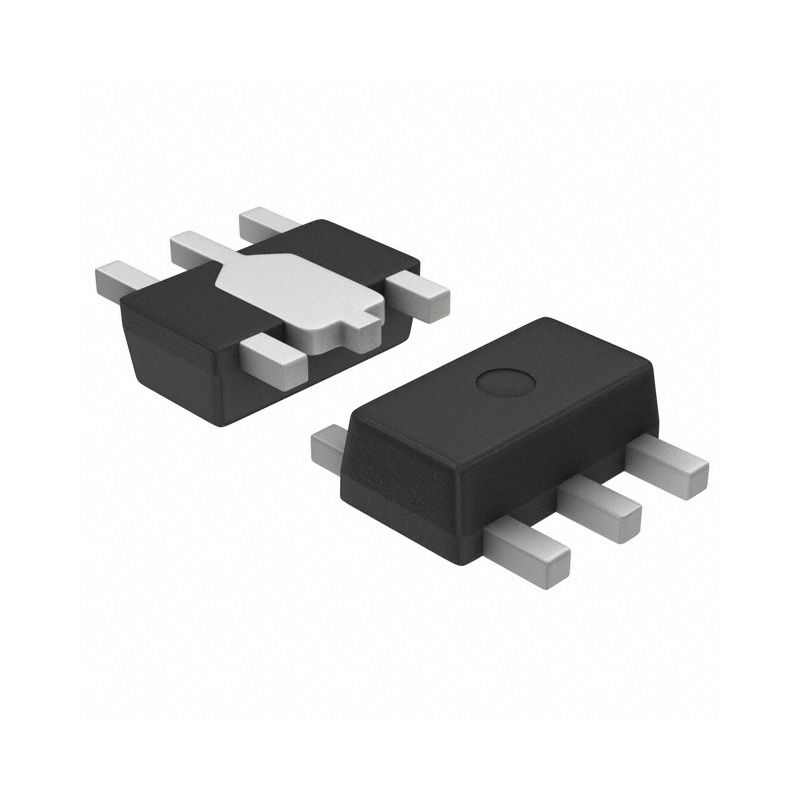


ADS1000A1IDBVT 12-Bit Self-Calibrating I2C Analog-to-Digital Converter
28 people are viewing this right now
In Stock
SKU
191792398767
£5.05
Safe Checkout, Guaranteed

Safe Checkout, Guaranteed
The BTA06-400A TRIAC is a robust and reliable semiconductor device designed for AC power control applications. Encased in a TO-220 package, this TRIAC offers excellent performance and ease of use, making it a popular choice for controlling AC loads in various industrial and consumer applications. The BTA06-400A's primary function is to switch AC power to a load, allowing for precise control of devices such as lights, motors, and heaters. Its ability to switch both positive and negative halves of the AC waveform makes it ideal for applications requiring full-wave control. Key features of the BTA06-400A include its high blocking voltage, which ensures safe operation in high-voltage AC circuits. Its low on-state voltage drop minimizes power dissipation, improving efficiency and reducing heat generation.
The TO-220 package provides excellent thermal conductivity, allowing for efficient heat dissipation and reliable operation at high power levels. This TRIAC finds applications in a variety of AC power control circuits, including light dimmers, motor speed controllers, and temperature controllers. Its robust design and reliable performance make it a preferred choice for applications where safety and accuracy are paramount. The BTA06-400A's ease of use and readily available documentation further contribute to its popularity. Its well-defined pinout and comprehensive specifications make it easy to integrate into existing and new designs. Whether you're designing a light dimmer, building a motor speed controller, or developing a temperature control system, the BTA06-400A TRIAC offers a compelling solution for achieving your design goals.
Its combination of high performance, reliability, and ease of use makes it a valuable asset in any AC power control project. Experience the difference that the BTA06-400A can make in your AC power control designs. Unlock the full potential of your projects with this exceptional TRIAC. Order your BTA06-400A today and take your designs to the next level. Don't compromise on safety and reliability; choose the BTA06-400A and experience the difference.
| Product Name | ADS1000A1IDBVT 12-Bit Self-Calibrating I2C Analog-to-Digital Converter |
|---|---|
| SKU | 191792398767 |
| Price | £5.05 |
| ADS1000A1IDBVT 12-Bit Self-Calibrating I2C Analog-to-Digital Converter Color | As per image |
| Category | Integrated Circuits |
| Brand | Nikko Electronics ltd |
| Product Code | 191792398767 |
| Availability | Yes |
Shipping cost is based on order value. Just add products to your cart and use the Shipping Calculator to see the shipping price. We want you to be 100% satisfied with your purchase. Items can be returned or exchanged within 30 days of delivery.
The ADS1000A1IDBVT 12-Bit Self-Calibrating I2C Analog-to-Digital Converter features a sophisticated on-board self-calibration system designed to eliminate offset and gain errors automatically. In precision industrial environments, thermal drift and component aging can often degrade the accuracy of an ADC. This converter continuously performs self-calibration cycles to ensure that the 12-bit output remains consistent with the input signal regardless of environmental changes. For engineers, this means the ADS1000A1IDBVT 12-Bit Self-Calibrating I2C Analog-to-Digital Converter reduces the need for factory calibration or manual software-based compensation routines. By correcting for these internal inaccuracies in real-time, the device maintains its high-performance specifications across its entire operating temperature range. This makes it an ideal choice for long-term deployments in remote sensing applications where maintenance is difficult. The self-calibration logic is transparent to the user, allowing for seamless integration into high-precision data acquisition systems that require a high degree of reliability and minimal long-term maintenance overhead.
The ADS1000A1IDBVT 12-Bit Self-Calibrating I2C Analog-to-Digital Converter is part of a family where the I2C address is factory-set. Specifically, the 'A1' designation in the ADS1000A1IDBVT 12-Bit Self-Calibrating I2C Analog-to-Digital Converter part number indicates a specific fixed address (typically 1001001). If your design requires multiple ADCs on a single I2C bus, you cannot use multiple 'A1' variants because they will cause address conflicts. Instead, you would need to source other variants like the A0, A2, or A3, each of which has a unique hardcoded address. If you are restricted to using only the ADS1000A1IDBVT 12-Bit Self-Calibrating I2C Analog-to-Digital Converter, you must implement an I2C multiplexer or use a microcontroller with multiple I2C peripherals. Understanding this addressing scheme is critical for hardware designers during the schematic phase to ensure bus scalability. The I2C interface supports standard and fast modes, providing flexibility for various communication speeds while maintaining the 12-bit resolution required for accurate sensor interfacing in complex multi-node systems.
Yes, the ADS1000A1IDBVT 12-Bit Self-Calibrating I2C Analog-to-Digital Converter is designed with a fully differential input stage. This architecture is particularly beneficial in industrial settings where common-mode noise, such as 50/60Hz interference or ground loops, can significantly corrupt single-ended measurements. By measuring the voltage difference between the Vin+ and Vin- pins, the ADS1000A1IDBVT 12-Bit Self-Calibrating I2C Analog-to-Digital Converter effectively cancels out noise that is common to both lines. The differential input range extends from -Vdd to +Vdd, allowing for versatile signal conditioning. However, it is important to note that the absolute voltage on either input pin must remain within the ground to Vdd supply rails. For designers working with bridge sensors or differential pressure transducers, the ADS1000A1IDBVT 12-Bit Self-Calibrating I2C Analog-to-Digital Converter provides a direct, low-noise interface that maximizes signal integrity without the need for complex external instrumentation amplifiers, thereby reducing both PCB footprint and the overall bill of materials (BOM) cost.
The ADS1000A1IDBVT 12-Bit Self-Calibrating I2C Analog-to-Digital Converter operates at a fixed sample rate of 128 samples per second (SPS). This rate is optimized for high-resolution Delta-Sigma conversion rather than high-speed data capture. In practice, the ADS1000A1IDBVT 12-Bit Self-Calibrating I2C Analog-to-Digital Converter is best suited for slowly varying signals, such as temperature monitoring, weight scales, or battery voltage sensing. The Delta-Sigma architecture provides excellent noise shaping and digital filtering, which is highly effective at rejecting high-frequency noise that faster SAR ADCs might alias into the baseband. While the 128 SPS rate is not sufficient for high-fidelity audio or high-speed vibration analysis, it is more than adequate for most process control and environmental monitoring applications. For engineers, the trade-off is clear: you are choosing the ADS1000A1IDBVT 12-Bit Self-Calibrating I2C Analog-to-Digital Converter for its 12-bit precision and stability in DC-like measurements rather than raw throughput. This makes it a robust component for stable, repeatable measurements in precision instrumentation.
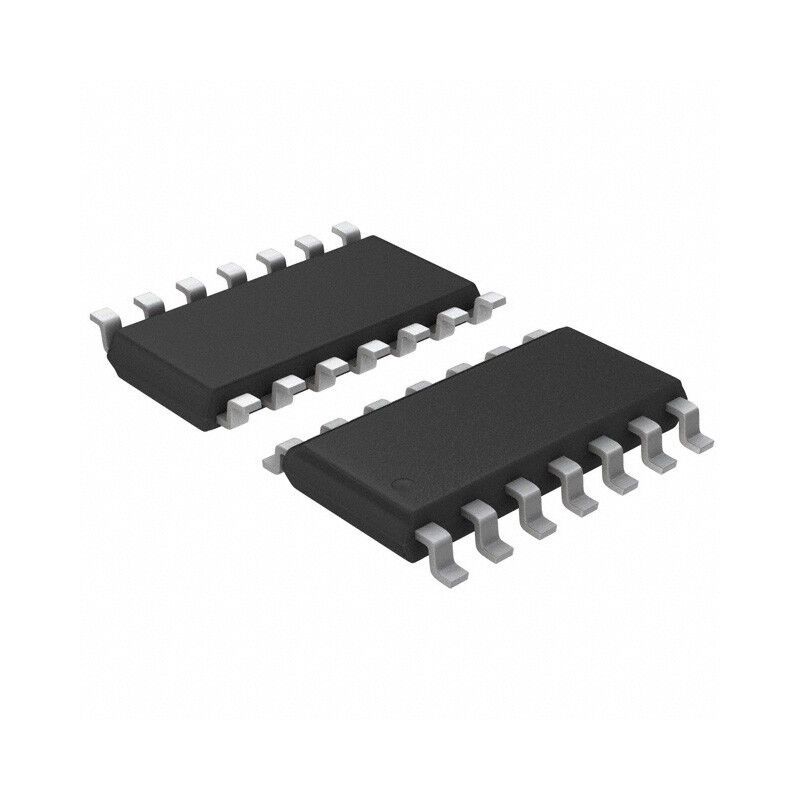
Power efficiency is a standout feature of the ADS1000A1IDBVT 12-Bit Self-Calibrating I2C Analog-to-Digital Converter. Operating from a single 2.7V to 5.5V supply, the device consumes very little current—typically around 250µA during active conversion. For battery-operated IoT devices, the ADS1000A1IDBVT 12-Bit Self-Calibrating I2C Analog-to-Digital Converter is particularly advantageous because it automatically enters a low-power mode between conversions when used in certain configurations. Its small SOT23-6 package also contributes to the miniaturization of portable devices. Since the ADS1000A1IDBVT 12-Bit Self-Calibrating I2C Analog-to-Digital Converter uses the supply voltage as its reference, it eliminates the need for an external, power-hungry voltage reference IC in ratiometric measurement applications. This direct-to-rail measurement capability simplifies the power tree of the design. When combined with its I2C interface, which allows the host MCU to poll the device only when necessary, the ADS1000A1IDBVT 12-Bit Self-Calibrating I2C Analog-to-Digital Converter helps extend the battery life of handheld instruments and remote wireless sensor nodes significantly.
To achieve the full 12-bit performance of the ADS1000A1IDBVT 12-Bit Self-Calibrating I2C Analog-to-Digital Converter, careful PCB layout is essential. Despite its small SOT23-6 footprint, the device is highly sensitive to ground noise. Designers should use a dedicated analog ground plane and place a 0.1µF ceramic bypass capacitor as close as possible to the Vdd pin of the ADS1000A1IDBVT 12-Bit Self-Calibrating I2C Analog-to-Digital Converter. Because the device uses Vdd as its reference, any noise on the power supply will directly translate into measurement errors. It is recommended to use a low-noise LDO to power the ADC. Route the differential input traces (Vin+ and Vin-) symmetrically and close together to maximize common-mode rejection. Keep digital I2C lines (SCL/SDA) away from the analog inputs to prevent capacitive coupling of digital switching noise. Following these high-precision layout techniques ensures that the ADS1000A1IDBVT 12-Bit Self-Calibrating I2C Analog-to-Digital Converter operates at its peak ENOB (Effective Number of Bits), providing the clean, accurate data required for professional-grade electronic systems.
The ADS1000A1IDBVT 12-Bit Self-Calibrating I2C Analog-to-Digital Converter is specifically designed to use its power supply (Vdd) as the reference voltage. This is a significant advantage for ratiometric measurements, such as those involving resistive bridge sensors or potentiometers. In a ratiometric setup, the sensor is excited by the same Vdd that powers the ADC. If the supply voltage fluctuates, both the sensor output and the ADC reference change proportionally, effectively cancelling out the error. This makes the ADS1000A1IDBVT 12-Bit Self-Calibrating I2C Analog-to-Digital Converter extremely cost-effective, as it removes the requirement for a high-precision external reference IC. However, for non-ratiometric applications where you are measuring an absolute voltage, the stability of the supply powering the ADS1000A1IDBVT 12-Bit Self-Calibrating I2C Analog-to-Digital Converter becomes the limiting factor for accuracy. In those cases, using a high-precision, low-drift voltage regulator is mandatory to ensure the 12-bit results are meaningful. This flexibility allows the ADS1000A1IDBVT 12-Bit Self-Calibrating I2C Analog-to-Digital Converter to adapt to various architectural needs, from simple battery monitors to complex industrial strain gauges.