

AM25LS2517PC 4-bit Parallel Access Shift Register DIP-20
22 people are viewing this right now
In Stock
SKU
191888043013
£6.45
Safe Checkout, Guaranteed

Safe Checkout, Guaranteed
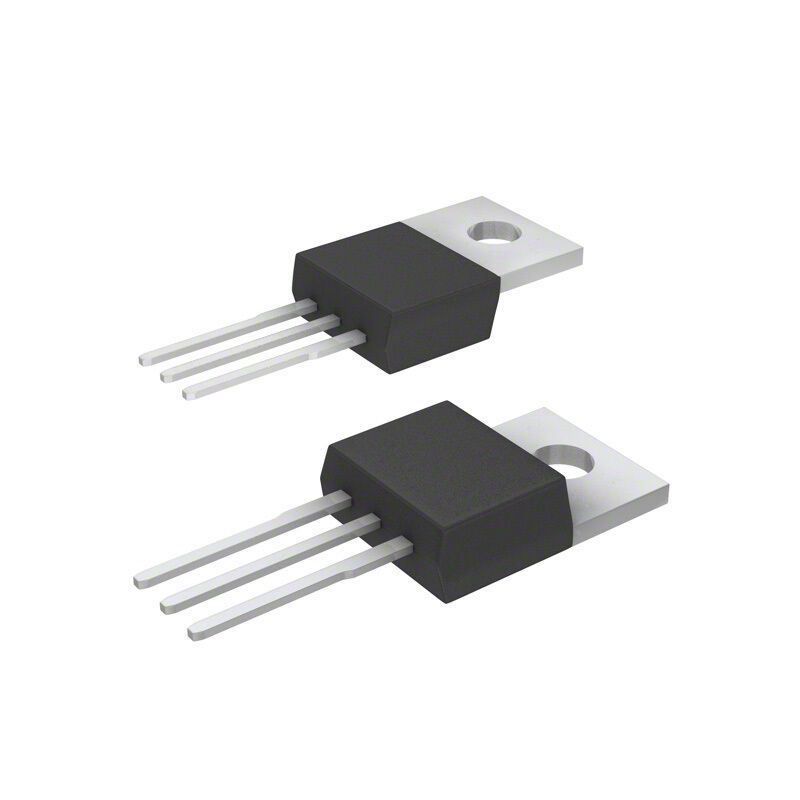
The MTP75N03HDL is a high-performance N-channel MOSFET transistor housed in a TO-220 package, designed for efficient power switching and motor control applications. This transistor features a low on-resistance (RDS(on)) of typically 0.008 ohms, minimizing power losses and improving overall efficiency. With a drain-source voltage rating of 30V and a continuous drain current of up to 75A, the MTP75N03HDL is suitable for a wide range of high-current applications. The TO-220 package provides excellent thermal dissipation, ensuring reliable operation even under demanding conditions. Its fast switching speed allows for high-frequency operation, making it ideal for modern power conversion circuits and motor control systems. This transistor is engineered to deliver consistent and stable performance, ensuring optimal efficiency and reliability in various environments.
The MTP75N03HDL is widely used in DC-DC converters, motor drives, and power management systems. Its ability to handle high currents with minimal losses makes it a preferred choice for engineers seeking a dependable solution for their power electronic designs. Whether you are building a DC-DC converter, designing a motor control circuit, or developing a power management system, the MTP75N03HDL transistor offers the performance and reliability you need. Its robust design, low on-resistance, and fast switching speed make it an essential component in any power electronics toolkit. Explore the possibilities and unlock the potential of your power electronic projects with this high-quality transistor. Benefit from its low on-resistance, high current capability, and excellent thermal dissipation.
The MTP75N03HDL is more than just a transistor; it's a solution for your power switching and motor control needs. Its widespread use in various applications underscores its reliability and efficiency. From DC-DC converters to motor drives, this transistor delivers consistent performance. The TO-220 package ensures easy integration and effective heat management, making it a favorite among both beginners and experienced professionals. Invest in the MTP75N03HDL and experience the difference in your power electronic projects. Don't compromise on efficiency and reliability.
Choose the MTP75N03HDL transistor for superior performance and peace of mind. Add this essential component to your cart today and take your power electronic projects to the next level. Experience the power and efficiency that the MTP75N03HDL offers. Order now and start building your next innovative power solution!
| Product Name | AM25LS2517PC 4-bit Parallel Access Shift Register DIP-20 |
|---|---|
| SKU | 191888043013 |
| Price | £6.45 |
| AM25LS2517PC 4-bit Parallel Access Shift Register DIP-20 Color | As per image |
| Category | Integrated Circuits |
| Brand | Nikko Electronics ltd |
| Product Code | 191888043013 |
| Availability | Yes |
Shipping cost is based on order value. Just add products to your cart and use the Shipping Calculator to see the shipping price. We want you to be 100% satisfied with your purchase. Items can be returned or exchanged within 30 days of delivery.
The AM25LS2517PC 4-bit Parallel Access Shift Register DIP-20 offers versatile data manipulation through several key operational modes, making it a highly functional component for digital systems. Its primary capabilities include parallel loading of 4-bit data, which allows for immediate input of parallel data into the register. Concurrently, it supports synchronous serial shifting, enabling data to be shifted in or out one bit at a time, controlled by a common clock signal. This flexibility facilitates both serial-to-parallel and parallel-to-serial conversions within a single device. The AM25LS2517PC also features a clear input, which asynchronously resets all internal flip-flops, ensuring a known initial state. With its dual clock inputs (Clock 1 and Clock 2) and mode control, users can precisely manage data flow, making the AM25LS2517PC 4-bit Parallel Access Shift Register DIP-20 an essential building block for data buffering, sequence generation, and specialized arithmetic operations in TTL-compatible designs.
The AM25LS2517PC 4-bit Parallel Access Shift Register DIP-20 is designed as a Low-power Schottky (LS) TTL device, ensuring seamless integration into existing transistor-transistor logic (TTL) ecosystems. This means it operates on a standard +5V DC power supply, making it compatible with a vast array of legacy and modern TTL components without requiring level shifters. Its inputs and outputs adhere to TTL voltage levels, simplifying direct connections to other logic gates, microcontrollers, or data buses. Regarding power requirements, as an LS family device, the AM25LS2517PC typically consumes less power than standard TTL counterparts, contributing to more energy-efficient designs. While exact current consumption can vary with operating frequency and load, designers can expect quiescent current in the low milliampere range, with dynamic current increasing proportionally to switching activity. This low power characteristic makes the AM25LS2517PC 4-bit Parallel Access Shift Register DIP-20 an optimal choice for power-conscious digital logic applications requiring robust TTL compatibility.
For high-speed digital applications, understanding the timing characteristics of the AM25LS2517PC 4-bit Parallel Access Shift Register DIP-20 is crucial. As an LS TTL device, it offers a good balance of speed and power consumption. Typical maximum clock frequencies for the AM25LS2517PC can range up to 25-30 MHz, allowing for robust performance in many moderate-to-high speed data processing tasks. However, actual achievable frequency depends on system-level factors like trace capacitance, fan-out, and operating temperature. Propagation delays are also critical; for data paths, delays from clock to output (tPLH/tPHL) are generally in the range of 20-30 nanoseconds. Similarly, delays from control inputs like parallel load or clear to output are within a comparable range. Designers must consider these timing parameters when synchronizing the AM25LS2517PC 4-bit Parallel Access Shift Register DIP-20 with other high-speed components to avoid race conditions or data corruption, ensuring stable and reliable operation across the entire system.
Absolutely, one of the significant advantages and primary use cases of the AM25LS2517PC 4-bit Parallel Access Shift Register DIP-20 is its inherent capability for bidirectional data conversion – specifically, both serial-to-parallel and parallel-to-serial operations. For serial-to-parallel conversion, data bits are clocked into the serial input (Data In) one by one, and after four clock cycles, the complete 4-bit word becomes available simultaneously at the parallel outputs (Q0-Q3). Conversely, for parallel-to-serial conversion, a 4-bit parallel word is first loaded into the register using the parallel load control, and then, with subsequent clock pulses, the data can be shifted out serially from the designated serial output. This dual functionality makes the AM25LS2517PC 4-bit Parallel Access Shift Register DIP-20 an extremely versatile component for applications requiring data format conversion, such as interfacing between serial communication buses and parallel data processors, or for creating custom data pipelines in embedded systems and control circuits.
Interfacing the AM25LS2517PC 4-bit Parallel Access Shift Register DIP-20 with microcontrollers or other digital ICs primarily involves ensuring compatibility in logic levels, clocking, and control signal management. As an LS TTL device, the AM25LS2517PC operates on a +5V supply, meaning direct connection to 5V tolerant microcontroller I/O pins is typically straightforward. For 3.3V microcontrollers, level shifters might be necessary for inputs to the AM25LS2517PC, though its outputs may be read by 3.3V tolerant inputs if the microcontroller's logic high threshold is sufficiently low. Careful attention must be paid to the clock signal (Clock 1, Clock 2) and control inputs (Clear, Parallel Load) to ensure proper synchronization and data integrity. Microcontrollers can easily generate these signals, but timing specifications like setup and hold times for data and control inputs relative to the clock edge must be strictly adhered to. Additionally, proper decoupling capacitors near the AM25LS2517PC 4-bit Parallel Access Shift Register DIP-20 are essential to maintain stable power and prevent noise from affecting its operation, ensuring reliable data transfer in complex digital systems.
The AM25LS2517PC 4-bit Parallel Access Shift Register DIP-20 is designed for robust performance within typical commercial and industrial temperature ranges. For optimal reliability, standard operating temperature ranges are usually specified from 0°C to 70°C for commercial grades, and often -40°C to +85°C or -55°C to +125°C for industrial or military grades, respectively. Users should verify the specific datasheet for the AM25LS2517PC variant they are using. The DIP-20 package, while offering decent thermal resistance, benefits from adequate airflow and proper PCB layout, especially in demanding environments or when operating at higher frequencies where dynamic power dissipation increases. Exceeding recommended operating conditions, particularly the maximum junction temperature, can lead to degraded performance, reduced lifespan, or device failure. Ensuring the ambient temperature remains within limits and providing sufficient thermal paths are crucial for maintaining the long-term reliability and consistent electrical characteristics of the AM25LS2517PC 4-bit Parallel Access Shift Register DIP-20 in any application.
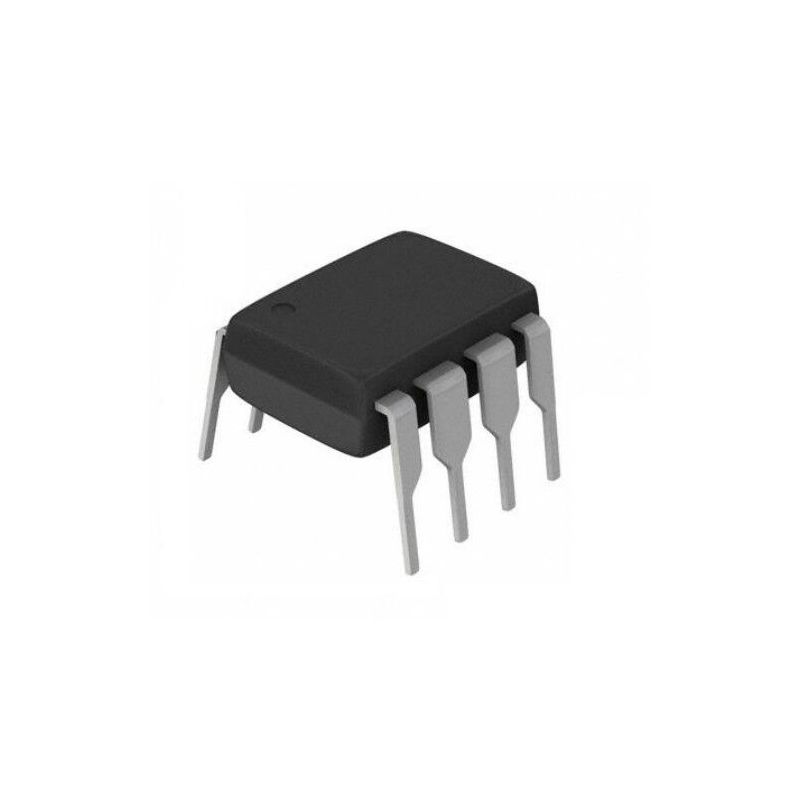
The DIP-20 package of the AM25LS2517PC 4-bit Parallel Access Shift Register DIP-20 significantly influences board layout and manufacturing, offering distinct advantages and considerations compared to modern surface-mount technology (SMT) alternatives. DIP packages are through-hole components, requiring drilled holes in the PCB for lead insertion. This makes them highly suitable for prototyping, educational kits, and low-volume production where manual assembly is common. The larger pitch and physical size of the DIP-20 package simplify soldering, inspection, and rework processes, reducing the need for specialized equipment. However, DIP packages occupy more board space, which can be a constraint in compact designs. From a manufacturing perspective, while SMT allows for higher component density and automated pick-and-place, the AM25LS2517PC 4-bit Parallel Access Shift Register DIP-20's through-hole nature makes it less susceptible to mechanical stress during assembly and provides excellent long-term reliability in vibration-prone environments. Designers choosing the AM25LS2517PC in its DIP-20 form factor prioritize ease of handling, repairability, and robustness over maximum miniaturization.