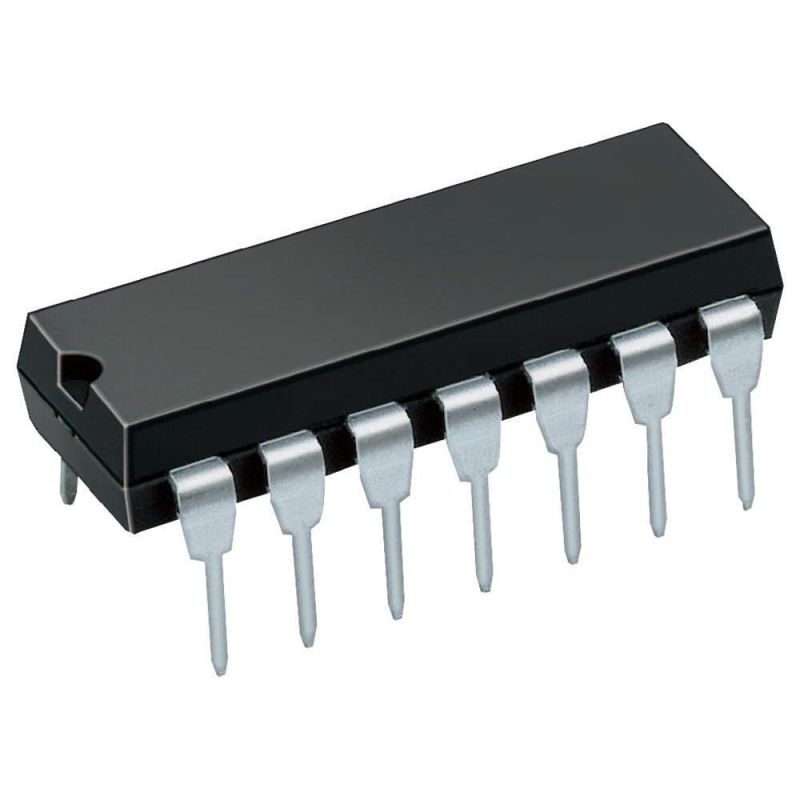


BF371 NPN High-Voltage High-Frequency Transistor (TO-92)
43 people are viewing this right now
In Stock
SKU
191776282827
£3.09
Safe Checkout, Guaranteed

Safe Checkout, Guaranteed
This offering provides a convenient lot of two MMBTA56 PNP Darlington transistors designed for surface-mount applications. Each transistor is housed in a compact SOT (Small Outline Transistor) package, making them ideal for space-constrained designs where amplification and switching are critical. The Darlington configuration provides exceptionally high current gain, making it suitable for driving loads that require significant current. Purchasing this lot of two allows for cost-effective prototyping, experimentation, or small-scale production runs. The SOT package simplifies soldering and integration into automated assembly lines, reducing manufacturing time and costs. The MMBTA56 is commonly used in amplifier circuits, switching applications, and as a driver for relays, LEDs, and other components.
Its low saturation voltage ensures efficient operation and minimal power dissipation. The MMBTA56 features a high breakdown voltage, providing protection against voltage spikes and ensuring reliable operation. Its wide operating temperature range allows for use in various environmental conditions. This lot of two MMBTA56 transistors provides a cost-effective solution for various electronic design needs, offering a balance of performance, reliability, and affordability. Whether you're developing a new product or upgrading an existing system, these transistors provide a dependable and efficient solution. Their versatility and robust design make them a popular choice among engineers and hobbyists.
Take advantage of this lot of two to streamline your projects and ensure you have a spare on hand. Explore the possibilities with the MMBTA56 and unlock the potential of your electronic designs. Its compact size, high gain, and low saturation voltage make it an ideal choice for a wide range of applications. Upgrade your projects with the MMBTA56 and experience the difference in performance and reliability. Order your lot of two today and take your electronic designs to the next level. Don't miss out on the opportunity to enhance your projects with these exceptional transistors.
Invest in the MMBTA56 and witness the improvement in your electronic systems. Add to cart now and start building smarter, more efficient devices. These SMD transistors are a great choice for applications requiring high gain. Get yours today and see the difference!
| Product Name | BF371 NPN High-Voltage High-Frequency Transistor (TO-92) |
|---|---|
| SKU | 191776282827 |
| Price | £3.09 |
| BF371 NPN High-Voltage High-Frequency Transistor (TO-92) Color | As per image |
| Category | Transistors |
| Brand | Nikko Electronics ltd |
| Product Code | 191776282827 |
| Availability | Yes |
Shipping cost is based on order value. Just add products to your cart and use the Shipping Calculator to see the shipping price. We want you to be 100% satisfied with your purchase. Items can be returned or exchanged within 30 days of delivery.
The BF371 NPN High-Voltage High-Frequency Transistor (TO-92) is specifically engineered for high-voltage applications that require rapid switching and high-frequency response, such as video output stages. One of its most critical specifications is its high collector-emitter voltage (Vceo) rating, typically around 300V, which allows it to handle the significant voltage swings required to drive cathode ray tubes or high-voltage driver circuits. Furthermore, the BF371 features a low reverse transfer capacitance (Cre), often measured at approximately 1.6pF. This low capacitance is vital for maintaining signal integrity at high frequencies, as it minimizes the Miller effect, which can otherwise limit the bandwidth of the amplifier. Engineers select the BF371 NPN High-Voltage High-Frequency Transistor (TO-92) because it provides a gain-bandwidth product (fT) of roughly 60MHz, ensuring that it can amplify high-frequency video signals without significant roll-off or distortion. This combination of high voltage tolerance and high-speed performance makes it a staple for legacy display repairs and specialized industrial high-voltage switching designs where modern low-voltage surface-mount components would fail.
When integrating the BF371 NPN High-Voltage High-Frequency Transistor (TO-92) into a circuit, thermal management is a primary concern for long-term reliability. The TO-92 package is a compact, through-hole plastic housing with a total power dissipation (Ptot) rating of approximately 625mW at an ambient temperature of 25°C. In high-voltage video or driver applications, the product of the collector current and the collector-emitter voltage can quickly approach this limit. To prevent thermal runaway or junction degradation, it is essential to calculate the junction temperature using the thermal resistance coefficient (Rth j-a), which is typically around 200 K/W for this package. For high-performance designs using the BF371 NPN High-Voltage High-Frequency Transistor (TO-92), designers often utilize wide PCB copper traces connected to the collector lead to act as a heat sink or implement active airflow. If the transistor is expected to operate near its maximum ratings, derating the power according to the ambient temperature is mandatory. Keeping the junction temperature well below the maximum limit of 150°C ensures that the BF371 maintains its electrical characteristics and does not suffer from premature failure in demanding environments.
Achieving linear amplification with the BF371 NPN High-Voltage High-Frequency Transistor (TO-92) requires precise DC biasing, particularly because high-voltage transistors often exhibit varying DC current gain (hFE) across different collector current ranges. For the BF371, the hFE typically ranges between 30 and 100 at a collector current of 10mA to 30mA. To ensure the transistor operates in the active region without clipping the signal, the quiescent point (Q-point) must be established mid-way along the load line, accounting for the high Vce supply. Because the BF371 NPN High-Voltage High-Frequency Transistor (TO-92) is often used in video applications, the bias network must also be stable against temperature fluctuations to prevent shifts in black levels or signal contrast. Utilizing an emitter resistor for local negative feedback is a common practice to stabilize the gain and improve linearity. Additionally, because this is a high-frequency component, the biasing network should include high-quality decoupling capacitors located as close to the transistor leads as possible to prevent parasitic oscillations that could interfere with the intended signal amplification and cause circuit instability.
While the BF371 NPN High-Voltage High-Frequency Transistor (TO-92) is primarily optimized for linear high-frequency amplification, it is also highly effective in high-voltage switching applications, such as driving small relays, gas discharge lamps, or as a level shifter. Its high Vceo rating allows it to switch loads connected to high-voltage rails that would destroy standard small-signal transistors like the 2N2222. However, when using the BF371 NPN High-Voltage High-Frequency Transistor (TO-92) as a switch, designers must be mindful of the saturation voltage (Vce sat). High-voltage transistors generally have higher saturation voltages compared to low-voltage types, which can lead to increased power dissipation during the 'on' state. Furthermore, while its switching speed is fast due to its high fT, the storage time during turn-off should be evaluated in high-speed PWM applications. It is also critical to ensure that the base drive current is sufficient to saturate the transistor fully, typically following a 1:10 ratio of base current to collector current, while staying within the maximum base current limits to prevent damaging the device.
The BF371 NPN High-Voltage High-Frequency Transistor (TO-92) is part of a family of high-voltage transistors, and selecting it over alternatives like the BF422 or BF420 depends on the specific bandwidth and voltage requirements of your design. The BF371 is often favored for its specific balance of low output capacitance and high-frequency response. While the BF422 is also a high-voltage NPN transistor (Vceo of 250V), the BF371 typically offers a slightly different gain profile and capacitance characteristic that may be better suited for specific legacy video equipment tuning. When substituting the BF371 NPN High-Voltage High-Frequency Transistor (TO-92), it is vital to compare the gain-bandwidth product (fT) and the collector-base capacitance (Ccb). Using a transistor with higher capacitance can lead to a loss of high-frequency detail in video signals, resulting in 'soft' images. The BF371 remains a popular choice for technicians because of its proven track record in maintaining crisp transitions in high-speed analog signals. Always verify the pinout configuration, as some variations in the BF-series can differ between EBC and CBE layouts depending on the manufacturer.
Layout is critical when working with the BF371 NPN High-Voltage High-Frequency Transistor (TO-92) due to its high-frequency capabilities and high-voltage operation. To minimize electromagnetic interference (EMI) and parasitic inductance, traces connected to the base and collector should be kept as short as possible. High-voltage traces require adequate spacing (creepage and clearance) to prevent arcing, especially in environments with high humidity or dust. When using the BF371 NPN High-Voltage High-Frequency Transistor (TO-92) in an amplifier, a ground plane is highly recommended to provide a low-impedance return path and to shield sensitive input signals from the high-swing output. Parasitic capacitance between the collector trace and other signal lines can cause unwanted feedback or oscillations; therefore, avoid running sensitive traces parallel to the collector output. For the TO-92 package, ensure that the leads are not bent too close to the plastic body, as this can cause internal mechanical stress. Properly soldering the BF371 NPN High-Voltage High-Frequency Transistor (TO-92) with clean, high-quality joints will also help in maintaining the low-noise performance required for precision video and RF applications.
The BF371 NPN High-Voltage High-Frequency Transistor (TO-92) can be used to interface low-voltage microcontrollers (like Arduino or ESP32) with high-voltage peripherals, acting as a robust level shifter or driver. Since microcontrollers typically operate at 3.3V or 5V, they cannot directly control high-voltage loads. By using the BF371 NPN High-Voltage High-Frequency Transistor (TO-92) in a common-emitter configuration, the microcontroller can drive the base through a current-limiting resistor, allowing the transistor to switch a load connected to a much higher voltage rail (up to 300V). However, users must ensure that the microcontroller can provide enough base current to drive the BF371 into the desired state, given its hFE range. It is also important to include a flyback diode if the BF371 NPN High-Voltage High-Frequency Transistor (TO-92) is switching an inductive load, such as a small solenoid or relay, to protect the transistor from high-voltage back-EMF spikes. This versatility makes the BF371 an excellent choice for industrial control systems where mixed-voltage domains are common and high-speed signal transition is required.