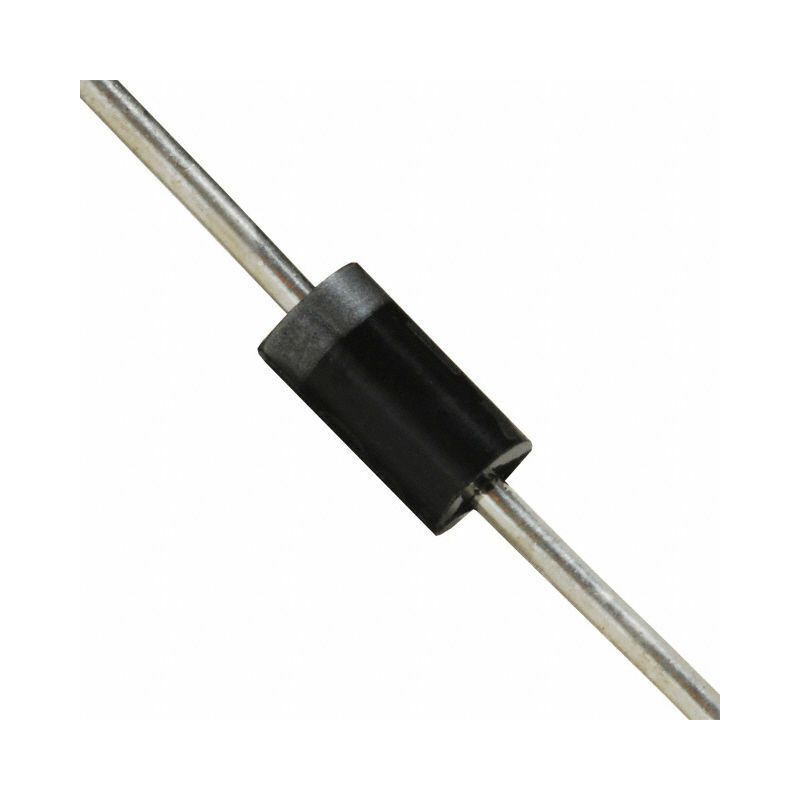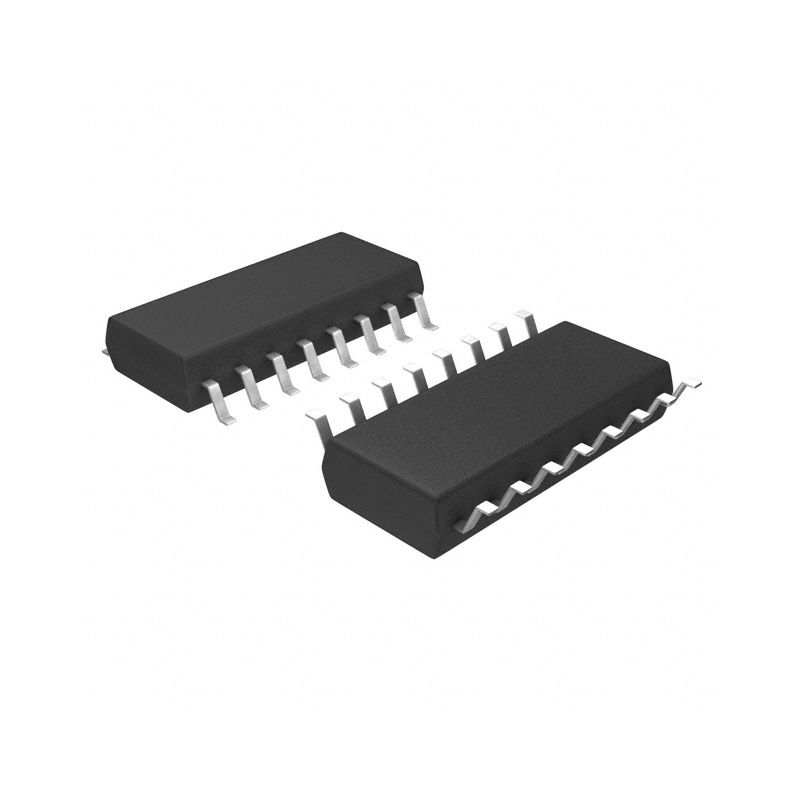


BF981 RF dual gate N-FET transistor SOT-103
48 people are viewing this right now
In Stock
SKU
BF981
BF981 RF dual gate N-FET transistor SOT-103
£4.75
Safe Checkout, Guaranteed

BF981 RF dual gate N-FET transistor SOT-103
Safe Checkout, Guaranteed
| Product Name | BF981 RF dual gate N-FET transistor SOT-103 |
|---|---|
| SKU | BF981 |
| Price | £4.75 |
| BF981 RF dual gate N-FET transistor SOT-103 Color | As per image |
| Category | Transistors |
| Brand | Nikko Electronics ltd |
| Product Code | BF981 |
| Availability | Yes |
Shipping cost is based on order value. Just add products to your cart and use the Shipping Calculator to see the shipping price. We want you to be 100% satisfied with your purchase. Items can be returned or exchanged within 30 days of delivery.
The BF981 RF Dual-Gate MOSFET offers significant advantages for high-frequency amplification, making it a preferred choice over single-gate alternatives. Its primary benefit is the dual-gate configuration, which provides two independent control inputs. This allows for superior isolation between the input and output, substantially reducing the Miller capacitance effect and improving reverse isolation. Consequently, the BF981 delivers enhanced stability and prevents unwanted oscillations in demanding RF circuits. Furthermore, the second gate can be used for automatic gain control (AGC), simplifying circuit design for variable gain applications. This transistor is engineered for exceptional gain and low noise characteristics, critical for maintaining signal integrity in sensitive RF front-ends, tuners, and intermediate frequency (IF) amplifiers, ultimately leading to superior system performance in high-frequency environments.
The BF981 RF Dual-Gate MOSFET's unique dual-gate structure provides a powerful mechanism for improving both gain control and stability in RF circuits. The first gate (G1) typically receives the RF input signal, while the second gate (G2) is used for biasing and gain adjustment. By varying the voltage on G2, the transconductance of the BF981 can be precisely controlled, enabling highly effective automatic gain control (AGC) or manual gain adjustment without significantly impacting the input impedance. This independent control path minimizes interaction with the signal path on G1. Crucially, the presence of G2 effectively screens the drain from G1, drastically reducing the feedback capacitance (Crss). This reduction in internal feedback is paramount for stability at high frequencies, preventing parasitic oscillations and simplifying impedance matching, leading to more robust and predictable RF designs.
The BF981 RF Dual-Gate MOSFET is specifically designed to deliver excellent noise performance, making it highly suitable for sensitive RF receiver applications where minimizing noise is paramount. As an N-channel MOSFET, it inherently offers good noise characteristics compared to bipolar junction transistors in many RF scenarios, particularly at higher frequencies. The dual-gate structure allows for optimal biasing, which can be fine-tuned to achieve the lowest possible noise figure for a given operating point and frequency. This low noise capability is critical for the initial stages of RF receivers, such as low-noise amplifiers (LNAs) and mixer front-ends, where any added noise at the input is amplified throughout the entire signal chain. Utilizing the BF981 ensures that weak incoming RF signals are amplified with minimal degradation, preserving signal-to-noise ratio and enhancing overall receiver sensitivity and performance.
Absolutely, the BF981 RF Dual-Gate MOSFET is an excellent choice for mixer applications, leveraging its dual-gate architecture to provide superior performance. In a typical mixer configuration, the RF input signal is applied to one gate (e.g., G1) and the local oscillator (LO) signal to the other gate (e.g., G2). This allows for efficient frequency conversion through the intrinsic non-linearity of the transistor. The key benefits of using the BF981 as a mixer include high conversion gain, which helps minimize subsequent amplification stages, and excellent linearity, leading to reduced intermodulation distortion and spurious responses. Furthermore, the dual-gate configuration provides inherent isolation between the RF and LO ports, preventing unwanted signal leakage and simplifying filter design. This makes the BF981 RF Dual-Gate MOSFET ideal for high-performance tuners and frequency conversion stages in various communication systems.
The BF981 RF Dual-Gate MOSFET excels in applications demanding high performance at radio frequencies, particularly where single-gate transistors face limitations. Its superior performance is evident in RF amplifier stages requiring variable gain control (AGC), such as in TV tuners, FM radios, and satellite receivers, due to the independent control offered by the second gate. It is also highly effective in mixer circuits, providing better isolation and linearity for frequency conversion. For high-frequency oscillators, the BF981 offers enhanced stability due to its reduced feedback capacitance, leading to cleaner spectral purity. Additionally, in demanding RF front-ends, its low noise figure and improved reverse isolation contribute to higher sensitivity and overall system stability, making the BF981 RF Dual-Gate MOSFET a preferred component for professional and high-fidelity RF designs over simpler single-gate MOSFETs.
The BF981 RF Dual-Gate MOSFET's significantly reduced feedback capacitance, specifically the drain-to-gate1 capacitance (Crss), is a critical design advantage, particularly in high-frequency applications. In single-gate transistors, this capacitance can couple output signals back to the input, leading to the Miller effect, which complicates impedance matching, reduces gain, and can cause instability or even oscillations, especially in common-source configurations. By effectively shielding Gate 1 from the Drain with the second gate, the BF981 minimizes this parasitic feedback. This reduction simplifies stabilization techniques, often eliminating the need for complex neutralization circuits. Designers can achieve higher stable gain, wider bandwidths, and more predictable circuit performance without concerns about unwanted feedback. This characteristic makes the BF981 RF Dual-Gate MOSFET indispensable for robust and high-performing RF amplifier and mixer designs.
Optimizing the BF981 RF Dual-Gate MOSFET in oscillator circuits requires careful consideration of several key design parameters to ensure stable, low-noise, and frequency-accurate operation. Crucially, proper biasing of both Gate 1 (G1) and Gate 2 (G2) is essential to set the desired operating point for optimal transconductance and oscillation conditions. G1 typically forms part of the resonant tank circuit, defining the oscillation frequency, while G2 can be used to fine-tune the gain or even for amplitude stabilization. The design of the resonant tank circuit itself (LC network) must ensure a high Q-factor for spectral purity and frequency stability. Furthermore, appropriate feedback networks are required to initiate and sustain oscillation, often using capacitive or inductive coupling. Impedance matching at the input and output is vital for maximum power transfer and minimizing losses. Leveraging the BF981's low noise and reduced feedback capacitance contributes significantly to achieving a stable oscillator with minimal phase noise, making it ideal for precision RF sources.