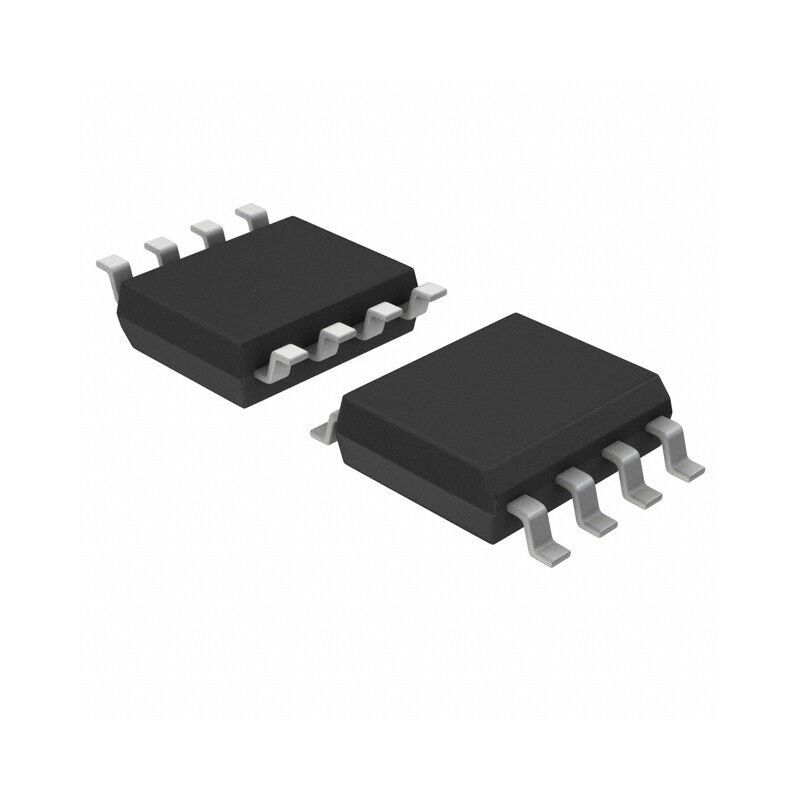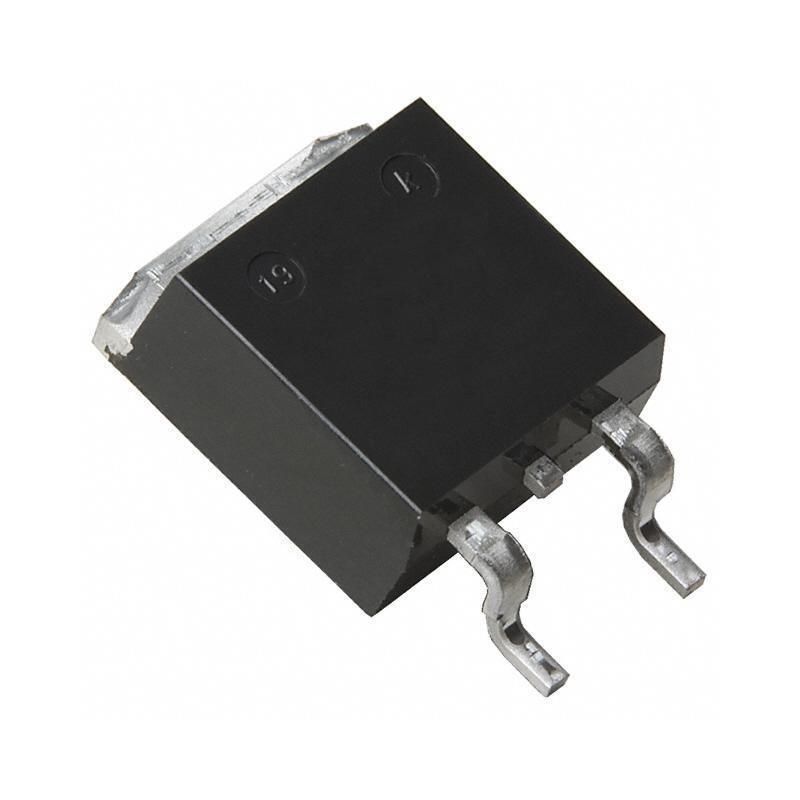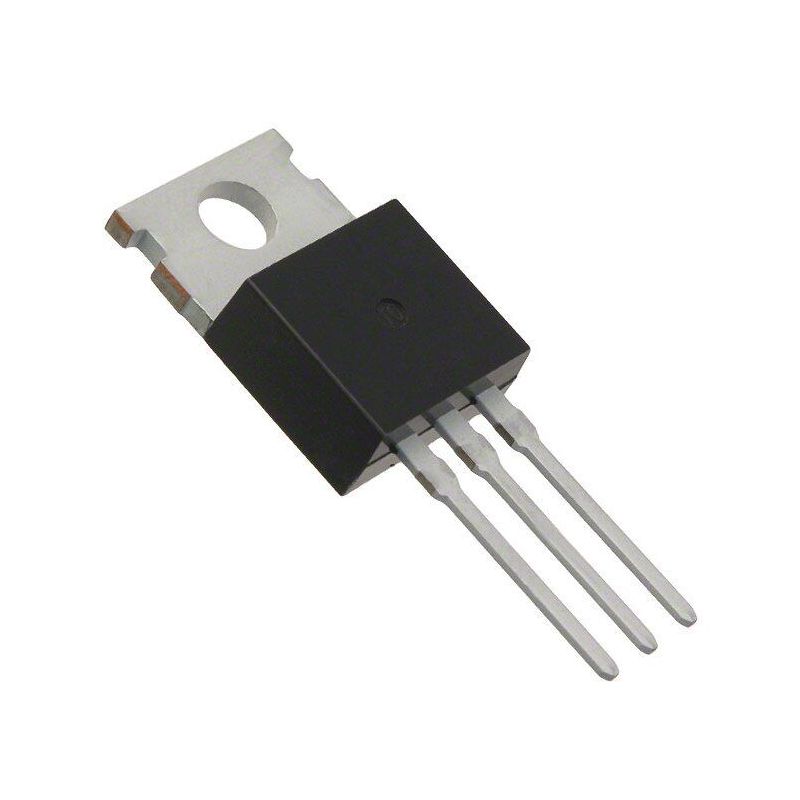


BPW50 IR PIN Photodiode
42 people are viewing this right now
In Stock
SKU
190975859986
£1.99
Safe Checkout, Guaranteed

Safe Checkout, Guaranteed
The BPW50 is a high-sensitivity silicon PIN photodiode designed for infrared (IR) detection, commonly used as an infrared receiver in a wide array of applications. This photodiode is optimized for detecting infrared radiation in the 800 nm to 1100 nm wavelength range, making it an excellent choice for remote control systems, light barriers, and optical sensors. The BPW50's PIN structure provides high sensitivity and fast response times, allowing for accurate and reliable detection of infrared signals. Its low dark current minimizes noise and ensures optimal performance in low-light conditions. This photodiode is commonly used in remote control systems for televisions, DVD players, and other electronic devices. Its ability to detect modulated infrared signals allows for reliable communication between the remote control and the device.
The BPW50 also finds applications in light barriers, where it is used to detect the presence or absence of an object by monitoring the interruption of an infrared beam. This is useful in security systems, industrial automation, and other applications where object detection is required. This photodiode is also used in optical sensors for measuring light intensity, distance, and proximity. Its high sensitivity and fast response time make it suitable for a wide range of sensing applications. The BPW50 is housed in a clear plastic package that allows for maximum transmission of infrared radiation. Its compact size and easy mounting make it suitable for both surface-mount and through-hole applications.
Sourcing reliable components is crucial for ensuring the performance and longevity of your electronic projects. We guarantee the authenticity and quality of our BPW50 Photodiodes, ensuring that you receive a genuine component that meets the original manufacturer's specifications. Each photodiode is rigorously tested to verify its performance and reliability. The BPW50 is designed for use in a wide range of operating temperatures, making it suitable for both indoor and outdoor applications. Its robust construction ensures reliable performance even in harsh environments. Whether you're designing a remote control system, building a light barrier, or developing an optical sensor, the BPW50 Photodiode provides a versatile and reliable solution for your infrared detection needs.
Don't compromise on sensitivity or performance. Choose the BPW50 Photodiode for accurate and reliable infrared detection. Add this essential component to your cart now and experience the difference it can make in your projects. Order your BPW50 today and take control of your infrared sensing applications.
| Product Name | BPW50 IR PIN Photodiode |
|---|---|
| SKU | 190975859986 |
| Price | £1.99 |
| BPW50 IR PIN Photodiode Color | As per image |
| Category | Diodes |
| Brand | Nikko Electronics ltd |
| Product Code | 190975859986 |
| Availability | Yes |
Shipping cost is based on order value. Just add products to your cart and use the Shipping Calculator to see the shipping price. We want you to be 100% satisfied with your purchase. Items can be returned or exchanged within 30 days of delivery.
The BPW50 IR PIN Photodiode is specifically optimized for detecting infrared radiation in the 800 nm to 1100 nm wavelength range. Its peak sensitivity typically lies within this window, often around 950 nm, which aligns perfectly with common IR LED emitters. While the BPW50 IR PIN Photodiode offers robust performance across this specified range, its sensitivity will gradually decrease as you move towards the extreme edges of 800 nm and 1100 nm. For applications requiring maximum signal-to-noise ratio and detection range, it is advisable to pair the BPW50 IR PIN Photodiode with IR emitters whose peak emission wavelength falls squarely within the photodiode's optimal detection spectrum. This ensures efficient photon conversion and reliable signal acquisition, crucial for high-performance optical sensing and communication systems.
The BPW50 IR PIN Photodiode's fast response time is a direct benefit of its PIN (P-type, Intrinsic, N-type) structure, which minimizes junction capacitance and transit time for charge carriers. This allows the photodiode to quickly convert rapidly changing optical signals into electrical current with minimal delay or distortion. For high-speed data transmission, such as in optical data links or modulated IR communication, this fast response ensures that individual data bits (pulses) are accurately captured without blurring or inter-symbol interference. In pulsed IR applications like active light barriers or distance sensors, the BPW50 IR PIN Photodiode can precisely detect short IR pulses, enabling accurate timing measurements and reliable object detection. This characteristic makes the BPW50 IR PIN Photodiode highly suitable for systems requiring swift and precise IR signal acquisition.
The low dark current of the BPW50 IR PIN Photodiode is a critical feature that significantly enhances signal integrity and reduces noise, particularly in demanding applications. Dark current is the small electrical current that flows through the photodiode even when no light is present, acting as an inherent noise source. For scenarios involving low-light conditions, very weak IR signals, or long-distance detection, a low dark current is paramount. It prevents the noise floor from masking the actual signal, allowing for the detection of fainter signals and improving the overall signal-to-noise ratio (SNR). This is particularly advantageous in precision optical sensors, medical diagnostic equipment, or secure communication links where every photon counts and false triggers due to noise must be minimized. The BPW50 IR PIN Photodiode ensures more reliable and accurate measurements by maintaining a clean baseline.
The BPW50 IR PIN Photodiode is excellently suited for detecting modulated infrared signals, which is fundamental to its use in remote control systems and optical communication. Its fast response time allows it to accurately follow the rapid ON/OFF cycles of modulated IR light. However, the BPW50 IR PIN Photodiode itself is a broadband detector; it converts any incident IR light within its sensitive wavelength range into an electrical signal. Differentiation between *various* modulated signals (e.g., from different remote controls) is not performed by the photodiode alone. This task relies on subsequent electronic circuitry, such as a demodulator and microcontroller, to interpret the specific modulation frequencies, pulse widths, or coding schemes embedded in the IR signal. In complex multi-device environments, the BPW50 IR PIN Photodiode will receive all IR signals within its line of sight. Therefore, robust system design requires careful filtering, coding, and demodulation techniques to isolate and interpret the desired signal while rejecting interference from other IR sources.
While widely recognized for remote control systems, the BPW50 IR PIN Photodiode's robust characteristics make it ideal for a broad spectrum of industrial and optical sensing applications. Its high sensitivity and fast response time are invaluable in light barriers for object detection, presence sensing in automation, or safety interlocks on machinery. The optimized wavelength range of the BPW50 IR PIN Photodiode also makes it suitable for optical data links in short-range communication, such as between industrial sensors or within control panels. Furthermore, its low dark current provides an edge in precision applications like smoke detectors (using IR scattering), optical encoders for position sensing, or even some medical and analytical instruments that rely on accurate IR detection. Its reliability and performance ensure consistent operation in demanding environments, extending its utility far beyond consumer electronics.
Optimizing the performance of the BPW50 IR PIN Photodiode in a receiver circuit involves careful consideration of biasing and amplification. Typically, the BPW50 operates in a reverse-biased mode (photoconductive mode), which enhances its speed and linearity by widening the depletion region. A common reverse bias voltage is around 5V to 15V, but specific applications may vary. The current generated by the photodiode is very small, requiring a transimpedance amplifier (TIA) to convert this current into a usable voltage signal. The TIA's feedback resistor value is critical; a higher resistance increases gain but can reduce bandwidth and increase noise. Careful selection of op-amps with low input bias current, low noise, and appropriate bandwidth is essential. Additionally, proper shielding and PCB layout are crucial to minimize electrical noise pick-up, especially for sensitive applications. Integrating a suitable band-pass filter after amplification can further enhance signal-to-noise ratio by rejecting unwanted ambient light interference, ensuring the BPW50 IR PIN Photodiode delivers its peak performance.
The high sensitivity of the BPW50 IR PIN Photodiode directly correlates with its effective detection range when paired with typical IR emitters. Higher sensitivity means the BPW50 IR PIN Photodiode can generate a detectable electrical signal from a weaker incident IR light level, thus extending the distance over which an IR emitter's signal can be reliably received. For common remote control applications, this translates to several meters. Factors that extend this range include using higher power IR emitters, employing focused optics (lenses) on both the emitter and receiver to narrow the beam and increase intensity, and minimizing ambient IR noise. Conversely, the detection range can be limited by low-power emitters, wide beam angles, significant ambient light interference (especially from sunlight or incandescent lamps), physical obstructions, and misalignments between the emitter and the BPW50 IR PIN Photodiode. System designers often balance these factors to achieve the desired range and reliability for their specific application.