

BT134-600D Sensitive Gate TRIAC (600V, 4A, SOT-82)
36 people are viewing this right now
In Stock
SKU
191798248344
£2.99
Safe Checkout, Guaranteed

Safe Checkout, Guaranteed
The BT134-600D is a sensitive gate triac designed for AC power control applications requiring reliable switching and low gate trigger current. Encased in a compact SOT82-3 package, this triac offers a voltage rating of 600V and a continuous on-state current of 4A, making it suitable for use in light dimmers, motor speed controllers, and small appliance control circuits. Its sensitive gate characteristic allows it to be triggered with a minimal gate current, simplifying drive circuitry and improving overall system efficiency. The BT134-600D is engineered to deliver superior performance in a wide range of AC power control applications, including resistive, inductive, and capacitive loads. Its high voltage rating ensures reliable operation in environments with fluctuating voltage levels, while its low gate trigger current allows it to be controlled directly by microcontrollers and other low-power devices. The SOT82-3 package provides excellent thermal conductivity, allowing for efficient heat transfer to the ambient environment.
Key features of the BT134-600D include its low holding current, which ensures that the triac remains in the on-state even with minimal load current. This is particularly important in applications where the load current may vary significantly. The triac also features a high surge current capability, providing robust protection against transient current spikes. The sensitive gate characteristic of the BT134-600D simplifies the design of gate drive circuits, reducing the need for external components and minimizing power consumption. This makes it an ideal choice for battery-powered applications and energy-efficient designs. The BT134-600D is commonly used in light dimmers to control the brightness of incandescent and LED lamps.
Its sensitive gate characteristic allows for precise control of the lamp's intensity, while its high voltage rating ensures reliable operation. It is also used in motor speed controllers to regulate the speed of small AC motors, such as those found in fans and pumps. The triac's ability to handle inductive loads makes it suitable for these applications. In small appliance control circuits, the BT134-600D can be used to switch power to various loads, such as heaters, lights, and motors. Its compact size and low gate trigger current make it an ideal choice for space-constrained designs. The triac's reliability and long lifespan ensure consistent performance over time, minimizing the need for frequent replacements.
When choosing the BT134-600D, you are investing in a high-quality triac that delivers exceptional performance and reliability. Its sensitive gate characteristic and robust design make it an ideal choice for a wide range of AC power control applications. Incorporating the BT134-600D into your designs allows you to achieve superior performance and ensure the long-term reliability of your electronic systems. This component guarantees efficient power control and consistent quality, making it a valuable addition to your inventory. Upgrade your circuits today with the BT134-600D triac and experience the difference in performance and efficiency. Don't miss out on this opportunity to enhance your projects with a high-quality component.
Order the BT134-600D now and take your electronic designs to the next level. Unlock efficient and reliable AC power control with the BT134-600D triac. Purchase the BT134-600D today and power up your projects with confidence!
| Product Name | BT134-600D Sensitive Gate TRIAC (600V, 4A, SOT-82) |
|---|---|
| SKU | 191798248344 |
| Price | £2.99 |
| BT134-600D Sensitive Gate TRIAC (600V, 4A, SOT-82) Color | As per image |
| Category | Triacs / Thyristors |
| Brand | Nikko Electronics ltd |
| Product Code | 191798248344 |
| Availability | Yes |
Shipping cost is based on order value. Just add products to your cart and use the Shipping Calculator to see the shipping price. We want you to be 100% satisfied with your purchase. Items can be returned or exchanged within 30 days of delivery.
Yes, the BT134-600D Sensitive Gate TRIAC is specifically designed for low-power triggering, making it an ideal choice for direct interfacing with microcontrollers, logic ICs, and low-power trigger circuits. The 'D' suffix indicates a very sensitive gate, typically requiring a gate trigger current (IGT) of 5mA or less in the first three quadrants. This low threshold allows the device to be driven directly from the GPIO pins of a 5V or even 3.3V MCU, provided a suitable current-limiting resistor is used to protect the controller. However, engineers should note that while the BT134-600D Sensitive Gate TRIAC is highly sensitive, triggering in the fourth quadrant (T2- negative, G+ positive) usually requires a slightly higher current than the other quadrants. For high-reliability AC phase control or PWM applications, it is often recommended to use a negative gate pulse or an opto-triac driver to ensure consistent switching across all operating temperatures and load conditions, while maintaining the isolation benefits of the sensitive gate architecture.
When utilizing the BT134-600D Sensitive Gate TRIAC at or near its maximum continuous on-state current of 4A (RMS), thermal management becomes a critical design factor. The SOT-82 package is more compact than a standard TO-220, meaning it has a higher junction-to-ambient thermal resistance. At a full 4A load, the power dissipation within the device—calculated by multiplying the on-state voltage drop (typically 1.2V to 1.5V) by the RMS current—can reach approximately 4 to 5 Watts. Without an external heatsink, the junction temperature will quickly exceed the maximum rated 125°C, leading to thermal runaway or device failure. To ensure the longevity of the BT134-600D Sensitive Gate TRIAC, it must be mounted to a properly sized aluminum heatsink using thermal grease. Designers should calculate the required thermal resistance of the heatsink based on the maximum expected ambient temperature and the junction-to-mounting base thermal resistance (Rth j-mb), ensuring that the junction temperature remains safely below the limit during peak operation.
Because the BT134-600D Sensitive Gate TRIAC is a standard sensitive-gate device and not a 'Snubberless' or 'High Com' type, an external RC snubber circuit is highly recommended when switching inductive loads such as small AC motors, solenoids, or fans. Inductive loads cause a phase shift between voltage and current; when the TRIAC turns off at zero current, the voltage across the device can rise very rapidly (high dV/dt). If this rate of rise exceeds the critical rate of rise of off-state voltage specified for the BT134-600D Sensitive Gate TRIAC, the device may 'false trigger' and turn back on immediately, leading to a loss of control. A typical snubber consisting of a 100-ohm resistor and a 100nF (X2 rated) capacitor placed in parallel with the TRIAC helps suppress these voltage transients. This protection is essential for maintaining the 600V blocking integrity of the BT134-600D Sensitive Gate TRIAC and preventing erratic behavior in noisy industrial or domestic power environments.
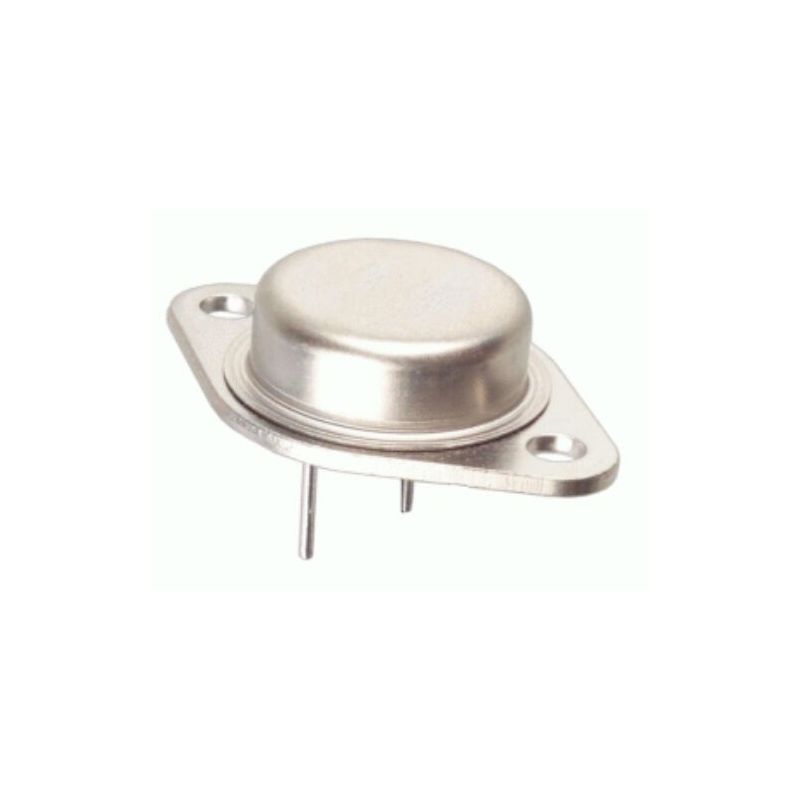
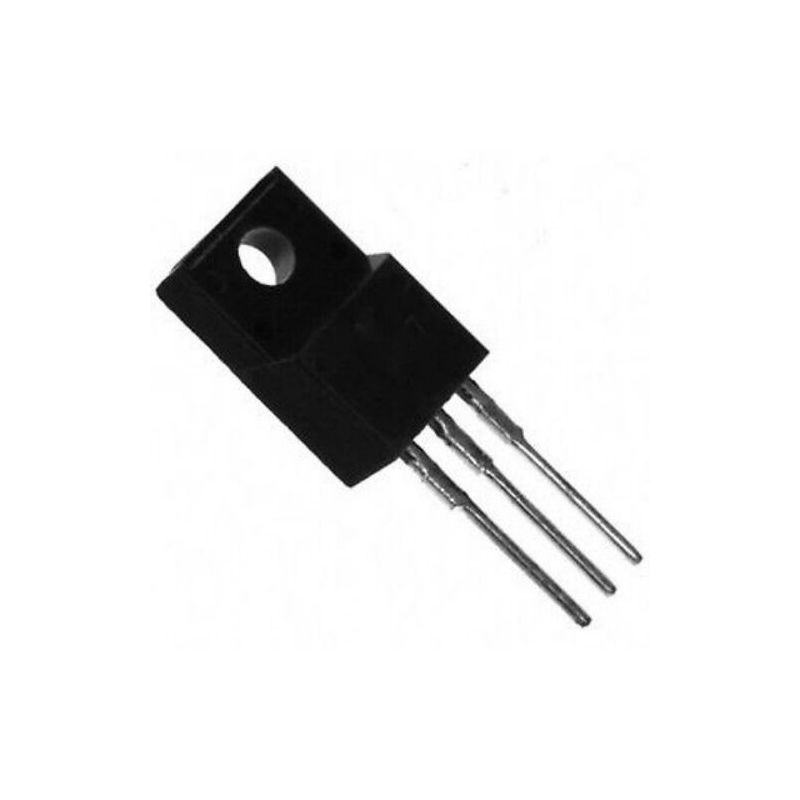
The BT134-600D Sensitive Gate TRIAC utilizes the SOT-82 (also known as TO-126) package, which offers a significant advantage in space-constrained applications where a standard TO-220 might be too bulky. The SOT-82 footprint is narrower and has a lower profile, making it excellent for slim electronic control modules, small appliances, and compact light dimmers. Despite its smaller size, the package still features a metal mounting tab with a hole, allowing for secure mechanical attachment to a chassis or heatsink, which is vital for the 4A current rating. When transitioning a design from a TO-220 to the BT134-600D Sensitive Gate TRIAC in an SOT-82 package, designers must verify the pinout configuration, which is typically Main Terminal 1 (MT1), Main Terminal 2 (MT2), and Gate (G). While the SOT-82 has lower power dissipation capabilities than the TO-220 due to its smaller surface area, its compact nature allows for higher component density on the PCB without sacrificing the 600V isolation and switching performance required for AC mains power control.
When designing with the BT134-600D Sensitive Gate TRIAC for low-power loads, such as LED indicator strings or very small heaters, designers must account for the latching current (IL) and holding current (IH). The latching current is the minimum gate-triggered current required to keep the TRIAC on after the gate signal is removed, while the holding current is the minimum current required to keep the device conducting after it has successfully latched. For the BT134-600D Sensitive Gate TRIAC, these values are relatively low due to its sensitive gate nature, but if the load current does not reach the latching threshold during the gate pulse duration, the device will fail to stay 'on.' Similarly, if the load current drops below the holding current during the AC cycle, the TRIAC will prematurely turn off. This is particularly relevant when using the BT134-600D Sensitive Gate TRIAC with highly efficient modern loads that draw very little current. In such cases, a 'bleeder' resistor or a minimum dummy load may be required to ensure stable operation and prevent flickering or intermittent switching.
The 600V repetitive peak off-state voltage (VDRM) rating of the BT134-600D Sensitive Gate TRIAC provides a substantial safety margin for applications running on standard 220V to 240V AC mains. In a typical 230V RMS system, the peak voltage is approximately 325V. The 600V rating of the BT134-600D Sensitive Gate TRIAC accounts for common line voltage fluctuations, surges, and transient spikes that occur on the power grid. This headroom is crucial because exceeding the VDRM can lead to catastrophic breakdown of the semiconductor junction. However, for industrial environments where heavy machinery creates significant inductive kickback or lightning-induced transients are possible, it is still professional practice to pair the BT134-600D Sensitive Gate TRIAC with a Metal Oxide Varistor (MOV). The MOV should be rated around 275V-300V RMS to clamp high-voltage spikes before they reach the TRIAC, ensuring that the 600V limit is never breached and extending the operational lifespan of the power control circuit.
The BT134-600D Sensitive Gate TRIAC is a four-quadrant device, meaning it can be triggered into conduction by both positive and negative gate currents regardless of the polarity of the voltage across Main Terminal 2. For the most efficient and reliable phase-angle control, it is generally preferred to trigger the BT134-600D Sensitive Gate TRIAC in Quadrants I (MT2+, G+) and III (MT2-, G-). These quadrants typically exhibit the highest sensitivity and the most symmetrical switching characteristics. In many modern logic-controlled designs, designers use a 'negative gate drive' scheme where the gate is pulled negative relative to MT1 to trigger the device in Quadrants II and III. This approach is favored because the BT134-600D Sensitive Gate TRIAC, like most sensitive gate TRIACs, is more easily triggered in these modes than in Quadrant IV (MT2-, G+). By standardizing the trigger pulse to a negative current, you ensure consistent firing angles and minimize the gate current required from your drive circuitry, optimizing the overall efficiency of the AC power control system.