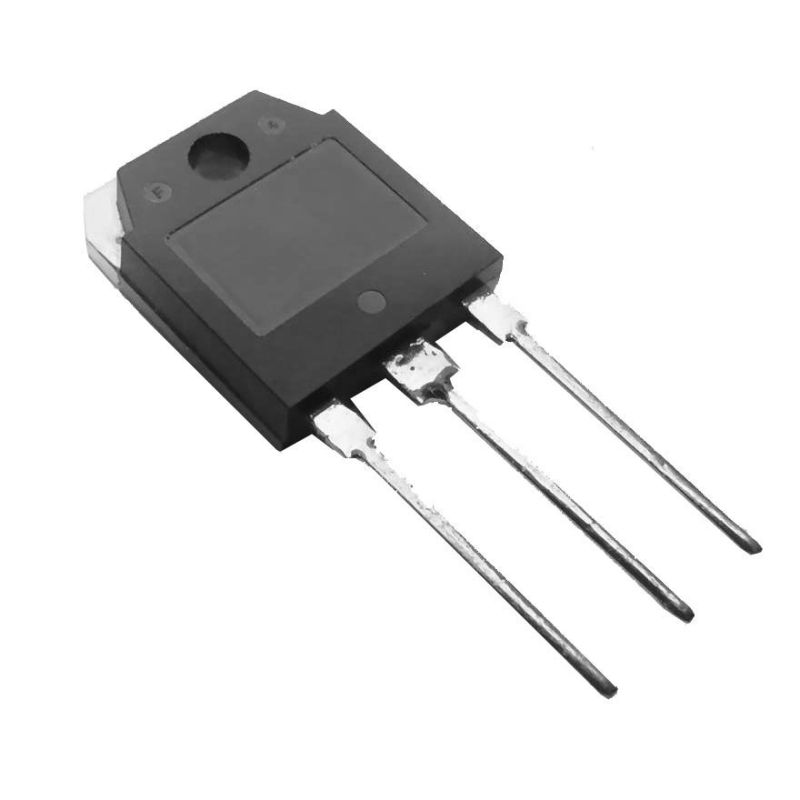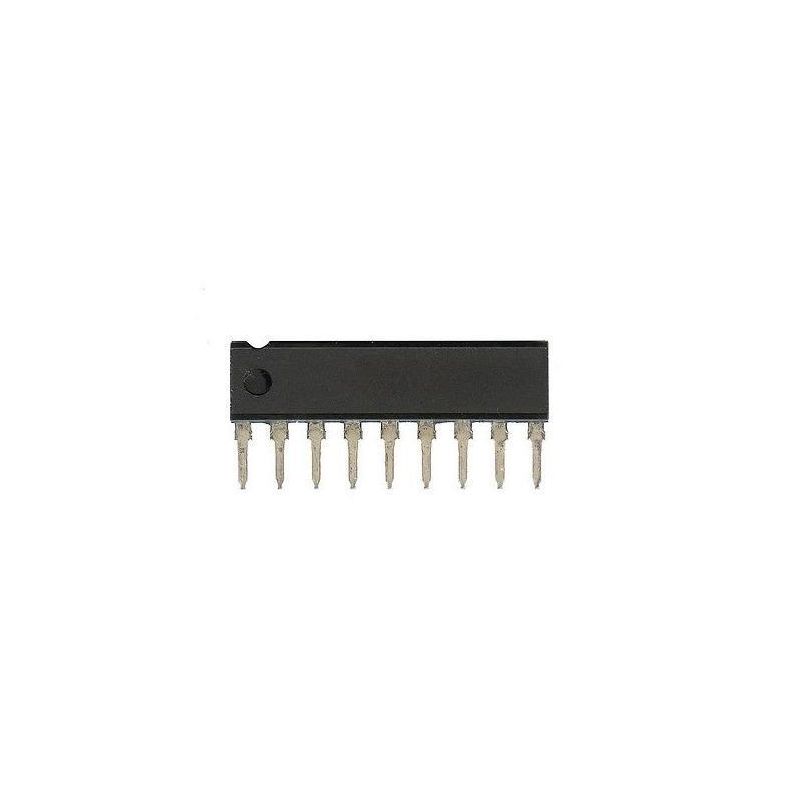


Qualcomm BTS4050 BGA Integrated Circuit
40 people are viewing this right now
In Stock
SKU
191792395552
£12.99
Safe Checkout, Guaranteed

Safe Checkout, Guaranteed
The 74ACT86D, also known as 74ACT86G or 74ACT86DG, is a high-performance hex Schmitt-trigger inverter integrated circuit housed in a 14-SOIC package. This IC is a fundamental building block in digital logic circuits, offering exceptional speed and noise immunity for a wide range of applications. The 74ACT86D's primary function is to invert digital signals, providing a clean and reliable output even with noisy or slowly changing input signals. Its Schmitt-trigger inputs provide hysteresis, which significantly improves noise immunity and prevents oscillations, ensuring stable and predictable operation. Key features of the 74ACT86D include its high-speed operation, allowing it to be used in demanding applications where timing is critical. Its low power consumption makes it suitable for battery-powered devices and energy-efficient designs.
The 14-SOIC package allows for surface-mount assembly, reducing board space requirements and simplifying manufacturing. This IC finds applications in a variety of digital logic circuits, including signal conditioning, pulse shaping, and waveform generation. Its robust design and reliable performance make it a preferred choice for applications where accuracy and stability are paramount. The 74ACT86D's ease of use and readily available documentation further contribute to its popularity. Its well-defined pinout and comprehensive specifications make it easy to integrate into existing and new designs. Whether you're designing a digital signal processor, building a logic gate circuit, or developing a microcontroller-based system, the 74ACT86D integrated circuit offers a compelling solution for achieving your design goals.
Its combination of speed, noise immunity, and ease of use makes it a valuable asset in any digital project. Experience the difference that the 74ACT86D can make in your digital designs. Unlock the full potential of your projects with this exceptional integrated circuit. Order your 74ACT86D today and take your designs to the next level. Don't compromise on performance and reliability; choose the 74ACT86D and experience the difference.
| Product Name | Qualcomm BTS4050 BGA Integrated Circuit |
|---|---|
| SKU | 191792395552 |
| Price | £12.99 |
| Qualcomm BTS4050 BGA Integrated Circuit Color | As per image |
| Category | BGA |
| Brand | Nikko Electronics ltd |
| Product Code | 191792395552 |
| Availability | Yes |
Shipping cost is based on order value. Just add products to your cart and use the Shipping Calculator to see the shipping price. We want you to be 100% satisfied with your purchase. Items can be returned or exchanged within 30 days of delivery.
When integrating the Qualcomm BTS4050 BGA IC into your PCB assembly, adhering to a precise reflow profile is essential to ensure long-term reliability and avoid internal delamination. As a Ball Grid Array (BGA) component, the Qualcomm BTS4050 BGA IC requires a lead-free reflow profile if you are using SAC305 solder balls, typically reaching a peak temperature between 245°C and 260°C. It is vital to maintain a controlled ramp-up rate of approximately 1-3°C per second to prevent thermal shock to the silicon die. The soak zone, usually between 150°C and 200°C, should last long enough to allow the flux to activate and the thermal mass of the Qualcomm BTS4050 BGA IC to equalize with the PCB. Excessive time above liquidus (TAL) can lead to brittle intermetallic layers, while insufficient heat may result in 'cold' solder joints or poor wetting. Engineers should use a multi-zone reflow oven and perform a thermal profile test using a thermocouple attached to a scrap board to ensure the specific thermal mass of the Qualcomm BTS4050 BGA IC is accounted for before mass production.
The Qualcomm BTS4050 BGA IC is a high-performance semiconductor device that is highly sensitive to atmospheric moisture. Typically rated at MSL 3, the Qualcomm BTS4050 BGA IC has a limited floor life once the vacuum-sealed moisture barrier bag (MBB) is opened. If the component is exposed to ambient humidity for longer than the specified period (usually 168 hours at ≤30% RH), any trapped moisture can rapidly expand during the high-heat reflow process, leading to internal cracking or 'popcorning.' To mitigate this risk, always inspect the Humidity Indicator Card (HIC) upon opening the package. If the indicator shows excessive moisture exposure, the Qualcomm BTS4050 BGA IC must be baked at 125°C for 24 hours (or according to J-STD-033 standards) prior to soldering. Proper storage in a dry cabinet with a controlled humidity level below 5% RH is strongly recommended for any Qualcomm BTS4050 BGA IC units that are not immediately placed on the assembly line, ensuring the integrity of the BGA connections and the internal circuitry.
As a specialized Qualcomm component, the Qualcomm BTS4050 BGA IC often functions as a critical node within a larger RF or baseband ecosystem. Unlike simple logic gates, the Qualcomm BTS4050 BGA IC is typically controlled via an I2C, SPI, or proprietary Qualcomm interface by the primary System on Chip (SoC). While the hardware installation involves precise BGA alignment, the functional deployment of the Qualcomm BTS4050 BGA IC usually requires specific firmware drivers and calibration tables. In many mobile and automotive applications, after replacing a Qualcomm BTS4050 BGA IC, technicians must run software-based diagnostic and calibration routines to ensure the chip's performance parameters—such as signal gain, frequency stability, and power consumption—align with the manufacturer's specifications. It is important to verify that the version of the Qualcomm BTS4050 BGA IC you are purchasing matches the specific revision required by your device's firmware, as different hardware revisions (stepping) may have incompatible register maps or power sequencing requirements.
Designing a PCB for the Qualcomm BTS4050 BGA IC requires careful attention to the land pattern and signal integrity. For this BGA package, we recommend using Non-Solder Mask Defined (NSMD) pads, as they provide better mechanical registration and allow the solder to grip the sides of the copper pad, increasing the reliability of the Qualcomm BTS4050 BGA IC under thermal cycling. The trace width and spacing for the fan-out must be calculated based on the ball pitch of the Qualcomm BTS4050 BGA IC to minimize crosstalk and impedance mismatches, especially in high-frequency applications. Via-in-pad technology may be necessary for dense designs, but these must be filled and capped to prevent solder wicking away from the BGA balls during reflow. Furthermore, ensure that the decoupling capacitors are placed as close as possible to the power pins of the Qualcomm BTS4050 BGA IC on the underside of the board to reduce parasitic inductance and provide a stable voltage reference for the high-speed internal operations of the chip.
In the electronics industry, ensuring you receive a genuine Qualcomm BTS4050 BGA IC is paramount, especially when sourcing for critical infrastructure or medical devices. Authentic Qualcomm BTS4050 BGA IC units will feature clear, laser-etched markings including the Qualcomm logo, the part number (BTS4050), and a unique trace code or date code. The date code (formatted as YYWW) indicates the year and week of manufacture; for example, '2312' would mean the Qualcomm BTS4050 BGA IC was produced in the 12th week of 2023. Procurement professionals should request a Certificate of Conformance (CoC) and ensure the packaging includes the original factory labels with 2D barcodes. Because the Qualcomm BTS4050 BGA IC is a BGA component, buyers should also inspect the solder balls under a microscope; genuine, new-old-stock or fresh-factory units will have perfectly uniform, shiny spheres without oxidation or signs of previous flux residue, which would indicate a 'pulled' or refurbished Qualcomm BTS4050 BGA IC.
The power consumption of the Qualcomm BTS4050 BGA IC is highly dependent on its operational state and the specific configuration of the host system. Generally, the Qualcomm BTS4050 BGA IC is designed with advanced power management features, allowing it to enter low-power sleep modes when idle to conserve battery life in mobile applications. However, during active RF transmission or heavy data processing, the Qualcomm BTS4050 BGA IC can generate significant localized heat. It is crucial to evaluate the Thermal Design Power (TDP) in your specific use case. If the Qualcomm BTS4050 BGA IC is used in a high-duty cycle environment, you may need to implement thermal vias or an external heat sink/thermal pad to dissipate heat through the PCB's ground planes. Failure to manage the thermal output of the Qualcomm BTS4050 BGA IC can lead to thermal throttling, where the IC reduces its performance to protect internal junctions, or in extreme cases, permanent failure of the silicon due to overheating.
Failure of the Qualcomm BTS4050 BGA IC often manifests as intermittent connectivity, complete signal loss, or the device failing to boot. These issues are frequently traced back to mechanical stress or thermal fatigue in the BGA solder joints rather than a failure of the silicon itself. To diagnose a suspected Qualcomm BTS4050 BGA IC failure, engineers often use X-ray inspection to check for solder bridging, voids, or 'head-in-pillow' defects that are invisible to the naked eye. If the Qualcomm BTS4050 BGA IC is powered but unresponsive, checking the voltage rails (VDD) and clock signals (CLK) at the surrounding passive components is the first step. If the inputs are correct but there is no output, the Qualcomm BTS4050 BGA IC may have suffered from Electrostatic Discharge (ESD) damage or electrical overstress (EOS). In repair scenarios, 'reballing' the Qualcomm BTS4050 BGA IC is sometimes attempted, but for mission-critical applications, replacing the Qualcomm BTS4050 BGA IC with a brand-new, factory-sealed unit is the only way to guarantee restored functionality and long-term reliability.