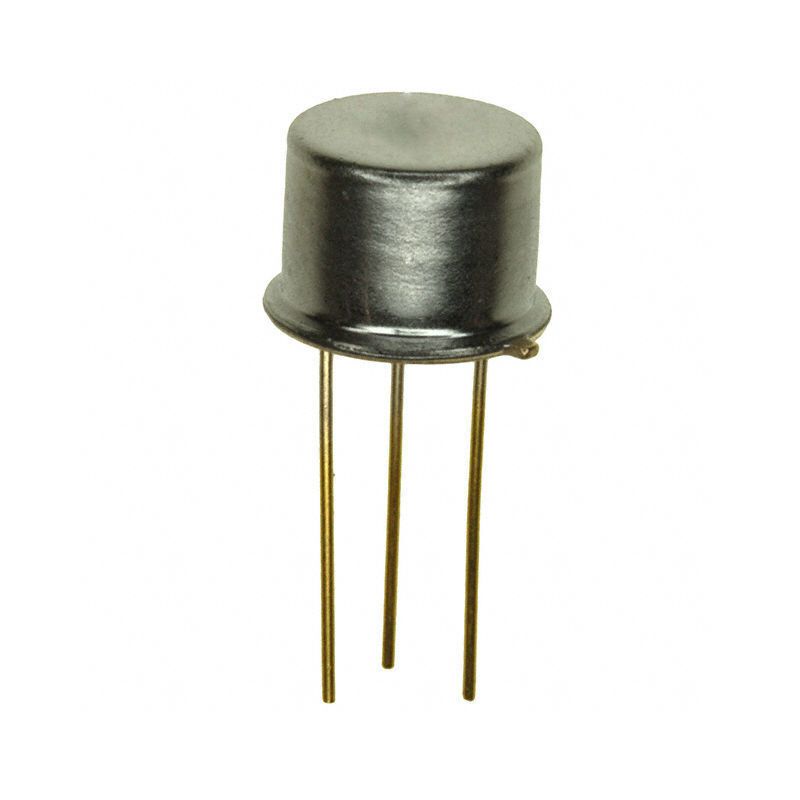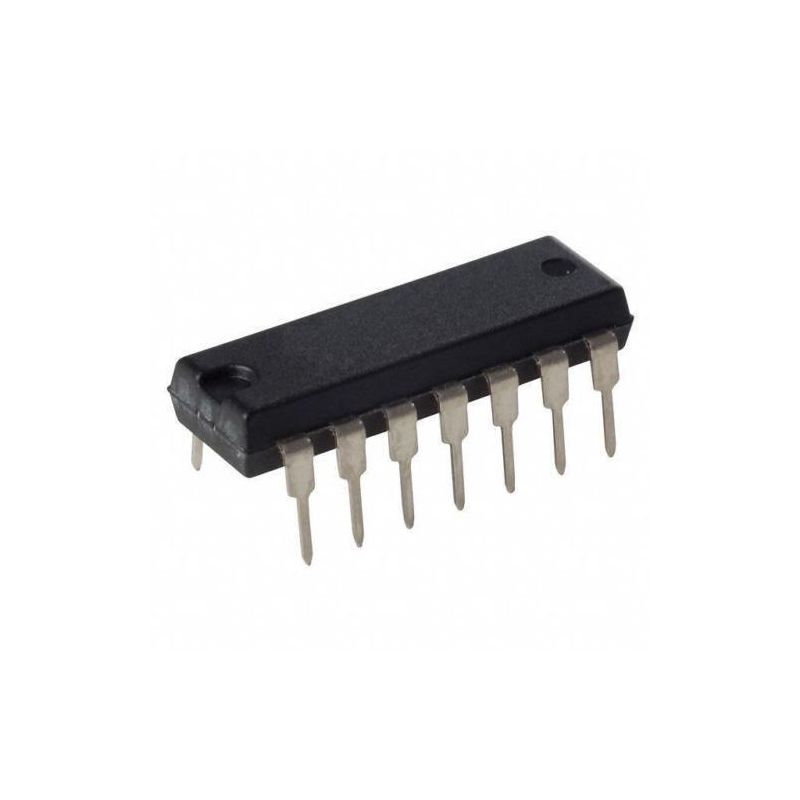


BUV71 NPN High Power Silicon Transistor TO-218
36 people are viewing this right now
In Stock
SKU
191804174992
£6.99
Safe Checkout, Guaranteed

Safe Checkout, Guaranteed
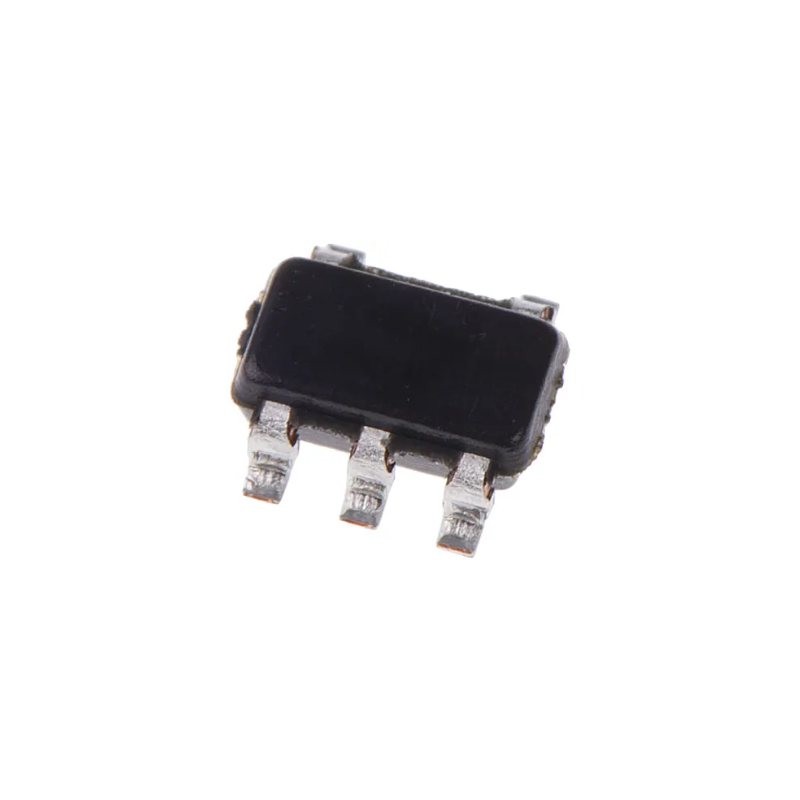
The S8050 is a versatile and widely used NPN bipolar junction transistor (BJT) housed in a small SOT-23 surface-mount package. This transistor is a popular choice for a variety of low-power amplification and switching applications due to its compact size, reliable performance, and ease of integration. The S8050's primary function is to amplify or switch electronic signals and power. Its NPN configuration makes it suitable for use in common-emitter, common-collector, and common-base amplifier circuits, as well as in switching circuits for controlling LEDs, relays, and other low-power devices. Key features of the S8050 include its high current gain (hFE), which allows it to amplify small signals into larger ones with minimal distortion. Its low saturation voltage ensures efficient switching operation, minimizing power loss and heat generation.
The SOT-23 package allows for high-density circuit board designs, making it ideal for portable and space-constrained applications. This transistor finds applications in a wide range of electronic devices, including audio amplifiers, signal processing circuits, power supplies, and microcontroller-based systems. Its robust design and reliable performance make it a preferred choice for both hobbyists and professional engineers. The S8050's ease of use and readily available documentation further contribute to its popularity. Its well-defined pinout and comprehensive specifications make it easy to integrate into existing and new designs. Whether you're building an audio amplifier, designing a switching circuit, or developing a microcontroller-based system, the S8050 transistor offers a compelling solution for achieving your design goals.
Its combination of versatility, reliability, and ease of use makes it a valuable asset in any electronic project. Experience the difference that the S8050 can make in your electronic designs. Unlock the full potential of your projects with this exceptional transistor. Order your S8050 today and take your designs to the next level. Don't compromise on performance and reliability; choose the S8050 and experience the difference.
| Product Name | BUV71 NPN High Power Silicon Transistor TO-218 |
|---|---|
| SKU | 191804174992 |
| Price | £6.99 |
| BUV71 NPN High Power Silicon Transistor TO-218 Color | As per image |
| Category | Transistors |
| Brand | Nikko Electronics ltd |
| Product Code | 191804174992 |
| Availability | Yes |
Shipping cost is based on order value. Just add products to your cart and use the Shipping Calculator to see the shipping price. We want you to be 100% satisfied with your purchase. Items can be returned or exchanged within 30 days of delivery.
When utilizing the BUV71 NPN High Power Silicon Transistor TO-218 in high-current environments, managing the thermal dissipation is paramount to prevent catastrophic failure. This device is rated for a total power dissipation (Ptot) of approximately 250W at a case temperature of 25°C. However, in real-world industrial applications, the junction-to-case thermal resistance (Rthjc) requires the use of a substantial heatsink. Because the BUV71 NPN High Power Silicon Transistor TO-218 often handles collector currents up to 40A, even a small saturation voltage can generate significant heat. It is critical to use high-quality thermal interface material (TIM) and ensure the TO-218 package is securely torqued to the cooling surface. Engineers should calculate the maximum allowable junction temperature (typically 150°C) and derate the power handling based on the ambient operating temperature. Forced-air cooling or liquid cooling may be necessary if the BUV71 NPN High Power Silicon Transistor TO-218 is expected to operate near its peak limits for extended durations, as thermal runaway can occur if the heat is not effectively evacuated from the silicon die.
The BUV71 NPN High Power Silicon Transistor TO-218 is specifically engineered for high-speed power switching, making it an excellent candidate for Switched-Mode Power Supplies (SMPS) and converters. One of its standout characteristics is its relatively fast fall time (tf) and storage time (ts), which are essential for minimizing switching losses during transitions. In high-frequency applications, the BUV71 NPN High Power Silicon Transistor TO-218 reduces the energy dissipated during the 'turn-off' phase, which is where most bipolar transistors struggle. However, designers must implement a robust base drive circuit to optimize these switching speeds. Providing a negative base-emitter voltage during turn-off can significantly accelerate the removal of stored charges from the base region, further enhancing the efficiency of the BUV71 NPN High Power Silicon Transistor TO-218. While MOSFETs are often preferred for very high frequencies, this BJT remains a reliable, cost-effective choice for industrial power stages where high voltage (VCEO of 200V) and high current capability are required simultaneously in a rugged TO-218 housing.
In heavy-duty power electronics, the Collector-Emitter Saturation Voltage (VCE(sat)) of the BUV71 NPN High Power Silicon Transistor TO-218 is a critical metric for determining conduction efficiency. For this transistor, the VCE(sat) is optimized to remain low even when conducting high collector currents. A lower saturation voltage means that less power is wasted as heat during the 'ON' state, which directly translates to higher system efficiency and reduced cooling requirements. When the BUV71 NPN High Power Silicon Transistor TO-218 is used to drive high-power solenoids, motors, or large resistive heaters, the power loss is calculated as IC multiplied by VCE(sat). For instance, at high current levels, a difference of just 0.5V in saturation can mean a 20W difference in heat dissipation. Therefore, ensuring the BUV71 NPN High Power Silicon Transistor TO-218 is driven with sufficient base current (IB) to reach deep saturation is vital for maintaining the longevity of the component and the overall reliability of the power circuit.
Yes, the BUV71 NPN High Power Silicon Transistor TO-218 is frequently employed in H-bridge and half-bridge configurations for controlling high-power DC motors. Its high collector current rating and robust voltage breakdown characteristics allow it to handle the significant back-EMF and current spikes associated with inductive motor loads. When designing a motor controller using the BUV71 NPN High Power Silicon Transistor TO-218, it is essential to include ultra-fast recovery freewheeling diodes across the collector and emitter to protect the transistor from voltage transients during PWM switching. Additionally, because the BUV71 NPN High Power Silicon Transistor TO-218 is a bipolar junction transistor, the current gain (hFE) will decrease at higher collector currents. This means the control logic must be capable of providing enough base drive current to keep the transistor in the linear or saturated region as required by the motor's torque demands. The TO-218 package provides the mechanical stability and surface area needed to withstand the vibration and thermal cycling common in industrial motor drive applications.
Driving the BUV71 NPN High Power Silicon Transistor TO-218 at its upper current limits requires careful attention to the base current (IB). Bipolar transistors like the BUV71 have a gain factor (hFE) that typically drops as the collector current (IC) increases. To achieve full saturation at a 40A load, a substantial base current is required—often in the range of several amperes. Standard microcontrollers or low-power op-amps cannot provide this directly. Therefore, a driver stage, such as a smaller NPN transistor in a Darlington configuration or a dedicated high-current gate driver IC, is necessary to interface with the BUV71 NPN High Power Silicon Transistor TO-218. It is also important to consider the base-emitter saturation voltage (VBE(sat)), which will increase with the base current. Proper circuit design must account for this voltage drop to ensure the driving source can maintain the necessary current flow into the BUV71 NPN High Power Silicon Transistor TO-218 base, preventing the device from entering the active region where power dissipation would skyrocket and lead to failure.
The BUV71 NPN High Power Silicon Transistor TO-218 features a high Collector-Emitter Voltage (VCEO) rating, typically around 200V, which provides a significant safety margin for many industrial flyback and forward converter topologies. However, when switching inductive loads, the transistor is susceptible to high-voltage spikes caused by the collapsing magnetic field. The BUV71 NPN High Power Silicon Transistor TO-218 has a rated VCEX (Collector-Emitter Voltage with a specific base-emitter bias), which is often higher than the VCEO, providing extra protection when the base is properly biased off. To ensure long-term reliability, it is standard practice to implement a snubber circuit (R-C or R-C-D) across the BUV71 NPN High Power Silicon Transistor TO-218 to clamp these spikes below the maximum breakdown voltage. Furthermore, the robust silicon construction of the BUV71 NPN High Power Silicon Transistor TO-218 allows it to handle some energy in the avalanche region, though this should be avoided in continuous operation to maximize the lifespan of the power supply unit.
The TO-218 package used by the BUV71 NPN High Power Silicon Transistor TO-218 is a large, through-hole format designed for high power, but it requires specific mounting techniques to ensure electrical isolation and mechanical integrity. When mounting the BUV71 NPN High Power Silicon Transistor TO-218 to a metal chassis or heatsink, an insulating mica or silicone washer is typically required because the collector is often internally connected to the mounting tab. It is vital to use an insulating bushing for the mounting screw to prevent shorting the collector to the grounded heatsink. During soldering, avoid applying excessive heat to the leads for prolonged periods, as this can stress the internal wire bonds of the BUV71 NPN High Power Silicon Transistor TO-218. Additionally, the leads should be bent with care using needle-nose pliers to avoid putting stress on the plastic body of the transistor, which could lead to micro-cracks and moisture ingress, eventually causing the BUV71 NPN High Power Silicon Transistor TO-218 to fail under high-voltage conditions.