

BZT03C62 Zener Diode SOD57
25 people are viewing this right now
In Stock
SKU
191005914019
£3.25
Safe Checkout, Guaranteed

Safe Checkout, Guaranteed
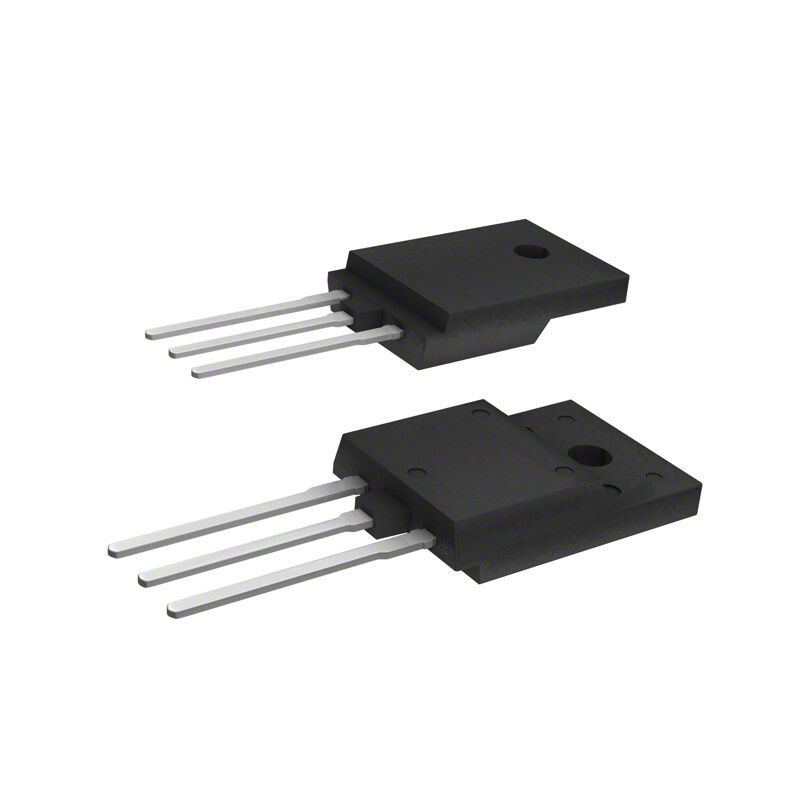
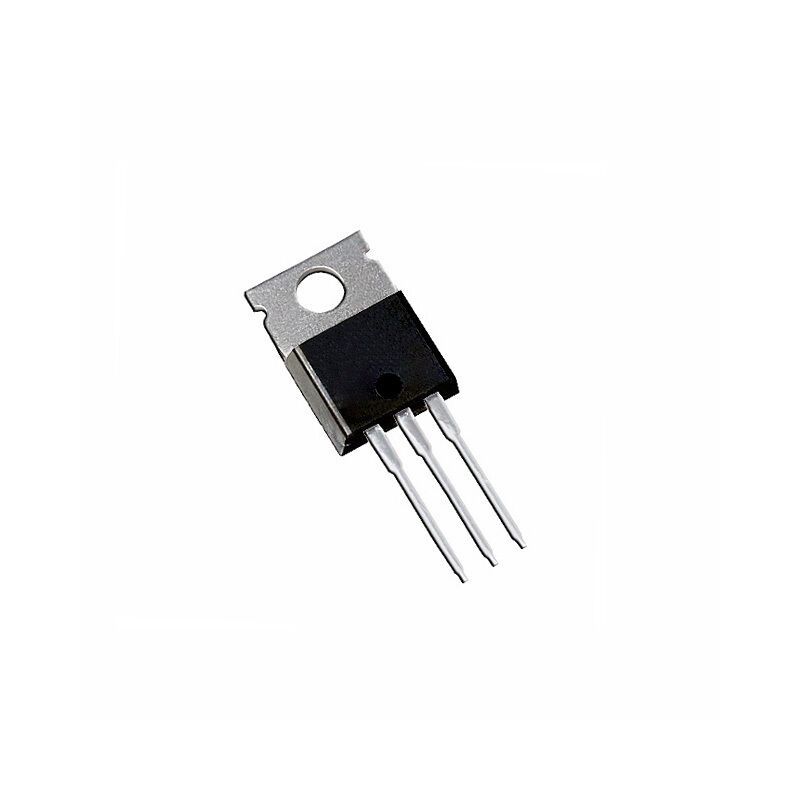
The 2SD330 is a robust NPN bipolar junction transistor (BJT) manufactured by Sanyo, housed in a TO-220 package. This transistor is designed for high-power switching and amplification applications, offering excellent current handling capabilities, low saturation voltage, and high reliability. Its robust design and versatile characteristics make it a popular choice for power supplies, motor drivers, audio amplifiers, and other demanding applications. The TO-220 package provides excellent thermal performance, allowing the 2SD330 to handle high currents and operate in demanding environments. Its through-hole design simplifies mounting and soldering, making it suitable for both prototyping and production environments. The 2SD330 is characterized by its high collector current rating, low saturation voltage, and high gain.
These features enable it to switch and amplify signals with minimal power loss and distortion. Its high current handling capability makes it suitable for driving inductive loads such as motors and relays. This transistor is commonly used in power supplies to switch and regulate voltage. Its low saturation voltage minimizes power dissipation, improving efficiency and reducing heat generation. It is also used in motor drivers to control the speed and direction of DC motors. The 2SD330 is manufactured to meet stringent quality standards, ensuring its reliability and longevity.
Its robust construction and stable electrical characteristics make it a preferred choice for engineers and technicians who demand high-performance and dependable switching and amplification. Whether you are designing a power supply, a motor driver, or an audio amplifier, the 2SD330 BJT provides the performance and reliability you need. Its compact size, ease of use, and exceptional electrical characteristics make it an indispensable component in any power electronic circuit. Invest in the 2SD330 today and unlock the full potential of your power electronic designs. Experience the difference that a high-quality transistor can make. Order now and elevate your circuits to new levels of performance.
Don't compromise on quality – choose the 2SD330 for superior switching and amplification performance. Upgrade your circuits today and experience the difference that a quality BJT can make. Secure your 2SD330 now and fortify your electronic designs with a reliable and high-performance transistor.
| Product Name | BZT03C62 Zener Diode SOD57 |
|---|---|
| SKU | 191005914019 |
| Price | £3.25 |
| BZT03C62 Zener Diode SOD57 Color | As per image |
| Category | Diodes |
| Brand | Nikko Electronics ltd |
| Product Code | 191005914019 |
| Availability | Yes |
Shipping cost is based on order value. Just add products to your cart and use the Shipping Calculator to see the shipping price. We want you to be 100% satisfied with your purchase. Items can be returned or exchanged within 30 days of delivery.
The BZT03C62 Zener Diode SOD57 is characterized by a nominal Zener voltage (Vz) of 62 volts. This voltage is measured at a specified Zener test current (Iz), typically provided in the datasheet. The 'C' in BZT03C62 usually indicates a standard tolerance, often ±5%. This tolerance is critical for voltage regulation applications as it defines the permissible variation from the ideal 62V output. For instance, a ±5% tolerance means the actual Zener voltage could be anywhere between 58.9V and 65.1V. Designers must account for this variation when setting up voltage references or power supply rails, especially in precision circuits where tight regulation is required. For applications demanding higher accuracy, additional voltage trimming or feedback mechanisms might be necessary to compensate for the Zener diode's inherent tolerance, ensuring the regulated output stays within acceptable limits for sensitive components.
The maximum power dissipation (Ptot) for the BZT03C62 Zener Diode SOD57 is a crucial specification, typically in the range of 500mW (0.5 Watts) for SOD57 packages, though specific datasheets should be consulted for the exact value. This rating dictates how much power the diode can safely dissipate as heat without exceeding its maximum junction temperature. For continuous operation, it's imperative to ensure that the actual power dissipated (calculated as Vz * Iz) remains well below the maximum Ptot, usually with a significant derating factor. Effective thermal management involves considering the ambient operating temperature, the PCB layout (e.g., copper pour for heat sinking), and airflow around the BZT03C62 Zener Diode SOD57. Over-dissipation will lead to increased junction temperature, potentially causing permanent damage, reduced lifespan, or a shift in the Zener voltage characteristics, compromising the circuit's reliability and performance.
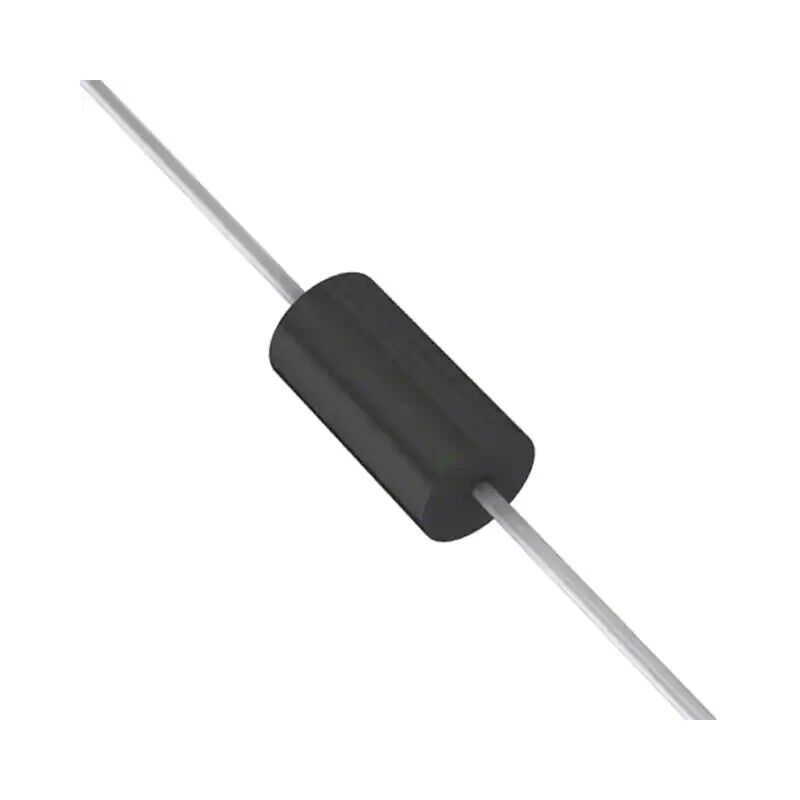
The SOD57 package of the BZT03C62 Zener Diode SOD57 is a small, hermetically sealed glass package, commonly used for discrete semiconductor devices like Zener diodes. It's a through-hole (axial lead) component, characterized by its cylindrical glass body and leads extending from each end. For automated assembly processes, while not as prevalent as surface-mount devices (SMDs) for high-volume pick-and-place, SOD57 components are still compatible with automated insertion machines. Key considerations include ensuring proper lead forming and spacing for insertion into PCB holes, maintaining correct polarity, and managing component reel packaging for automated feeders. The robust glass construction offers good environmental protection. While through-hole components like the BZT03C62 Zener Diode SOD57 require drilling, they often provide superior mechanical strength and improved thermal dissipation compared to some smaller SMD packages in certain applications, making them suitable for designs requiring durability or specific soldering processes.
The dynamic impedance (Zz), also known as Zener impedance, of the BZT03C62 Zener Diode SOD57 is a critical parameter that quantifies its ability to maintain a stable Zener voltage despite changes in the Zener current (Iz). It's essentially the AC resistance of the diode when operating in its breakdown region. A lower dynamic impedance indicates better regulation performance, meaning the Zener voltage will exhibit less variation for a given change in Zener current. Under varying load conditions, if the load current fluctuates, the current through the BZT03C62 Zener Diode SOD57 will also change. A low Zz minimizes the voltage swing across the diode due to these current variations, resulting in a more stable regulated output voltage. Designers should select a Zener diode with a Zz appropriate for the expected load current range and desired voltage stability, often considering it in conjunction with the series current-limiting resistor to optimize the regulation characteristics of the BZT03C62 Zener Diode SOD57.
The reverse leakage current (Ir) for the BZT03C62 Zener Diode SOD57 is the small current that flows through the diode when it is reverse-biased below its Zener breakdown voltage. Typically measured at a specified reverse voltage (e.g., 1V or 5V), this current is usually in the nanoampere (nA) to microampere (µA) range. For low-power or battery-operated applications, a low reverse leakage current for the BZT03C62 Zener Diode SOD57 is extremely important because it directly impacts power efficiency and battery life. Even a small leakage current, when integrated over time, can significantly drain a battery. In circuits designed for minimal quiescent current, any unnecessary current draw, such as leakage from a Zener diode, must be minimized. Therefore, selecting a BZT03C62 Zener Diode SOD57 with a very low Ir ensures that the diode does not contribute significantly to power consumption when it's not actively regulating, thereby preserving battery life and maintaining the overall efficiency of the system.
Beyond its primary role in voltage regulation, the BZT03C62 Zener Diode SOD57 is highly versatile and can be effectively utilized in several other circuit functions. One common application is overvoltage protection; the BZT03C62 Zener Diode SOD57 can be placed across sensitive components to 'clamp' transient voltage spikes above 62V, diverting excess current and protecting downstream circuitry. It's also frequently used in voltage shifting or level shifting circuits, where a stable voltage offset is needed. As a reference voltage source, especially when combined with a precision current source, it can provide a stable reference for ADCs, comparators, or other measurement systems. Furthermore, the BZT03C62 Zener Diode SOD57 can be incorporated into wave shaping circuits to clip or limit AC signals, creating specific waveforms. Its robust design in the SOD57 package makes it suitable for these diverse roles, offering reliable performance in various electronic designs requiring a stable 62V reference or protection.
The temperature coefficient (TC) of the BZT03C62 Zener Diode SOD57 describes how its Zener voltage (Vz) changes with temperature. For Zener diodes, especially those with voltages above approximately 5-6V like the 62V BZT03C62, the TC is typically positive, meaning Vz increases as temperature rises. This characteristic can significantly impact the stability of the regulated voltage in circuits operating over a wide temperature range or requiring high precision. To mitigate the effects of the TC in precision circuits, several techniques can be employed. One common method is to use temperature-compensated Zener diodes, which combine a Zener diode with a forward-biased diode in series to achieve a near-zero temperature coefficient over a specific temperature range. Alternatively, designers can implement active temperature compensation circuits or use a voltage reference IC that incorporates internal temperature compensation. For the BZT03C62 Zener Diode SOD57, understanding its TC from the datasheet is crucial for predicting voltage drift and designing appropriate compensation strategies to maintain desired stability.