

CA3080AE Operational Transconductance Amplifier (OTA)
33 people are viewing this right now
In Stock
SKU
190970805063
£9.99
Safe Checkout, Guaranteed

Safe Checkout, Guaranteed
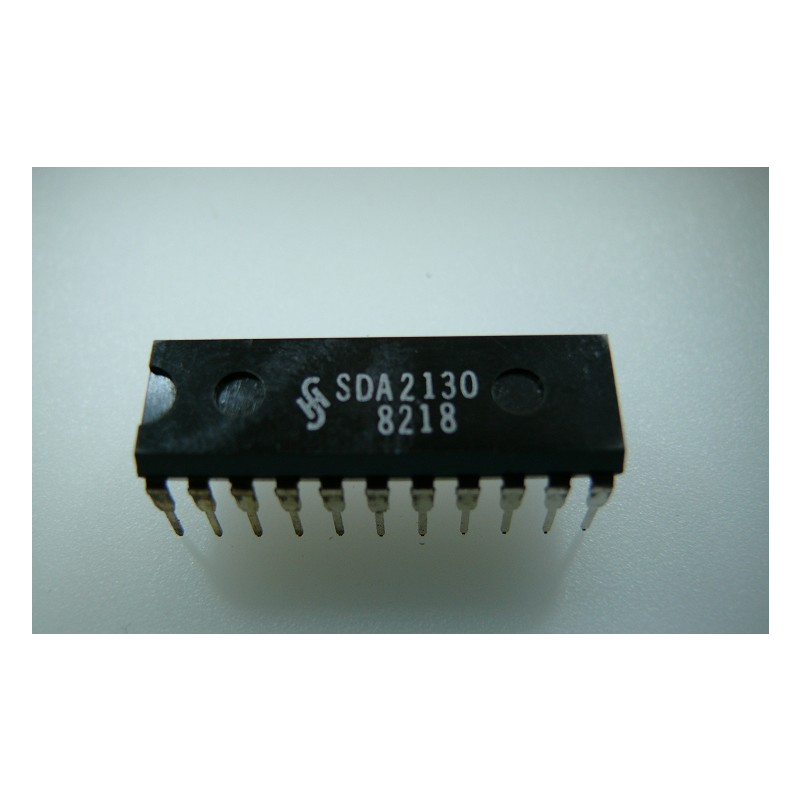
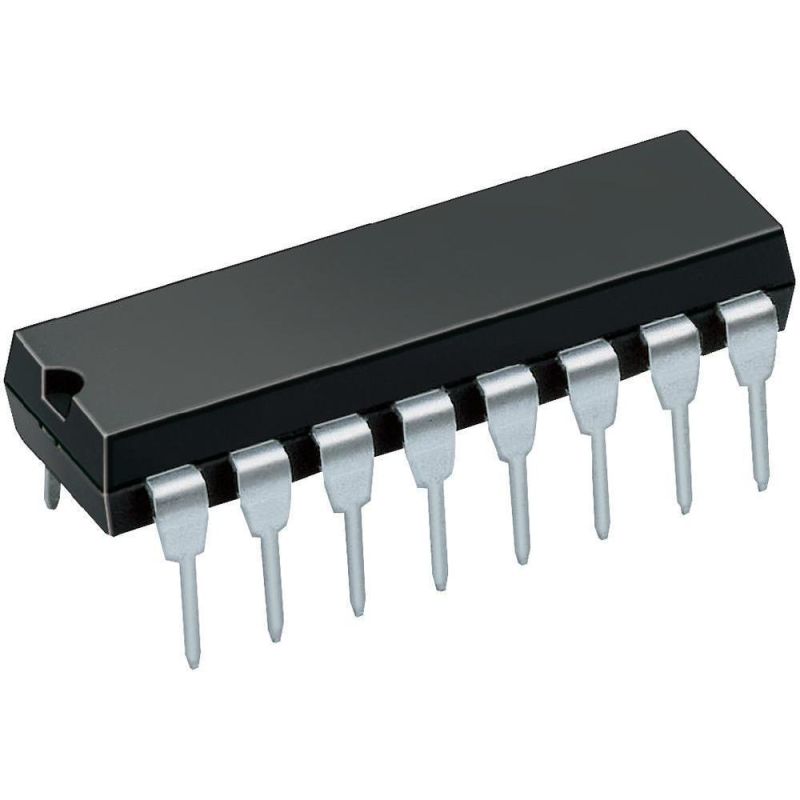
The CA3080AE Integrated Circuit is a versatile and widely used operational transconductance amplifier (OTA) housed in a compact DIP-8 (Dual In-Line Package with 8 pins). This IC is highly regarded for its adjustable gain characteristics, making it an ideal choice for applications requiring voltage-controlled amplification, gain control, and signal processing. The CA3080AE's key feature is its ability to control the transconductance (gm) linearly with an applied control current (IABC). This allows for precise adjustment of the amplifier's gain, providing a level of flexibility not found in traditional operational amplifiers. This makes it suitable for voltage-controlled amplifiers (VCAs), automatic gain control (AGC) circuits, and electronic music synthesizers. The DIP-8 package ensures easy integration into standard circuit board designs, simplifying the prototyping and construction process.
Its compact size makes it suitable for space-constrained applications where board real estate is at a premium. The CA3080AE is commonly used in audio processing applications, such as dynamic range compressors, expanders, and noise reduction systems. Its adjustable gain characteristics allow for precise control over the audio signal, resulting in improved sound quality and reduced distortion. This integrated circuit also finds applications in instrumentation and control systems, where it can be used to amplify and condition analog signals from sensors and transducers. Its low input bias current and high input impedance make it suitable for interfacing with a wide range of signal sources. The CA3080AE's linear transconductance characteristic is also valuable in waveform generation circuits, allowing for the creation of complex waveforms with precise control over their amplitude and shape.
This makes it a useful component in function generators and other signal processing equipment. Sourcing reliable components is crucial for ensuring the performance and longevity of your electronic projects. We guarantee the authenticity and quality of our CA3080AE Integrated Circuits, ensuring that you receive a genuine component that meets the original manufacturer's specifications. Each IC is rigorously tested to verify its performance and reliability. The CA3080AE is designed for low power consumption, making it suitable for battery-powered devices and systems where energy efficiency is a concern. Its efficient design helps to minimize heat generation, contributing to the overall reliability and stability of the circuit.
Whether you're designing a new audio processor, building a precision instrumentation system, or experimenting with electronic music synthesis, the CA3080AE Integrated Circuit offers a versatile and reliable solution for your amplification and signal processing needs. Don't settle for ordinary amplifiers. Unlock the potential of voltage-controlled gain with the CA3080AE Integrated Circuit. Add this essential component to your cart now and experience the difference it can make in your projects. Order your CA3080AE today and take control of your signal processing needs.
| Product Name | CA3080AE Operational Transconductance Amplifier (OTA) |
|---|---|
| SKU | 190970805063 |
| Price | £9.99 |
| CA3080AE Operational Transconductance Amplifier (OTA) Color | As per image |
| Category | Integrated Circuits |
| Brand | Nikko Electronics ltd |
| Product Code | 190970805063 |
| Availability | Yes |
Shipping cost is based on order value. Just add products to your cart and use the Shipping Calculator to see the shipping price. We want you to be 100% satisfied with your purchase. Items can be returned or exchanged within 30 days of delivery.
The CA3080AE Operational Transconductance Amplifier (OTA) achieves its unique adjustable gain characteristic by allowing the designer to directly control its transconductance (gm) with an external current, known as the amplifier bias current (IABC). Unlike traditional operational amplifiers which have very high, fixed open-loop gain, the CA3080AE's transconductance is linearly proportional to IABC. By varying IABC, typically from a few microamperes to several milliamperes, the output current (Iout) produced for a given input voltage (Vin) changes accordingly (Iout = gm * Vin). This direct control over gm translates into voltage-controlled gain in many practical applications. For circuit design, this means the CA3080AE is ideal for systems requiring dynamic gain adjustment, such as automatic gain control (AGC) loops, voltage-controlled amplifiers (VCAs) in audio processing, or variable filters where the Q factor needs to be modulated. The ability to precisely tailor the gain via an external current source provides immense flexibility for dynamic signal processing and modulation.
The fundamental difference between the CA3080AE Operational Transconductance Amplifier (OTA) and a standard operational amplifier (op-amp) lies in their output characteristics and gain control. An op-amp is a voltage-controlled voltage source (VCVS), meaning it takes a differential input voltage and produces an output voltage. Its open-loop gain is typically very high and fixed, requiring negative feedback for stable operation and controlled voltage gain. In contrast, the CA3080AE OTA is a voltage-controlled current source (VCCS); it takes a differential input voltage and produces an output current, with its transconductance (gm) directly controllable by an external bias current (IABC). You should choose the CA3080AE OTA when you need variable gain, voltage-to-current conversion, or the ability to easily multiply signals. It excels in applications like VCAs, voltage-controlled filters, modulators, and automatic gain control. A standard op-amp is preferred for high-precision voltage amplification, buffering, integration, or differentiation where a stable, high-impedance voltage output is required and fixed gain characteristics are acceptable or desirable.
Absolutely, the CA3080AE Operational Transconductance Amplifier (OTA) is exceptionally well-suited for audio applications, particularly in voltage-controlled filters (VCFs) and synthesizers. Its ability to linearly control transconductance (gm) via an external current (IABC) is precisely what makes it invaluable in these contexts. In a VCF, the CA3080AE can be configured as a voltage-controlled resistor or a gain element within a filter topology, allowing the cutoff frequency or Q factor to be dynamically adjusted by a control voltage. This enables the rich, evolving timbres characteristic of analog synthesizers. For synthesizers in general, the CA3080AE's VCA functionality is crucial for shaping amplitude envelopes, creating tremolo effects, and implementing ring modulation. Its relatively simple architecture and compact DIP-8 package make it a popular choice for DIY audio enthusiasts and professional designers alike, providing a cost-effective and versatile building block for complex sound synthesis and processing circuits.
The CA3080AE Operational Transconductance Amplifier (OTA) is designed for operation with dual power supplies, typically ranging from ±2V to ±15V, though it can operate on a single supply with appropriate biasing. It's crucial to ensure stable and clean power rails to avoid introducing noise into the sensitive transconductance stage. Regarding output characteristics, the CA3080AE produces an output current, not a voltage, which is proportional to the product of its transconductance (gm) and the differential input voltage. This output current is then typically converted to a voltage by an external load resistor or another current-to-voltage converter stage. The output impedance is very high, characteristic of a current source. The maximum output current is limited by the amplifier bias current (IABC) and the power supply rails. Designers must carefully consider the external load to ensure the output current does not exceed the device's limits and that the subsequent stage can effectively process the current output. Proper power supply decoupling with capacitors close to the DIP-8 package is always recommended for optimal performance.
Controlling the transconductance (gm) of the CA3080AE Operational Transconductance Amplifier (OTA) is central to its utility, primarily achieved by varying the amplifier bias current (IABC). The most common technique involves using an external resistor connected from a control voltage source to the IABC pin (Pin 5) to set this current. A more sophisticated approach for precise voltage control uses a voltage-to-current converter circuit, often built with another op-amp or a transistor, to generate a highly linear IABC proportional to a control voltage. This allows for accurate voltage control over gain, filter cutoff, or modulation depth. The gm directly impacts the gain (in VCA configurations) or the Q-factor/cutoff frequency (in VCFs). Higher IABC results in higher gm, leading to greater gain or higher Q/cutoff frequencies. However, increasing IABC also increases power consumption and can impact noise performance and linearity at very high levels. Designers must balance the desired dynamic range and control sensitivity with potential linearity distortions and power budget. Proper selection of the control current range is vital for optimal performance of the CA3080AE.
Yes, specific considerations for input biasing and output loading are crucial for optimal performance of the CA3080AE Operational Transconductance Amplifier (OTA). For input biasing, the CA3080AE features high input impedance, but its input stage is differential. To prevent common-mode issues and ensure proper operation, the inputs (Pins 2 and 3) should be biased within the common-mode input voltage range, typically centered around ground for dual supply operation. If using a single supply, the inputs would need to be biased to a mid-supply reference voltage. Capacitive coupling might be necessary for AC signals if DC biasing is not suitable. Regarding output loading, as the CA3080AE is a current output device, its output (Pin 6) should ideally be connected to a high-impedance load to preserve its current source characteristics. A common practice is to connect a resistor from the output to ground or a reference voltage, converting the output current into a voltage. Alternatively, it can drive the summing junction of a subsequent op-amp in a current-to-voltage converter configuration. Avoiding low-impedance loads directly on the output is essential, as this would diminish its current source behavior and potentially limit its dynamic range or introduce distortion.
When integrating the CA3080AE Operational Transconductance Amplifier (OTA) into a new design, several best practices and common pitfalls should be addressed to ensure optimal performance. A frequent pitfall is neglecting proper power supply decoupling; bypass capacitors (e.g., 0.1µF ceramic and 10µF electrolytic) placed close to the DIP-8 package are essential to minimize noise and ensure stability. Another common issue is improper biasing of the amplifier bias current (IABC); ensure the control current source is stable and provides the desired linear range for transconductance adjustment. Designers sometimes overlook the current-output nature of the CA3080AE, attempting to drive low-impedance voltage loads directly, which can lead to distortion or limited swing. Always use a current-to-voltage conversion stage (e.g., a resistor to ground or a transimpedance amplifier) to convert the output current into a usable voltage signal. Furthermore, while the CA3080AE offers excellent linearity, pushing IABC too high can increase distortion, especially at higher input signal levels. Carefully consider the trade-offs between dynamic range, linearity, and power consumption. Finally, pay attention to thermal management if operating at higher bias currents, as increased temperature can affect device parameters.