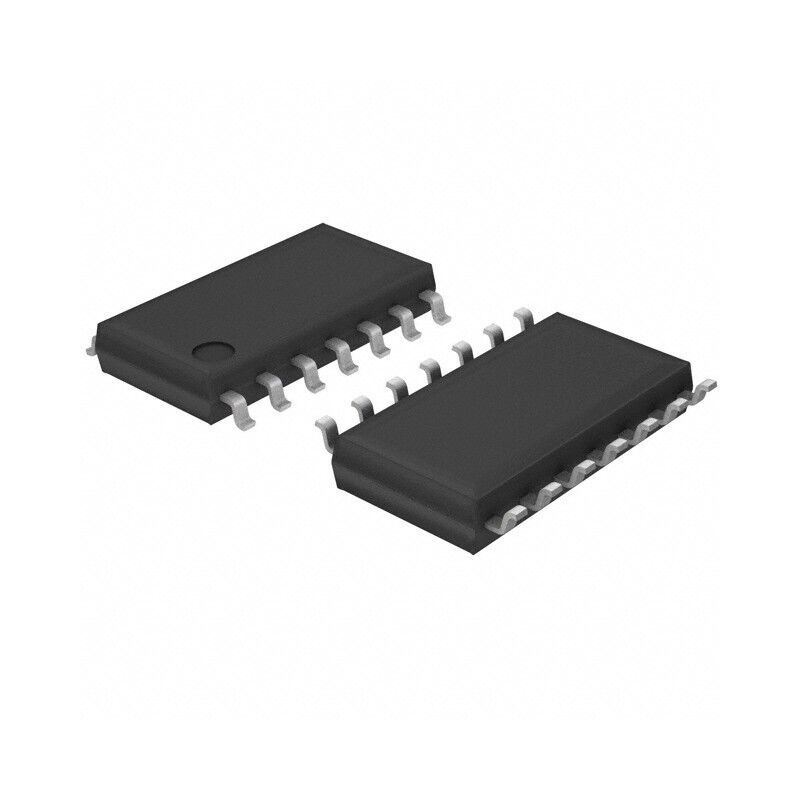


CD4094BE 8-Stage Shift-and-Store Bus Register (DIP-16)
21 people are viewing this right now
In Stock
SKU
191821992067
£1.99
Safe Checkout, Guaranteed

Safe Checkout, Guaranteed
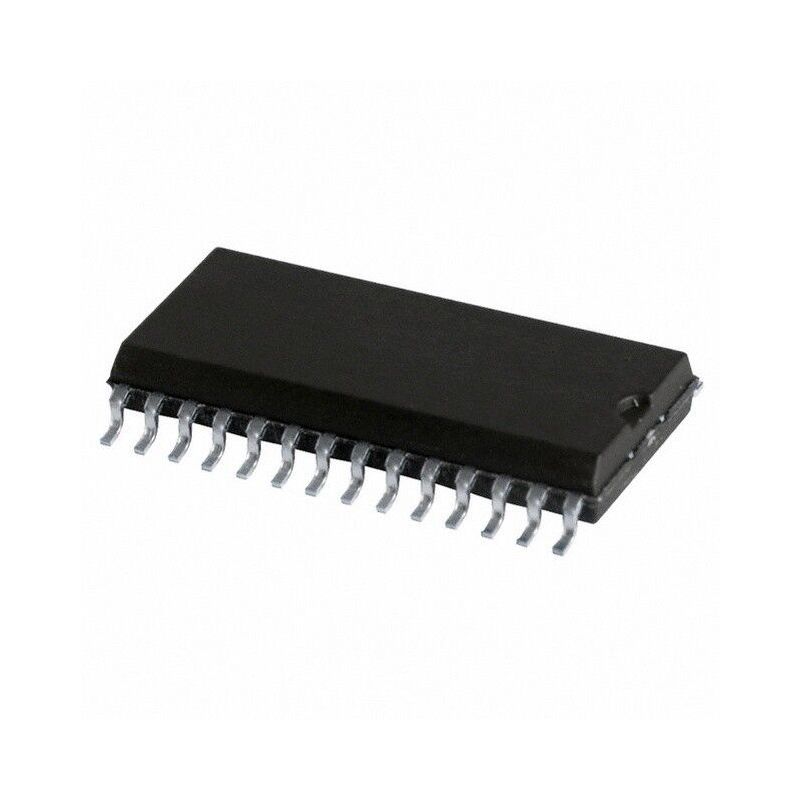
The CD4094BE Integrated Circuit in DIP-16 package is a versatile 8-stage shift-and-store bus register with 3-state outputs. This CMOS logic device is designed for a wide range of digital applications, offering reliable performance and flexibility. The CD4094BE is commonly used in display drivers, remote control systems, and serial-to-parallel data conversion. Its primary function is to shift serial data into the register and then store and output the data in parallel. The DIP-16 package allows for easy integration into through-hole circuit boards, simplifying assembly and maintenance. The CD4094BE integrated circuit features a 3-state output, allowing for easy connection to a common bus.
Its low quiescent current consumption makes it ideal for battery-powered applications. The device is designed to operate over a wide voltage range, providing compatibility with various logic families. The CD4094BE is RoHS compliant, ensuring it meets environmental regulations and is free from hazardous substances. Its robust design and stable performance make it a reliable choice for demanding applications. The CD4094BE integrated circuit is commonly used in LED display drivers to control multiple LEDs with a minimal number of control lines. It is also employed in remote control systems to transmit data over a serial communication channel.
The device's high clock frequency allows for fast data transfer and processing. The CD4094BE provides excellent noise immunity, ensuring accurate data transmission even in noisy environments. Its cascading capability allows for expanding the number of output stages, enabling the control of more devices. The device is designed to withstand high transient voltages, providing increased protection against electrical surges. The CD4094BE integrated circuit is a crucial component in modern digital systems, offering a reliable and cost-effective solution for data storage and output. Its simple design and ease of use make it a popular choice among engineers and hobbyists alike.
The device's long lifespan and stable performance ensure reliable operation over extended periods. The CD4094BE is also used in data acquisition systems to convert serial data from sensors to parallel data for processing. The integrated circuit is easy to handle and solder, making it a convenient choice for both prototype and high-volume production. This device is an excellent addition to any digital design project, providing a flexible and efficient solution for data management. Its low power consumption and high performance make it ideal for a wide range of applications. The CD4094BE integrated circuit offers a high level of versatility and reliability, simplifying your digital designs and enhancing their performance.
Whether you need to drive displays, control remote devices, or convert data formats, the CD4094BE is the perfect solution. Upgrade your digital systems with the CD4094BE Integrated Circuit DIP-16. Add it to your cart today and experience the benefits of reliable data storage and output!
| Product Name | CD4094BE 8-Stage Shift-and-Store Bus Register (DIP-16) |
|---|---|
| SKU | 191821992067 |
| Price | £1.99 |
| CD4094BE 8-Stage Shift-and-Store Bus Register (DIP-16) Color | As per image |
| Category | Integrated Circuits |
| Brand | Nikko Electronics ltd |
| Product Code | 191821992067 |
| Availability | Yes |
Shipping cost is based on order value. Just add products to your cart and use the Shipping Calculator to see the shipping price. We want you to be 100% satisfied with your purchase. Items can be returned or exchanged within 30 days of delivery.
Cascading the CD4094BE 8-Stage Shift-and-Store Bus Register (DIP-16) is a common requirement for driving large LED matrices or managing extensive digital output arrays. To expand the bit depth beyond eight, you connect the serial output of the first stage to the data input of the subsequent stage. The CD4094BE 8-Stage Shift-and-Store Bus Register (DIP-16) features two specialized serial outputs: Pin 9 (QS) and Pin 10 (Q'S). The QS output changes state on the positive-going clock edge, while the Q'S output changes on the negative-going clock edge. For high-speed applications where timing margins are tight, using the Q'S output to feed the next stage provides a half-clock cycle of hold time, which significantly improves data integrity across multiple cascaded devices. When cascading, all units should share a common Clock and Strobe line to ensure synchronized data latching across the entire chain. This modularity makes the CD4094BE 8-Stage Shift-and-Store Bus Register (DIP-16) an exceptionally flexible choice for designers needing to scale their I/O capabilities without consuming additional microcontroller pins beyond the standard serial interface.
The CD4094BE 8-Stage Shift-and-Store Bus Register (DIP-16) is part of the high-voltage CMOS 4000 series, offering a much wider operating range than standard TTL logic. It can operate reliably with a power supply (VDD) ranging from 3V to 18V. This versatility allows the CD4094BE 8-Stage Shift-and-Store Bus Register (DIP-16) to be used in both low-voltage battery-powered devices and 12V/15V industrial control systems. It is important to note that the logic input thresholds are proportional to the supply voltage. Typically, a logic 'high' (VIH) is recognized at approximately 0.7 times VDD, and a logic 'low' (VIL) at 0.3 times VDD. For example, if you are powering the CD4094BE 8-Stage Shift-and-Store Bus Register (DIP-16) at 12V, a 5V microcontroller signal may not be sufficient to trigger the inputs reliably without a level shifter. Conversely, at 5V VDD, it is fully compatible with standard CMOS logic levels. The device also features extremely low quiescent current, typically in the microampere range, making it ideal for applications where power efficiency is a critical design constraint.
The 3-state output capability is a standout feature of the CD4094BE 8-Stage Shift-and-Store Bus Register (DIP-16), controlled via the Output Enable (OE) pin (Pin 15). When the OE pin is held high, the parallel outputs (Q1 through Q8) reflect the state of the internal storage registers. When the OE pin is pulled low, the outputs enter a high-impedance state, effectively disconnecting the device from the output bus. This feature allows multiple CD4094BE 8-Stage Shift-and-Store Bus Register (DIP-16) units or other peripheral devices to share the same physical data lines without signal contention. In complex bus-oriented systems, this prevents 'fighting' between different drivers and allows a central processor to selectively enable specific segments of a display or control array. Furthermore, the 3-state outputs facilitate multiplexing tasks, where data can be pre-loaded into the shift register and only presented to the load when the bus is clear. This architectural flexibility makes the CD4094BE 8-Stage Shift-and-Store Bus Register (DIP-16) a preferred component for sophisticated digital systems where efficient bus management and reduced wiring complexity are paramount.
The CD4094BE 8-Stage Shift-and-Store Bus Register (DIP-16) utilizes a dual-stage internal architecture consisting of an 8-stage shift register followed by an 8-bit storage latch. The Strobe input (Pin 1) acts as the gatekeeper between these two stages. As data is clocked into the shift register, the parallel outputs of the CD4094BE 8-Stage Shift-and-Store Bus Register (DIP-16) do not change immediately if the Strobe signal is managed correctly. If the Strobe input is held high, the data flows through the shift register directly to the storage latches, causing the parallel outputs to ripple as bits shift through. However, by keeping the Strobe signal low during the shifting process and pulsing it high only after all eight bits have been shifted in, the user can update all parallel outputs simultaneously. This 'store-and-forward' mechanism is critical for applications like driving multi-digit LED displays, as it eliminates the visual 'flicker' or ghosting that would occur if the outputs changed while the data was still in transit. Mastering the timing of the Strobe pin is essential for achieving clean, professional-grade data conversion with the CD4094BE 8-Stage Shift-and-Store Bus Register (DIP-16).
The timing performance of the CD4094BE 8-Stage Shift-and-Store Bus Register (DIP-16) is highly dependent on the operating voltage (VDD). At a standard 5V supply, the maximum clock frequency is typically around 1.25 MHz to 2.5 MHz, which is sufficient for most display and low-speed control tasks. However, if your application requires higher throughput, increasing the supply voltage to 15V can push the maximum clock frequency up to 5 MHz or higher. Propagation delays—the time it takes for a signal to transition from the clock edge to the output—also scale with voltage. At 5V, the propagation delay from clock to serial output can be as high as 250ns, whereas at 15V, it drops significantly to around 60ns. When designing high-speed circuits with the CD4094BE 8-Stage Shift-and-Store Bus Register (DIP-16), engineers must carefully account for setup and hold times (typically 50-100ns at 5V). Because this is a CMOS device, the transition times are slower than high-speed TTL counterparts, so ensuring a clean, bounce-free clock signal is vital to prevent double-triggering and data corruption within the register stages.
While the CD4094BE 8-Stage Shift-and-Store Bus Register (DIP-16) is excellent for logic processing, it has limited current sourcing and sinking capabilities. At a 5V supply, each output pin can typically source or sink only about 1mA to 2mA of current. While this is enough to drive high-efficiency indicator LEDs or high-impedance CMOS inputs, it is insufficient for standard high-brightness LEDs, relays, or solenoids. Attempting to draw excessive current directly from the CD4094BE 8-Stage Shift-and-Store Bus Register (DIP-16) can lead to a significant voltage drop at the output or even thermal damage to the IC. For applications requiring more power, it is standard practice to interface the CD4094BE 8-Stage Shift-and-Store Bus Register (DIP-16) with a buffer or a driver IC, such as the ULN2003 Darlington array or discrete MOSFETs. This allows the CD4094BE 8-Stage Shift-and-Store Bus Register (DIP-16) to handle the logic and sequencing while the external driver handles the heavy current load. Using the device in this manner ensures long-term reliability and maintains the integrity of the logic signals across the circuit board.
To ensure stable operation of the CD4094BE 8-Stage Shift-and-Store Bus Register (DIP-16), especially in industrial environments, proper PCB layout and decoupling are mandatory. CMOS devices like the CD4094BE 8-Stage Shift-and-Store Bus Register (DIP-16) have very high input impedance, which makes them susceptible to picking up electromagnetic interference (EMI) or crosstalk from adjacent high-speed traces. Always place a 0.1µF ceramic decoupling capacitor as close as possible to the VDD (Pin 16) and VSS (Pin 8) pins to filter out high-frequency power supply noise. Furthermore, all unused inputs of the CD4094BE 8-Stage Shift-and-Store Bus Register (DIP-16) must be tied to either VDD or VSS; leaving CMOS inputs floating can lead to unpredictable oscillations and increased power consumption. If the device is located far from the signal source, consider adding a small RC filter or a Schmitt trigger buffer on the Clock and Data lines to clean up the signals. These precautions prevent false clocking and data errors, ensuring that the CD4094BE 8-Stage Shift-and-Store Bus Register (DIP-16) performs reliably within its specified parameters even in electrically noisy conditions.