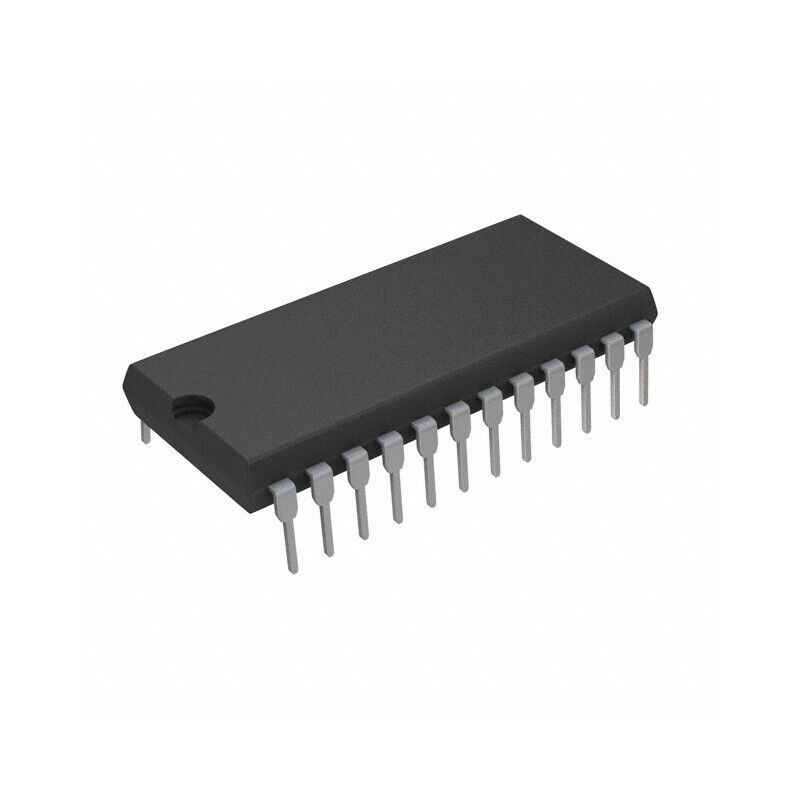


Hitachi HM6264LP-70 8K x 8 CMOS Low Power SRAM DIP-28
30 people are viewing this right now
In Stock
SKU
191713507500
£8.99
Safe Checkout, Guaranteed

Safe Checkout, Guaranteed
The ML232B is a versatile integrated circuit housed in a standard 16-pin DIP (Dual In-line Package), designed for a variety of analog and digital applications. This IC is known for its reliable performance and ease of integration, making it a popular choice among electronics enthusiasts, hobbyists, and professional engineers. The specific function of the ML232B can vary depending on the manufacturer and intended application, but it is often used in signal processing, control systems, and interface circuits. The DIP-16 package provides easy integration into through-hole circuit boards, making it suitable for prototyping, hobbyist projects, and legacy systems. Its standard pinout simplifies design and reduces the need for complex wiring. The ML232B is designed to operate within a specific voltage range and provides a variety of functions, depending on its internal circuitry.
It may include amplifiers, comparators, timers, or other analog and digital components. This IC is commonly used in signal conditioning circuits, where it amplifies, filters, or modifies analog signals. It is also used in control systems, where it provides feedback and control signals. In interface circuits, the ML232B can be used to connect different electronic devices and systems. The ML232B is manufactured to stringent quality standards, ensuring consistent performance and long-term reliability. Its robust construction and high-quality materials ensure that it can withstand the rigors of everyday use.
Upgrade your circuits with the ML232B integrated circuit and experience the versatility and reliability of this popular component. Add it to your cart today and take your projects to the next level. Don't settle for less – choose the ML232B for superior performance and long-lasting reliability. Order now and unleash the full potential of your electronic designs. Invest in the ML232B today and experience the benefits of a versatile and reliable integrated circuit. Its easy integration, robust performance, and wide range of potential applications make it an ideal choice for a variety of projects.
Don't wait – order now and add this essential component to your electronics toolkit.
| Product Name | Hitachi HM6264LP-70 8K x 8 CMOS Low Power SRAM DIP-28 |
|---|---|
| SKU | 191713507500 |
| Price | £8.99 |
| Hitachi HM6264LP-70 8K x 8 CMOS Low Power SRAM DIP-28 Color | As per image |
| Category | Integrated Circuits |
| Brand | Nikko Electronics ltd |
| Product Code | 191713507500 |
| Availability | Yes |
Shipping cost is based on order value. Just add products to your cart and use the Shipping Calculator to see the shipping price. We want you to be 100% satisfied with your purchase. Items can be returned or exchanged within 30 days of delivery.
The Hitachi HM6264LP-70 is designed to follow the industry-standard JEDEC pinout for 64K (8K x 8) static RAM, making it highly compatible with various 6264 series chips from other manufacturers like Toshiba (TC5564), Cypress (CY6264), and Samsung. Because the Hitachi HM6264LP-70 features a standard 28-pin Dual In-line Package (DIP), it can often serve as a drop-in replacement in vintage computers, industrial controllers, and synthesizers. However, when replacing a chip, you must ensure that the access time of the Hitachi HM6264LP-70, which is 70ns, is equal to or faster than the original component's rating. This specific 'LP' version is particularly sought after for its low-power characteristics, which is critical if the original circuit relied on low standby current for battery-backed data retention. Always verify the logic levels and timing diagrams in your specific application, but for the vast majority of 8-bit systems, the Hitachi HM6264LP-70 provides a reliable and high-quality solution for memory upgrades or repairs where a 28-pin 8K x 8 SRAM is required.
The 'LP' suffix in the Hitachi HM6264LP-70 stands for 'Low Power,' which is a critical specification for applications requiring non-volatile storage via a backup battery. Unlike standard SRAM, the Hitachi HM6264LP-70 is engineered using advanced CMOS technology to minimize standby current consumption. This means that when the system is powered down and the chip enters standby mode (controlled by the Chip Select pins), the current draw is reduced to just a few microamps. This efficiency significantly extends the life of lithium coin cells or NiCd batteries used in memory backup circuits. Furthermore, the Hitachi HM6264LP-70 maintains data integrity even as the supply voltage drops, typically down to a data retention voltage of 2.0V. This makes the Hitachi HM6264LP-70 the ideal choice for storing system parameters, save-game data in arcade boards, or calibration constants in industrial equipment where power loss shouldn't result in data erasure. Its ability to balance high-speed 70ns access with ultra-low power idle states makes it a premium choice for engineers designing robust, energy-efficient embedded systems.
The 70ns access time of the Hitachi HM6264LP-70 refers to the maximum time it takes for the device to output valid data after the address lines have stabilized and the chip has been enabled. In the context of 8-bit microprocessors like the Z80, 6502, or 8051, a 70ns rating is considered quite fast. Many vintage systems originally shipped with 120ns or 150ns memory. By using the Hitachi HM6264LP-70, you ensure that the memory will not be a bottleneck, even if the CPU is overclocked or running at its maximum rated frequency. The fast response time of the Hitachi HM6264LP-70 allows for tighter timing margins and reduces the need for 'wait states' in the bus cycle, leading to more stable and efficient system operation. When designing with the Hitachi HM6264LP-70, it is important to consider the total propagation delay of your glue logic (like address decoders), but at 70ns, this SRAM provides ample headroom for most classic computing and early industrial automation tasks, ensuring that data is ready well before the CPU's next clock edge.
The Hitachi HM6264LP-70 shares a very similar 28-pin layout with the 2764 series EPROMs, which is a common trick used by developers for rapid prototyping. Both chips are 8K x 8 devices, but there are key differences in the pin functions that must be addressed. While the address and data pins mostly align, the Hitachi HM6264LP-70 requires a Write Enable (WE) signal on pin 27, which is the Program (PGM) pin on a 2764 EPROM. Additionally, the Hitachi HM6264LP-70 features two chip select pins (CS1 and CS2) to simplify memory bank decoding, whereas EPROMs usually have different enable configurations. If you are using the Hitachi HM6264LP-70 in a socket intended for a 2764, you may need to modify the wiring for the Write Enable and Chip Select signals. Using the Hitachi HM6264LP-70 as a 'RAM-based EPROM emulator' allows for instantaneous code updates without the need for UV erasing, making it a valuable tool for firmware development in legacy environments, provided the hardware interface is correctly adapted to handle the SRAM's control logic requirements.
The Hitachi HM6264LP-70 is designed to operate on a standard +5V DC power supply, which is the typical logic level for TTL and CMOS systems of its era. Specifically, the Hitachi HM6264LP-70 usually supports a voltage tolerance of +/- 10%, meaning it can operate reliably between 4.5V and 5.5V. Operating the Hitachi HM6264LP-70 within these parameters is essential for maintaining the 70ns access speed and ensuring long-term reliability. If the voltage exceeds 7V, there is a significant risk of permanent damage to the internal CMOS structures. Conversely, if the voltage drops below 4.5V during active operation, the timing characteristics may degrade, leading to potential data corruption or system crashes. For battery backup scenarios, the Hitachi HM6264LP-70 is designed to transition into a data retention mode where it can hold memory contents at much lower voltages, typically down to 2V, but it cannot be read from or written to in this state. Proper decoupling with a 0.1uF ceramic capacitor placed close to the VCC pin of the Hitachi HM6264LP-70 is highly recommended to filter out high-frequency noise.
One of the primary benefits of the Hitachi HM6264LP-70 is that it is a Static RAM (SRAM) device, meaning it does not require any refresh circuitry. Unlike DRAM, which stores data in capacitors that leak charge and must be refreshed every few milliseconds, the Hitachi HM6264LP-70 uses a six-transistor (6T) or four-transistor with poly-load memory cell design that maintains its state as long as power is applied. This makes the Hitachi HM6264LP-70 significantly easier to interface with microprocessors, as the designer does not need to implement complex DRAM controllers or worry about refresh-related bus arbitration. The simplicity of the Hitachi HM6264LP-70 interface—consisting essentially of address lines, data lines, and three control signals (WE, OE, and CS)—makes it the preferred choice for small-scale embedded systems, cache memory, and applications where low latency and ease of design are prioritized over high density. This 'set-and-forget' nature of the Hitachi HM6264LP-70 memory storage is what makes it a staple in the world of classic electronics and industrial control systems.
As a CMOS integrated circuit, the Hitachi HM6264LP-70 is sensitive to Electrostatic Discharge (ESD), which can cause immediate failure or latent defects that appear later in the product's life. When handling the Hitachi HM6264LP-70, it is crucial to follow standard ESD safety protocols, such as using a grounded wrist strap and working on a dissipative mat. The 28-pin DIP package of the Hitachi HM6264LP-70 is robust in terms of physical installation into sockets, but the internal gates are susceptible to high-voltage transients. When storing the Hitachi HM6264LP-70, always keep it in antistatic tubes or conductive foam to ensure the pins remain at the same potential. Additionally, when soldering the Hitachi HM6264LP-70 directly onto a PCB, ensure your soldering iron is ESD-safe and grounded. For those using the Hitachi HM6264LP-70 in legacy repairs, using a high-quality IC socket is often recommended to avoid thermal stress during soldering and to allow for easy replacement in the future. Proper handling ensures that the Hitachi HM6264LP-70 will continue to perform reliably for decades, preserving the functionality of the equipment it inhabits.