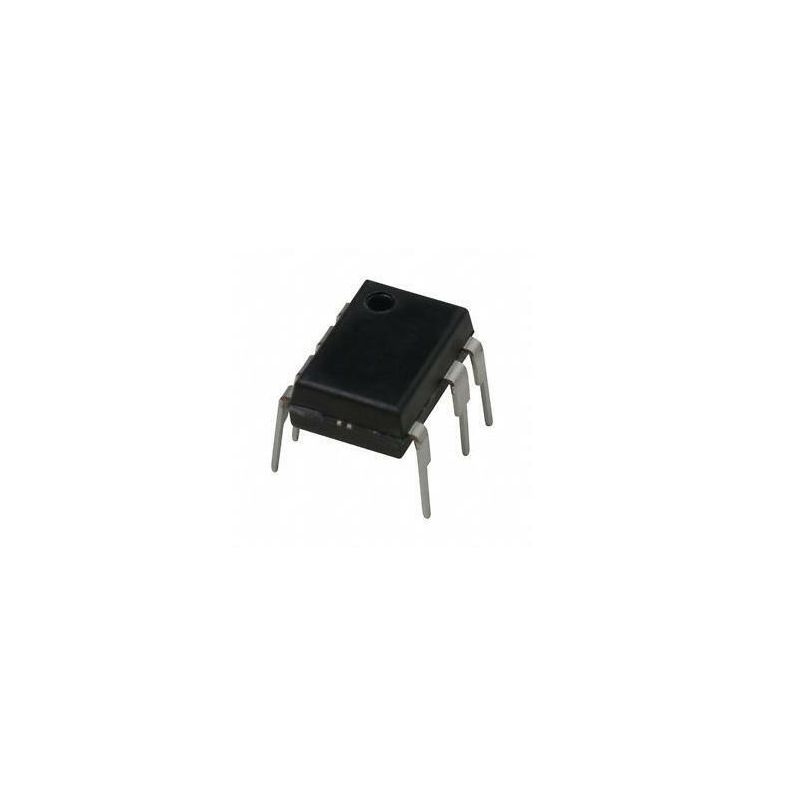


HT12D CMOS Decoder IC (DIP-18)
47 people are viewing this right now
In Stock
SKU
191457665285
£3.99
Safe Checkout, Guaranteed

Safe Checkout, Guaranteed
The HT12D is a versatile and reliable CMOS LSI decoder designed for remote control system applications. Encased in a DIP-18 (Dual In-line Package with 18 pins), this integrated circuit is a fundamental component for constructing robust and secure wireless communication systems. Its primary function is to decode signals transmitted by compatible encoders, typically the HT12E, allowing for control of various electronic devices and systems from a distance. The HT12D boasts excellent noise immunity and a wide operating voltage range, contributing to its consistent and dependable performance in diverse environments. This integrated circuit leverages advanced CMOS technology, resulting in low power consumption, a crucial attribute for battery-operated remote control units and energy-efficient embedded systems. It features eight address pins and four data output pins, providing a flexible architecture for addressing and controlling multiple devices with a single encoder-decoder pair.
This setup enables the creation of sophisticated remote control systems for applications ranging from home automation and security systems to industrial control and robotics. The address pins allow for setting a unique address code, ensuring that only the intended receiver responds to a specific transmitter, thereby minimizing interference and enhancing security. The four data output pins can be used to directly drive loads or interface with microcontrollers for more complex control functionalities. Furthermore, the HT12D incorporates a built-in oscillator circuit, which requires only an external resistor to establish the operating frequency, simplifying the circuit design process and reducing the overall component count. Its compatibility with a broad range of operating voltages further enhances its adaptability to different power supply configurations. The HT12D's applications are vast and varied.
In home automation, it can be used to control lighting, appliances, and security systems remotely. In industrial settings, it can facilitate wireless control of machinery and equipment. It also finds applications in automotive security systems, garage door openers, and a wide array of other consumer electronic devices. The HT12D is known for its ease of use and straightforward implementation. Its well-documented specifications and readily available application notes make it a popular choice for both hobbyists and professional engineers. The robust design ensures reliable operation even in challenging environments.
If you're looking to build a reliable and secure remote control system, the HT12D integrated circuit is an excellent choice. Its versatility, ease of use, and robust performance make it an ideal component for a wide range of applications. Don't miss out on the opportunity to enhance your project with this dependable decoder IC. Order your HT12D DIP-18 today and experience the convenience and control it offers!
| Product Name | HT12D CMOS Decoder IC (DIP-18) |
|---|---|
| SKU | 191457665285 |
| Price | £3.99 |
| HT12D CMOS Decoder IC (DIP-18) Color | As per image |
| Category | Integrated Circuits |
| Brand | Nikko Electronics ltd |
| Product Code | 191457665285 |
| Availability | Yes |
Shipping cost is based on order value. Just add products to your cart and use the Shipping Calculator to see the shipping price. We want you to be 100% satisfied with your purchase. Items can be returned or exchanged within 30 days of delivery.
The HT12D CMOS Decoder IC (DIP-18) is specifically designed to work seamlessly with its corresponding encoder, the HT12E. This pairing is fundamental for establishing a robust and secure wireless communication link in remote control applications. The HT12E encoder transmits data that the HT12D is engineered to interpret, ensuring proper synchronization and decoding. While other 2^12 series encoders might share similar principles, the HT12E is the recommended and most compatible counterpart, guaranteeing optimal performance, address bit matching, and data integrity. Utilizing the HT12D with the HT12E allows developers to leverage their combined features for reliable data transmission, essential for applications ranging from garage door openers to home automation systems, where consistent and error-free operation is paramount.
The HT12D CMOS Decoder IC (DIP-18) significantly enhances security and uniqueness in remote control applications through its 8 address bits (AD0-AD7). These pins can be set to VCC, GND, or left floating, providing 256 unique address combinations. For a remote control system to operate correctly, the address settings on the HT12D decoder must precisely match those of its paired HT12E encoder. This matching mechanism prevents unauthorized control by other devices and minimizes interference in environments with multiple remote systems. By implementing a unique address code, the HT12D ensures that the decoder only responds to signals from its intended encoder, thereby bolstering the system's security against false triggers and enhancing the overall reliability of the wireless communication link, critical for sensitive control applications.
The HT12D CMOS Decoder IC (DIP-18) is renowned for its low power consumption, a direct benefit of its advanced CMOS technology. In quiescent mode, when no valid signal is being received, the device draws minimal current, typically in the microampere range. During active decoding, while processing a valid transmission, the current consumption increases but remains relatively low compared to other logic families. This inherent energy efficiency makes the HT12D an ideal choice for battery-operated remote control units and other power-sensitive applications where extending battery life is crucial. Its wide operating voltage range further complements this, allowing for flexible power source options without compromising on performance or significantly increasing power draw, ensuring longevity and cost-effectiveness in diverse electronic designs.
The HT12D CMOS Decoder IC (DIP-18) features four data output pins (D8, D9, D10, D11) that become active (typically low or high, depending on the specific data transmitted) upon successful decoding of a valid signal. These outputs are commonly interfaced with various control circuitry components such as microcontrollers, relay drivers, or direct LED indicators. For microcontroller integration, the data pins are connected to GPIOs, allowing the MCU to read the decoded commands and execute corresponding actions. When controlling actuators like motors or solenoids, the data pins can drive transistor or relay circuits. Additionally, the Valid Transmission (VT) output pin provides a high signal when a valid code is received, which can be used to gate other circuits or as an interrupt for a microcontroller, ensuring that actions are only triggered by authenticated and complete data transmissions from the paired HT12E encoder.
The HT12D CMOS Decoder IC (DIP-18) is engineered with several features that contribute to its excellent noise immunity, making it reliable in challenging RF environments. Firstly, it employs a sophisticated decoding algorithm that requires a specific sequence of valid preamble bits, address bits, and data bits before recognizing a transmission as legitimate. This prevents random noise or spurious RF signals from being misinterpreted as valid commands. Secondly, the HT12D often incorporates internal filtering and error-checking mechanisms to further validate incoming signals, rejecting incomplete or corrupted data. The requirement for a precise match with the encoder's address settings also acts as a robust filter against interference from other remote control systems. These combined attributes ensure that the HT12D only activates upon receiving a clean, authenticated signal, significantly reducing false triggers and enhancing the overall stability and dependability of the remote control system.
The HT12D CMOS Decoder IC (DIP-18) offers a wide operating voltage range, typically from 2.4V to 12V, which provides significant flexibility for system designers. This broad voltage tolerance means the HT12D can be seamlessly integrated into a variety of power schemes, from low-voltage battery-powered devices (e.g., 3V, 5V systems) to higher-voltage industrial or automotive applications (e.g., 9V, 12V systems). Such versatility simplifies power supply design by eliminating the need for complex voltage regulators solely for the decoder. It also ensures consistent performance across different battery discharge levels, maintaining reliable operation even as battery voltage fluctuates. This wide range enhances the HT12D's adaptability, making it a robust choice for diverse remote control and wireless communication projects without compromising its decoding capabilities or power efficiency.
For the proper functioning of the HT12D CMOS Decoder IC (DIP-18), the most critical external component is a resistor connected between its OSC1 and OSC2 pins. This resistor is fundamental for setting the frequency of the internal oscillator, which dictates the timing for data decoding. It is crucial that the oscillator frequency of the HT12D closely matches that of its paired HT12E encoder to ensure accurate and reliable data reception. The resistor value is typically chosen based on the desired transmission speed and the specific application requirements, often specified in the datasheet. Additionally, decoupling capacitors (e.g., 0.1µF) placed near the VCC and GND pins are highly recommended to stabilize the power supply and filter out noise, contributing to the overall integrity and performance of the HT12D CMOS Decoder IC (DIP-18) in any remote control system.