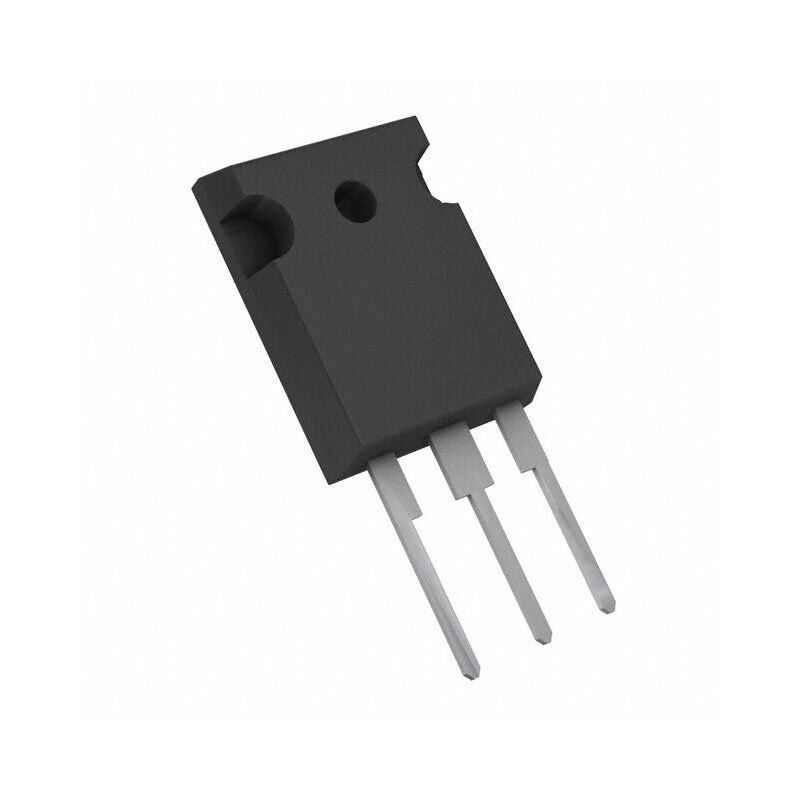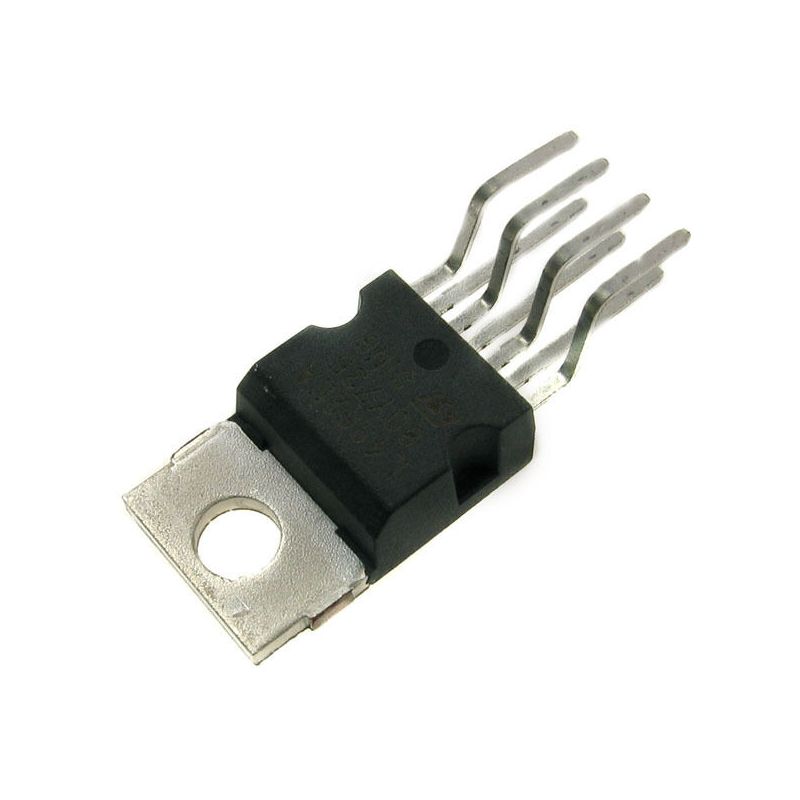


KBPC110 Bridge Rectifier (1A 1000V)
21 people are viewing this right now
In Stock
SKU
191434122587
£2.85
Safe Checkout, Guaranteed

Safe Checkout, Guaranteed
The SAA7709H-103 is a sophisticated integrated circuit designed for advanced audio processing and control, housed in a QFP-80 (Quad Flat Package) for surface mount technology. This IC is a key component in high-end audio systems, automotive entertainment units, and professional audio equipment, providing a comprehensive solution for audio decoding, encoding, and signal processing. The SAA7709H-103 integrates multiple functionalities, including digital audio decoding, digital-to-analog conversion (DAC), and audio signal processing algorithms. It supports a wide range of audio formats, ensuring compatibility with various audio sources and media. The QFP-80 package allows for compact integration on printed circuit boards (PCBs), making it suitable for space-constrained applications. Its surface mount design facilitates automated assembly, reducing manufacturing costs and improving production efficiency.
The SAA7709H-103 features advanced audio processing capabilities, such as equalization, dynamic range compression, and surround sound processing. These features enhance the listening experience by optimizing audio signals for different environments and speaker configurations. The IC also incorporates a built-in microcontroller for system control and configuration, allowing for flexible customization and integration with other system components. The SAA7709H-103 is designed for low power consumption, making it suitable for battery-powered devices and energy-efficient systems. Its robust design and wide operating temperature range ensure reliable performance in demanding environments. The SAA7709H-103 is commonly used in car audio systems, home theater receivers, and professional audio mixing consoles.
Its ability to decode and process a wide range of audio formats makes it a versatile component in any audio system. Furthermore, the SAA7709H-103's advanced audio processing capabilities enhance the listening experience, providing clear and immersive sound. Consider the SAA7709H-103 for your next audio project requiring advanced audio processing and control. Its combination of multiple functionalities, low power consumption, and robust design makes it a valuable component in any audio system. Upgrade your audio designs with the SAA7709H-103 and experience enhanced sound quality and performance. Order yours today and unlock the potential of advanced audio processing in your electronic circuits.
Explore the possibilities and elevate your projects with this dependable and versatile integrated circuit. Don't miss out on the opportunity to enhance your audio designs with the SAA7709H-103. Add it to your cart now and experience the difference in performance and reliability. Its integration capabilities extend to supporting various communication interfaces, such as I2C and SPI, for seamless integration with other system components, further solidifying its role as a central hub for audio processing and control.
| Product Name | KBPC110 Bridge Rectifier (1A 1000V) |
|---|---|
| SKU | 191434122587 |
| Price | £2.85 |
| KBPC110 Bridge Rectifier (1A 1000V) Color | As per image |
| Category | Bridge Rectifier |
| Brand | Nikko Electronics ltd |
| Product Code | 191434122587 |
| Availability | Yes |
Shipping cost is based on order value. Just add products to your cart and use the Shipping Calculator to see the shipping price. We want you to be 100% satisfied with your purchase. Items can be returned or exchanged within 30 days of delivery.
Thermal management is a critical factor when integrating the KBPC110 Bridge Rectifier into power supply designs. While the KBPC110 Bridge Rectifier is rated for a specific forward current, typically 1 Amp, the heat generated due to the forward voltage drop (Vf) across the internal silicon junctions must be effectively dissipated to prevent thermal runaway. This component is usually housed in a compact, rugged casing that facilitates heat transfer. In professional applications, engineers often rely on the ambient air cooling or PCB copper pours to manage heat, but for designs operating near the maximum thermal limits, calculating the junction-to-ambient thermal resistance is essential. If the KBPC110 Bridge Rectifier is used in a confined enclosure with limited airflow, the derating curve must be strictly followed to ensure the junction temperature does not exceed the standard 150°C limit. Proper spacing between the rectifier and other heat-generating components like power transformers or high-wattage resistors is recommended to maintain long-term reliability and prevent premature failure of the internal diode bridge structure.
The KBPC110 Bridge Rectifier is engineered with a Peak Inverse Voltage (PIV) rating of 1000V, making it highly suitable for high-voltage AC to DC rectification tasks. In industrial and consumer electronics, this high voltage ceiling provides a significant safety margin against transient voltage spikes and line surges that often occur in standard 220V or 240V AC mains. When the KBPC110 Bridge Rectifier is used in a full-wave bridge configuration, each internal diode must withstand the peak value of the input waveform. By offering a 1000V rating, the KBPC110 Bridge Rectifier minimizes the risk of avalanche breakdown during unexpected grid fluctuations. However, for robust design practices, it is still advisable to incorporate external protection such as Metal Oxide Varistors (MOVs) or transient voltage suppression (TVS) diodes in parallel with the AC input. This ensures that the KBPC110 Bridge Rectifier remains protected against extreme atmospheric surges or inductive kickbacks that could exceed even the generous 1000V limit provided by the device's silicon architecture.
When the KBPC110 Bridge Rectifier is connected to a large electrolytic filter capacitor, it experiences a significant inrush current during the initial power-up phase. This 'charging current' can momentarily exceed the steady-state maximum current rating of the KBPC110 Bridge Rectifier. To ensure the longevity of the component, designers must compare the circuit's peak inrush current against the non-repetitive peak forward surge current (Ifsm) specification of the KBPC110 Bridge Rectifier. If the calculated inrush is too high, adding a small series resistance or an NTC (Negative Temperature Coefficient) thermistor before the bridge is a standard industry practice. This limits the initial surge and protects the internal junctions of the KBPC110 Bridge Rectifier from localized overheating and mechanical stress. Failure to account for this in high-capacitance power supplies can lead to gradual degradation of the diode junctions, eventually resulting in a short circuit. Using the KBPC110 Bridge Rectifier within its surge current limits ensures a stable DC output for sensitive downstream electronics.
Efficiency in power conversion is largely dictated by the forward voltage drop (Vf) of the rectifier. The KBPC110 Bridge Rectifier features standard silicon PN junctions, which typically exhibit a forward voltage drop of approximately 1.0 to 1.1 Volts per diode. Since the current passes through two diodes simultaneously in a full-wave bridge configuration, the total voltage drop for the KBPC110 Bridge Rectifier is roughly 2.0 to 2.2 Volts. This voltage drop results in power loss in the form of heat, calculated as P = I * Vf. For a 1 Amp load, the KBPC110 Bridge Rectifier will dissipate about 2 Watts of power. While this is negligible in many high-voltage applications, it becomes a factor in low-voltage, high-efficiency designs. Understanding this characteristic of the KBPC110 Bridge Rectifier allows engineers to accurately predict the DC output voltage after rectification (Vdc = Vpeak - 2Vf) and ensures that the power supply provides the correct voltage levels to the voltage regulator or load without excessive thermal waste.
The KBPC110 Bridge Rectifier is primarily designed as a standard recovery rectifier optimized for low-frequency applications, such as 50Hz or 60Hz utility power rectification. Because it utilizes standard silicon recovery characteristics, the KBPC110 Bridge Rectifier is not recommended for high-frequency switching power supplies (SMPS) where frequencies exceed several kilohertz. In high-frequency environments, the reverse recovery time (trr) of the KBPC110 Bridge Rectifier would be too slow, leading to excessive switching losses, overheating, and potential EMI issues. However, the KBPC110 Bridge Rectifier is the ideal choice for the primary input stage of a power supply, where it rectifies the incoming AC mains before it is filtered and then switched at high frequencies by MOSFETs or IGBTs. For designers looking for a robust, reliable component to handle the initial AC-to-DC conversion at mains frequency, the KBPC110 Bridge Rectifier offers the perfect balance of voltage tolerance and current capacity without the unnecessary cost of ultra-fast recovery diodes.
To ensure a reliable electrical connection and mechanical stability, the KBPC110 Bridge Rectifier must be soldered correctly onto the PCB. The leads of the KBPC110 Bridge Rectifier are designed for through-hole mounting, providing strong physical anchoring. During the soldering process, it is important to avoid excessive heat dwell time on the pins to prevent damaging the internal epoxy seal or the silicon die. Using a temperature-controlled soldering station set between 260°C and 300°C is recommended. Additionally, when bending the leads of the KBPC110 Bridge Rectifier for specific mounting orientations, one should use needle-nose pliers to provide stress relief between the bend point and the component body. This prevents mechanical stress from cracking the package. In high-vibration environments, such as automotive or industrial machinery, ensuring the KBPC110 Bridge Rectifier is seated flush against the PCB or secured with a small amount of non-conductive adhesive can prevent lead fatigue and maintain circuit integrity over years of operation.
Using the KBPC110 Bridge Rectifier with inductive loads requires careful consideration of 'flyback' or back-EMF voltages. When a motor or solenoid connected to the output of the KBPC110 Bridge Rectifier is switched off, the collapsing magnetic field can generate a high-voltage spike. While the KBPC110 Bridge Rectifier has a high 1000V PIV rating, these spikes can sometimes exceed that limit or cause repetitive stress to the diodes. It is standard practice to include a freewheeling diode or a snubber circuit (RC network) across the inductive load to dissipate this energy safely. The KBPC110 Bridge Rectifier is robust enough to handle the rectification for small DC motors and actuators, provided these precautions are taken. Its high voltage ceiling makes it particularly resilient in these scenarios compared to lower-rated rectifiers. By choosing the KBPC110 Bridge Rectifier, designers gain a component that provides a stable DC bus while offering the ruggedness needed to survive the electrical noise commonly associated with electromechanical systems.