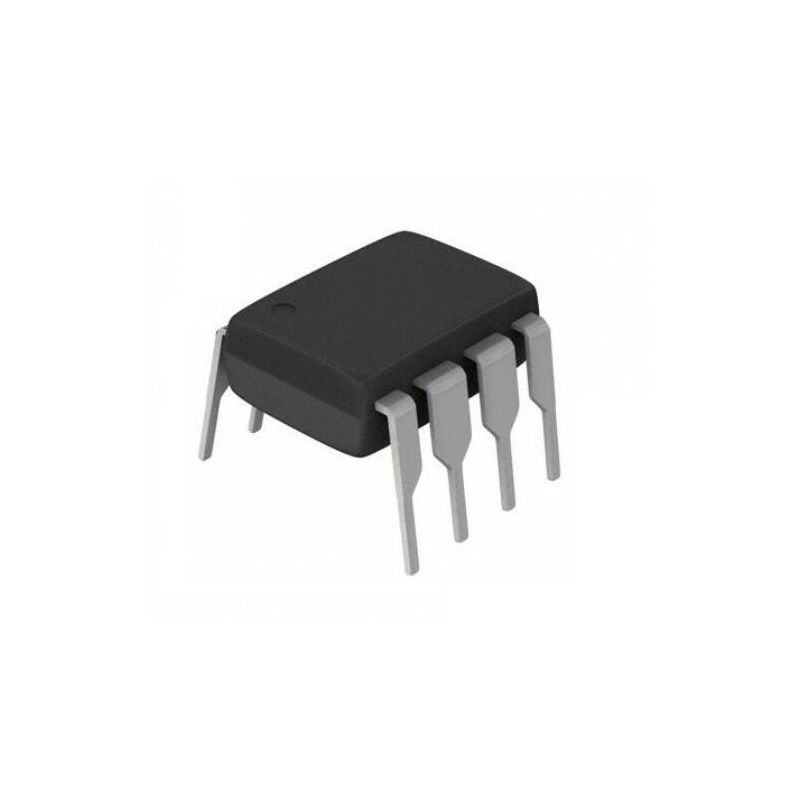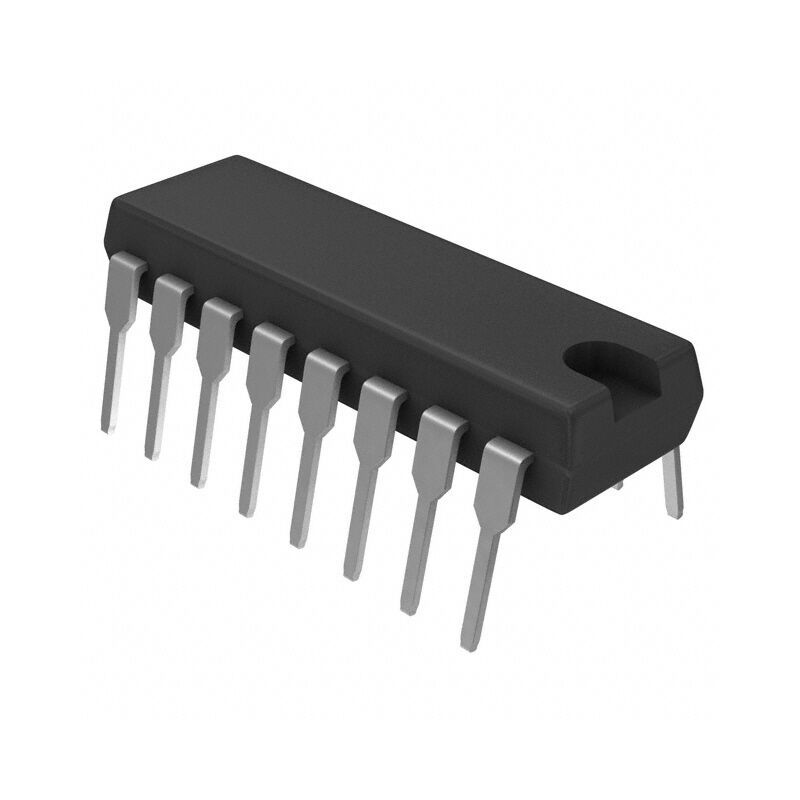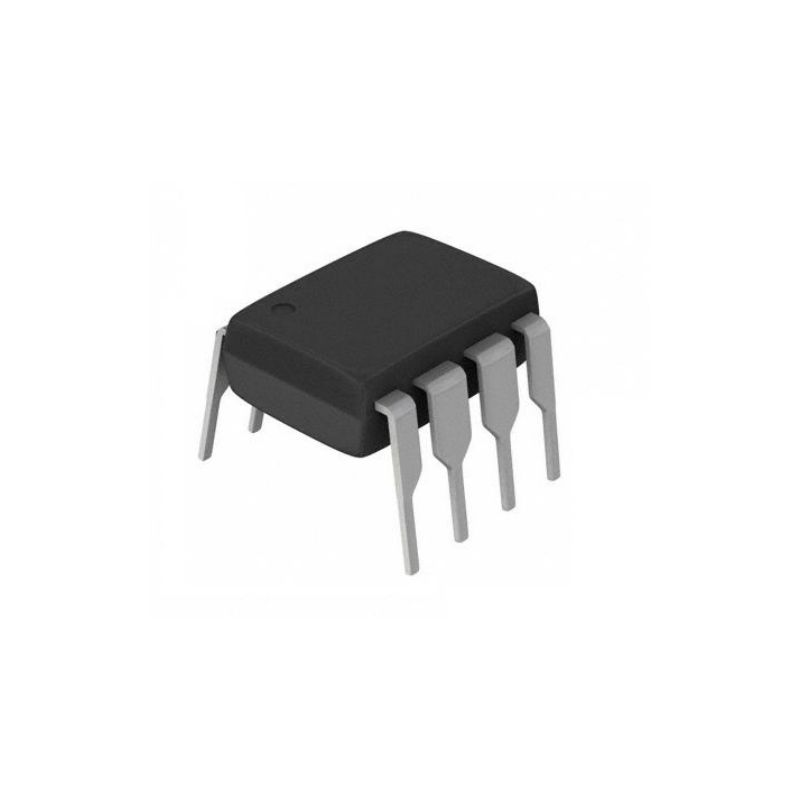


Sanyo LB1407 DIP-14 LED Driver IC
20 people are viewing this right now
In Stock
SKU
191890137159
£6.99
Safe Checkout, Guaranteed

Safe Checkout, Guaranteed
The LB1407 is an integrated circuit (IC) manufactured by Sanyo, designed for driving LED bar graphs or arrays. Encased in a DIP-14 (Dual In-Line Package), this IC is ideal for a variety of display applications, including audio level meters, voltage indicators, and signal strength displays. Its robust design and industry-standard packaging make it easy to integrate into both new and existing circuit designs. The LB1407 is designed to drive up to five LEDs, providing a simple and efficient way to create visual displays. It features a built-in constant current source for each LED, ensuring uniform brightness and preventing damage to the LEDs. The IC operates on a single 5V power supply, simplifying power supply design and reducing overall system complexity.
The DIP-14 package provides easy insertion and removal from sockets, simplifying prototyping and maintenance. The LB1407 is also available in surface-mount packages for high-density applications. The Sanyo LB1407 LED driver IC offers several advantages over discrete LED driving circuits, including lower component count, smaller size, and improved reliability. Its built-in constant current sources ensure uniform brightness and prevent damage to the LEDs, while its simple interface makes it easy to integrate into existing systems. Engineers use the LB1407 in audio level meters, voltage indicators, and signal strength displays. In audio level meters, the LB1407 is used to display the audio signal level using a bar graph of LEDs.
Its constant current sources ensure that each LED is illuminated with the same brightness, providing an accurate and visually appealing display. In voltage indicators, the LB1407 is used to display the voltage level of a battery or power supply. Its simple interface makes it easy to connect to a voltage divider circuit, providing a visual indication of the voltage level. In signal strength displays, the LB1407 is used to display the signal strength of a radio receiver or other communication device. Its constant current sources ensure that each LED is illuminated with the same brightness, providing an accurate and visually appealing display. Whether you are building a new display system or upgrading an existing one, the LB1407 can provide the performance and reliability you need.
Consider LM3914 or LM3915 for possible substitute part numbers. Its simple interface and built-in constant current sources make it easy to integrate into a wide variety of applications. Add this key component to your inventory and see the enhanced potential of your electrical efforts. Order your LB1407 today and experience the superior performance and reliability of Sanyo integrated circuits. Its constant current sources and simple interface make it ideal for a wide variety of display applications. Add this versatile IC to your cart now and take your display projects to the next level!
| Product Name | Sanyo LB1407 DIP-14 LED Driver IC |
|---|---|
| SKU | 191890137159 |
| Price | £6.99 |
| Sanyo LB1407 DIP-14 LED Driver IC Color | As per image |
| Category | Integrated Circuits |
| Brand | Nikko Electronics ltd |
| Product Code | 191890137159 |
| Availability | Yes |
Shipping cost is based on order value. Just add products to your cart and use the Shipping Calculator to see the shipping price. We want you to be 100% satisfied with your purchase. Items can be returned or exchanged within 30 days of delivery.
The Sanyo LB1407 DIP-14 LED Driver IC is specifically designed to drive up to five individual LEDs, making it ideal for compact bar graph or array displays. Each of these five outputs benefits from a built-in constant current source, ensuring uniform brightness across all connected LEDs and simplifying the design by eliminating the need for external current-limiting resistors for each LED. While the Sanyo LB1407 itself does not feature direct cascading pins in the traditional sense for a single, continuous bar graph beyond five segments, larger displays can be easily achieved by employing multiple Sanyo LB1407 ICs in parallel. For instance, two LB1407 units could drive a 10-segment display, three for 15 segments, and so on. Each IC would require its own input signal, which could be derived from a common source through appropriate signal conditioning or a microcontroller. This modular approach offers flexibility for designers needing more than five visual indicators.
The Sanyo LB1407 DIP-14 LED Driver IC operates efficiently on a single 5V power supply, which is a significant advantage for designers. This standard voltage level simplifies power supply design considerably, as 5V rails are ubiquitous in digital and mixed-signal electronic systems, making the LB1407 highly compatible with most microcontrollers, logic gates, and other common integrated circuits. When integrating the Sanyo LB1407 into an existing 5V system, ensure the power supply can provide sufficient current for the IC itself, plus the cumulative current required by all five LEDs at their specified operating current (typically a few milliamps per LED, depending on the constant current source value, which is internally set). Decoupling capacitors (e.g., 0.1µF ceramic) should be placed close to the IC's power pins to ensure stable operation and filter out high-frequency noise, which is a standard practice for robust IC integration.
The Sanyo LB1407 DIP-14 LED Driver IC's most critical feature for LED applications is its integrated constant current source for each of its five LED outputs. This design choice offers substantial benefits in terms of display quality and component longevity. Firstly, it ensures superior brightness uniformity across all LEDs in the array. Without a constant current source, variations in LED forward voltage (Vf), which can occur even within the same batch, or fluctuations in the supply voltage, would lead to noticeable differences in LED brightness. Secondly, the constant current source inherently protects the LEDs from overcurrent conditions, which are a common cause of premature LED failure. By actively regulating the current flowing through each LED, the Sanyo LB1407 eliminates the need for external current-limiting resistors, simplifying circuit design, reducing component count, and ultimately enhancing the reliability and aesthetic consistency of the LED display.
Given its intended use in applications like audio level meters and voltage indicators, the Sanyo LB1407 DIP-14 LED Driver IC is primarily designed to respond to an analog input signal. Internally, it likely incorporates a series of comparators that trigger each LED output sequentially as the input voltage crosses predefined thresholds. This allows for a continuous analog input voltage to be translated into a stepped, visual bar graph display, where more LEDs illuminate as the input signal strength increases. For instance, in an audio level meter, an increasing audio signal amplitude (after rectification and filtering) would cause more LEDs to light up. While the product description doesn't detail specific input pin configurations, designers should anticipate providing a conditioned analog voltage signal within the IC's specified input range to control the progressive illumination of the five LED segments efficiently and accurately.
The Dual In-Line Package (DIP-14) of the Sanyo LB1407 DIP-14 LED Driver IC offers several distinct advantages, particularly for prototyping, educational projects, and certain manufacturing scenarios. For prototyping, DIP packages are exceptionally breadboard-friendly, allowing engineers and hobbyists to quickly assemble and test circuits without the need for specialized soldering equipment or custom PCBs. This expedites the design and iteration process significantly. In manufacturing, especially for lower-volume production or applications requiring robust physical connections, through-hole components like the DIP-14 are easier to hand-solder and inspect compared to surface-mount devices (SMD). They also provide greater mechanical strength once soldered to a PCB, making them suitable for environments where vibration or physical stress might be a concern. Furthermore, rework and repair are generally simpler with DIP components, as individual pins are more accessible for desoldering and replacement.
While the Sanyo LB1407 DIP-14 LED Driver IC is excellent for audio level meters, its versatility extends to a wide array of other visual display applications. Its ability to drive up to five LEDs with constant current makes it ideal for any scenario requiring a multi-segment visual indicator. Common uses include general-purpose voltage indicators, showing charge levels for battery-powered devices, or displaying signal strength in communication equipment. It can also be integrated into industrial control panels to provide visual feedback on process variables like temperature (when interfaced with a sensor and appropriate conditioning), pressure, or flow rates in a simplified, stepped manner. Furthermore, the Sanyo LB1407 is a popular choice for educational kits and hobby electronics projects due to its ease of use, standard 5V operation, and DIP-14 packaging, allowing for quick implementation of visual feedback in various custom circuits.
Utilizing an integrated circuit such as the Sanyo LB1407 DIP-14 LED Driver IC offers significant reliability benefits compared to constructing an equivalent LED driver circuit from discrete components (e.g., individual transistors, resistors, and comparators). Firstly, an IC drastically reduces the total component count on a PCB, which in turn minimizes the number of solder joints – a primary point of failure in electronic assemblies. Fewer components and connections directly translate to improved overall system reliability and reduced manufacturing defects. Secondly, the internal circuitry of the Sanyo LB1407 is designed and manufactured under controlled conditions, ensuring consistent performance characteristics across all units, unlike discrete components which can have wider tolerances. This leads to more predictable and stable LED brightness and operation. Finally, the compact nature of an IC often results in a smaller PCB footprint and potentially better thermal management for the driving circuitry, contributing to a longer operational lifespan for the entire display system.