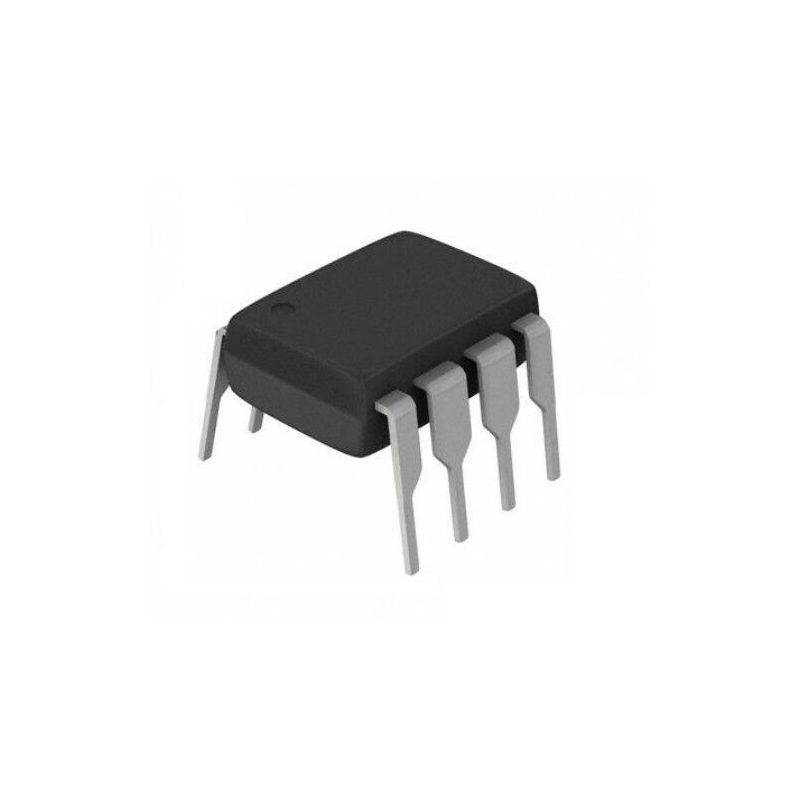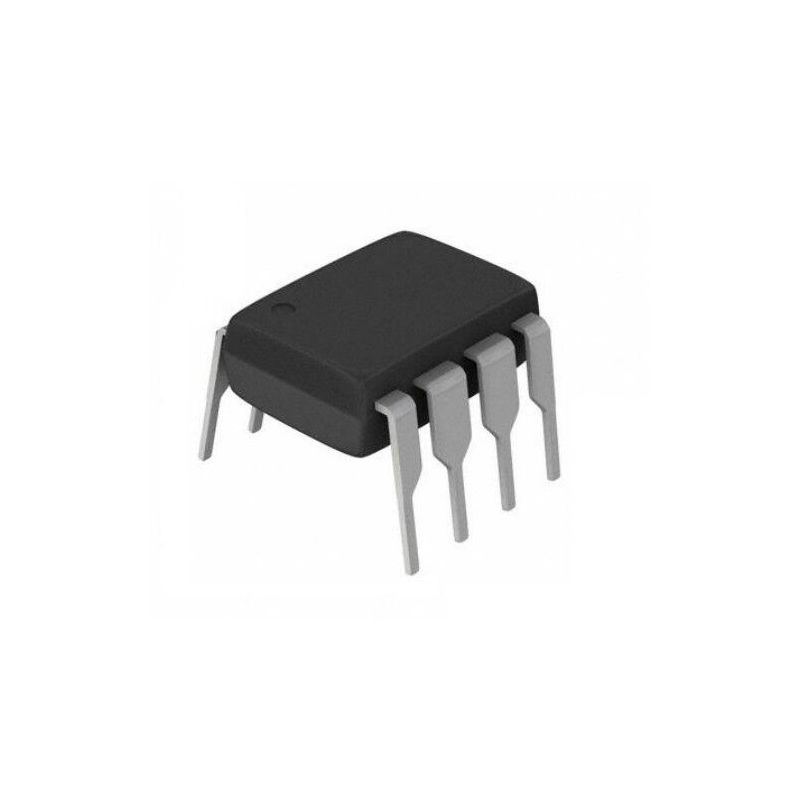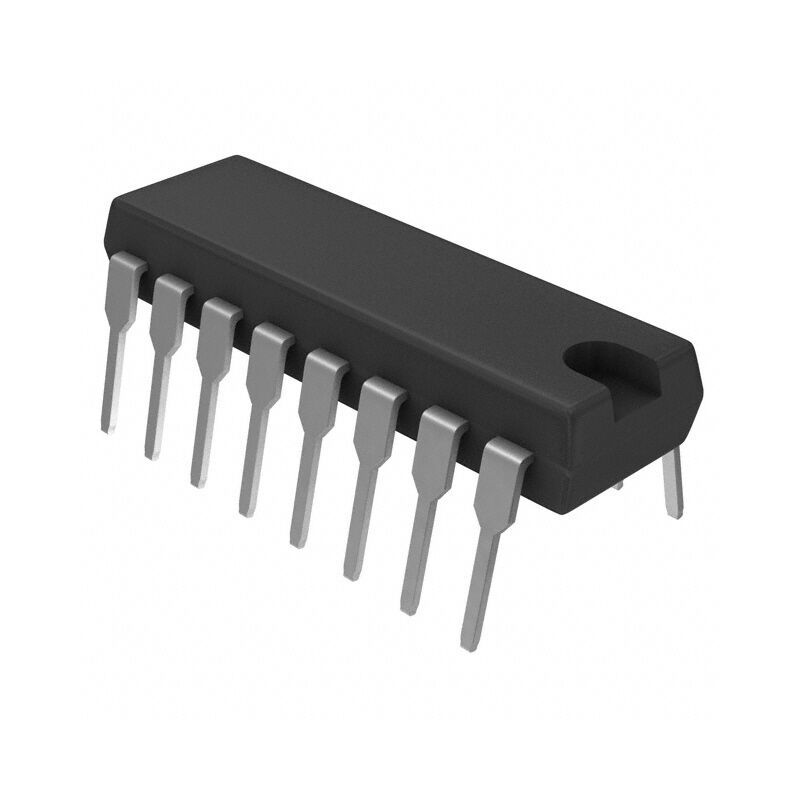


LM211N Texas Instruments Voltage Comparator DIP-8
25 people are viewing this right now
In Stock
SKU
191890137176
£2.65
Safe Checkout, Guaranteed

Safe Checkout, Guaranteed
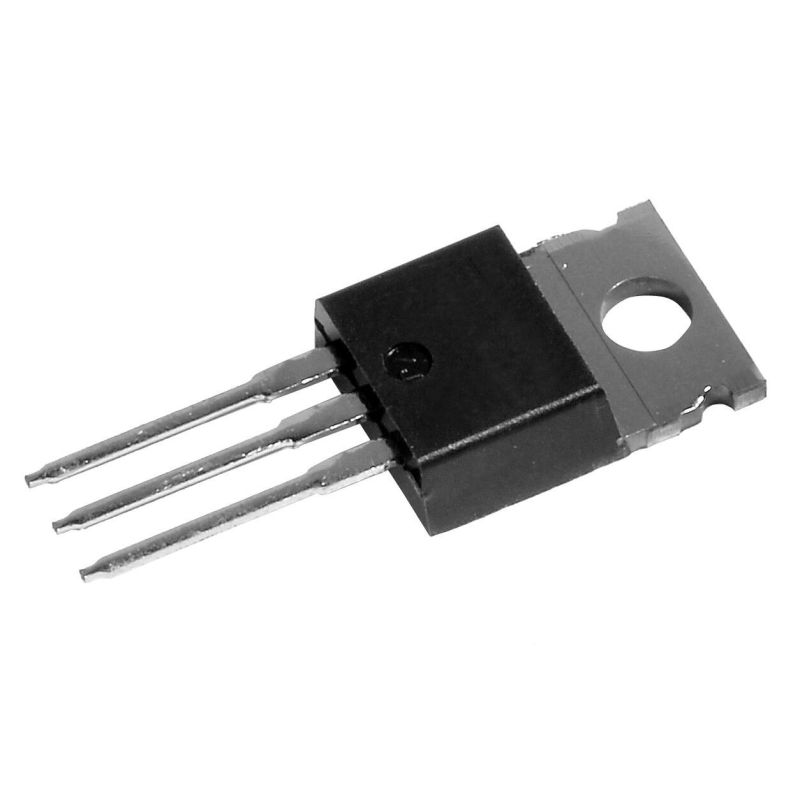
The IPS5451 is a robust and efficient Power MOSFET designed for a wide array of power switching applications. Encased in the TO-220-5 package, this MOSFET offers excellent thermal performance and ease of mounting, making it a versatile choice for both industrial and consumer electronics. The TO-220-5 package enhances heat dissipation, allowing the IPS5451 to operate reliably under high-power conditions. The additional pins provide enhanced control and monitoring capabilities, improving overall system performance. The IPS5451 is engineered to deliver low on-resistance (RDS(on)), minimizing power losses during conduction and maximizing energy efficiency. This is particularly crucial in applications where energy conservation is a priority.
The MOSFET is commonly used in switching power supplies, motor control circuits, DC-DC converters, and other power management systems. Its high switching speed and low gate charge contribute to efficient operation and reduced switching losses. The IPS5451 is designed to withstand high voltage and current levels, making it suitable for demanding applications. It also incorporates built-in protection features such as over-temperature protection and over-current protection, enhancing its reliability and preventing damage to the device and connected circuitry. The IPS5451 is a popular choice among power electronics engineers due to its superior performance and robust design. Its low RDS(on) and high switching speed contribute to efficient power conversion and reduced heat generation.
The TO-220-5 package simplifies mounting and provides excellent thermal contact with heat sinks. The IPS5451 is manufactured to stringent quality standards, ensuring consistent performance and long-term reliability. Each MOSFET is thoroughly tested to meet the manufacturer's specifications. This Power MOSFET provides a cost-effective solution for your power electronics needs. Whether you are designing a new power supply, upgrading an existing motor drive, or experimenting with DC-DC converters, the IPS5451 will deliver the performance and reliability you expect. Don't settle for less.
Choose the IPS5451 Power MOSFET for your next project. Order yours today and experience the difference!
| Product Name | LM211N Texas Instruments Voltage Comparator DIP-8 |
|---|---|
| SKU | 191890137176 |
| Price | £2.65 |
| LM211N Texas Instruments Voltage Comparator DIP-8 Color | As per image |
| Category | Integrated Circuits |
| Brand | Nikko Electronics ltd |
| Product Code | 191890137176 |
| Availability | Yes |
Shipping cost is based on order value. Just add products to your cart and use the Shipping Calculator to see the shipping price. We want you to be 100% satisfied with your purchase. Items can be returned or exchanged within 30 days of delivery.
The LM211N Texas Instruments Voltage Comparator DIP-8 is highly versatile, finding primary applications in various signal conditioning and interfacing tasks. It is frequently employed in zero-crossing detectors, window comparators, level shifters, and oscillator circuits. Its precision makes it suitable for analog-to-digital conversion, threshold detection, and relay driving. A key feature is its open-collector output, which provides significant design flexibility. This output can sink up to 50mA, allowing it to interface directly with TTL, CMOS, and DTL logic families, or drive lamps and relays. The open-collector configuration means an external pull-up resistor is required, which can be connected to a supply voltage independent of the comparator's own supply. This facilitates level shifting, enabling the LM211N to compare signals at one voltage level and output a signal compatible with a different logic family's supply, enhancing its utility in mixed-signal environments and complex control systems.
Yes, the LM211N Texas Instruments Voltage Comparator DIP-8 is designed for flexible power supply operation, accommodating both single and dual supply configurations. When operating with a single supply, typically from +5V up to +36V, the input common-mode voltage range extends from the negative supply rail (ground) to within approximately 1.5V of the positive supply. In this mode, careful consideration of input signals is necessary to avoid exceeding these limits. For dual supply operation, such as ±15V or ±12V, the input common-mode voltage range typically extends to the negative supply rail and within 1.5V of the positive supply, offering greater flexibility for signals referenced to ground. The open-collector output of the LM211N allows its output voltage swing to be independent of its own supply voltage, enabling it to pull up to an external voltage source (up to +36V) regardless of whether it's powered by a single or dual supply, making it highly adaptable for interfacing with various logic levels.
The LM211N Texas Instruments Voltage Comparator DIP-8 offers a typical response time in the range of 150 to 200 nanoseconds, depending on the overdrive voltage and load conditions. This makes it a generally fast comparator suitable for many moderate-speed switching and timing applications where microsecond-level precision is acceptable. For instance, in pulse width modulation (PWM) circuits or simple data acquisition systems, its speed is often sufficient. However, for genuinely high-speed switching applications, such as those requiring nanosecond or sub-nanosecond response times found in RF systems, very fast clock generation, or high-frequency data recovery, the LM211N may not be the optimal choice. In such cases, dedicated high-speed comparators like the TLV3501 or specialized ECL/PECL comparators would offer significantly faster propagation delays, often in the single-digit nanosecond range, at the cost of higher power consumption and potentially more complex interfacing requirements. The LM211N strikes a good balance between speed, precision, and ease of use for a broad range of general-purpose applications.
The offset voltage (VOS) and input bias current (IB) are critical parameters for the LM211N Texas Instruments Voltage Comparator DIP-8, significantly impacting its precision in sensing applications. The typical input offset voltage for the LM211N is around 2mV, meaning the comparator may indicate a difference even when the input voltages are identical. This can lead to inaccuracies in precise threshold detection. Similarly, the input bias current, typically in the tens of nanoamperes, flows through the input resistors, causing a voltage drop that can introduce further errors, especially when using high-value input resistors. To mitigate these effects, several compensation techniques are recommended. For offset voltage, the LM211N includes dedicated offset null pins (typically pins 5 and 6) that allow for external potentiometer adjustment to effectively zero out the offset. For input bias current, ensuring that the Thevenin equivalent resistance seen by both input terminals is matched can minimize errors, as the bias currents will create similar voltage drops, effectively canceling out their differential effect. Choosing lower value input resistors also helps, provided they don't unduly load the signal source. These techniques are crucial for maximizing the accuracy of the LM211N in sensitive sensing and measurement circuits.
While operational amplifiers can be configured as comparators, the LM211N Texas Instruments Voltage Comparator DIP-8 is specifically designed for comparison tasks and offers distinct advantages. A key difference lies in their output stages. The LM211N features an open-collector output, allowing it to interface with various logic levels and directly drive inductive loads like relays, something a typical op-amp output cannot do without external circuitry. Comparators are also designed for speed; they have much faster slew rates and recovery times from saturation than general-purpose op-amps, which are optimized for linear operation. When an op-amp is driven into saturation as a comparator, it can take a significant amount of time to recover, leading to slow response times and potential oscillations. The LM211N, however, is designed to operate in a saturated state and recover quickly. Furthermore, comparators often have built-in hysteresis or can be easily configured for it, preventing output chatter due to noise on the input signal, a feature not inherently optimized in standard op-amps. For reliable, fast, and flexible voltage threshold detection, the LM211N is generally the superior choice over an op-amp.
The LM211N Texas Instruments Voltage Comparator DIP-8 features an open-collector output with a robust current sinking capability, typically up to 50mA. This makes it highly versatile for direct interfacing with various loads. When connecting to TTL logic, the LM211N's output can directly sink the required current from a TTL gate's pull-up resistor, providing a reliable low state. For CMOS logic, which typically has high input impedance and low current requirements, the LM211N is also highly compatible, often requiring only a moderate pull-up resistor to define the high state. A critical consideration for both is selecting an appropriate external pull-up resistor value. This resistor, connected between the output pin and the desired positive supply (e.g., +5V for TTL, +3.3V or +5V for CMOS), determines the high-state voltage and limits the current when the output is in the low state. When driving a relay, the 50mA sink capability is sufficient for many small signal relays. However, it's essential to include a flyback diode across the relay coil to protect the LM211N from voltage spikes generated when the relay coil de-energizes, preventing potential damage to the comparator.
The LM211N Texas Instruments Voltage Comparator DIP-8 offers dedicated strobe and balance/offset null pins, which significantly enhance its functionality and precision. The balance/offset null pins (typically pins 5 and 6) are crucial for high-accuracy applications. By connecting a potentiometer between these pins with its wiper tied to the negative supply or ground, the inherent input offset voltage of the comparator can be precisely adjusted to zero. This ensures that the output switches exactly when the input voltages are equal, improving the accuracy of threshold detection or window comparison circuits. The strobe pin (typically pin 6, often shared with one of the balance pins) provides a powerful control feature. When the strobe pin is pulled low (typically to ground or the negative supply), it disables the comparator's output, forcing it into a known high-impedance state regardless of the input conditions. This functionality is invaluable for multiplexing multiple comparator outputs onto a single bus, for power-saving modes, or for implementing sample-and-hold comparator functions, allowing external control over when the comparison result is valid or held, thereby increasing the overall system flexibility and performance of the LM211N.