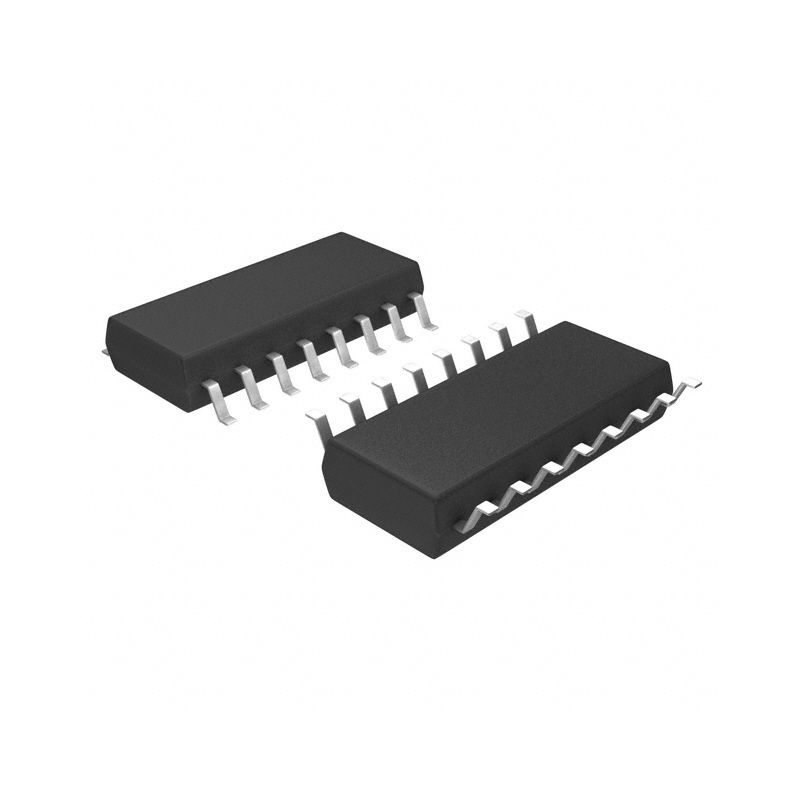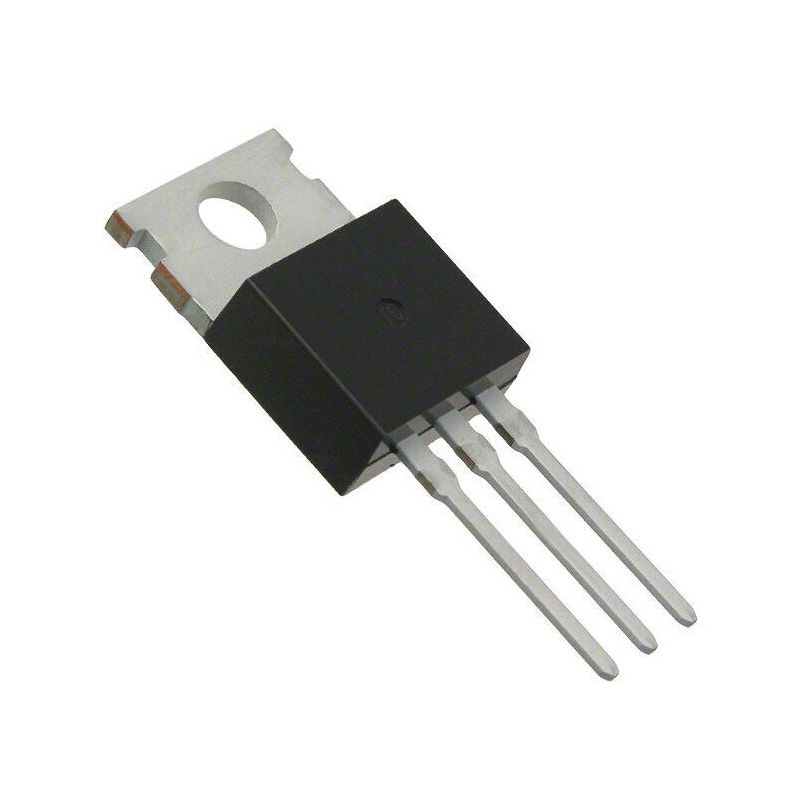


LM2575T-ADJ 1A Adjustable Buck Regulator IC (TO-220)
20 people are viewing this right now
In Stock
SKU
191068976962
£3.99
Safe Checkout, Guaranteed

Safe Checkout, Guaranteed
The LM2575T-ADJ is an adjustable output voltage step-down (buck) switching regulator integrated circuit, designed for efficient power conversion. Encased in a TO-220-5 package, this IC is capable of delivering up to 1A of output current, making it a versatile solution for a wide range of applications requiring regulated DC voltage from a higher voltage source. The adjustable output voltage feature of the LM2575T-ADJ allows designers to customize the output voltage to precisely meet the requirements of their circuits. This adjustability is achieved through the use of external resistors, providing flexibility in voltage selection. The LM2575T-ADJ excels in providing highly efficient power conversion. Its switching regulator design minimizes power loss during the voltage step-down process, resulting in improved energy efficiency and reduced heat generation.
This efficiency is particularly beneficial in battery-powered devices or applications where minimizing power consumption is critical. This IC simplifies power supply design by integrating all necessary functions, including the switching regulator, error amplifier, oscillator, and current limiting circuitry. This integration reduces the number of external components required, saving board space and reducing overall system cost. The TO-220-5 package provides excellent thermal performance, allowing the LM2575T-ADJ to dissipate heat effectively. This thermal performance is crucial for maintaining stable operation, especially under high load conditions. The LM2575T-ADJ also incorporates several protection features to ensure safe and reliable operation.
These features include thermal shutdown, current limiting, and overvoltage protection, safeguarding the IC and connected components from damage. The LM2575T-ADJ switching regulator is ideal for applications such as battery chargers, DC-DC converters, and general-purpose power supplies. Its versatility, efficiency, and robust protection features make it a popular choice for electronics design engineers. This IC can be used in applications such as point-of-load regulation, where it provides a stable and regulated voltage to specific components or sections of a circuit board. The LM2575T-ADJ is also suitable for use in industrial control systems, where a reliable and efficient power supply is essential for the operation of critical equipment. In automotive applications, the LM2575T-ADJ can be used to provide regulated power for various electronic systems, such as infotainment systems and engine control units.
Its ability to withstand harsh environmental conditions makes it a reliable choice for these applications. With its combination of efficiency, adjustability, protection features, and ease of use, the LM2575T-ADJ is a powerful tool for power supply design. Moreover, its use in alternative energy systems, such as solar panel charge controllers and wind turbine power management, demonstrates its versatility and eco-friendly applications. This IC helps to efficiently convert energy from renewable sources into usable power, thereby maximizing the performance and sustainability of these systems. Furthermore, the LM2575T-ADJ provides a stable voltage supply for sensitive electronic components, ensuring that they function reliably and accurately. Whether you're a hobbyist or a professional, this is the optimal IC regulator for your projects.
Don't wait any longer – add the LM2575T-ADJ to your cart now and experience efficient power conversion!
| Product Name | LM2575T-ADJ 1A Adjustable Buck Regulator IC (TO-220) |
|---|---|
| SKU | 191068976962 |
| Price | £3.99 |
| LM2575T-ADJ 1A Adjustable Buck Regulator IC (TO-220) Color | As per image |
| Category | Integrated Circuits |
| Brand | Nikko Electronics ltd |
| Product Code | 191068976962 |
| Availability | Yes |
Shipping cost is based on order value. Just add products to your cart and use the Shipping Calculator to see the shipping price. We want you to be 100% satisfied with your purchase. Items can be returned or exchanged within 30 days of delivery.
The LM2575T-ADJ 1A Adjustable Buck Regulator IC (TO-220) offers a versatile output voltage range, typically adjustable from 1.23V up to 37V, provided the input voltage (Vin) is sufficiently higher than the desired output voltage (Vout). This adjustability is achieved using an external resistor divider network connected to the feedback pin. Specifically, two resistors, R1 and R2, are required. R1 connects from the output voltage to the feedback pin, and R2 connects from the feedback pin to ground. The output voltage is determined by the formula Vout = Vref * (1 + R1/R2), where Vref is the internal reference voltage of 1.23V. Careful selection of these resistors, often in the kilohm range, is crucial for precise output voltage setting and stability. It's recommended to use precision resistors to maintain accuracy, especially in sensitive applications. This flexibility makes the LM2575T-ADJ an excellent choice for custom power supply designs.
The efficiency of the LM2575T-ADJ 1A Adjustable Buck Regulator IC (TO-220) is a key performance metric, typically ranging from 75% to over 85%, depending significantly on the input-to-output voltage differential and the load current. Higher efficiency is generally observed when the input voltage is closer to the output voltage (within the buck regulator's operational limits) and at higher load currents, as the fixed quiescent current losses become less significant proportionally. Conversely, a very large differential between input and output voltage, or very light loads, can reduce efficiency due to increased switching losses and quiescent current dominance. Factors influencing efficiency include the switching frequency (fixed at 52 kHz for the LM2575T-ADJ), the ON-resistance of the internal power switch, the forward voltage drop of the external diode, and the ESR of the capacitors. Optimizing external component selection, such as using low-ESR capacitors and a low-Vf Schottky diode, is crucial for maximizing the overall efficiency of your power supply design using the LM2575T-ADJ.
When operating the LM2575T-ADJ 1A Adjustable Buck Regulator IC (TO-220) at its maximum 1A output current, especially with a large input-to-output voltage differential, thermal management becomes a critical design consideration. The TO-220 package, while offering decent thermal performance compared to smaller packages, still requires attention to dissipate heat generated by internal power losses. These losses are primarily due to the internal switch's ON-resistance and switching losses. To prevent the IC from overheating and potentially entering thermal shutdown, a heatsink is often necessary when operating near the 1A limit, or when the input voltage is significantly higher than the output. The heatsink should be adequately sized based on the maximum expected ambient temperature, the power dissipation of the LM2575T-ADJ, and the thermal resistance of the heatsink itself. Proper PCB layout with large copper areas connected to the ground and output pins can also help in heat spreading, contributing to improved thermal performance and long-term reliability of the LM2575T-ADJ 1A Adjustable Buck Regulator IC (TO-220).
For optimal performance of the LM2575T-ADJ 1A Adjustable Buck Regulator IC (TO-220), careful selection of input and output capacitors is essential for stability, ripple reduction, and transient response. For the input capacitor, a low-ESR electrolytic capacitor, typically in the range of 100µF to 330µF, is recommended. This capacitor helps smooth the input voltage, reduce input ripple caused by the switching action, and provide transient current to the regulator. It should be rated for at least 1.5 times the maximum input voltage. For the output capacitor, also a low-ESR electrolytic capacitor is preferred, usually between 100µF and 470µF. This capacitor significantly impacts output ripple and transient response; lower ESR results in lower output ripple. Ceramic capacitors can be used in parallel with electrolytic ones to further reduce high-frequency noise. Always ensure that the ripple current rating of both capacitors is sufficient for the application to prevent premature failure. Proper placement close to the LM2575T-ADJ is also vital for minimizing parasitic inductance and maximizing performance.
The LM2575T-ADJ 1A Adjustable Buck Regulator IC (TO-220) is primarily designed as a positive step-down (buck) switching regulator, meaning it converts a higher positive input voltage to a lower positive output voltage. Its internal architecture, including the NPN output switch and feedback loop, is optimized for this configuration. Therefore, it cannot directly generate a negative output voltage in a standard buck configuration. However, with creative circuit topologies, such as a buck-boost (inverting) configuration, it is possible to use the LM2575T-ADJ to generate a negative output voltage from a positive input. This requires a different external component arrangement, including specific inductor, diode, and capacitor connections to invert the voltage. While feasible, this inverting buck-boost setup typically results in lower efficiency and reduced output current capability compared to its standard positive buck operation. Designers should consult the detailed application notes for such configurations if a negative output is absolutely necessary with the LM2575T-ADJ, carefully considering the trade-offs in performance and complexity.
The LM2575T-ADJ 1A Adjustable Buck Regulator IC (TO-220) incorporates several crucial built-in protection features to ensure reliability and safeguard both the IC and the connected load. It includes thermal shutdown, which prevents damage from excessive internal junction temperatures. If the IC's temperature exceeds a predefined limit (typically around 150-160°C), the output switch is temporarily disabled until the temperature drops to a safe level, then normal operation resumes. Additionally, the LM2575T-ADJ features current limit protection. This function monitors the peak current through the internal power switch. If the current exceeds the safe operating limit (approximately 1.6A for the 1A version), the switch-on time is reduced or the switching cycle is terminated to prevent saturation and damage to the inductor or the IC itself. These robust protection mechanisms make the LM2575T-ADJ a resilient component for various power management applications, reducing the need for external protection circuitry in many cases and enhancing system reliability.
The output ripple and noise performance of the LM2575T-ADJ 1A Adjustable Buck Regulator IC (TO-220) is a critical factor for sensitive applications. Typically, the output ripple voltage can be in the tens of millivolts peak-to-peak, depending on the load current, input voltage, and most importantly, the selection of the output capacitor and inductor. To minimize output ripple and noise, several design practices are highly recommended. Firstly, use a low-ESR (Equivalent Series Resistance) output capacitor, preferably an electrolytic one with a ceramic capacitor in parallel to filter high-frequency noise. Secondly, select an inductor with appropriate inductance value (typically 10µH to 330µH for 1A) and saturation current rating that is significantly higher than the peak inductor current. Thirdly, proper PCB layout is crucial: keep the high-current switching loops as small as possible, use wide traces for power paths, and ensure a solid ground plane. Shielding the inductor and careful routing of the feedback trace away from noisy switching nodes can also significantly reduce EMI and conducted noise, ensuring the LM2575T-ADJ 1A Adjustable Buck Regulator IC (TO-220) delivers a clean, stable output.