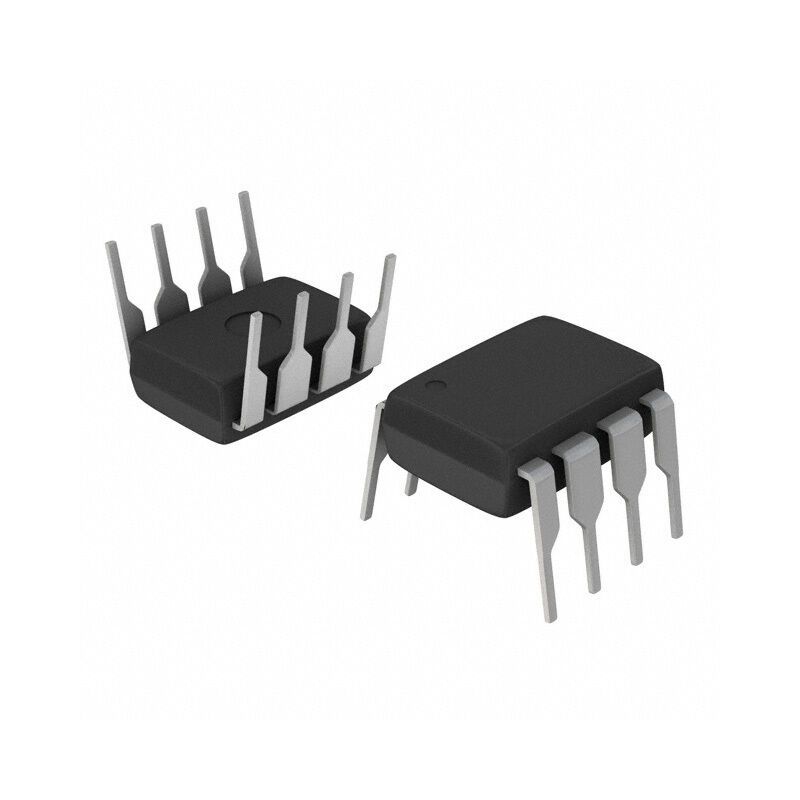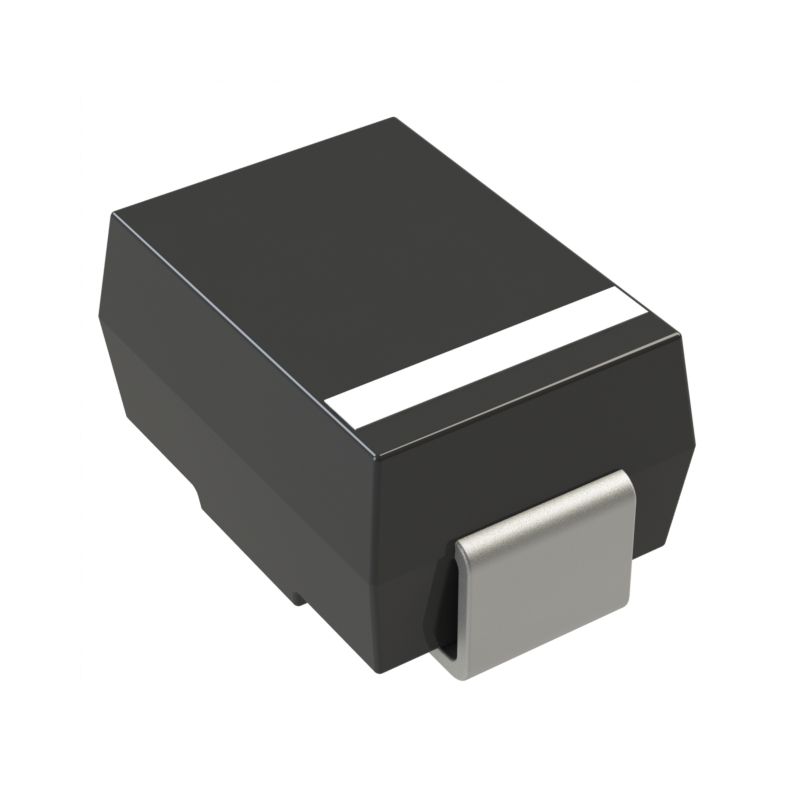


LM4250CM Micropower Programmable Operational Amplifier
44 people are viewing this right now
In Stock
SKU
191886278866
£5.99
Safe Checkout, Guaranteed

Safe Checkout, Guaranteed
The LM4250CM is a micropower operational amplifier (op-amp) designed for low-power applications where minimizing current consumption is critical. Housed in the compact 8-SOIC (Small Outline Integrated Circuit) package, this op-amp offers versatility and efficiency in a variety of analog circuit designs. Its low power requirements make it particularly well-suited for battery-powered devices, portable instruments, and remote sensor applications. The LM4250CM is a general-purpose op-amp with a typical bandwidth of 250kHz, making it suitable for audio amplification, signal conditioning, and instrumentation circuits. Its adjustable power consumption feature allows designers to optimize the trade-off between power consumption and performance, adapting the op-amp to the specific needs of the application. The 8-SOIC package offers a compact footprint, saving valuable board space in densely populated circuits.
Its surface-mount design simplifies assembly and allows for automated manufacturing processes. The LM4250CM is known for its stable performance and low input bias current, ensuring accurate signal processing and minimal offset errors. Its wide supply voltage range provides flexibility in power supply design, accommodating a variety of voltage sources. The LM4250CM op-amp is a versatile and reliable component that meets the stringent demands of low-power applications. From its adjustable power consumption to its stable performance, every aspect of the LM4250CM is optimized for efficiency and precision. Whether you're designing a battery-powered sensor or a low-power audio amplifier, the LM4250CM provides the performance and versatility you need.
When selecting an op-amp for your next project, consider the LM4250CM for its superior power efficiency, compact size, and reliable operation. Its consistent performance and widespread availability make it an excellent choice for both prototyping and production runs. Don't compromise on quality; choose the LM4250CM for your op-amp needs. Invest in a component that will deliver consistent performance and minimize power consumption in your circuits. Purchase your LM4250CM op-amps today and experience the difference that quality engineering can make. Secure yours now for optimal low-power analog signal processing!
| Product Name | LM4250CM Micropower Programmable Operational Amplifier |
|---|---|
| SKU | 191886278866 |
| Price | £5.99 |
| LM4250CM Micropower Programmable Operational Amplifier Color | As per image |
| Category | Integrated Circuits |
| Brand | Nikko Electronics ltd |
| Product Code | 191886278866 |
| Availability | Yes |
Shipping cost is based on order value. Just add products to your cart and use the Shipping Calculator to see the shipping price. We want you to be 100% satisfied with your purchase. Items can be returned or exchanged within 30 days of delivery.
The LM4250CM Micropower Programmable Operational Amplifier features a unique programming pin (Pin 8) that allows designers to control the internal biasing. To set the standby or quiescent current, you must connect an external resistor, referred to as Rset, between Pin 8 and the negative supply rail (V-) or ground, depending on your configuration. The quiescent current is approximately 5 to 10 times the current flowing out of Pin 8. For most applications, the set current (Iset) is determined by the formula Iset = (V+ - Vbe - V-) / Rset, where Vbe is roughly 0.5V. By adjusting this resistor, you can tune the LM4250CM Micropower Programmable Operational Amplifier to operate at current levels as low as 1µA or as high as several hundred microamps. This flexibility is critical for engineers who need to balance power consumption against performance metrics like slew rate and bandwidth. When designing for battery-operated devices, using a high-value Rset ensures maximum battery longevity, though it will proportionally reduce the device's gain-bandwidth product. Always consult the datasheet curves to ensure your Rset selection provides sufficient bias for your required signal frequency.
The LM4250CM Micropower Programmable Operational Amplifier is highly regarded for its wide supply voltage range, which spans from ±1V to ±18V in dual-supply configurations, or 2V to 36V in single-supply setups. For modern low-power electronics, this means the LM4250CM Micropower Programmable Operational Amplifier can reliably operate from a single 3V lithium cell or even two 1.5V alkaline batteries in series. One of the primary advantages of this component is its ability to maintain functional stability even as the battery voltage drops near the end of its discharge cycle. However, users should be aware that at very low supply voltages, the output swing will be limited. The LM4250CM Micropower Programmable Operational Amplifier is not a rail-to-rail op-amp; therefore, the output typically stays within 0.8V to 1.5V of the supply rails depending on the load. If your application requires a full 0V to Vcc swing, you may need to implement additional output buffering. Despite this, its micropower nature makes it an industry standard for remote sensors and portable instrumentation where minimal voltage overhead is available.
The performance of the LM4250CM Micropower Programmable Operational Amplifier is directly proportional to the current flowing into the programming pin. At the typical maximum bandwidth of 250kHz, the device is generally operating at its higher rated quiescent current levels. As you increase the value of the Rset resistor to lower the power consumption, the internal transconductance of the input stages decreases, which leads to a linear reduction in both the gain-bandwidth product (GBW) and the slew rate. For example, if you program the LM4250CM Micropower Programmable Operational Amplifier for an ultra-low quiescent current of 10µA, your effective bandwidth may drop significantly below the 250kHz headline specification. This trade-off is a fundamental characteristic of the LM4250CM Micropower Programmable Operational Amplifier design. Engineers must carefully evaluate the highest frequency component of their input signal to ensure that the programmed current provides enough speed to avoid slew-induced distortion. For DC or low-frequency sensor conditioning, the power can be throttled down aggressively, while audio or fast pulse detection requires a higher Iset to maintain signal integrity and prevent phase shift issues.
Yes, the LM4250CM Micropower Programmable Operational Amplifier is an excellent choice for interfacing with high-impedance sources such as piezoelectric sensors, pH probes, or capacitive transducers. Although it is a bipolar-input op-amp, its micropower design naturally results in very low input bias currents, often in the range of a few nanoamps, especially when the device is programmed for low quiescent current operation. This low bias current minimizes the voltage error (offset) created when the signal passes through high-value source resistors. Furthermore, the input offset voltage of the LM4250CM Micropower Programmable Operational Amplifier is relatively low for a micropower device, making it suitable for precision instrumentation. To maximize the performance of the LM4250CM Micropower Programmable Operational Amplifier in high-impedance circuits, it is recommended to use a guard ring around the input traces on the PCB to prevent leakage currents and to choose a set current that balances input bias requirements with the desired noise floor. This makes the component a versatile tool for analog front-ends where signal power is extremely limited but accuracy is paramount.
The LM4250CM Micropower Programmable Operational Amplifier is optimized for power efficiency rather than high-current output drive. When the device is programmed for micropower operation, its internal output stage has limited sourcing and sinking capabilities. Typically, the LM4250CM Micropower Programmable Operational Amplifier can drive loads in the range of 10kΩ to 100kΩ without significant distortion. If you attempt to drive low-impedance loads, such as 32Ω headphones or long capacitive cables, the output will likely clip or exhibit a severely reduced slew rate. For applications requiring the LM4250CM Micropower Programmable Operational Amplifier to interface with heavier loads, it is standard practice to follow the op-amp with a discrete transistor buffer or a dedicated high-current driver stage. Additionally, because the output current is linked to the Iset current, increasing the quiescent current will slightly improve the drive capability, but it will never reach the levels of a standard power op-amp. For most signal conditioning tasks, such as driving an ADC input or a high-impedance filter stage, the LM4250CM Micropower Programmable Operational Amplifier provides more than adequate performance while maintaining an exceptionally small power footprint.
In the LM4250CM Micropower Programmable Operational Amplifier, there is an inverse relationship between power consumption and noise spectral density. Like all micropower amplifiers, reducing the operating current increases the equivalent input noise voltage. This is primarily due to the increase in shot noise and the higher thermal noise associated with the lower transconductance of the input transistors at low bias levels. When the LM4250CM Micropower Programmable Operational Amplifier is programmed for its lowest power state (e.g., 1µA to 5µA), the noise floor will be noticeably higher than when it is running at 100µA. For precision low-frequency measurements, this might manifest as increased 'flicker' or 1/f noise. If your application is noise-sensitive, such as a high-gain preamplifier for a low-level sensor, you should find a 'sweet spot' for the Iset current that provides an acceptable signal-to-noise ratio (SNR) without exceeding your power budget. In many cases, adding a simple low-pass filter at the output of the LM4250CM Micropower Programmable Operational Amplifier can help mitigate the effects of the higher noise floor by limiting the integration bandwidth to only what is necessary for the signal.
While the LM4250CM Micropower Programmable Operational Amplifier shares a similar 8-pin SOIC footprint with many standard op-amps like the LM741, it is not a 'drop-in' replacement because of Pin 8. In a standard LM741, Pin 8 is typically a No-Connect (NC), whereas in the LM4250CM Micropower Programmable Operational Amplifier, Pin 8 is the critical Iset programming pin. If you place the LM4250CM in a socket designed for a 741 without providing a bias resistor on Pin 8, the amplifier will remain in a 'shut down' or zero-current state and will not function. To successfully migrate a design to the LM4250CM Micropower Programmable Operational Amplifier, you must modify the PCB layout to include the Rset resistor. However, the benefit of making this change is significant: the LM4250CM can operate at a fraction of the power of a 741 and offers much better performance at low supply voltages. Furthermore, the LM4250CM Micropower Programmable Operational Amplifier provides internal frequency compensation, so it remains stable at unity gain without external capacitors, simplifying the transition for general-purpose analog signal processing circuits.