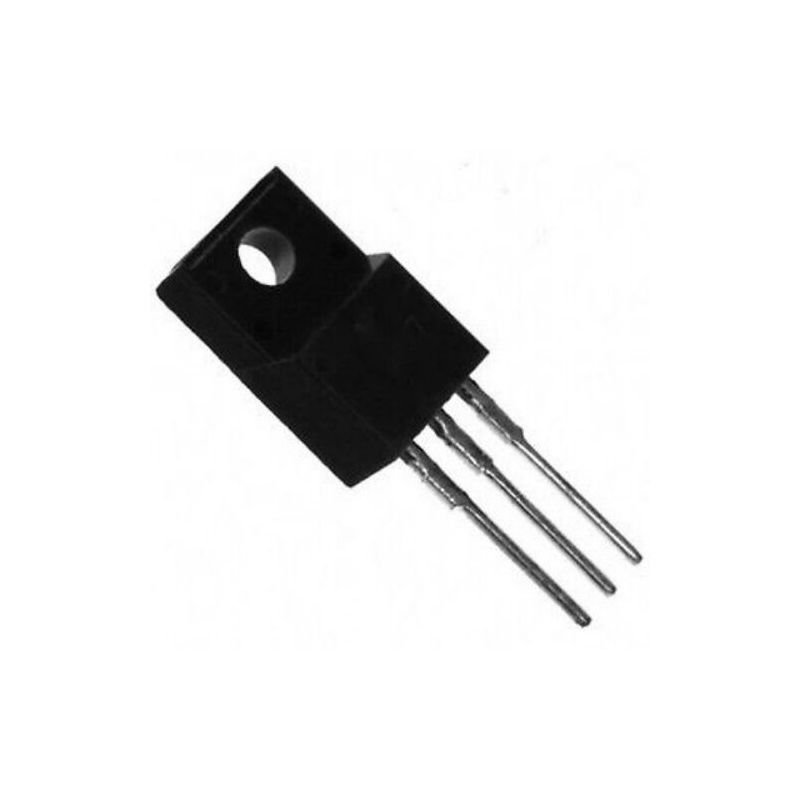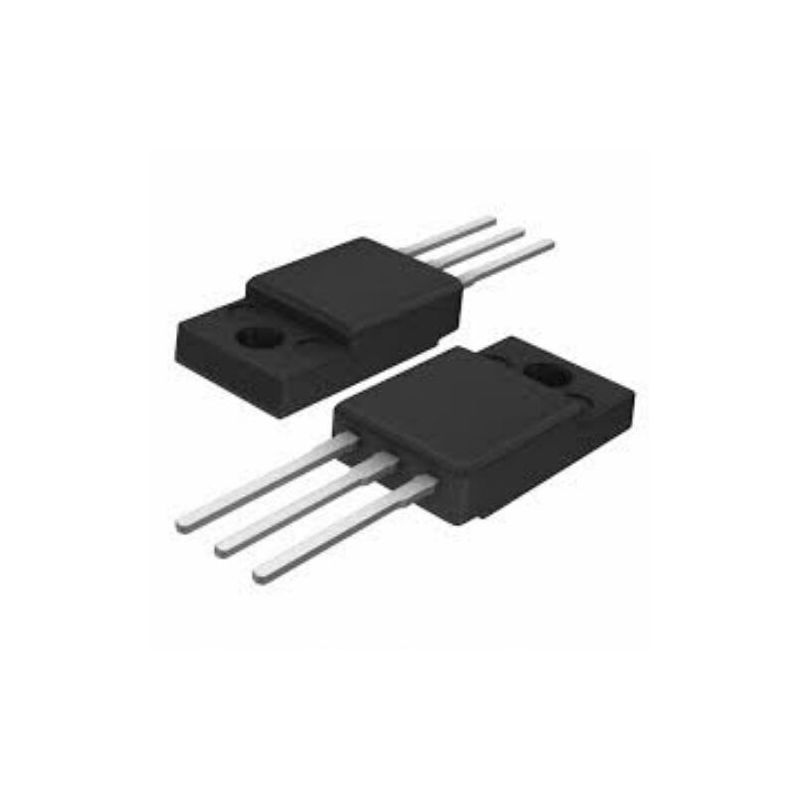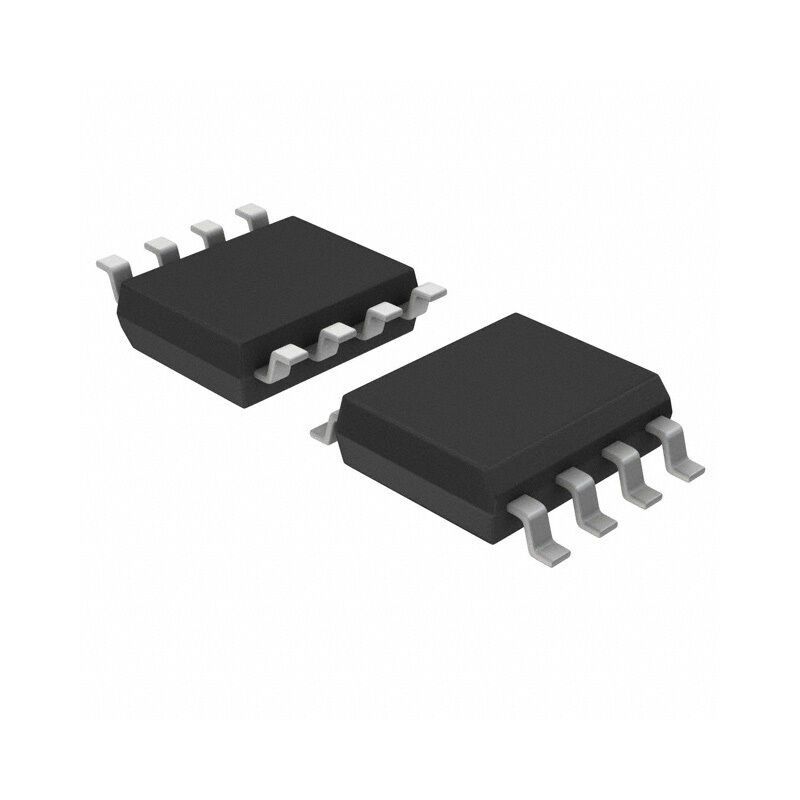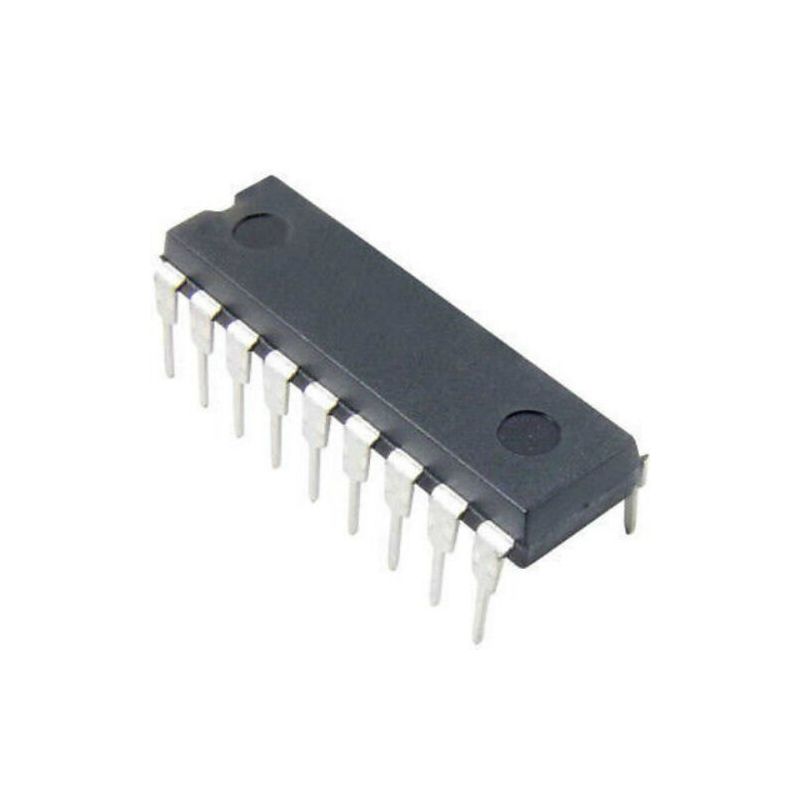


M74HC123 Dual Retriggerable Monostable Multivibrator IC (DIP-16)
40 people are viewing this right now
In Stock
SKU
191802761117
£3.99
Safe Checkout, Guaranteed

Safe Checkout, Guaranteed
The M74HC123 is a high-speed CMOS dual retriggerable monostable multivibrator integrated circuit, offering precise timing and pulse generation capabilities for a wide array of digital logic applications. Encased in a DIP-16 package, this versatile IC provides two independent monostable circuits, each capable of producing accurate and stable output pulses with durations determined by external resistor and capacitor values. Its high noise immunity and low power consumption make it ideal for use in timers, pulse delay circuits, and frequency dividers. The M74HC123 operates on a wide supply voltage range, typically from 2V to 6V, making it compatible with various digital logic systems. Its CMOS technology ensures low power consumption, making it suitable for battery-powered applications and energy-efficient designs. The IC's retriggerable feature allows it to extend the output pulse duration if a new trigger signal is received during the output pulse, providing flexible timing control.
Key features of the M74HC123 include its dual independent monostable circuits, which allow for generating two separate pulses simultaneously or sequentially. The IC also features a clear input, which allows for resetting the output pulse at any time. The external resistor and capacitor values determine the output pulse duration, providing precise control over the timing characteristics. The M74HC123 is particularly well-suited for use in timing circuits, where it can be used to generate accurate and stable timing pulses for controlling various electronic devices and systems. It is also commonly used in pulse delay circuits, where it can be used to delay the arrival of a pulse signal. In frequency divider applications, the M74HC123 can be used to divide the frequency of a clock signal, providing lower frequency signals for various applications.
The integrated circuit's reliability and long lifespan ensure consistent performance over time, minimizing the need for frequent replacements. When choosing the M74HC123, you are investing in a high-quality CMOS integrated circuit that delivers exceptional performance and reliability. Its dual monostable circuits and precise timing capabilities make it an ideal choice for a wide range of digital logic applications. By incorporating the M74HC123 into your designs, you can achieve superior performance and ensure the long-term reliability of your electronic systems. This component guarantees accurate timing and consistent quality, making it a valuable addition to your inventory. Upgrade your digital logic circuits today with the M74HC123 integrated circuit and experience the difference in performance and reliability.
Don't miss out on this opportunity to enhance your projects with a high-quality component. Order the M74HC123 now and take your electronic designs to the next level. Achieve precise timing and versatile pulse generation with the M74HC123 - the ultimate CMOS multivibrator for demanding applications. Purchase the M74HC123 today and power up your projects with confidence!
| Product Name | M74HC123 Dual Retriggerable Monostable Multivibrator IC (DIP-16) |
|---|---|
| SKU | 191802761117 |
| Price | £3.99 |
| M74HC123 Dual Retriggerable Monostable Multivibrator IC (DIP-16) Color | As per image |
| Category | CMOS |
| Brand | Nikko Electronics ltd |
| Product Code | 191802761117 |
| Availability | Yes |
Shipping cost is based on order value. Just add products to your cart and use the Shipping Calculator to see the shipping price. We want you to be 100% satisfied with your purchase. Items can be returned or exchanged within 30 days of delivery.
The M74HC123 Dual Retriggerable Monostable Multivibrator IC (DIP-16) is designed to extend its output pulse duration whenever a valid trigger pulse is received before the previous timing cycle expires. In a continuous pulse train scenario, if the interval between input triggers is shorter than the programmed output pulse width (determined by external R and C components), the output (Q) will remain in a high state indefinitely. This happens because each new trigger resets the internal timing flip-flop and re-initiates the discharge-charge cycle of the external capacitor. Professional engineers often utilize this feature of the M74HC123 Dual Retriggerable Monostable Multivibrator IC (DIP-16) for 'missing pulse detection' or 'watchdog' timers, where the output only drops low if the input signal stops for a duration longer than the set RC time constant. This makes it an essential component for monitoring periodic signals in industrial control systems where signal continuity is critical for safety and operational logic.
To achieve high precision with the M74HC123 Dual Retriggerable Monostable Multivibrator IC (DIP-16), component selection is paramount. The output pulse width is calculated using the formula tw = K * Rext * Cext, where K is typically 0.45 for this CMOS family. For the external resistor (Rext), it is recommended to stay within the range of 5kΩ to 50kΩ to ensure stability and minimize the impact of internal leakage currents. For the external capacitor (Cext), users should avoid electrolytic capacitors due to their high leakage and wide tolerances; instead, high-quality ceramic or film capacitors are preferred for the M74HC123 Dual Retriggerable Monostable Multivibrator IC (DIP-16) to maintain timing accuracy across temperature fluctuations. Furthermore, because the timing pins are high-impedance, traces between the IC and the RC network should be kept as short as possible to minimize stray capacitance and noise pickup, which could lead to pulse jitter or inconsistent timing in sensitive digital applications.
The M74HC123 Dual Retriggerable Monostable Multivibrator IC (DIP-16) operates across a wide supply voltage range from 2V to 6V, which directly influences its switching speed and drive capability. At a lower VCC of 2V, the propagation delay increases significantly (often exceeding 100ns), and the output drive current is relatively low. However, when operating the M74HC123 Dual Retriggerable Monostable Multivibrator IC (DIP-16) at 6V, the propagation delay is minimized, and the IC can source or sink approximately 5.2mA, making it more suitable for driving larger capacitive loads or interfacing with high-speed logic. It is important to note that the timing constant (K factor) can vary slightly with the supply voltage. Designers should consult the datasheet's characteristic curves to ensure that the M74HC123 Dual Retriggerable Monostable Multivibrator IC (DIP-16) maintains the required pulse width accuracy if the system power rail is subject to fluctuations, or implement a regulated supply for precision timing requirements.
Yes, the M74HC123 Dual Retriggerable Monostable Multivibrator IC (DIP-16) is frequently used in power-on reset and system initialization circuits. Each of the two independent multivibrators features an active-low Clear (CLR) input. When the CLR pin is pulled low, it immediately terminates any output pulse in progress and resets the internal timing mechanism, forcing the Q output low and the /Q output high. In a POR application, a simple RC network can be connected to the CLR pin of the M74HC123 Dual Retriggerable Monostable Multivibrator IC (DIP-16) to hold the circuit in a reset state until the power supply stabilizes. Unlike many other monostable ICs, the CLR input on the M74HC123 can also serve as a secondary trigger; if CLR is held low and then transitioned to high while the trigger inputs are in a specific state, it can initiate a pulse. This flexibility allows the M74HC123 Dual Retriggerable Monostable Multivibrator IC (DIP-16) to manage complex sequencing tasks in digital logic boards.
Since the M74HC123 Dual Retriggerable Monostable Multivibrator IC (DIP-16) is a high-speed CMOS device, it is susceptible to power supply noise and ground bounce. To maximize noise immunity, a 0.1µF ceramic decoupling capacitor must be placed as close as possible to the VCC and GND pins (pins 16 and 8). When designing the PCB layout for the M74HC123 Dual Retriggerable Monostable Multivibrator IC (DIP-16), it is critical to isolate the sensitive analog timing components (Rext/Cext) from high-speed digital switching lines to prevent crosstalk. Using a dedicated ground plane is highly recommended to provide a low-impedance return path. Additionally, if any of the trigger inputs (A or B) are unused, they should be tied to the appropriate logic level (VCC or GND) rather than being left floating, as floating CMOS inputs can oscillate and cause excessive power consumption or erratic behavior in the M74HC123 Dual Retriggerable Monostable Multivibrator IC (DIP-16), potentially triggering false pulses.
Upgrading to the M74HC123 Dual Retriggerable Monostable Multivibrator IC (DIP-16) from the older bipolar 74LS123 offers several significant advantages, primarily in terms of power efficiency and voltage flexibility. The M74HC123 utilizes CMOS technology, resulting in near-zero quiescent current consumption, which is ideal for battery-powered or green-energy applications. Unlike the LS version, which is strictly limited to a 5V supply, the M74HC123 Dual Retriggerable Monostable Multivibrator IC (DIP-16) operates from 2V to 6V. Furthermore, the HC version provides rail-to-rail output swings, offering better noise margins when interfacing with other CMOS logic. However, designers should be aware that the input logic thresholds for the M74HC123 are different from TTL levels; if the M74HC123 Dual Retriggerable Monostable Multivibrator IC (DIP-16) is being driven by TTL-level signals at a 5V VCC, a level shifter or the HCT version might be required to ensure reliable logic high detection, as the HC input high threshold (VIH) is typically 70% of VCC.
The M74HC123 Dual Retriggerable Monostable Multivibrator IC (DIP-16) is highly versatile, but it has physical timing limits dictated by its internal architecture. The minimum pulse width is generally constrained by the internal propagation delays of the logic gates, typically falling in the range of 20ns to 30ns at 5V. Attempting to generate pulses shorter than this by using extremely low Rext/Cext values may result in unstable or non-existent outputs. On the upper end, the maximum pulse width for the M74HC123 Dual Retriggerable Monostable Multivibrator IC (DIP-16) is theoretically limited only by the leakage current of the external capacitor. For very long durations (seconds or minutes), the leakage current of the capacitor can interfere with the charging ramp, leading to significant timing errors. For timing requirements exceeding several seconds, it is often more reliable to use the M74HC123 Dual Retriggerable Monostable Multivibrator IC (DIP-16) in conjunction with a digital counter or to select a specialized long-period timer IC to maintain accuracy and repeatability.