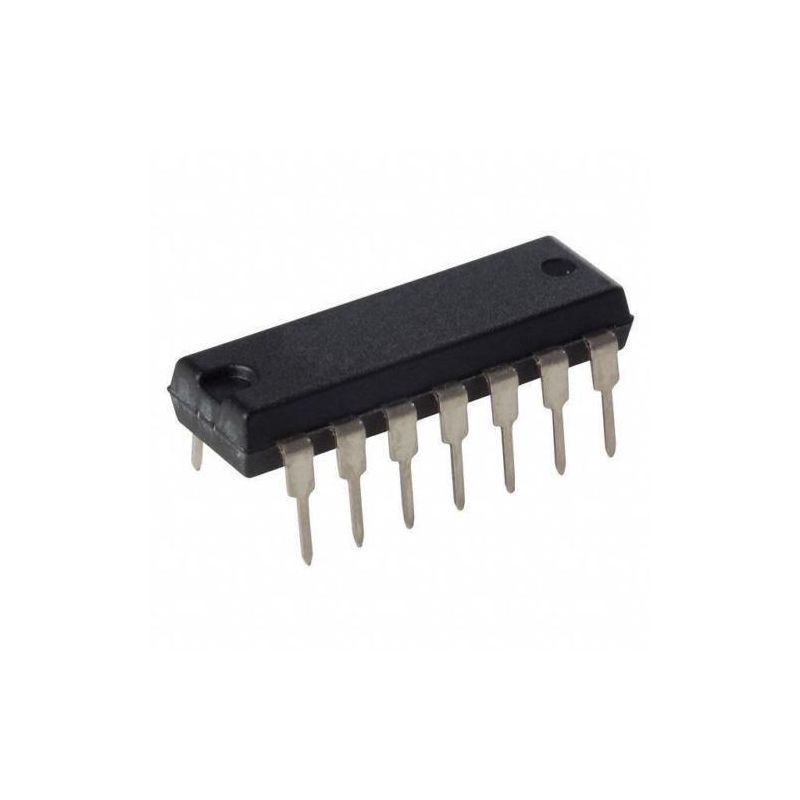
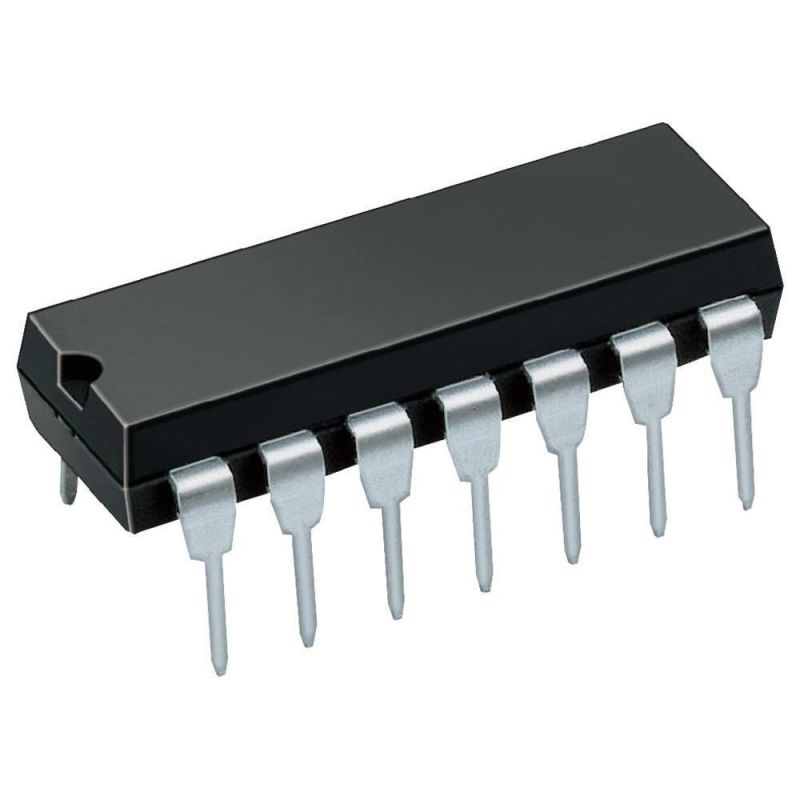
M82C55A-2 CMOS Programmable Peripheral Interface IC
24 people are viewing this right now
In Stock
SKU
191826778225
£8.99
Safe Checkout, Guaranteed

Safe Checkout, Guaranteed
The M82C55A-2 is a versatile programmable peripheral interface (PPI) integrated circuit, commonly utilized in microprocessor-based systems to expand input/output (I/O) capabilities. Housed in a durable DIP (Dual In-line Package), this IC is designed for easy integration into a wide array of digital systems, providing a flexible means of interfacing microprocessors with external devices and peripherals. The M82C55A-2 features three 8-bit parallel I/O ports (Port A, Port B, and Port C), each of which can be independently configured as either an input or an output port. This programmability allows the IC to adapt to various application requirements, providing a customized I/O solution. The IC operates in three different modes: Mode 0 (Basic I/O), Mode 1 (Strobed I/O), and Mode 2 (Bidirectional Bus), each offering specific features and capabilities to suit different interfacing needs. Mode 0 provides simple input and output operations, while Mode 1 supports handshaking signals for data transfer synchronization.
Mode 2 enables bidirectional data transfer on Port A, making it suitable for interfacing with peripheral devices that require two-way communication. The M82C55A-2 is compatible with a wide range of microprocessors, including the Intel 8085 and 8086 families, making it a popular choice for legacy systems and educational purposes. Its easy programmability and flexible I/O capabilities make it an ideal solution for interfacing with various peripherals, such as sensors, actuators, displays, and keyboards. The DIP package facilitates easy prototyping and experimentation, allowing developers to quickly integrate the M82C55A-2 into their designs. Its robust design and reliable operation ensure stable performance in demanding environments. Applications for the M82C55A-2 include industrial control systems, data acquisition systems, robotics, and embedded systems.
Its versatility and programmability make it a valuable component in various electronic systems. Whether you’re designing an industrial automation system, a laboratory instrument, or an embedded control application, the M82C55A-2 provides the flexibility and functionality you need. Consider the M82C55A-2 for your next microprocessor-based project and experience the benefits of its programmable I/O capabilities. This IC offers a cost-effective solution for expanding the I/O capabilities of your system, providing a versatile interface for connecting with external devices. Its reliable operation and easy integration make it a trusted choice among engineers and hobbyists. Upgrade your microprocessor systems with the M82C55A-2 and unlock enhanced I/O functionality.
Don't settle for less; choose the M82C55A-2 for your demanding applications. Order yours today and take advantage of its versatile capabilities. Enhance your circuit designs with this reliable peripheral interface, optimizing for I/O flexibility and control.
| Product Name | M82C55A-2 CMOS Programmable Peripheral Interface IC |
|---|---|
| SKU | 191826778225 |
| Price | £8.99 |
| M82C55A-2 CMOS Programmable Peripheral Interface IC Color | As per image |
| Category | Integrated Circuits |
| Brand | Nikko Electronics ltd |
| Product Code | 191826778225 |
| Availability | Yes |
Shipping cost is based on order value. Just add products to your cart and use the Shipping Calculator to see the shipping price. We want you to be 100% satisfied with your purchase. Items can be returned or exchanged within 30 days of delivery.
The M82C55A-2 CMOS Programmable Peripheral Interface IC offers significant improvements over the older NMOS versions, primarily in terms of power consumption and operating speed. As a CMOS-based device, the M82C55A-2 draws substantially less current during standby and active operation, making it ideal for systems where thermal management or power efficiency is critical. The '-2' designation specifically indicates a higher speed rating, typically supporting bus speeds up to 8MHz, which is essential for interfacing with faster microprocessors like the 8086 or 80186. Furthermore, this IC provides a much higher level of noise immunity and a wider operating temperature range compared to NMOS equivalents. Engineers often choose the M82C55A-2 CMOS Programmable Peripheral Interface IC for retrofitting legacy industrial controllers because it maintains full pin-compatibility with the 8255A while offering superior DC driving capabilities. It can source and sink more current on its I/O pins, which is vital for driving LEDs or optocouplers directly without needing additional buffer stages, thereby simplifying the overall circuit design and reducing the component count on the PCB.
The M82C55A-2 CMOS Programmable Peripheral Interface IC is highly versatile, and its Mode 2 operation is one of its most advanced features. In Mode 2, Port A is configured as a bidirectional 8-bit bus, allowing for both input and output operations on the same pins. This is particularly useful for interfacing with other intelligent peripherals or master-slave bus systems. To facilitate this, the M82C55A-2 CMOS Programmable Peripheral Interface IC utilizes five bits of Port C to act as handshaking signals, including STB (Strobe), IBF (Input Buffer Full), OBF (Output Buffer Full), and ACK (Acknowledge). This hardware-level handshaking ensures that data is only transferred when the receiving device is ready, preventing data collisions and loss. Mode 2 is exclusive to Port A, while Port B can still be used in Mode 0 or Mode 1 simultaneously. When implementing the M82C55A-2 CMOS Programmable Peripheral Interface IC in complex systems, this bidirectional capability allows for efficient, synchronized communication between a CPU and external high-speed devices without requiring constant polling, as the handshaking signals can be tied directly to the microprocessor's interrupt controller for asynchronous data processing.
Yes, one of the most powerful features of the M82C55A-2 CMOS Programmable Peripheral Interface IC is its Bit Set/Reset capability for Port C. Unlike many other parallel I/O expanders that require a read-modify-write operation to change a single bit, the M82C55A-2 CMOS Programmable Peripheral Interface IC allows the programmer to set or reset any individual bit of Port C by simply writing a specific control word to the internal Control Register. This feature is extremely efficient for industrial control applications where Port C bits are used to trigger specific hardware events, such as toggling a relay or enabling a motor driver. Because this operation is handled internally by the IC’s logic, it eliminates the risk of 'software glitches' that can occur if an interrupt fires during a manual read-modify-write cycle. When the M82C55A-2 CMOS Programmable Peripheral Interface IC is used in Mode 1 or Mode 2, these Port C bits often serve as control or status signals, and the ability to manipulate them independently ensures that the handshaking logic remains stable and predictable throughout the execution of the system firmware.
When integrating the M82C55A-2 CMOS Programmable Peripheral Interface IC into high-speed microprocessor systems, designers must pay close attention to the timing parameters specified for the '-2' variant. This IC is designed to interface seamlessly with 8MHz systems, meaning its internal logic transitions and data-hold times are optimized for faster clock cycles. The Chip Select (CS), Read (RD), and Write (WR) signals must meet minimum pulse width requirements to ensure reliable data latching. Specifically, for the M82C55A-2 CMOS Programmable Peripheral Interface IC, the address setup time before the command pulse and the data hold time after the trailing edge of the write pulse are critical. If these timings are violated, the IC may fail to register the control word or result in corrupted I/O data. In modern applications using fast microcontrollers (like ARM or high-speed AVR), it may be necessary to insert 'wait states' in the bus cycle to match the M82C55A-2 CMOS Programmable Peripheral Interface IC’s response time. Additionally, proper decoupling with a 0.1uF ceramic capacitor close to the VCC pin is essential to prevent transient voltage drops during high-speed switching of the 24 I/O pins.
Upon the application of a high-level signal to the RESET pin, the M82C55A-2 CMOS Programmable Peripheral Interface IC undergoes a full internal initialization. During this reset state and immediately following it, all internal registers are cleared, and all three I/O ports (A, B, and C) are automatically configured into Mode 0 as input ports. This is a critical safety feature of the M82C55A-2 CMOS Programmable Peripheral Interface IC, as it ensures that the IC does not accidentally drive external hardware (like motors or actuators) in an undefined state during system power-up. All I/O pins are placed in a high-impedance state, effectively disconnecting the peripheral from the bus until the CPU sends a valid Control Word to define the desired port directions and modes. For engineers designing with the M82C55A-2 CMOS Programmable Peripheral Interface IC, it is important to include pull-up or pull-down resistors on critical output lines to maintain a known logic level during this high-impedance reset period. Once the reset signal is de-asserted, the IC is ready to be programmed, and the user must write to the Control Register before attempting any data output operations.
The M82C55A-2 CMOS Programmable Peripheral Interface IC is primarily designed as a 5V logic device, consistent with the TTL and CMOS standards of the microprocessors it was originally intended to support. While it is a CMOS component, which typically allows for a broader voltage range, the M82C55A-2 CMOS Programmable Peripheral Interface IC is optimized for VCC = 5V (+/- 10%). Operating the device at 3.3V is generally not recommended as it can significantly increase propagation delays and may result in the I/O pins failing to meet the required logic threshold levels for the rest of the system. If you need to interface the M82C55A-2 CMOS Programmable Peripheral Interface IC with a modern 3.3V microcontroller, it is best practice to use logic level shifters (such as the 74LVC245 or similar) for the data bus and control lines. This ensures that the M82C55A-2 CMOS Programmable Peripheral Interface IC receives a full 5V swing for reliable operation while protecting the 3.3V MCU from 5V signals. Using the IC within its specified 5V range ensures that the timing characteristics of the '-2' speed grade are fully maintained, providing the performance expected in industrial environments.
The M82C55A-2 CMOS Programmable Peripheral Interface IC remains a staple in two primary areas: the maintenance of legacy industrial equipment and the design of custom I/O expansion for embedded systems. In legacy repair, it is the 'go-to' replacement for failed 8255 chips in CNC machines, older PLC units, and laboratory instrumentation, where its DIP-40 package allows for easy socket replacement. For new designs, the M82C55A-2 CMOS Programmable Peripheral Interface IC is often used in educational kits or specialized controllers where a large number of simple parallel I/O lines are needed without the complexity of I2C or SPI protocols. Its ability to provide 24 independently programmable I/O pins makes it ideal for driving matrix keyboards, LED displays, and managing complex sensor arrays. Furthermore, because the M82C55A-2 CMOS Programmable Peripheral Interface IC features a straightforward parallel bus interface, it is frequently used in FPGA-based projects as a reliable way to expand I/O through a memory-mapped interface. Its long-standing reputation for reliability and its well-documented behavior make the M82C55A-2 CMOS Programmable Peripheral Interface IC a trusted component for engineers working on robust, long-lifecycle hardware.