

MCT61 Optocoupler IC
34 people are viewing this right now
In Stock
SKU
191680387873
£3.31
Safe Checkout, Guaranteed

Safe Checkout, Guaranteed
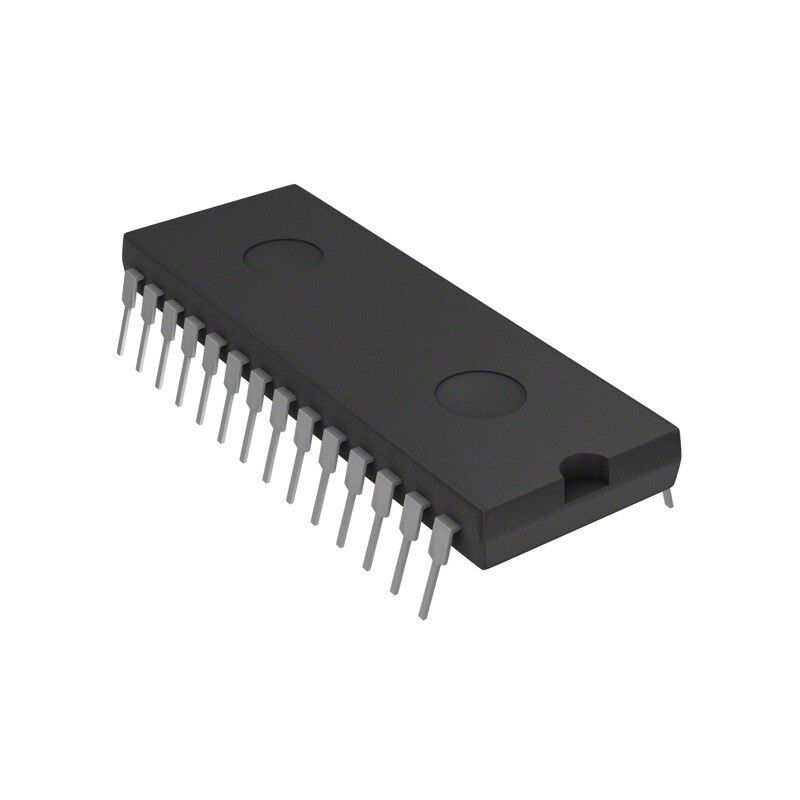
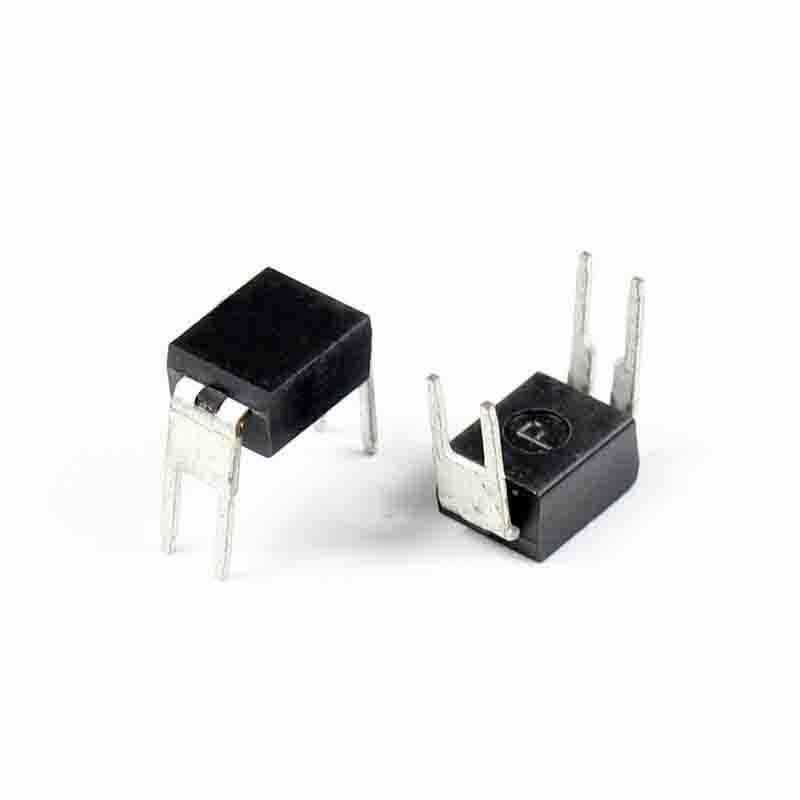
The MCT61 is a high-performance optocoupler integrated circuit designed for galvanic isolation in a wide variety of electronic applications. Encased in a DIP-8 (Dual In-Line Package), this optocoupler provides a reliable and effective means of electrically isolating sensitive circuits from high-voltage or noisy environments. This is crucial for protecting microcontrollers, logic circuits, and other sensitive components from damage or interference. The MCT61 consists of an infrared emitting diode (IRED) and a phototransistor, providing a completely optical signal transfer that eliminates any electrical connection between the input and output sides. This isolation is essential in applications such as industrial control systems, power supplies, and communication interfaces. The DIP-8 package allows for easy installation and integration into various circuit board designs, making it ideal for both prototyping and mass production.
The MCT61 features a high isolation voltage rating, ensuring that it can withstand significant voltage differences between the input and output sides. Its fast switching speed enables efficient signal transfer, minimizing delays and ensuring accurate data transmission. In industrial control systems, the MCT61 can be used to isolate control signals from high-voltage motor drives, preventing damage to sensitive control circuits. Its robust design and high-quality manufacturing ensure that it can withstand harsh operating conditions, delivering consistent performance over time. The MCT61 also features built-in protection mechanisms against overvoltage and overcurrent, safeguarding connected circuits and devices from potential damage. The IC’s high current transfer ratio ensures efficient signal transfer, even at low input currents.
The DIP-8 package simplifies the soldering process, allowing for easy integration into existing circuits. The MCT61 is an essential component for maintaining the safety and performance of electronic systems requiring galvanic isolation. Each IC is thoroughly tested to ensure it meets the stringent quality and reliability standards. Protect your circuits and ensure signal integrity with the MCT61 Opto Integrated Circuit. Order now and experience the reliable galvanic isolation that this high-performance optocoupler offers. Enhance the safety and reliability of your electronic designs today.
| Product Name | MCT61 Optocoupler IC |
|---|---|
| SKU | 191680387873 |
| Price | £3.31 |
| MCT61 Optocoupler IC Color | As per image |
| Category | Integrated Circuits |
| Brand | Nikko Electronics ltd |
| Product Code | 191680387873 |
| Availability | Yes |
Shipping cost is based on order value. Just add products to your cart and use the Shipping Calculator to see the shipping price. We want you to be 100% satisfied with your purchase. Items can be returned or exchanged within 30 days of delivery.
The MCT61 Optocoupler IC is specifically engineered to provide robust galvanic isolation, a critical feature for protecting sensitive circuitry from high-voltage transients and ground potential differences. While specific datasheet values for maximum isolation voltage can vary slightly by manufacturer, the MCT61 typically offers a high isolation voltage, often in the range of 5000 Vrms, ensuring reliable separation between the input and output stages. This high isolation capability makes the MCT61 Optocoupler IC ideal for safety-critical applications where personnel protection or equipment integrity is paramount. Furthermore, its design contributes to a respectable common-mode transient immunity (CMTI), which is essential for preventing noise on the high-voltage side from coupling to the low-voltage side. This immunity helps maintain signal integrity in noisy industrial environments, making the MCT61 Optocoupler IC a dependable choice for applications requiring robust noise rejection.
When integrating the MCT61 Optocoupler IC into a design, understanding its Current Transfer Ratio (CTR) and output characteristics is fundamental. The CTR specifies the ratio of the output collector current to the input forward current, typically expressed as a percentage. The MCT61 often features a moderate to high CTR range, which allows for efficient signal transfer with relatively low input drive current, simplifying the design of the input stage. Designers should consult the datasheet for the exact CTR range and its variation with temperature and input current. Regarding output characteristics, the MCT61 Optocoupler IC utilizes a phototransistor output, meaning its output acts as a controlled current source. Key parameters include collector-emitter breakdown voltage (Vceo), collector dark current (Iceo), and saturation voltage (Vce(sat)). These determine the maximum voltage the output can withstand, the leakage current when off, and the voltage drop across the transistor when fully on, respectively. Properly accounting for these values ensures the MCT61 Optocoupler IC operates within its specified limits and provides reliable switching performance for your application.
The MCT61 Optocoupler IC is a versatile component widely adopted across numerous industrial and power supply applications due to its reliable galvanic isolation and robust performance. In industrial control systems, it is frequently used for isolating PLCs, motor drives, and sensor interfaces from noisy field environments, preventing ground loops and protecting sensitive control logic. For power supplies, the MCT61 Optocoupler IC is crucial in feedback loops for isolated DC-DC converters and AC-DC power supplies, providing voltage regulation while maintaining safety isolation between the primary and secondary sides. Its ability to handle voltage differences and isolate noise also makes it suitable for communication interfaces in harsh environments, such as RS-232, RS-485, or CAN bus systems, where it safeguards data lines from electrical interference. Additionally, the MCT61 Optocoupler IC finds use in medical equipment, home appliances, and test and measurement instruments where safety and signal integrity are paramount, underscoring its broad utility in demanding electronic designs.
The DIP-8 (Dual In-Line Package) of the MCT61 Optocoupler IC presents several considerations for PCB layout, handling, and thermal management. For PCB layout, the DIP-8 package requires through-hole mounting, which typically results in a larger footprint compared to surface-mount devices (SMDs). This can influence board density and overall product size. However, the wider pin spacing of DIP packages provides excellent creepage and clearance distances, enhancing the isolation barrier, which is a significant advantage for the MCT61 Optocoupler IC in high-voltage applications. From a handling perspective, DIP-8 components are generally easier to handle manually and are less susceptible to damage during assembly than smaller SMD parts. For thermal management, optocouplers like the MCT61 typically dissipate minimal power under normal operating conditions, so the DIP-8 package, with its larger thermal mass and lead frame, usually provides sufficient heat dissipation without requiring additional heatsinking. The through-hole mounting also offers a more robust mechanical connection, which can be beneficial in applications subject to vibration or mechanical stress, ensuring the long-term reliability of the MCT61 Optocoupler IC in challenging environments.
The MCT61 Optocoupler IC, like many standard phototransistor optocouplers, is primarily designed for general-purpose isolation and control applications rather than high-speed data transmission. Its switching speed is typically limited by the turn-on and turn-off times of the phototransistor, which are influenced by its capacitance and the load resistance. You can expect typical rise and fall times (tr and tf) in the order of a few microseconds, which translates to a maximum usable frequency response generally in the kilohertz range. For instance, common applications might see effective operation up to 10-20 kHz for clean signal reproduction. While suitable for isolating slower control signals, status indicators, and power supply feedback loops, the MCT61 Optocoupler IC is generally not recommended for applications requiring megahertz-level data rates. For such high-speed requirements, specialized high-speed optocouplers or digital isolators with different output stages (e.g., photo-Darlington, logic-gate output) would be more appropriate. Therefore, when designing with the MCT61 Optocoupler IC, it's crucial to consider these speed limitations to ensure it meets the timing requirements of your specific application.
The long-term reliability and operational lifespan of the MCT61 Optocoupler IC are significantly influenced by several factors, with the Infrared Emitting Diode (IRED) being a primary consideration. The IRED, like all LEDs, experiences a gradual degradation in light output over time, a phenomenon known as aging. This degradation directly impacts the Current Transfer Ratio (CTR) of the MCT61 Optocoupler IC, as reduced light output from the IRED results in less current generated by the phototransistor. Operating the IRED at higher forward currents and elevated temperatures accelerates this aging process. To maximize the lifespan of the MCT61 Optocoupler IC, designers should aim to operate the IRED at the lowest possible forward current that still achieves the desired CTR and output saturation. Additionally, ensuring proper thermal management to keep the junction temperature within specified limits is crucial. Other factors affecting overall reliability include environmental conditions such as humidity and mechanical stress. By adhering to recommended operating conditions, derating input current, and managing thermal dissipation, the MCT61 Optocoupler IC can provide many years of reliable service in demanding applications.
To achieve optimal output saturation and reliable switching performance from the MCT61 Optocoupler IC, understanding its input current requirements for the Infrared Emitting Diode (IRED) is essential. The input forward current (If) typically ranges from 5mA to 20mA for most phototransistor optocouplers like the MCT61. While a lower input current extends the IRED's lifespan, a higher current generally provides a higher Current Transfer Ratio (CTR) and faster switching speeds up to a certain point. To ensure the phototransistor fully saturates and provides a clear logic low at the output (assuming an active-low configuration), designers often target an input current that is well within the specified operating range, typically around 10mA to 15mA, depending on the required output current and load. It's crucial to consult the MCT61 Optocoupler IC's datasheet for specific CTR vs. If curves and recommended operating conditions to determine the precise input current needed for your application's desired output characteristics, while also considering the effects of temperature variation. Proper current limiting, usually via a series resistor, is necessary to protect the IRED from overcurrent damage.