
ML231B DIP-16 Integrated Circuit
25 people are viewing this right now
In Stock
SKU
191714366929
£7.99
Safe Checkout, Guaranteed

Safe Checkout, Guaranteed
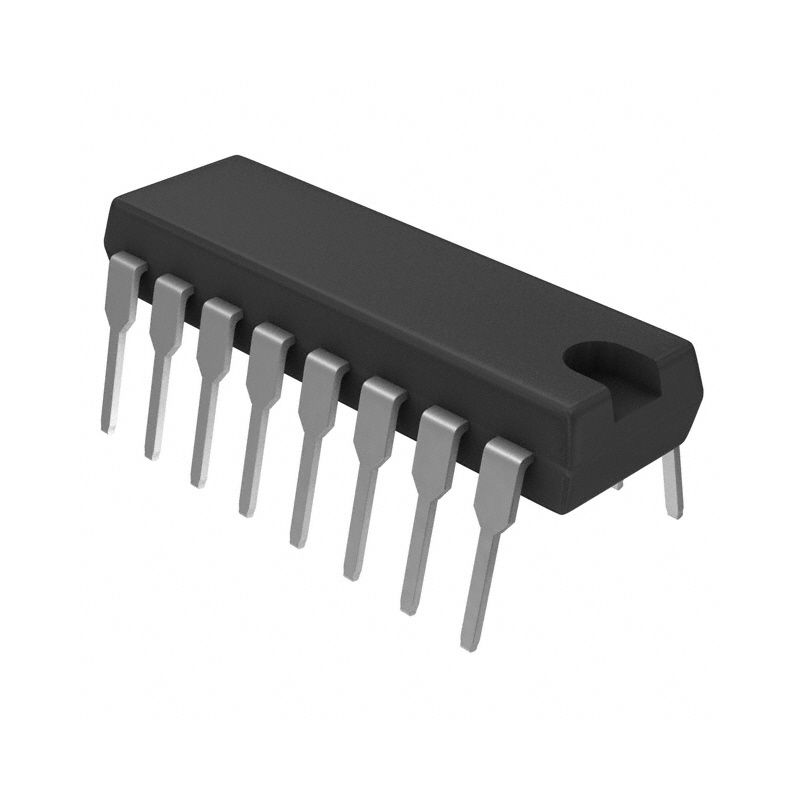
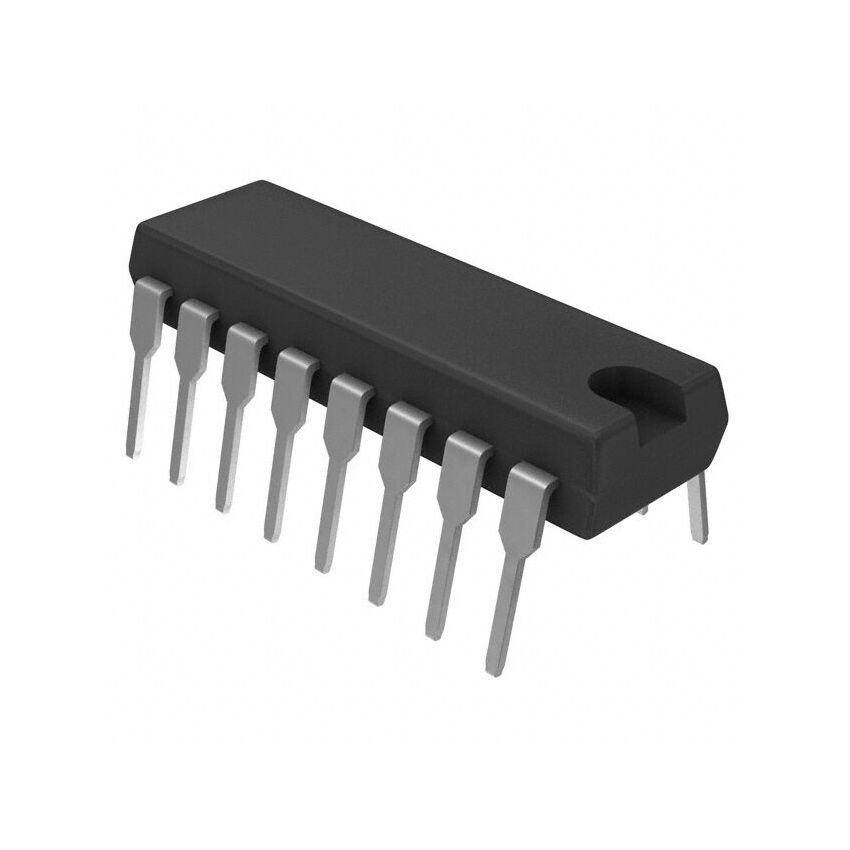
The ML231B is a versatile integrated circuit (IC) supplied in a DIP-16 (Dual In-line Package with 16 pins). Its general purpose and compact DIP-16 package makes it a valuable component for a variety of electronic applications. The DIP-16 package is easy to work with, especially when prototyping or building circuits on breadboards. While without specific datasheet information, it is hard to tell its exact function, it is reasonable to assume this IC serves one of the following roles: operational amplifier, timer, comparator, or some form of signal processing unit. Depending on its specific configuration and design, it could be suitable for applications such as signal conditioning, audio processing, or basic logic functions. Engineers and hobbyists frequently use DIP-16 packaged ICs due to their simplicity in handling and wide availability of sockets and prototyping tools.
The ML231B, in particular, benefits from this ease of integration, allowing for faster development cycles and quicker circuit testing. When selecting an IC for a particular application, it's crucial to consider its power consumption, voltage requirements, and operating frequency. The ML231B would offer a balance of performance and simplicity, suited for projects where space constraints or ease of assembly are key factors. DIP packages offer good mechanical stability, which is valuable for applications where vibrations or physical stress might be present. Overall, this integrated circuit packaged in a DIP-16 form provides versatility and ease of integration into various electronic circuits. Its ease of use and widespread availability makes it an appealing option for both prototyping and production purposes.
Given the widespread nature of DIP-16 packages, this integrated circuit provides a simple but effective option for many applications. Enhance your electronics toolkit with the ML231B IC. Purchase now and expand your project capabilities.
| Product Name | ML231B DIP-16 Integrated Circuit |
|---|---|
| SKU | 191714366929 |
| Price | £7.99 |
| ML231B DIP-16 Integrated Circuit Color | As per image |
| Category | Integrated Circuits |
| Brand | Nikko Electronics ltd |
| Product Code | 191714366929 |
| Availability | Yes |
Shipping cost is based on order value. Just add products to your cart and use the Shipping Calculator to see the shipping price. We want you to be 100% satisfied with your purchase. Items can be returned or exchanged within 30 days of delivery.
The ML231B DIP-16 Integrated Circuit utilizes a standard 16-pin Dual In-line Package with a 2.54mm (0.1-inch) pitch, which is the industry standard for through-hole components. When integrating the ML231B DIP-16 Integrated Circuit into an existing PCB or a new prototype, the most critical consideration is the orientation of pin 1, usually marked by a notch or a recessed dot on the package body. Since this IC is frequently used in precision signal processing or data acquisition, the layout of the pins often separates sensitive analog inputs from digital control lines to minimize crosstalk. Engineers should ensure that the PCB trace widths are sufficient for the power pins and that the ground return paths are as short as possible. If you are performing a repair, verify that the previous component was indeed a standard DIP-16 footprint, as some legacy systems used slightly different widths. Using a high-quality IC socket for the ML231B DIP-16 Integrated Circuit is highly recommended to prevent thermal stress on the internal silicon during the soldering process and to facilitate easier troubleshooting or component swapping in the future.
While modern surface-mount devices (SMD) offer smaller footprints, the ML231B DIP-16 Integrated Circuit remains a preferred choice for specific high-precision signal conditioning tasks due to its robust thermal mass and ease of handling in industrial environments. The DIP-16 package of the ML231B DIP-16 Integrated Circuit allows for better heat dissipation in ambient air compared to extremely small SOT or QFN packages, which is vital for maintaining the stability of internal voltage references and operational parameters. In signal conditioning, the ML231B DIP-16 Integrated Circuit excels at maintaining high input impedance and low offset voltages, provided that the surrounding circuitry is properly shielded. Professionals often choose the ML231B DIP-16 Integrated Circuit for low-frequency analog processing where the parasitic capacitance of a larger package is negligible compared to the benefits of mechanical durability and the ability to easily probe pins during the calibration phase. It provides a reliable bridge between analog sensors and digital processing units, ensuring that the integrity of the data remains intact throughout the conversion or amplification process.
To ensure the ML231B DIP-16 Integrated Circuit operates with maximum accuracy and minimal noise, a robust decoupling strategy is essential. It is standard practice to place a 0.1µF ceramic capacitor as close as possible to the VCC and GND pins of the ML231B DIP-16 Integrated Circuit. This capacitor handles high-frequency noise and sudden current demands from the IC's internal switching circuitry. For applications involving sensitive analog-to-digital conversion, an additional 10µF tantalum or electrolytic capacitor should be placed in parallel to manage lower-frequency power supply fluctuations. Because the ML231B DIP-16 Integrated Circuit is often used in mixed-signal environments, keeping the digital power rail noise away from the analog supply pins is paramount. If the system uses a single power source, consider using a small ferrite bead in series with the power input of the ML231B DIP-16 Integrated Circuit to further isolate it from high-frequency interference generated by other digital components on the board. Proper grounding, preferably using a dedicated ground plane, will complement these decoupling efforts and maximize the signal-to-noise ratio of the ML231B DIP-16 Integrated Circuit.
The ML231B DIP-16 Integrated Circuit is designed to be highly compatible with standard TTL and CMOS logic levels, making it a versatile choice for interfacing with a wide range of microcontrollers and digital logic gates. Most versions of the ML231B DIP-16 Integrated Circuit operate comfortably within the 5V logic range, which aligns perfectly with popular 8-bit and 32-bit controller platforms. However, when using the ML231B DIP-16 Integrated Circuit with 3.3V systems, such as modern ARM Cortex or ESP32 modules, level shifters or voltage dividers may be required on the input/output pins to prevent overvoltage conditions or logic level mismatches. It is important to check the specific voltage thresholds for 'logic high' and 'logic low' in the application to ensure that the ML231B DIP-16 Integrated Circuit correctly interprets control signals. Furthermore, the drive capability of the digital output pins on the ML231B DIP-16 Integrated Circuit is typically sufficient to drive several standard logic loads, but for long-distance signal transmission, adding a buffer might be necessary to maintain signal crispness and prevent data errors.
Thermal management for the ML231B DIP-16 Integrated Circuit is generally straightforward due to the efficiency of the DIP-16 package, but certain precautions are necessary for enclosed environments. The ML231B DIP-16 Integrated Circuit has a specific thermal resistance (junction-to-ambient) that dictates how much the internal temperature will rise per watt of power dissipated. In tightly sealed industrial control boxes where airflow is limited, the ambient temperature can rise significantly, potentially affecting the accuracy of the ML231B DIP-16 Integrated Circuit. To mitigate this, ensure that the IC is not placed directly next to high-heat components like power transistors or large voltage regulators. While the ML231B DIP-16 Integrated Circuit does not usually require a dedicated heatsink, ensuring a few millimeters of clearance around the package and using wide PCB copper traces for the ground pins can help conduct heat away from the silicon die. If the application involves high-speed switching or continuous heavy loads, monitoring the case temperature during the initial testing phase is advisable to ensure it remains within the manufacturer's specified operating temperature range for long-term reliability.
Yes, the ML231B DIP-16 Integrated Circuit is frequently employed in audio-frequency signal processing due to its balanced performance characteristics in the analog domain. Its architecture is well-suited for tasks such as active filtering, pre-amplification, or basic signal mixing. When using the ML231B DIP-16 Integrated Circuit for audio, it is important to consider the Total Harmonic Distortion (THD) and the slew rate, which determine how accurately the IC can follow rapid changes in the audio waveform. For high-fidelity applications, the ML231B DIP-16 Integrated Circuit provides a solid foundation, though engineers should be mindful of the noise floor. Using metal film resistors and high-quality film capacitors in the peripheral circuitry will help the ML231B DIP-16 Integrated Circuit deliver cleaner audio output. One limitation to keep in mind is the gain-bandwidth product; at very high gain settings, the frequency response may narrow, so it is often better to use multiple stages of the ML231B DIP-16 Integrated Circuit rather than pushing a single stage to its limits. This ensures a flat frequency response across the entire audible spectrum from 20Hz to 20kHz.
The ML231B DIP-16 Integrated Circuit is a staple in the maintenance and repair of legacy laboratory and medical equipment because it was a widely adopted standard during the era when these machines were designed. Technicians prefer the ML231B DIP-16 Integrated Circuit because its through-hole design allows for reliable hand-soldering, which is often necessary when working on aged PCBs where the copper pads may be fragile. Replacing an original component with a genuine ML231B DIP-16 Integrated Circuit ensures that the timing constants, voltage levels, and operational logic remain identical to the original design, which is critical for maintaining the calibration and safety certifications of lab instruments. Unlike modern surface-mount alternatives that require specialized reflow equipment and adapters, the ML231B DIP-16 Integrated Circuit can be serviced with standard tools. Furthermore, the 'B' suffix in the ML231B DIP-16 Integrated Circuit often denotes a specific performance grade or temperature tolerance that was specifically chosen by the original equipment manufacturers for its stability over time, making it the only reliable choice for high-stakes repair work.