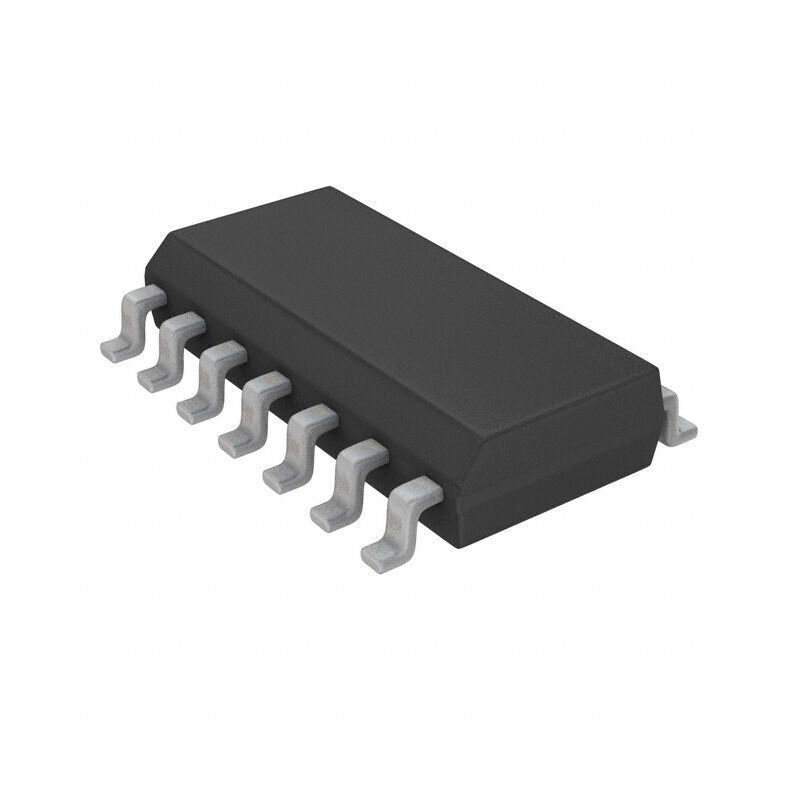


MMBTA92 PNP High-Voltage 300V Bipolar Transistor (SOT-23)
22 people are viewing this right now
In Stock
SKU
191714395270
£2.75
Safe Checkout, Guaranteed

Safe Checkout, Guaranteed
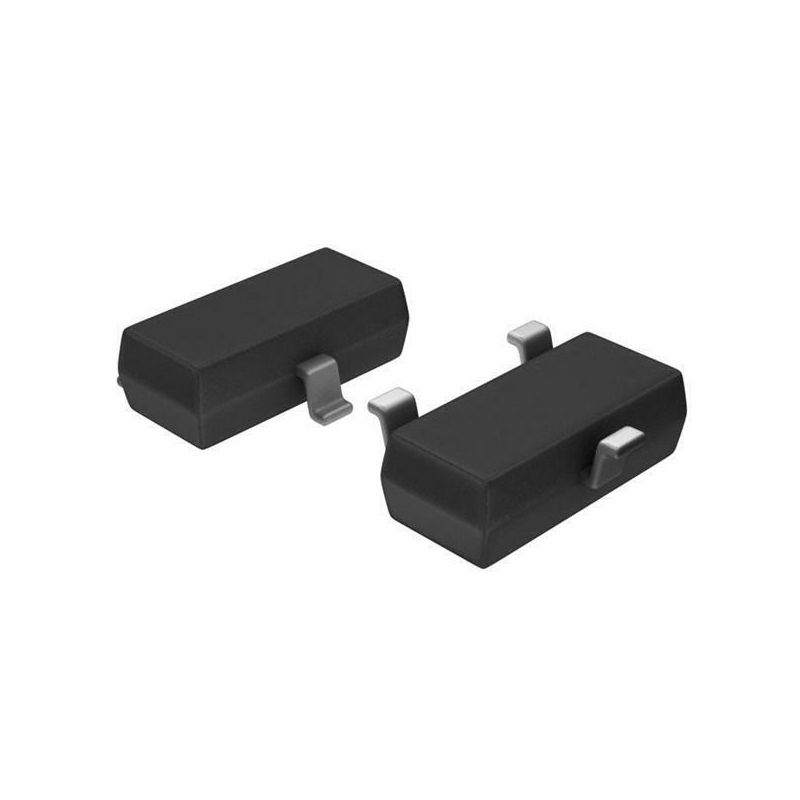
The MMBTA92 is a high-voltage PNP bipolar transistor meticulously designed for demanding switching and amplification applications. Offered here in a lot of 2 pieces, this transistor is encased in the compact SOT23-3 package, perfectly suited for space-constrained circuit designs. Its primary strength lies in its impressive 300V collector-emitter voltage rating, enabling it to handle high-voltage signals with exceptional reliability. This is crucial for applications such as high-voltage power supplies, display drivers, and line-operated circuits. The SOT23-3 package facilitates efficient surface mount assembly, contributing to streamlined manufacturing processes. Moreover, it ensures effective thermal dissipation, which is vital for maintaining stable performance under varying operating conditions.
The MMBTA92 boasts a high current gain (hFE), allowing it to amplify weak signals effectively, while its fast switching speed makes it suitable for high-frequency applications. The robust construction and stringent manufacturing standards ensure consistent electrical characteristics and long-term reliability. This high-voltage PNP transistor finds applications in a variety of industrial control systems, automotive electronics, and lighting systems. It excels in situations where handling high voltages is paramount. Moreover, this high voltage transistor can be utilized in various industrial and medical devices. The MMBTA92 is a crucial component for engineers and hobbyists seeking to create robust and reliable high-voltage circuits.
Its high reliability and voltage handling capabilities make it ideal for sensitive electronic equipment. Don't miss the opportunity to include this essential component in your inventory. The MMBTA92, with its superior voltage handling and reliable performance, makes it an invaluable asset to any circuit designer. Get your lot of 2 MMBTA92 TRANS PNP BIPOLAR 300V SOT23-3 today and elevate your project's performance. Order now and experience the pinnacle of high-voltage performance in your designs. Don't miss out, add to cart today!
| Product Name | MMBTA92 PNP High-Voltage 300V Bipolar Transistor (SOT-23) |
|---|---|
| SKU | 191714395270 |
| Price | £2.75 |
| MMBTA92 PNP High-Voltage 300V Bipolar Transistor (SOT-23) Color | As per image |
| Category | Transistors |
| Brand | Nikko Electronics ltd |
| Product Code | 191714395270 |
| Availability | Yes |
Shipping cost is based on order value. Just add products to your cart and use the Shipping Calculator to see the shipping price. We want you to be 100% satisfied with your purchase. Items can be returned or exchanged within 30 days of delivery.
The MMBTA92 PNP High-Voltage 300V Bipolar Transistor (SOT-23) is specifically engineered for high-side switching where the load is connected to a high-voltage rail. Its standout feature is the 300V collector-emitter breakdown voltage (Vceo), which provides a substantial safety margin for circuits operating on rectified AC lines or high-voltage DC buses. Unlike standard small-signal transistors that fail at 40V or 60V, this component maintains structural integrity and prevents leakage under high electrical stress. In high-side configurations, the PNP architecture allows for easier biasing relative to the positive rail, simplifying the drive circuitry. This makes the MMBTA92 PNP High-Voltage 300V Bipolar Transistor (SOT-23) an ideal choice for level-shifting circuits, where it can translate low-voltage logic signals into high-voltage control signals for power stages. Its compact SOT-23 footprint further ensures that these high-voltage capabilities do not compromise PCB real estate, making it a staple for modern, miniaturized power electronics and industrial control modules.
Thermal management is critical when utilizing the MMBTA92 PNP High-Voltage 300V Bipolar Transistor (SOT-23), as the SOT-23 package has a relatively small surface area for heat rejection. While the transistor is rated for high voltage, the total power dissipation (Pd) is typically limited to around 350mW at an ambient temperature of 25°C. When switching 300V, even a small collector current (Ic) can result in significant heat generation (P = Vce x Ic). To ensure long-term reliability of the MMBTA92 PNP High-Voltage 300V Bipolar Transistor (SOT-23), designers should maximize the copper pad area connected to the collector lead, which acts as a primary heat sink. Additionally, implementing thermal vias to internal PCB ground planes can significantly lower the junction-to-ambient thermal resistance (Rthja). It is also advisable to derate the operating current as the ambient temperature rises to prevent thermal runaway. Using the MMBTA92 PNP High-Voltage 300V Bipolar Transistor (SOT-23) within its Safe Operating Area (SOA) ensures that the junction temperature remains below the 150°C threshold, preserving the component's switching characteristics and lifespan.
The MMBTA42 NPN transistor is the direct complementary partner for the MMBTA92 PNP High-Voltage 300V Bipolar Transistor (SOT-23). In professional circuit design, pairing these two components is essential for creating symmetrical push-pull amplifiers, high-voltage totem-pole output stages, and balanced level shifters. Both the MMBTA92 PNP High-Voltage 300V Bipolar Transistor (SOT-23) and its NPN counterpart share nearly identical electrical characteristics, including the 300V breakdown voltage rating and similar current gain (hFE) profiles. This matching is vital for minimizing distortion in amplification tasks and ensuring synchronized switching times in high-speed digital-to-analog high-voltage interfaces. When used together, they allow for efficient bipolar signaling across high-voltage rails. Designers often source the MMBTA92 PNP High-Voltage 300V Bipolar Transistor (SOT-23) alongside the MMBTA42 to maintain consistency in their Bill of Materials (BOM) and to ensure that the SOT-23 land patterns are uniform across the PCB layout, facilitating streamlined automated assembly processes.
Yes, the MMBTA92 PNP High-Voltage 300V Bipolar Transistor (SOT-23) is a preferred component for driving Nixie tubes, neon lamps, and other gas-discharge displays that require high ionization voltages. These displays typically operate at potentials between 170V and 250V, which would instantly destroy standard transistors. The 300V rating of the MMBTA92 PNP High-Voltage 300V Bipolar Transistor (SOT-23) provides the necessary overhead to handle the striking voltage and the inductive spikes often associated with these circuits. Because PNP transistors are often used in the anode-side switching of multiplexed displays, the MMBTA92 PNP High-Voltage 300V Bipolar Transistor (SOT-23) allows for precise control over individual digits or segments from a high-voltage supply. Its low collector-emitter saturation voltage ensures that the transistor remains efficient, minimizing voltage drop across the switch and ensuring the display receives consistent power. For collectors and engineers restoring vintage tech or building modern retro-clocks, the MMBTA92 PNP High-Voltage 300V Bipolar Transistor (SOT-23) offers a reliable, surface-mount solution for high-voltage cathode or anode management.
The MMBTA92 PNP High-Voltage 300V Bipolar Transistor (SOT-23) features a current-gain bandwidth product (fT) of approximately 50MHz, which is quite respectable for a high-voltage bipolar device. This makes it suitable for Pulse Width Modulation (PWM) applications in the kilohertz range, such as dimming high-voltage LED strings or controlling small DC motors in line-operated equipment. However, because it is a bipolar junction transistor (BJT), it is subject to storage time delays during saturation. When using the MMBTA92 PNP High-Voltage 300V Bipolar Transistor (SOT-23) in high-frequency switching, it is important to manage the base drive current to avoid deep saturation, which can slow down the turn-off transition. Designers often use speed-up capacitors in parallel with base resistors to improve the transient response. While not intended for Megahertz-range RF switching, the MMBTA92 PNP High-Voltage 300V Bipolar Transistor (SOT-23) excels in power supply regulation and signal modulation where reliability at 300V is more critical than ultra-fast nanosecond switching speeds.
The MMBTA92 PNP High-Voltage 300V Bipolar Transistor (SOT-23) is essentially the surface-mount (SMD) equivalent of the classic MPSA92 through-hole transistor (TO-92 package). Electrically, they are virtually identical, sharing the same 300V rating and PNP polarity. The primary difference lies in the mechanical packaging and thermal performance. The MMBTA92 PNP High-Voltage 300V Bipolar Transistor (SOT-23) is designed for modern SMT production lines, allowing for smaller, lighter, and more cost-effective circuit boards. While the TO-92 MPSA92 might offer slightly better standalone power dissipation due to its larger bulk, the MMBTA92 PNP High-Voltage 300V Bipolar Transistor (SOT-23) is preferred for high-density designs. Engineers transitioning a design from through-hole to SMD can typically swap the MPSA92 for the MMBTA92 PNP High-Voltage 300V Bipolar Transistor (SOT-23) without changing circuit values, provided they account for the SOT-23's thermal footprint. This makes it a go-to component for modernizing legacy industrial designs while maintaining the same high-voltage performance characteristics.
The MMBTA92 PNP High-Voltage 300V Bipolar Transistor (SOT-23) exhibits a stable DC current gain (hFE) typically ranging from 25 to 40 when operating with a collector current (Ic) between 1mA and 30mA. This consistency is vital for linear amplification and predictable switching behavior. At very low currents, the gain may taper off, and at currents exceeding 50mA, the gain begins to drop due to high-injection effects. For most high-voltage signaling and driver applications, the MMBTA92 PNP High-Voltage 300V Bipolar Transistor (SOT-23) operates within its 'sweet spot' of 10mA to 20mA, where the gain is most linear. When designing with the MMBTA92 PNP High-Voltage 300V Bipolar Transistor (SOT-23), it is standard practice to provide sufficient base drive to ensure the transistor remains fully saturated in switching modes, or to use negative feedback in amplifier stages to compensate for any hFE variance between individual units. This ensures that the high-voltage performance remains consistent across different production lots and varying environmental conditions.