


MPC556LFMZP40 Power Architecture Microcontroller
29 people are viewing this right now
In Stock
SKU
191774760592
£34.99
Safe Checkout, Guaranteed

Safe Checkout, Guaranteed
The MPC556LFMZP40 is a high-performance integrated circuit designed for demanding embedded applications. Housed in a BGA (Ball Grid Array) package, this powerful IC offers a robust solution for automotive, industrial, and aerospace applications where reliability and performance are critical. This integrated circuit is built around a Power Architecture® core, renowned for its efficiency and scalability. This allows for efficient processing of complex algorithms and real-time data, making it ideal for engine control units (ECUs), industrial automation systems, and flight control systems. Its advanced architecture ensures optimal power consumption, extending battery life in portable devices and reducing overall energy costs in industrial settings. The BGA package provides a high density of connections, enabling superior signal integrity and reduced electromagnetic interference (EMI).
This ensures reliable communication between different parts of the system, even in noisy environments. The compact size of the BGA package also allows for more efficient use of board space, making it ideal for applications with strict size constraints. One of the key features of the MPC556LFMZP40 is its extensive set of peripherals. It includes multiple communication interfaces such as CAN (Controller Area Network), SPI (Serial Peripheral Interface), and UART (Universal Asynchronous Receiver/Transmitter), enabling seamless integration with other devices in the system. It also features a powerful DMA (Direct Memory Access) controller, which allows for high-speed data transfer between memory and peripherals without CPU intervention. This significantly improves system performance and reduces CPU load.
The MPC556LFMZP40 also incorporates advanced security features to protect sensitive data and prevent unauthorized access. It includes hardware encryption accelerators, secure boot capabilities, and memory protection mechanisms. These features are essential for applications that require a high level of security, such as automotive telematics systems and industrial control systems. The MPC556LFMZP40 is designed to meet the stringent requirements of automotive and industrial applications. It is manufactured using a robust process technology and undergoes rigorous testing to ensure reliable operation in harsh environments. It is also compliant with industry standards such as AEC-Q100, ensuring its suitability for automotive applications.
Whether you are developing an advanced driver-assistance system (ADAS), an industrial robot, or a flight control system, the MPC556LFMZP40 provides the performance, reliability, and security you need. Its powerful processing capabilities, extensive peripherals, and advanced security features make it an ideal choice for demanding embedded applications. Take your designs to the next level with the MPC556LFMZP40. Experience the power and reliability of the Power Architecture® core and the benefits of the BGA package. Order your MPC556LFMZP40 Integrated Circuit BGA today and unlock the potential of your next embedded project. Invest in quality, performance, and reliability.
Choose the MPC556LFMZP40 for your critical applications. Purchase now and revolutionize your embedded solutions.
| Product Name | MPC556LFMZP40 Power Architecture Microcontroller |
|---|---|
| SKU | 191774760592 |
| Price | £34.99 |
| MPC556LFMZP40 Power Architecture Microcontroller Color | As per image |
| Category | BGA |
| Brand | Nikko Electronics ltd |
| Product Code | 191774760592 |
| Availability | Yes |
Shipping cost is based on order value. Just add products to your cart and use the Shipping Calculator to see the shipping price. We want you to be 100% satisfied with your purchase. Items can be returned or exchanged within 30 days of delivery.
The MPC556LFMZP40 Power Architecture Microcontroller is engineered for high-performance embedded control, specifically within the automotive and aerospace sectors. Built on the robust PowerPC RCPU RISC core, it operates at a 40MHz clock speed, which is optimized for executing complex mathematical algorithms required for real-time engine management. One of its standout features is the integrated floating-point unit (FPU), which allows for precise calculation of fuel injection timing and ignition maps without the overhead of software emulation. Furthermore, the MPC556LFMZP40 Power Architecture Microcontroller includes a dedicated Time Processor Unit (TPU3) that offloads timing-critical tasks from the main CPU, ensuring that high-resolution pulse-width modulation (PWM) and frequency measurements are handled with minimal latency. This architectural synergy makes the MPC556LFMZP40 Power Architecture Microcontroller an exceptional choice for legacy ECU designs where reliability and deterministic performance are non-negotiable requirements. Engineers appreciate its ability to maintain stable processing throughput even under heavy interrupt loads common in modern industrial and vehicular networking environments.
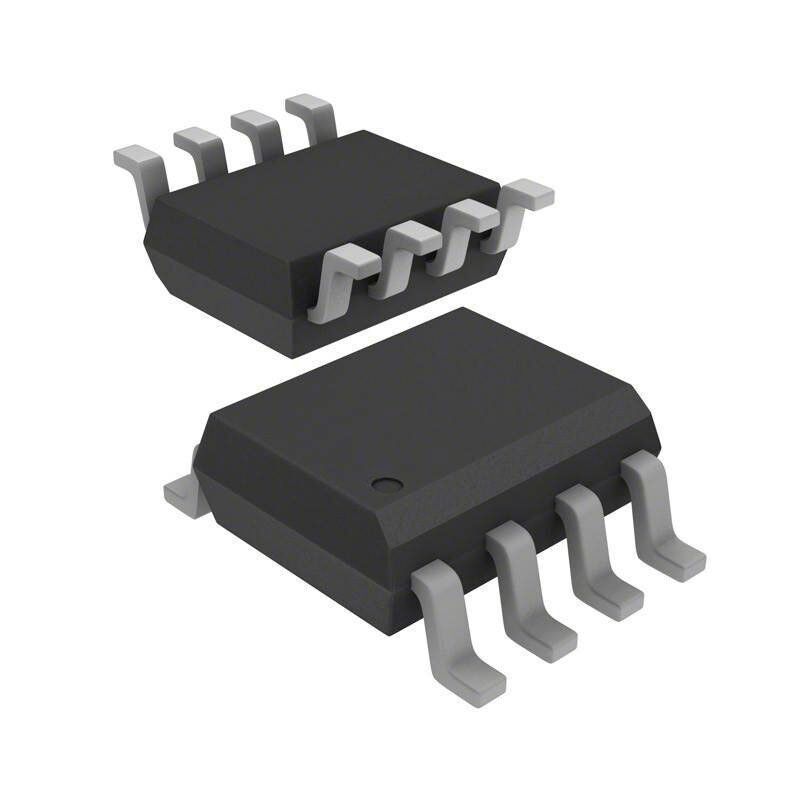
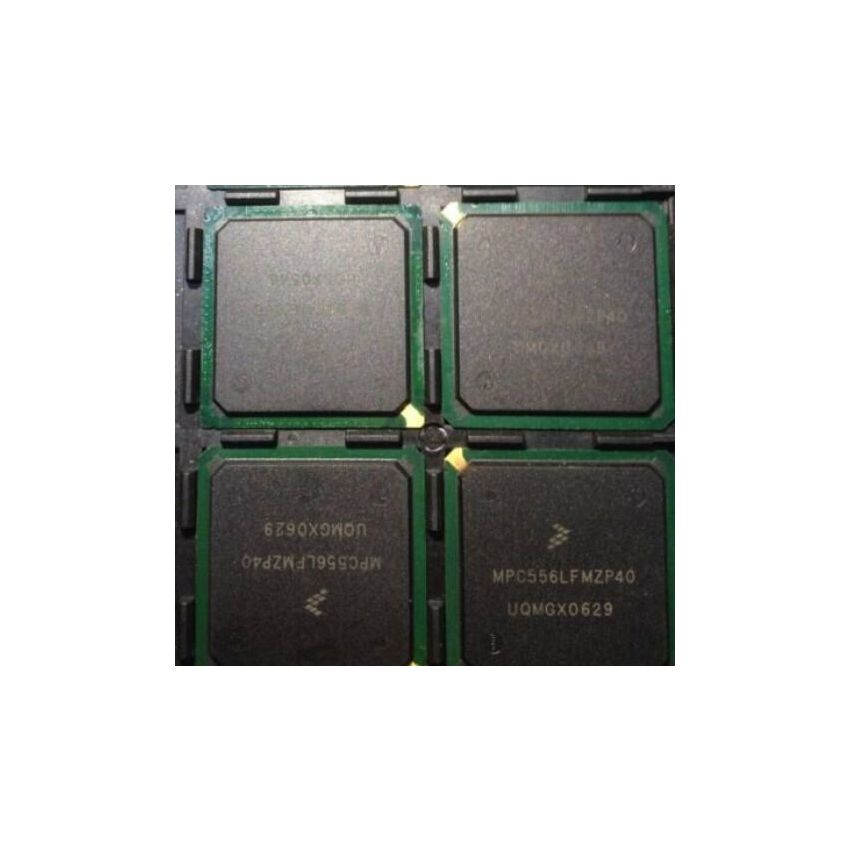
The MPC556LFMZP40 Power Architecture Microcontroller utilizes a Plastic Ball Grid Array (PBGA) package, which offers significant advantages in terms of electrical performance and thermal dissipation compared to traditional leaded packages. The BGA footprint reduces parasitic inductance and capacitance, which is critical for maintaining signal integrity at the 40MHz operating frequency. From a thermal perspective, the MPC556LFMZP40 Power Architecture Microcontroller benefits from a shorter thermal path from the silicon die to the PCB, allowing the board itself to act as a heat sink. When designing with this component, it is essential to implement a robust grid of thermal vias directly beneath the package to effectively move heat into the internal ground planes. This is particularly important for aerospace or under-the-hood automotive applications where ambient temperatures can be extreme. Additionally, the high-density interconnect of the MPC556LFMZP40 Power Architecture Microcontroller allows for a more compact PCB layout, though it requires precise SMT reflow profiles and X-ray inspection to ensure void-free solder joints and long-term reliability in high-vibration environments.
The MPC556LFMZP40 Power Architecture Microcontroller is equipped with a comprehensive suite of on-chip memory and peripherals designed to support complex embedded applications. It features 448KB of embedded Flash memory, which provides ample space for sophisticated control firmware and look-up tables. To support high-speed data processing, it includes 26KB of static RAM (SRAM), ensuring fast access for volatile variables and stack operations. A key highlight of the MPC556LFMZP40 Power Architecture Microcontroller is its dual TouCAN modules, which support the CAN 2.0B protocol, enabling seamless integration into automotive diagnostic and control networks. Additionally, the device incorporates a 10-bit Queued Analog-to-Digital Converter (QADC64), which allows for the simultaneous sampling of multiple sensor inputs, such as throttle position or pressure sensors, with high precision. These integrated features reduce the need for external components, thereby lowering the overall Bill of Materials (BOM) cost and increasing the system's MTBF (Mean Time Between Failures) by simplifying the circuit complexity around the MPC556LFMZP40 Power Architecture Microcontroller.
The MPC556LFMZP40 Power Architecture Microcontroller is a member of the highly successful MPC5xx family, making it a primary candidate for maintaining and upgrading legacy systems that rely on Power Architecture technology. When considering the MPC556LFMZP40 Power Architecture Microcontroller as a replacement, engineers must verify the specific 'L' suffix features, which often denote specific voltage or flash configurations tailored for low-power or high-reliability variants. While the core instruction set remains compatible across the MPC500 series, the MPC556LFMZP40 Power Architecture Microcontroller offers refined power management and enhanced peripheral sets that may require minor firmware adjustments to initialize correctly. Many defense and industrial automation systems utilize this specific BGA variant because of its proven track record in mission-critical applications where long-term availability is essential. It is highly recommended to review the pinout and electrical characteristics to ensure the MPC556LFMZP40 Power Architecture Microcontroller matches the existing PCB footprint, especially regarding the 3.3V and 5V I/O requirements, to ensure a seamless drop-in transition without necessitating a complete hardware redesign.
Developing for the MPC556LFMZP40 Power Architecture Microcontroller typically involves utilizing the Background Debug Mode (BDM) interface, which is a standard feature of the Power Architecture family. The BDM port allows developers to perform non-intrusive debugging, including real-time hardware breakpoints, single-stepping through code, and direct manipulation of internal registers and memory. For the MPC556LFMZP40 Power Architecture Microcontroller, professional-grade tools from vendors like P&E Micro, Green Hills Software, or Wind River are frequently used to provide a robust IDE and compiler environment. These tools are essential for optimizing the execution of the RISC core and managing the complex TPU3 microcode. Furthermore, the MPC556LFMZP40 Power Architecture Microcontroller supports sophisticated trace capabilities that help in identifying race conditions or timing bottlenecks in real-time operating systems (RTOS). When sourcing development hardware, ensure that the headers are compatible with the BGA package's signal routing, as the high-speed nature of the MPC556LFMZP40 Power Architecture Microcontroller requires short, impedance-matched traces to the debug header to prevent signal reflections during high-speed data logging sessions.
Electromagnetic compatibility is a critical design factor for the MPC556LFMZP40 Power Architecture Microcontroller, especially when deployed in electrically noisy industrial or aerospace settings. The BGA package of the MPC556LFMZP40 Power Architecture Microcontroller inherently aids in EMC performance by minimizing the loop area of power and ground connections, which significantly reduces radiated emissions. To further enhance EMC, the IC features multiple power and ground pins distributed across the ball array, allowing for low-impedance decoupling. It is recommended to place high-frequency ceramic decoupling capacitors as close as possible to the MPC556LFMZP40 Power Architecture Microcontroller pins on the bottom side of the PCB. The internal design of the Power Architecture core also includes features to mitigate switching noise. When layouting a board for the MPC556LFMZP40 Power Architecture Microcontroller, engineers should utilize a multi-layer stack-up with dedicated ground planes to shield sensitive analog signals from the high-speed digital switching of the 40MHz clock. Proper termination of the external bus and careful routing of the CAN bus signals are also vital for maintaining the robust EMI profile that the MPC556LFMZP40 Power Architecture Microcontroller is known for.
The MPC556LFMZP40 Power Architecture Microcontroller typically operates using a dual-voltage supply strategy to balance high-speed processing with I/O flexibility. It generally requires a 3.3V supply for the internal logic core and a 5V supply for the I/O pins and analog peripherals, such as the QADC. This dual-rail architecture allows the MPC556LFMZP40 Power Architecture Microcontroller to interface directly with 5V legacy sensors while maintaining the energy efficiency of a lower-voltage core. Proper power sequencing is vital; the core voltage should ideally stabilize before or simultaneously with the I/O voltage to prevent latch-up conditions or unpredictable behavior during the boot sequence. Many designers use dedicated power management ICs (PMICs) or LDOs with 'Power Good' outputs to manage the startup of the MPC556LFMZP40 Power Architecture Microcontroller. Additionally, the device features various low-power modes, including 'Stop' and 'Wait' states, which allow the MPC556LFMZP40 Power Architecture Microcontroller to drastically reduce current consumption during idle periods, making it suitable for battery-backed or energy-conscious applications in remote industrial monitoring stations.