

N82S115N 4K-bit (512 x 8) Bipolar PROM DIP-24
29 people are viewing this right now
In Stock
SKU
191839141293
£14.99
Safe Checkout, Guaranteed

Safe Checkout, Guaranteed
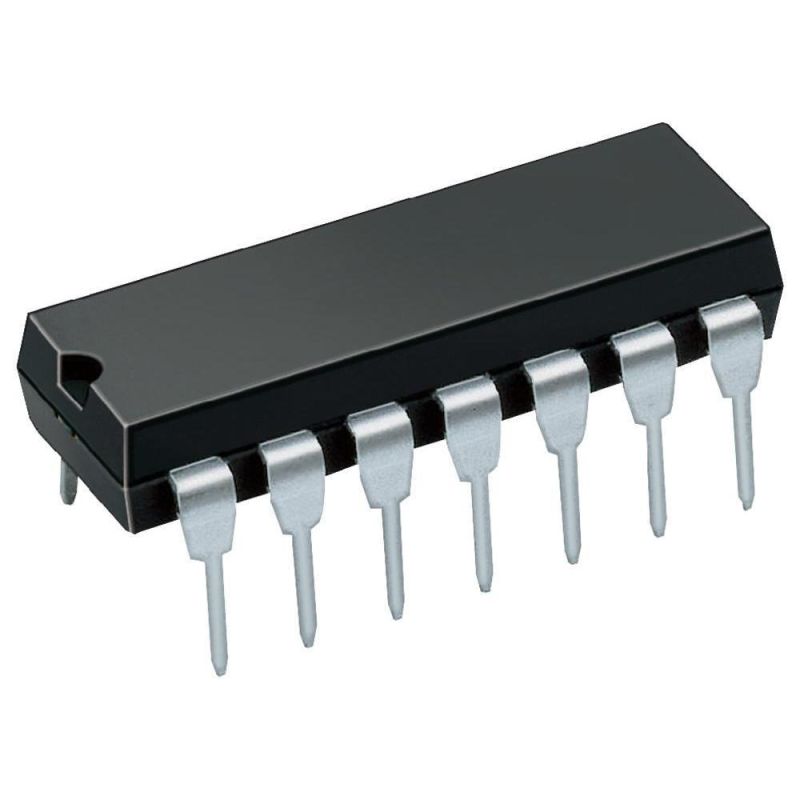
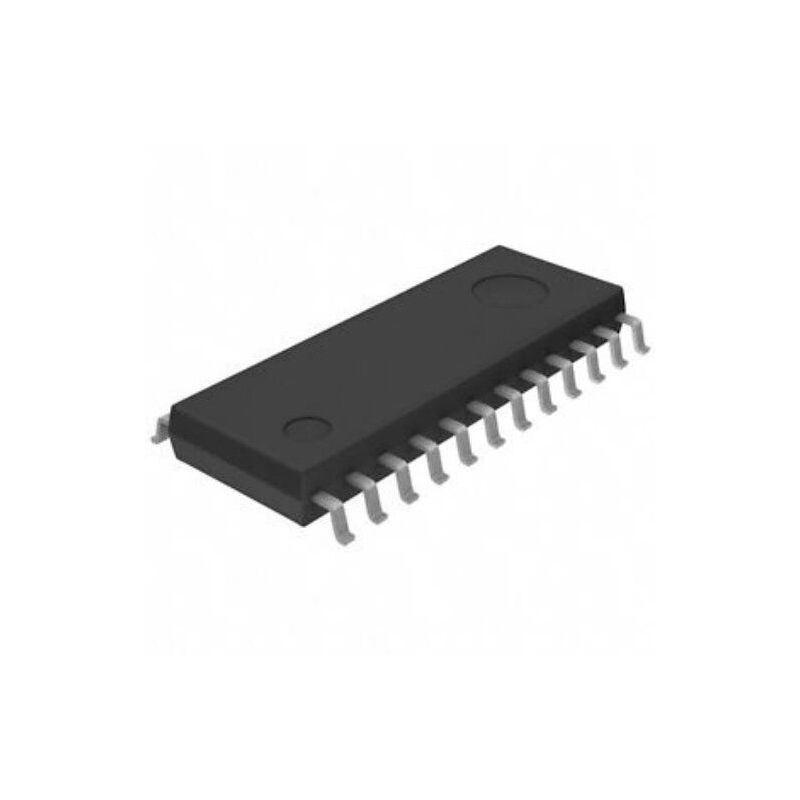
The N82S115N is a bipolar Programmable Read-Only Memory (PROM) integrated circuit housed in a 24-pin DIP (Dual In-line Package). This PROM is typically organized as 512 words x 8 bits, providing a total storage capacity of 4096 bits (4Kbits). PROMs are non-volatile memory devices that can be programmed once, making them suitable for storing firmware, lookup tables, and other fixed data in embedded systems. The DIP-24 package facilitates easy integration into through-hole printed circuit boards (PCBs) and allows for simple replacement. The N82S115N is designed for use in older computer systems, industrial control equipment, and other applications requiring non-volatile memory storage. The key advantage of the N82S115N lies in its ability to provide permanent storage for critical data or code.
Once programmed, the data is retained even when power is removed. This makes it ideal for storing boot loaders, configuration parameters, and lookup tables in embedded systems. The 8-bit word organization allows for efficient storage of byte-oriented data. The N82S115N was commonly used in older microprocessors, controllers, and logic circuits. While EEPROMs and flash memory offer greater flexibility with their erasable and reprogrammable capabilities, the N82S115N remains a valuable component for repairing or maintaining legacy systems that rely on PROM technology. The DIP-24 package simplifies replacement and upgrades, minimizing downtime.
Its compatibility with older systems ensures that it can be seamlessly integrated into existing hardware. When selecting a memory chip for your application, consider the N82S115N for its non-volatility, ease of integration, and compatibility with legacy systems. Preserve the functionality of your vintage systems or incorporate it into custom projects requiring permanent data storage. This IC is suited to repairing older devices which rely on this technology. Order your N82S115N today and ensure the continued operation of your legacy systems. Don't let obsolescence get in the way; choose the N82S115N for your essential non-volatile memory storage needs and unlock the full potential of your vintage hardware.
Secure your N82S115N IC now and keep your valuable legacy systems running smoothly. Add the N82S115N to your cart today!
| Product Name | N82S115N 4K-bit (512 x 8) Bipolar PROM DIP-24 |
|---|---|
| SKU | 191839141293 |
| Price | £14.99 |
| N82S115N 4K-bit (512 x 8) Bipolar PROM DIP-24 Color | As per image |
| Category | Integrated Circuits |
| Brand | Nikko Electronics ltd |
| Product Code | 191839141293 |
| Availability | Yes |
Shipping cost is based on order value. Just add products to your cart and use the Shipping Calculator to see the shipping price. We want you to be 100% satisfied with your purchase. Items can be returned or exchanged within 30 days of delivery.
Programming the N82S115N 4K-bit (512 x 8) Bipolar PROM DIP-24 requires specialized hardware capable of delivering the specific high-voltage pulses needed to blow its internal Nichrome (NiCr) fuses. Unlike modern CMOS EPROMs or Flash memory, this bipolar PROM is a One-Time Programmable (OTP) device that relies on a permanent physical change within the silicon. Most contemporary USB-based universal programmers do not support the high current and precise timing algorithms required for these older bipolar devices. Engineers and restorers typically use vintage professional-grade equipment such as the Data I/O 29B, BP Microsystems programmers, or specialized Stag units equipped with the correct family and pinout modules. It is critical to verify that your programmer's library specifically lists the N82S115N 4K-bit (512 x 8) Bipolar PROM DIP-24, as incorrect voltage levels can easily damage the chip's internal structure or result in incomplete fuse blowing, leading to intermittent data read errors in the target system. Always ensure your power supply is stable during the programming cycle to prevent 'under-burning' the fuses.
The N82S115N 4K-bit (512 x 8) Bipolar PROM DIP-24 was engineered for high-performance applications where speed was a priority over power consumption. Typically, this device offers an address access time (tAA) in the range of 50ns to 60ns, which was significantly faster than the MOS-based EPROMs of the same era. This speed makes the N82S115N 4K-bit (512 x 8) Bipolar PROM DIP-24 an ideal component for address decoding, microcode storage in CPU control paths, and state machine implementation in industrial controllers or vintage arcade hardware. Because it is a bipolar device, its propagation delay is relatively constant across the operating temperature range compared to early CMOS alternatives. When designing or repairing a circuit with this PROM, it is essential to account for the chip-enable access time as well, ensuring that the system clock cycle allows for the full data stabilization period. Its high-speed capability is the primary reason it remains a staple in maintaining legacy high-speed computing environments where timing margins are extremely tight and non-negotiable.
A defining characteristic of the N82S115N 4K-bit (512 x 8) Bipolar PROM DIP-24 is its relatively high power consumption, which is typical for Schottky bipolar technology. The device can draw upwards of 150mA to 175mA from a standard 5V supply, resulting in significant heat dissipation during continuous operation. When integrating the N82S115N 4K-bit (512 x 8) Bipolar PROM DIP-24 into a PCB layout, especially in dense DIP-24 arrays, it is vital to ensure adequate airflow. It is common for these chips to feel quite warm to the touch under normal operating conditions. Engineers should prioritize the use of high-quality, low-impedance decoupling capacitors (typically 0.1µF ceramic) placed as close to the VCC and GND pins as possible to suppress the switching noise generated by the high-current internal drivers. If the N82S115N 4K-bit (512 x 8) Bipolar PROM DIP-24 is being used in an enclosed industrial control box, passive cooling or strategic placement away from other heat-sensitive components like electrolytic capacitors is highly recommended to ensure long-term reliability and prevent thermal-induced logic failures.
The N82S115N 4K-bit (512 x 8) Bipolar PROM DIP-24 is generally pin-compatible with other 82S115 series PROMs from various manufacturers, such as the Signetics 82S115, Harris HM-7641, or MMI 6341. However, the 'N' suffix specifically denotes the plastic Dual In-line Package (DIP). When sourcing a replacement, you must ensure that the output configuration matches; the N82S115N 4K-bit (512 x 8) Bipolar PROM DIP-24 features three-state (tri-state) outputs, which are essential for bus-oriented systems where multiple devices share the same data lines. If your original circuit used an open-collector version (like the 82S114), the N82S115N 4K-bit (512 x 8) Bipolar PROM DIP-24 will not function correctly without modifying the pull-up resistor network. Additionally, always verify the speed grade of the existing part. While the N82S115N 4K-bit (512 x 8) Bipolar PROM DIP-24 is quite fast, some military-grade or high-speed 'A' versions may have even tighter timing requirements. For most industrial and hobbyist restoration projects, the N82S115N serves as a robust, standard-speed replacement that meets the original electrical specifications of the 82S115 family.
The three-state (tri-state) output capability of the N82S115N 4K-bit (512 x 8) Bipolar PROM DIP-24 is a critical feature for effective bus management in 8-bit microcomputer architectures. This design allows the data pins to enter a high-impedance state when the chip is not selected (via the CE inputs), effectively disconnecting the PROM from the data bus. This prevents bus contention, where two devices might attempt to drive the bus to different logic levels simultaneously. In the N82S115N 4K-bit (512 x 8) Bipolar PROM DIP-24, the inclusion of multiple chip-enable inputs provides flexible decoding logic, allowing multiple PROMs to be mapped into a larger memory space without the need for extensive external glue logic. This is particularly useful in systems where the 512x8 organization is expanded to 1Kx8 or 2Kx8 by banking multiple N82S115N units. The active-low and active-high enable inputs allow for direct connection to address lines, simplifying the overall PCB design and reducing the propagation delay that would otherwise be introduced by external inverters or decoders.
The N82S115N 4K-bit (512 x 8) Bipolar PROM DIP-24 offers superior long-term data retention compared to UV-erasable EPROMs (like the 2716 or 2732 series). This is because the N82S115N 4K-bit (512 x 8) Bipolar PROM DIP-24 uses fuse-link technology, where the programming process physically and permanently alters the internal circuitry by 'blowing' a metal link. Once a bit is programmed, it cannot be reversed, and it is not susceptible to 'bit rot' caused by charge leakage from a floating gate, which is a common failure mode in aged MOS EPROMs. Because there is no quartz window and no stored charge, the N82S115N 4K-bit (512 x 8) Bipolar PROM DIP-24 is immune to accidental erasure from ultraviolet light or X-rays. This makes it an exceptionally reliable choice for firmware storage in harsh industrial environments or military applications where data integrity over decades is paramount. For collectors and maintainers of legacy hardware, using an N82S115N 4K-bit (512 x 8) Bipolar PROM DIP-24 ensures that the stored code will remain intact as long as the physical substrate of the chip survives.
When working with New Old Stock (NOS) N82S115N 4K-bit (512 x 8) Bipolar PROM DIP-24 integrated circuits, several precautions are necessary to ensure successful implementation. First, despite being bipolar and generally more rugged than CMOS, standard ESD (Electrostatic Discharge) protocols should be followed to protect the sensitive internal logic. Second, because these chips have often been in storage for decades, the leads of the DIP-24 package may have developed oxidation or tarnish. It is advisable to gently clean the pins with a specialized electronic contact cleaner or a fiberglass pen before insertion into a socket or soldering onto a PCB to ensure a low-resistance connection. Furthermore, before programming an NOS N82S115N 4K-bit (512 x 8) Bipolar PROM DIP-24, it is good practice to perform a 'blank check' using your programmer to confirm that no fuses were inadvertently blown during manufacturing or previous handling. Finally, ensure that the target socket is clean; for these high-current devices, a loose or oxidized socket connection can lead to voltage drops that cause erratic behavior or system crashes.