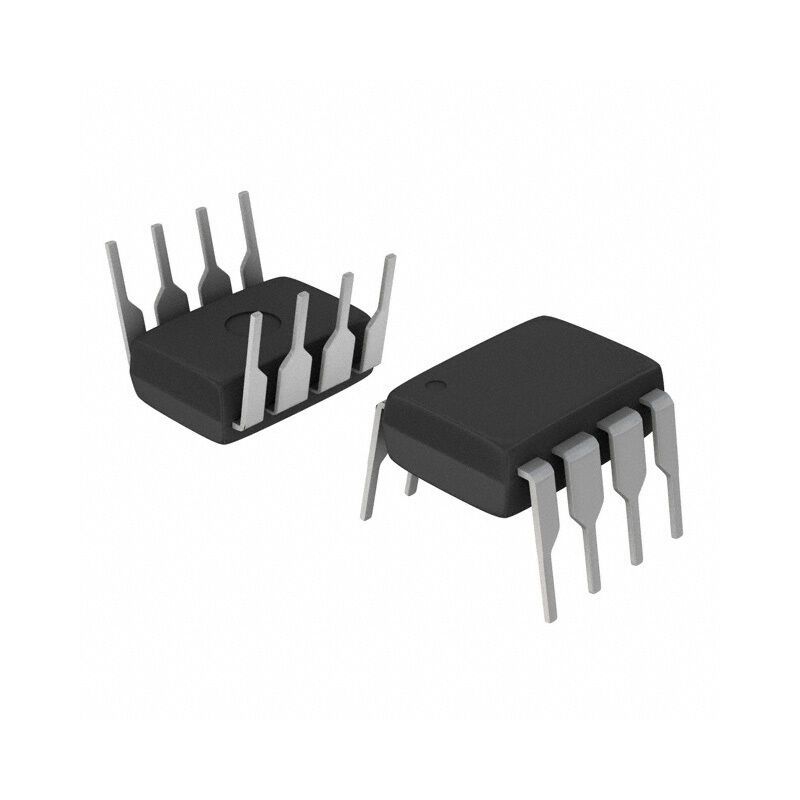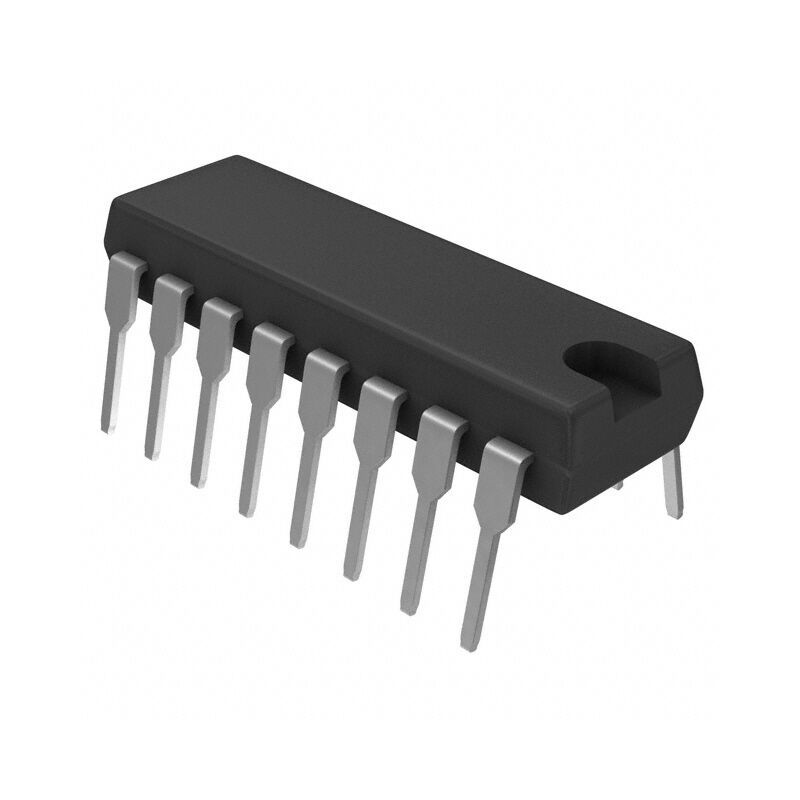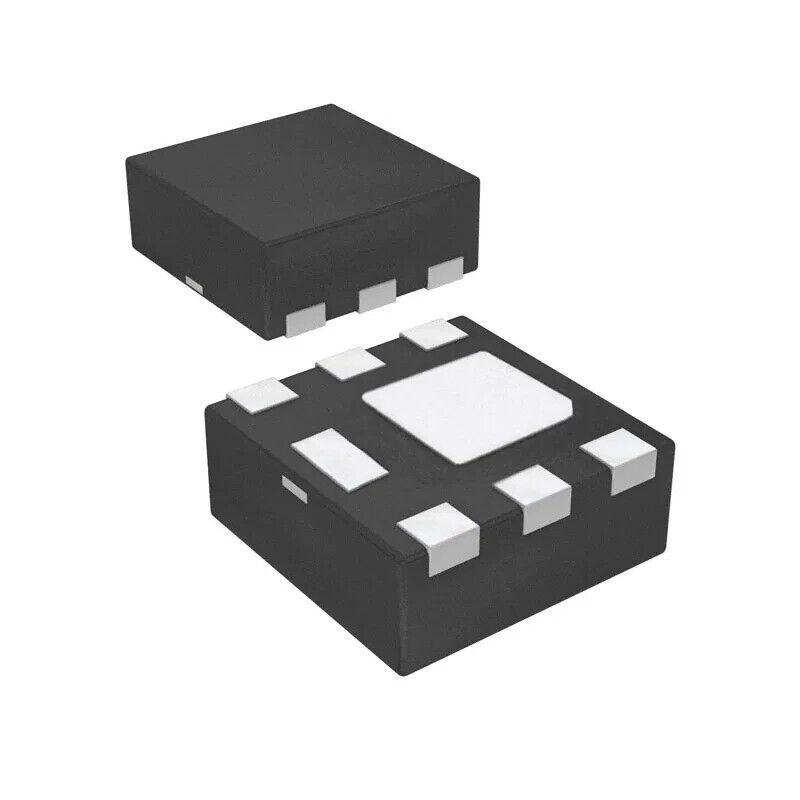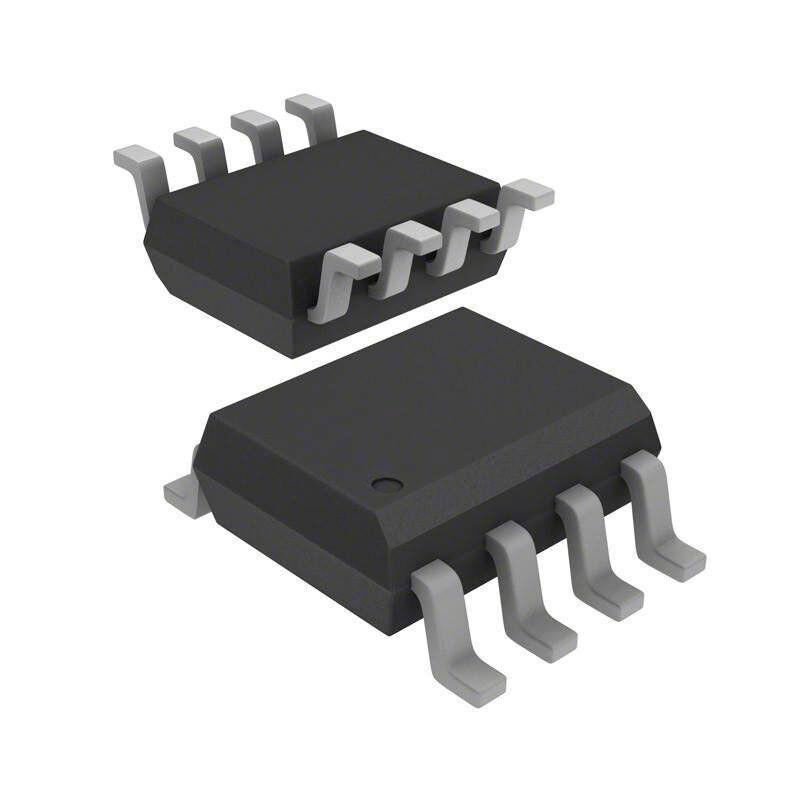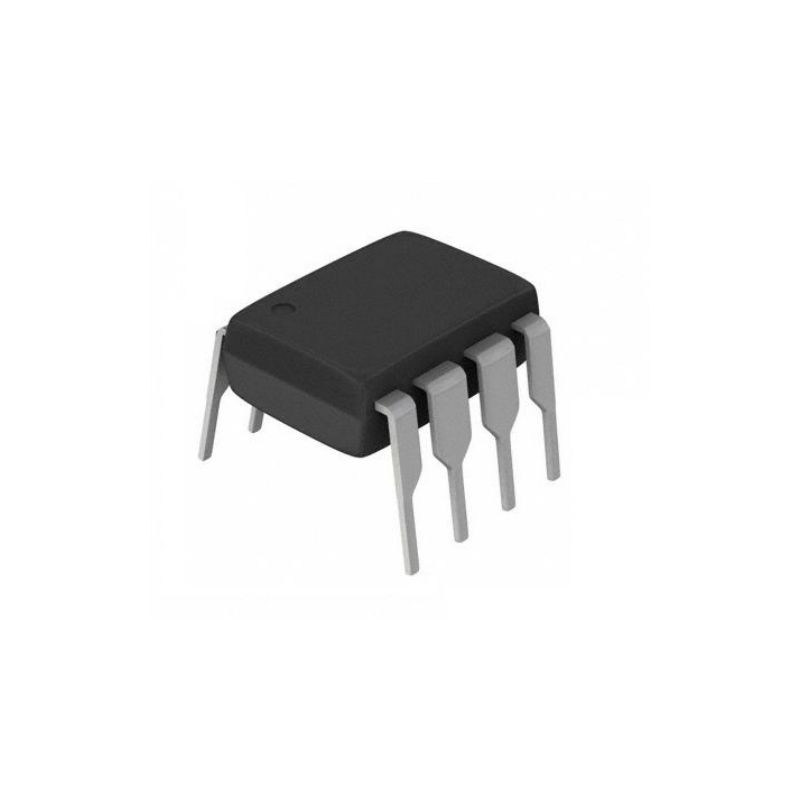


NE592N14 High-Speed Differential Video Amplifier IC DIP-14
33 people are viewing this right now
In Stock
SKU
190898996633
£3.75
Safe Checkout, Guaranteed

Safe Checkout, Guaranteed
Unleash the power of high-speed differential amplification with the NE592N14 Integrated Circuit. Encased in a convenient DIP-14 package, this monolithic video amplifier is engineered for demanding applications requiring exceptional bandwidth and gain stability. The NE592 is a versatile building block, ideal for use in video amplifiers, line receivers, pulse amplifiers, and FM discriminators. It offers adjustable gain and excellent common-mode rejection, making it a crucial component for enhancing signal integrity and reducing noise in sensitive electronic circuits. The NE592N14 isn't just another IC; it’s a precision tool that empowers you to design high-performance systems with confidence. Its differential input and output configuration minimizes common-mode noise, ensuring a clean and accurate signal even in noisy environments.
The adjustable gain feature allows you to tailor the amplifier's performance to your specific application requirements, providing maximum flexibility and control. The DIP-14 package facilitates easy prototyping and integration into existing circuit designs. This IC simplifies the design process and reduces the overall component count, making it an efficient and cost-effective solution for various applications. When thinking about amplifier circuits, consider related search terms like 'video amplifier IC', 'differential amplifier', 'high bandwidth amplifier', 'operational amplifier', 'analog IC', 'signal conditioning', 'DIP-14 IC', 'electronic circuit design', 'amplifier circuit components', and 'gain adjustable amplifier'. These search terms reflect the broader needs this component fulfills. The NE592N14 finds application in a wide range of fields, including video processing, data communication, and instrumentation.
It is commonly used in broadcast equipment, high-speed data transmission systems, and precision measurement instruments. Its high bandwidth and gain stability make it suitable for amplifying weak signals and processing high-frequency waveforms. By using the NE592N14, you can significantly improve the performance of your electronic circuits, enhancing signal quality and reducing the impact of noise. Its robust design ensures reliable operation over a wide range of temperatures and voltage levels. This integrated circuit simplifies the design process by integrating multiple amplifier stages into a single package, reducing the overall footprint and complexity of your circuit board. It also provides protection against overload conditions, preventing damage to the IC and ensuring the reliability of your system.
Whether you're a seasoned engineer or a hobbyist experimenting with electronics, the NE592N14 Integrated Circuit is an invaluable asset for achieving high-performance amplification. Don't settle for mediocre amplification when you can achieve superior performance with the NE592N14. Order yours today and experience the difference a high-quality amplifier can make. Boost your signal, reduce noise, and unlock the full potential of your electronic circuits with the NE592N14. Add it to your cart now and start designing with confidence!
| Product Name | NE592N14 High-Speed Differential Video Amplifier IC DIP-14 |
|---|---|
| SKU | 190898996633 |
| Price | £3.75 |
| NE592N14 High-Speed Differential Video Amplifier IC DIP-14 Color | As per image |
| Category | Integrated Circuits |
| Brand | Nikko Electronics ltd |
| Product Code | 190898996633 |
| Availability | Yes |
Shipping cost is based on order value. Just add products to your cart and use the Shipping Calculator to see the shipping price. We want you to be 100% satisfied with your purchase. Items can be returned or exchanged within 30 days of delivery.
The NE592N14 High-Speed Differential Video Amplifier IC DIP-14 offers a highly flexible gain adjustment mechanism, primarily controlled by external resistors. Typically, the gain can be varied over a wide range, often from unity gain up to several hundred, depending on the specific application requirements and external component values. This adjustment is achieved by varying the resistance between the gain control pins (often pins 4 and 5) and ground, or by using a potentiometer for continuous adjustment. For instance, connecting a resistor between these pins and ground sets the transconductance, directly influencing the overall voltage gain. It's crucial to note that increasing the gain will generally reduce the amplifier's bandwidth, a common trade-off in high-speed amplifier designs. Careful selection of external resistors ensures stable operation and desired gain without compromising signal integrity or introducing excessive noise, making the NE592N14 a versatile choice for various amplification stages.
The NE592N14 High-Speed Differential Video Amplifier IC DIP-14 inherently leverages its differential input architecture to achieve superior common-mode rejection (CMRR). In a differential configuration, the amplifier responds only to the voltage difference between its two input terminals, effectively ignoring any voltage signals that are common to both inputs. This means that noise, interference, or DC offsets that appear equally on both signal lines (common-mode noise) are significantly attenuated or cancelled out. In noisy environments, such as those found in industrial controls, long cable runs, or video distribution systems, this capability is critical. It ensures that the integrity of the desired differential signal is maintained, minimizing unwanted artifacts and improving the signal-to-noise ratio. For applications like line receivers or pulse amplifiers, where signals traverse potentially noisy paths, the NE592N14's high CMRR is invaluable for extracting clean, accurate data from corrupted inputs.
The NE592N14 High-Speed Differential Video Amplifier IC DIP-14 is renowned for its impressive bandwidth capabilities, which are crucial for its suitability in demanding video and pulse amplification applications. While the exact bandwidth can vary with gain settings and load conditions, this IC typically offers a bandwidth in the range of 90-100 MHz or even higher at lower gain settings. This extensive frequency response ensures that it can faithfully amplify high-speed video signals, including standard definition (NTSC/PAL) and higher-resolution analog video formats without significant signal degradation or phase distortion. For pulse amplification, the wide bandwidth translates into fast rise and fall times, preserving the sharp edges and timing accuracy of digital pulses. This capability makes the NE592N14 an ideal component for applications requiring precise signal reproduction across a broad frequency spectrum, from high-fidelity video processing to fast data communication systems where signal integrity is paramount.
For optimal performance, the NE592N14 High-Speed Differential Video Amplifier IC DIP-14 typically operates on a dual-supply voltage, commonly ranging from ±6V to ±15V. Adhering to these recommended voltage rails is essential for maintaining the specified performance characteristics, including output swing, linearity, and bandwidth. Power supply decoupling is a critical consideration to prevent noise from the power lines from coupling into the sensitive amplifier circuitry. It is highly recommended to place bypass capacitors, such as 0.1µF ceramic capacitors in parallel with 10µF electrolytic capacitors, as close as possible to the power supply pins (V+ and V-) of the NE592N14. This practice minimizes power supply ripple and ensures a stable DC voltage, which is vital for achieving the excellent common-mode rejection and high-speed operation that the NE592N14 is designed for, ultimately enhancing overall circuit stability and signal integrity.
While exceptionally suited for video amplification, the NE592N14 High-Speed Differential Video Amplifier IC DIP-14's robust differential architecture and high-speed capabilities extend its utility to numerous other demanding applications. Its excellent common-mode rejection and adjustable gain make it an ideal choice for line receivers, where it can extract weak differential signals from noisy transmission lines over long distances, preserving data integrity. It also excels as a pulse amplifier, faithfully reproducing high-frequency pulses with minimal distortion, crucial for timing-sensitive circuits or data recovery systems. Furthermore, its characteristics can be leveraged in FM discriminators, where its ability to amplify and process high-frequency signals is beneficial. Designers can also implement the NE592N14 in high-speed data acquisition front-ends, differential sensor conditioning, or as a general-purpose differential gain block in RF and IF stages, making it a highly versatile and precision tool for various high-performance electronic designs.
The NE592N14 High-Speed Differential Video Amplifier IC DIP-14 features a high input impedance and a relatively low output impedance, which are crucial characteristics for its intended applications. The high input impedance (typically several kilohms) minimizes loading effects on the preceding stage, ensuring that the signal source is not unduly attenuated. Conversely, its low output impedance (typically tens of ohms) allows it to drive subsequent stages or transmission lines, such as 50-ohm or 75-ohm coaxial cables, effectively. For optimal signal integrity, especially in high-frequency video or pulse applications, proper impedance matching throughout the signal chain is paramount. This involves terminating the input and output transmission lines with resistors matching their characteristic impedance to prevent reflections, signal loss, and waveform distortion. Utilizing external series or parallel resistors with the NE592N14's inputs and outputs ensures maximum power transfer and minimizes standing wave ratios, preserving the fidelity and bandwidth of the amplified signal.
The differential design of the NE592N14 High-Speed Differential Video Amplifier IC DIP-14 significantly influences its noise performance, especially in high-gain configurations. A primary benefit is the inherent cancellation of common-mode noise, which are noise components that appear equally on both input lines. By amplifying only the differential signal, the NE592N14 effectively rejects external electromagnetic interference (EMI) and power supply noise that often couples into both signal paths. However, like all amplifiers, the NE592N14 also contributes its own intrinsic noise, typically characterized by input-referred voltage and current noise densities. In high-gain settings, this internal noise is amplified along with the signal. To optimize the signal-to-noise ratio (SNR), designers should minimize the source impedance if possible, ensure proper power supply decoupling, and limit the overall bandwidth to only what is necessary for the application. The NE592N14’s architecture, while excellent at rejecting common-mode noise, still requires careful system design to achieve the lowest possible noise floor for sensitive high-gain applications.