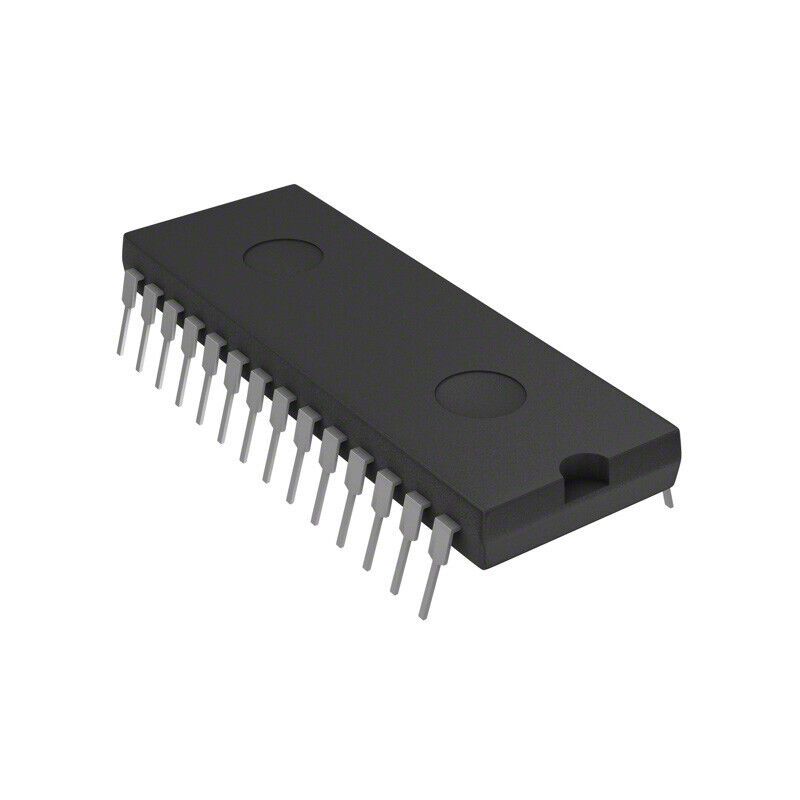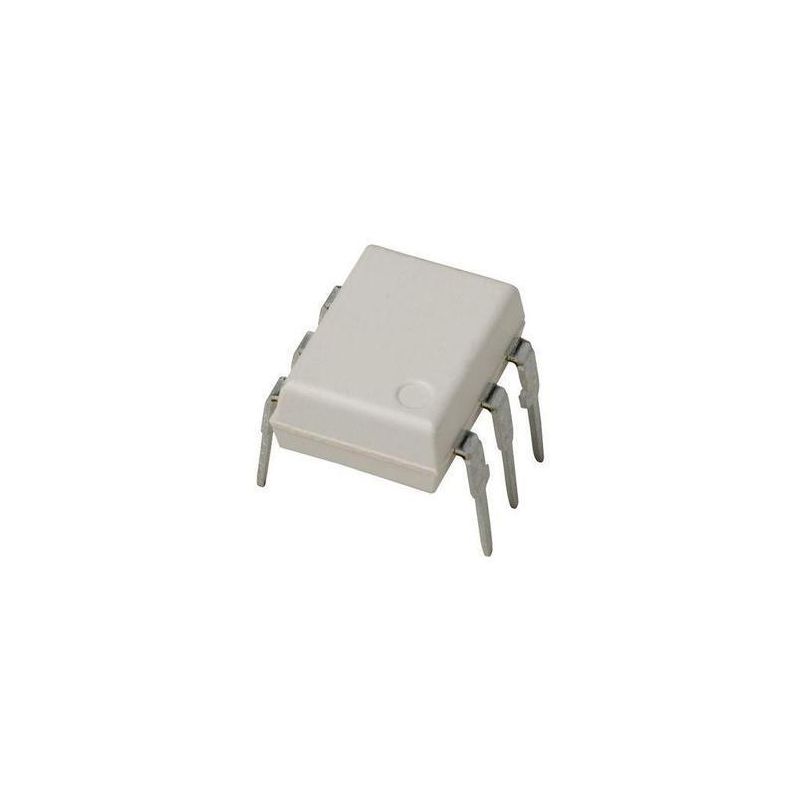


PALCE22V10H-15JC4 PLCC-28 Programmable Array Logic IC
39 people are viewing this right now
In Stock
SKU
191887014086
£8.50
Safe Checkout, Guaranteed

Safe Checkout, Guaranteed
The PALCE22V10H-15JC4 is a high-performance, programmable array logic (PAL) integrated circuit manufactured by various vendors. It is housed in a PLCC-28 (Plastic Leaded Chip Carrier with 28 pins) package, which facilitates surface-mount technology (SMT) assembly and enables compact circuit board designs. This versatile IC is commonly used for implementing custom logic functions, state machines, and address decoders in a wide range of digital systems. Its reprogrammability allows designers to easily modify the device's functionality without requiring hardware changes. The PALCE22V10H-15JC4's key feature is its programmable AND array and fixed OR array, which allows for the implementation of complex logic functions. The 22V10 designation indicates that it has 22 inputs, 10 outputs, and a variable output macrocell architecture, providing flexibility in configuring the output functions.
The H designation indicates that it is a high-speed version, offering faster propagation delays compared to standard PAL devices. The -15 designation indicates its maximum propagation delay, which is 15 nanoseconds, ensuring fast and predictable performance. The JC4 designates the package type and temperature range. The PLCC-28 package provides good thermal performance and allows for high-density board layouts. Its reprogrammable nature allows you to easily update the logic functions stored in the device. It also features output enable control, allowing you to disable the outputs when necessary.
The PALCE22V10H-15JC4 is commonly used in applications such as memory controllers, peripheral interfaces, and custom logic circuits. In memory controllers, it can be used to generate timing signals and control memory access. In peripheral interfaces, it can be used to decode addresses and control data transfer. In custom logic circuits, it can be used to implement complex logic functions tailored to specific application requirements. You can design custom logic circuits for digital signal processing, control systems, or any application that requires complex logic functions. It provides a cost-effective alternative to discrete logic gates, reducing component count and simplifying circuit design.
It's also suitable for rapid prototyping and experimentation. The PALCE22V10H-15JC4 offers a powerful and flexible solution for implementing custom logic functions in digital systems. Upgrade your logic designs with the PALCE22V10H-15JC4 today. Don't miss this opportunity to enhance your projects with a high-performance and versatile programmable logic device. Add the PALCE22V10H-15JC4 to your cart now and experience the difference in your digital designs!
| Product Name | PALCE22V10H-15JC4 PLCC-28 Programmable Array Logic IC |
|---|---|
| SKU | 191887014086 |
| Price | £8.50 |
| PALCE22V10H-15JC4 PLCC-28 Programmable Array Logic IC Color | As per image |
| Category | Integrated Circuits |
| Brand | Nikko Electronics ltd |
| Product Code | 191887014086 |
| Availability | Yes |
Shipping cost is based on order value. Just add products to your cart and use the Shipping Calculator to see the shipping price. We want you to be 100% satisfied with your purchase. Items can be returned or exchanged within 30 days of delivery.
The PALCE22V10H-15JC4 PLCC-28 Programmable Array Logic IC is an electrically erasable programmable logic device (EEPLD), meaning it utilizes EEPROM technology for its logic configuration. This allows for in-circuit or off-board electrical reprogramming and erasure, significantly simplifying design iterations compared to one-time programmable (OTP) or UV-erasable (EPROM) devices. Erasure is performed electrically during the reprogramming cycle. Compatible programming tools typically include universal device programmers from manufacturers like Xeltek, Data I/O, or Stag, which support the JEDEC standard file format (`.JED`) used to define the logic configuration. Users will generate the JEDEC file from a hardware description language (HDL) like ABEL or CUPL, or a schematic capture tool, and then load it into the programmer. Always verify the programmer's device list for explicit support of the PALCE22V10H-15JC4 to ensure proper voltage levels and programming algorithms are applied.
The 'H' designation in the PALCE22V10H-15JC4 PLCC-28 Programmable Array Logic IC typically signifies a higher-performance or enhanced version, often indicating improved speed or lower power consumption compared to standard versions. The '-15' in '-15JC4' is a critical speed grade indicator, specifying a maximum propagation delay of 15 nanoseconds (ns) from input to output. This speed grade makes the PALCE22V10H-15JC4 suitable for a wide range of high-speed digital logic applications, including synchronous designs operating at clock frequencies where a 15ns delay fits within the clock period, allowing for stable operation. This ensures that custom logic functions, state machines, and address decoders can respond quickly to input changes. For designs requiring faster operations, designers would typically look for lower speed grade numbers (e.g., -10 or -7), but the -15 variant offers a robust balance of speed and cost-effectiveness for many demanding systems.
While the PALCE22V10H-15JC4 PLCC-28 Programmable Array Logic IC shares the same 22V10 architecture and pinout as older bipolar 22V10 devices, it is generally *not* a direct drop-in replacement without careful consideration. The 'CE' in PALCE indicates it is a CMOS EEPROM-based device, offering significantly lower static power consumption compared to its bipolar (e.g., PAL22V10) predecessors. However, input and output characteristics, such as input leakage current, output drive capability (IOL/IOH), and transition times, can differ. Bipolar devices typically have higher input current requirements and different output impedance. Therefore, while the functional mapping and pin configuration are compatible, designers must verify that the PALCE22V10H-15JC4's electrical characteristics meet the requirements of the existing circuit, especially regarding fan-out, noise margins, and power supply decoupling. Proper decoupling capacitors are always recommended for CMOS devices to handle dynamic current surges.
The PALCE22V10H-15JC4 PLCC-28 Programmable Array Logic IC offers distinct advantages for specific applications like state machines and address decoders, particularly when compared to more complex FPGAs or larger CPLDs. Its primary benefits include simplicity, lower cost, and predictable timing. For designs requiring a relatively small to medium amount of combinational or sequential logic, the PALCE22V10H-15JC4 provides a highly efficient and compact solution without the overhead of complex configuration memory or routing. Its fixed AND-OR array architecture ensures very predictable and consistent propagation delays, which is crucial for critical timing paths in state machines and high-speed address decoding. Furthermore, for designs that are stable and unlikely to undergo frequent, drastic architectural changes, the PALCE22V10H-15JC4 offers a lower bill of material (BOM) cost and simpler development flow, making it ideal for cost-sensitive or mature product designs where dedicated logic is preferred over reconfigurable but more expensive solutions.
As a CMOS-based device, the PALCE22V10H-15JC4 PLCC-28 Programmable Array Logic IC exhibits significantly lower static power consumption compared to older bipolar PALs. In a static or quiescent state, where inputs are stable and outputs are not switching, the supply current (ICC) is typically in the microampere range. This makes it highly suitable for power-sensitive applications. However, dynamic power consumption becomes more prominent as the operating frequency increases. During active operation, power dissipation is primarily due to the charging and discharging of internal capacitances and output loads as logic gates switch. This dynamic power is proportional to the operating frequency, the square of the supply voltage, and the total capacitance being switched. Designers must consider both static and dynamic components when calculating the total power budget, especially in systems with high clock rates or frequent data transitions, ensuring proper thermal management and power supply capacity for the PALCE22V10H-15JC4.
For optimal reliability and performance, handling and surface-mount assembly of the PALCE22V10H-15JC4 PLCC-28 Programmable Array Logic IC require adherence to standard practices for sensitive electronic components. As a CMOS device, it is susceptible to electrostatic discharge (ESD), so always use ESD-safe workstations, grounding straps, and tools. The PLCC-28 package is designed for surface-mount technology (SMT), typically reflow soldering. Proper solder paste application, stencil design, and reflow oven profiling are crucial to ensure good solder joint integrity and prevent issues like bridging or insufficient wetting. The package's J-lead configuration provides excellent mechanical compliance during thermal cycling. After soldering, thorough cleaning to remove flux residues is recommended to prevent long-term reliability issues. Ensure that the pick-and-place machine uses appropriate nozzle sizes and pressure to handle the PALCE22V10H-15JC4 without damaging the leads or package.
The design flow for the PALCE22V10H-15JC4 PLCC-28 Programmable Array Logic IC typically involves several key steps within a dedicated software ecosystem. First, the logic design is captured using a hardware description language (HDL) like ABEL (Advanced Boolean Expression Language) or CUPL (Universal Compiler for Programmable Logic), or through schematic entry for simpler designs. These high-level descriptions are then processed by a logic compiler (e.g., WinCUPL, ABEL-HDL, or vendor-specific tools) that synthesizes the design into a minimized Boolean equation format. This compiler generates a JEDEC fuse map file (`.JED`), which is the industry-standard format describing the configuration of the programmable AND array and connections to the fixed OR array. Finally, this JEDEC file is loaded into a universal device programmer, which then programs the PALCE22V10H-15JC4. Simulation tools can also be integrated into this flow to verify the logic functionality before programming the physical device, ensuring the design operates as intended.