

S8050 NPN Silicon SMD Transistor (SOT-23)
41 people are viewing this right now
In Stock
SKU
191819433339
£1.99
Safe Checkout, Guaranteed

Safe Checkout, Guaranteed
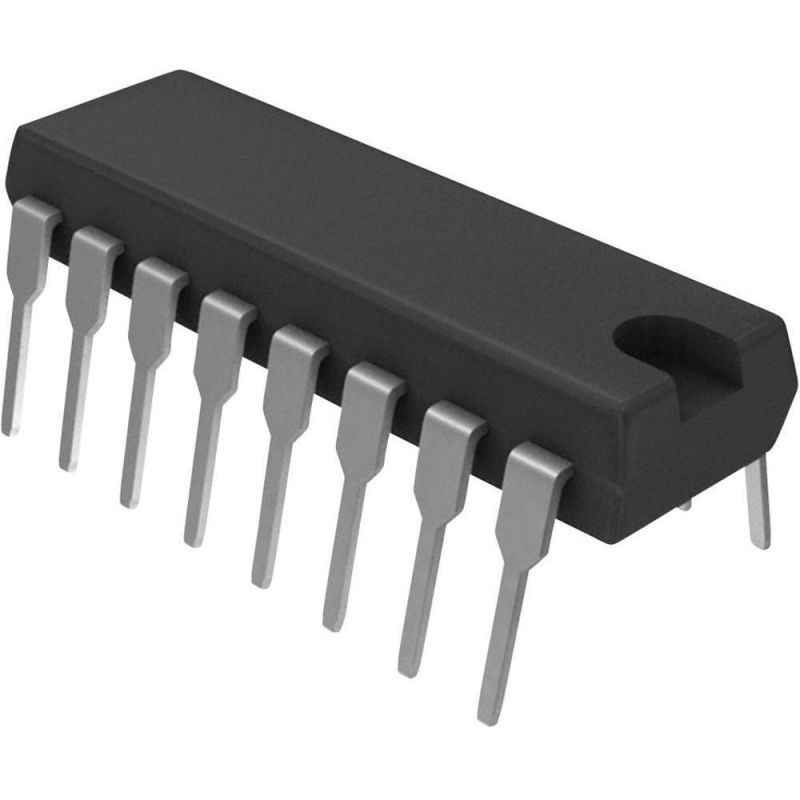
The LAG570 is a versatile integrated circuit (IC) housed in a DIP-16 package, designed for a variety of analog and digital signal processing applications. This IC is known for its reliability and ease of use, making it a popular choice for both hobbyists and professional engineers. The DIP-16 package allows for easy prototyping and breadboarding, making it ideal for experimenting with different circuit configurations. Its through-hole design ensures a secure and stable connection, minimizing the risk of loose connections and signal degradation. The LAG570 is engineered to deliver consistent performance and low noise, making it suitable for audio amplifiers, signal conditioners, and data acquisition systems. Its stable operating characteristics and wide operating temperature range ensure reliable performance in a variety of applications.
This IC is particularly well-suited for applications where ease of use and versatility are important. The DIP-16 package allows for easy integration into existing circuits, while the wide range of functions it can perform makes it a valuable addition to any electronic toolkit. The LAG570 is manufactured to meet stringent quality standards, ensuring consistent performance and long service life. Its robust design and high-performance characteristics make it a preferred choice for both hobbyists and professional engineers. Whether you're designing audio preamplifiers, sensor interfaces, or logic circuits, the LAG570 IC offers the performance and reliability you need. Its low noise and stable gain contribute to improved signal quality and reduced distortion.
This IC is also an excellent choice for protecting sensitive circuits from overvoltage and overcurrent conditions. Its robust construction and high breakdown voltage make it an effective safeguard against potentially damaging electrical surges. With its stable operating characteristics and wide operating temperature range, the LAG570 IC provides consistent and dependable performance in a variety of operating conditions. Don't compromise on the quality of your components. Invest in the LAG570 IC and ensure the efficiency and reliability of your electronic projects. Order your LAG570 IC today and experience the difference that quality components can make.
This IC is in stock and ready to ship, so you can start using it in your projects right away. Take advantage of this opportunity to add a reliable and versatile component to your electronic toolkit. Upgrade your circuits with the LAG570 IC and enjoy the peace of mind that comes with knowing your components are protected. Add to cart now!
| Product Name | S8050 NPN Silicon SMD Transistor (SOT-23) |
|---|---|
| SKU | 191819433339 |
| Price | £1.99 |
| S8050 NPN Silicon SMD Transistor (SOT-23) Color | As per image |
| Category | Transistors |
| Brand | Nikko Electronics ltd |
| Product Code | 191819433339 |
| Availability | Yes |
Shipping cost is based on order value. Just add products to your cart and use the Shipping Calculator to see the shipping price. We want you to be 100% satisfied with your purchase. Items can be returned or exchanged within 30 days of delivery.
The S8050 NPN Silicon SMD Transistor (SOT-23) is specifically designed for high-current applications compared to standard small-signal transistors like the BC847. It features a maximum continuous collector current (Ic) of approximately 500mA to 700mA, depending on the specific manufacturer's datasheet. This makes the S8050 NPN Silicon SMD Transistor (SOT-23) an excellent choice for driving small DC motors, high-brightness LEDs, and relay coils that exceed the 100mA limit of typical general-purpose transistors. However, when operating near the 700mA threshold, engineers must pay close attention to the total power dissipation (Pd), which is typically rated at 300mW to 350mW for the SOT-23 package. Exceeding these thermal limits without adequate PCB copper heat-sinking can lead to junction failure. For professional designs, it is recommended to maintain a safety margin of at least 20% below the absolute maximum ratings to ensure long-term reliability in varying ambient temperatures.
For engineers designing Class B or Class AB push-pull amplifiers, the S8550 PNP transistor is the ideal complementary match for the S8050 NPN Silicon SMD Transistor (SOT-23). Using a matched pair ensures symmetrical switching and amplification characteristics, which is critical for minimizing total harmonic distortion (THD) in audio output stages or signal conditioning circuits. Both the S8050 NPN Silicon SMD Transistor (SOT-23) and its S8550 counterpart share similar current gain (hFE) classifications and voltage ratings, allowing for balanced performance across the load. When sourcing these components for production, it is vital to check the gain grouping (often denoted by letters like L, H, or J) to ensure both the NPN and PNP variants fall within the same hFE range. This matching is essential for maintaining circuit stability and preventing DC offset issues in direct-coupled amplifier designs frequently found in portable consumer electronics and signal processing modules.
The SOT-23 package used for the S8050 NPN Silicon SMD Transistor (SOT-23) is a compact, surface-mount solution that offers significant space savings but presents thermal challenges compared to through-hole TO-92 versions. The typical power dissipation (Pd) is rated at 300mW at an ambient temperature of 25°C. To maximize the performance of the S8050 NPN Silicon SMD Transistor (SOT-23), designers should utilize large copper planes connected to the collector pin, which acts as the primary heat path to the PCB. Implementing thermal vias and increasing the trace width can significantly lower the junction-to-ambient thermal resistance (Rthja). In high-density layouts, it is important to avoid placing other heat-generating components in close proximity to the S8050 NPN Silicon SMD Transistor (SOT-23) to prevent thermal runaway. For industrial applications with high ambient temperatures, derating the collector current is necessary to keep the junction temperature below the standard 150°C limit.
When integrating the S8050 NPN Silicon SMD Transistor (SOT-23) into industrial control systems, understanding its voltage limits is crucial. The device typically features a Collector-Emitter Voltage (Vceo) of 25V and a Collector-Base Voltage (Vcbo) of 40V. While it can technically operate in a 24V DC environment, the 25V Vceo rating provides very little safety margin for voltage spikes, inductive kickback, or power supply fluctuations. If the S8050 NPN Silicon SMD Transistor (SOT-23) is used to switch 24V inductive loads like solenoids or relays, it is mandatory to use a flyback diode (such as a 1N4148 or an SMD equivalent) to clamp voltage transients. For designs requiring higher reliability or those operating in electrically noisy environments, engineers might prefer a transistor with a higher Vceo, though the S8050 NPN Silicon SMD Transistor (SOT-23) remains a cost-effective and high-current choice for 12V and 18V logic-level switching applications where its 25V rating is more than sufficient.
The S8050 NPN Silicon SMD Transistor (SOT-23) features a transition frequency (fT) typically around 150MHz. This high fT makes the transistor highly capable for high-speed switching and Pulse Width Modulation (PWM) applications well into the hundreds of kilohertz range without significant switching losses. In practical scenarios, such as driving a PWM-controlled fan or dimming high-current LED strips, the S8050 NPN Silicon SMD Transistor (SOT-23) maintains sharp rise and fall times, which minimizes the time spent in the linear region where heat generation is highest. However, for RF applications approaching the VHF band, designers should account for the parasitic capacitances inherent in the SOT-23 package. For standard digital logic interfacing and microcontroller-driven power switching, the S8050 NPN Silicon SMD Transistor (SOT-23) provides excellent response times, ensuring that the output accurately tracks the input signal even at high duty cycles and frequencies.
The S8050 NPN Silicon SMD Transistor (SOT-23) is usually available in different gain (hFE) grades, typically ranging from 80 to 400. The hFE value significantly impacts the Collector-Emitter Saturation Voltage [Vce(sat)], which is usually around 0.5V at a collector current of 500mA. In switching applications, a higher hFE allows the S8050 NPN Silicon SMD Transistor (SOT-23) to reach saturation with a lower base current (Ib), which is ideal for direct interfacing with low-power microcontrollers (MCUs). To ensure the S8050 NPN Silicon SMD Transistor (SOT-23) is fully turned on and operating efficiently, engineers typically use an 'overdrive' factor, providing 2 to 5 times the minimum required base current calculated from the hFE. This ensures the lowest possible Vce(sat), reducing power dissipation within the transistor and maximizing the voltage delivered to the load. Checking the specific hFE rank of your S8050 NPN Silicon SMD Transistor (SOT-23) batch is recommended for precision analog biasing or high-efficiency switching.
While the 2N2222 is a legendary general-purpose transistor, the S8050 NPN Silicon SMD Transistor (SOT-23) offers distinct advantages for modern, compact surface-mount (SMT) designs. Primarily, the S8050 is optimized for higher current handling in a smaller footprint; while many SOT-23 versions of the 2N2222 (like the MMBT2222A) peak at 600mA, the S8050 NPN Silicon SMD Transistor (SOT-23) is often more robust in high-current saturation regions. Furthermore, the S8050 is a staple in Asian manufacturing supply chains, often offering better availability and cost-efficiency for high-volume consumer electronics. Its pinout in the SOT-23 package is standardized, allowing for easy drop-in replacement in existing layouts. For developers moving from through-hole prototyping to professional SMT production, the S8050 NPN Silicon SMD Transistor (SOT-23) provides a reliable, high-performance bridge that handles more current than standard small-signal transistors while maintaining the footprint efficiency required for modern multi-layer PCB assemblies.