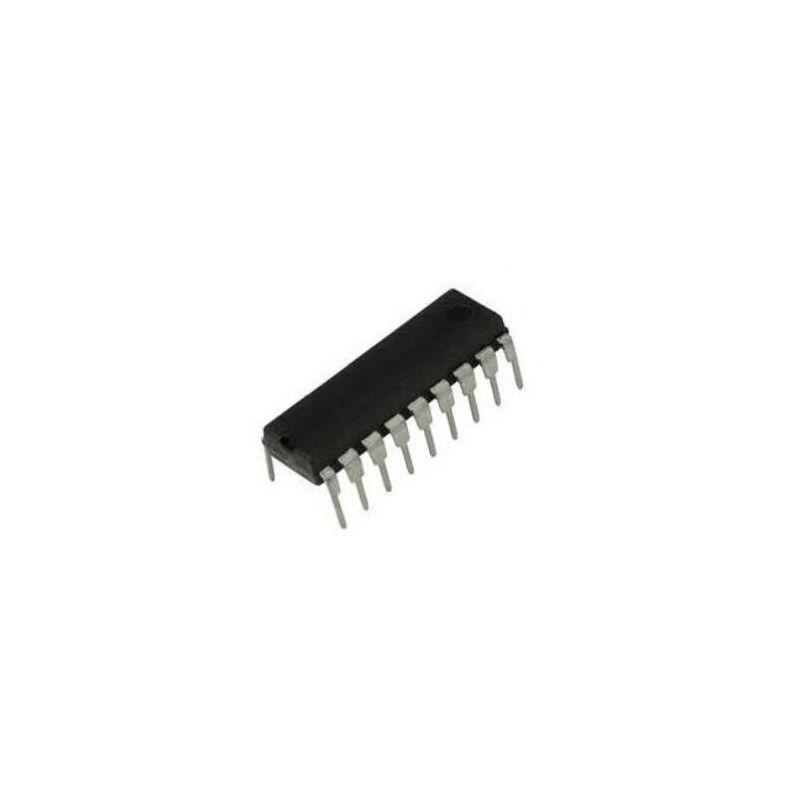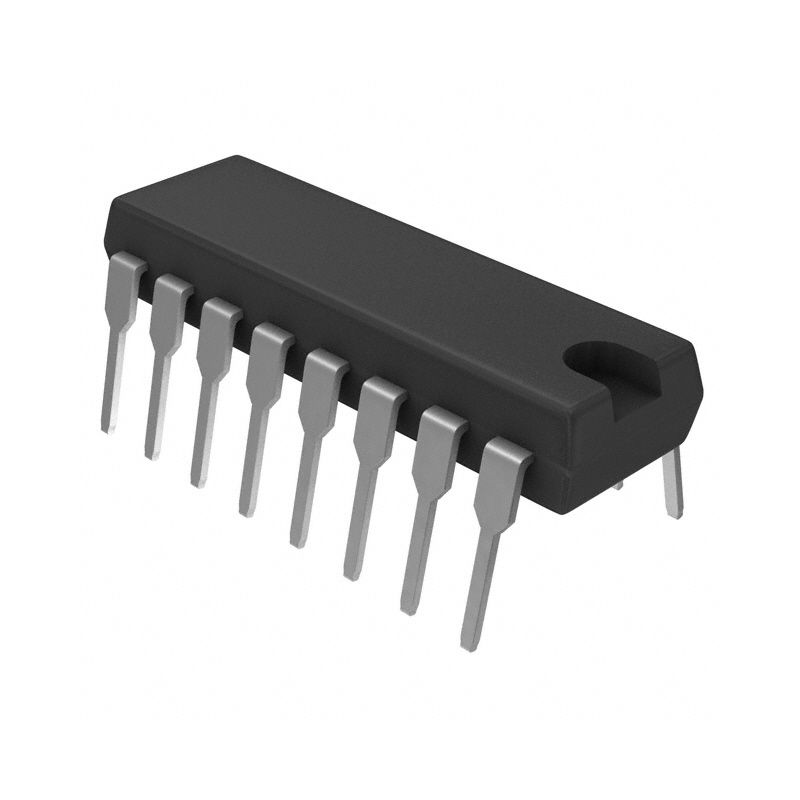


SAA1027 Stepper Motor Driver IC DIP-16
31 people are viewing this right now
In Stock
SKU
191869938231
£15.99
Safe Checkout, Guaranteed

Safe Checkout, Guaranteed
The SAA1027 integrated circuit (IC) in a DIP-16 (Dual In-line Package) configuration is a versatile stepper motor driver, specifically designed for applications requiring precise and controlled movement. This IC simplifies the implementation of stepper motor control in a variety of devices, ranging from robotics and automation systems to consumer electronics and instrumentation. Its primary function is to translate digital control signals into the necessary drive signals for a stepper motor, enabling accurate positioning and speed control. The DIP-16 package provides ease of use and integration into printed circuit boards (PCBs), making it suitable for both prototyping and mass production. The SAA1027 features a built-in sequencer that automatically generates the required stepping sequence for the motor, reducing the complexity of the control circuitry. It typically supports both half-step and full-step modes, allowing for fine-tuning of the motor's resolution and torque.
Half-stepping provides twice the resolution of full-stepping, resulting in smoother movement and reduced vibration, while full-stepping offers higher torque. The IC incorporates protection features such as over-current protection and thermal shutdown, safeguarding the device and the stepper motor from damage due to excessive current or temperature. These protection mechanisms enhance the reliability and longevity of the system. Additionally, the SAA1027 often includes input pins for controlling the direction of rotation and enabling or disabling the motor. These control inputs allow for easy interface with microcontrollers or other digital logic devices. The SAA1027 is suitable for applications where precise positioning and controlled movement are essential, such as in robotics, where it can be used to control the movement of robotic arms and joints.
In automation systems, it can drive conveyor belts, positioning stages, and other automated equipment. In consumer electronics, it can be found in printers, scanners, and other devices requiring precise mechanical movement. When selecting a stepper motor driver IC, it's important to consider factors such as the motor's voltage and current requirements, the desired stepping mode, and the level of integration required. The SAA1027 provides a cost-effective and reliable solution for a wide range of stepper motor control applications. Its integrated sequencer, protection features, and easy-to-use DIP-16 package make it a popular choice among engineers and hobbyists alike. If you're looking for a simple and efficient way to control stepper motors in your projects, the SAA1027 is an excellent option.
Its combination of performance, reliability, and ease of use makes it a valuable addition to any electronics toolkit. Order your SAA1027 stepper motor driver IC today and take your projects to the next level. Experience the precision and control that this versatile IC offers. Don't settle for less; choose the SAA1027 for your stepper motor control needs. Add it to your cart now and start building your next innovative project with confidence. Invest in dependable performance; invest in quality integrated circuits.
Experience the reliability that seasoned professionals and discerning hobbyists trust.
| Product Name | SAA1027 Stepper Motor Driver IC DIP-16 |
|---|---|
| SKU | 191869938231 |
| Price | £15.99 |
| SAA1027 Stepper Motor Driver IC DIP-16 Color | As per image |
| Category | Integrated Circuits |
| Brand | Nikko Electronics ltd |
| Product Code | 191869938231 |
| Availability | Yes |
Shipping cost is based on order value. Just add products to your cart and use the Shipping Calculator to see the shipping price. We want you to be 100% satisfied with your purchase. Items can be returned or exchanged within 30 days of delivery.
The SAA1027 Stepper Motor Driver IC DIP-16 is engineered to handle a wide supply voltage range, typically operating between 9.5V and 18V DC. This makes it highly compatible with standard 12V industrial power rails. Regarding current capacity, each of the four outputs can drive up to 500mA. This current limit is ideal for small to medium-sized unipolar stepper motors commonly found in precision instrumentation and medical devices. When integrating the SAA1027 Stepper Motor Driver IC DIP-16 into your design, it is crucial to account for the total power dissipation of the DIP-16 package, which is approximately 1 Watt at room temperature. For applications approaching the 500mA threshold per phase, designers should implement adequate PCB copper pours or external cooling to maintain thermal stability. The IC's robust output stages are designed to withstand the inductive spikes typical of motor coils, though the addition of external flyback diodes is often recommended in high-reliability environments to further protect the internal circuitry from transient voltage peaks.
One of the primary advantages of the SAA1027 Stepper Motor Driver IC DIP-16 is its integrated 4-phase gray-code sequencer. In traditional motor control setups, the microcontroller must manually toggle four separate GPIO pins in a specific timed sequence to achieve rotation. However, the SAA1027 Stepper Motor Driver IC DIP-16 reduces this overhead significantly by requiring only three primary control signals: Count (Trigger), Direction, and Set (Reset). Every time a negative-going transition is detected on the Trigger input, the internal logic automatically advances the motor to the next step in the sequence. The Direction pin dictates whether the sequence moves forward or backward, while the Set pin allows the system to return to a predetermined home state. This hardware-level sequencing frees up the MCU's processing cycles for higher-level tasks, such as sensor fusion or communication protocols, making the SAA1027 Stepper Motor Driver IC DIP-16 an efficient choice for resource-constrained embedded systems.
The SAA1027 Stepper Motor Driver IC DIP-16 features high-impedance inputs that are designed to be compatible with a variety of logic families. While the IC itself often operates at a higher Vcc (such as 12V), its input thresholds for the Trigger, Direction, and Set pins are generally compatible with standard 5V TTL logic. When using the SAA1027 Stepper Motor Driver IC DIP-16 with modern 3.3V microcontrollers like the ESP32 or STM32, a simple level shifter or a transistor-based buffer may be required if the logic high threshold of the IC exceeds the output capability of the MCU. It is important to note that the inputs are sensitive to noise in industrial environments; therefore, implementing RC decoupling filters or opto-isolators between the MCU and the SAA1027 Stepper Motor Driver IC DIP-16 is a best practice for preventing erratic stepping caused by EMI. This ensures that the digital control signals remain clean and that the motor maintains precise positioning throughout its duty cycle.
Thermal management is a critical consideration for the SAA1027 Stepper Motor Driver IC DIP-16, especially when it is mounted within a sealed or poorly ventilated enclosure. The DIP-16 package has a junction-to-ambient thermal resistance that necessitates careful PCB layout. To optimize heat dissipation, designers should use wide traces for the output pins and connect the ground pins to a large copper plane on the PCB, which acts as a heat sink. If the SAA1027 Stepper Motor Driver IC DIP-16 is driving a motor at its maximum 500mA rating continuously, the internal temperature can rise rapidly. In such cases, applying a small clip-on aluminum heatsink to the top of the DIP-16 package can significantly lower the operating temperature. Additionally, ensuring that the ambient temperature inside the housing does not exceed 70°C will help prevent thermal shutdown or long-term degradation of the silicon. Monitoring the case temperature during the prototyping phase is highly recommended to ensure the SAA1027 Stepper Motor Driver IC DIP-16 operates within its safe operating area.
The SAA1027 Stepper Motor Driver IC DIP-16 is specifically optimized for 4-phase unipolar stepper motors. Its internal architecture consists of four open-collector Darlington transistors that sink current to ground, which is the standard configuration for driving the four coils of a unipolar motor with a common center-tap connected to the positive supply. Because it lacks the H-bridge circuitry required to reverse current flow through a coil, the SAA1027 Stepper Motor Driver IC DIP-16 cannot directly drive a 2-phase bipolar motor (which typically has only 4 wires). If your application requires a bipolar motor, you would need to use the SAA1027 Stepper Motor Driver IC DIP-16 in conjunction with external power transistors or H-bridge drivers, or alternatively, select a different IC designed for bipolar operation. For users with 6-wire or 8-wire motors, the SAA1027 Stepper Motor Driver IC DIP-16 remains an excellent choice as these motors can be easily configured in a unipolar arrangement, providing a reliable and cost-effective driving solution.
The 'Set' pin (sometimes referred to as the Reset or Preset pin) on the SAA1027 Stepper Motor Driver IC DIP-16 is an essential feature for maintaining positional accuracy across power cycles. When the Set pin is activated, the internal counter of the SAA1027 Stepper Motor Driver IC DIP-16 is forced to a specific state (State 1 in the 4-phase sequence). This is particularly useful during the boot-up sequence of a machine; by pulsing the Set pin, the controller ensures that the motor's internal phase state matches the software's expected starting position. Without this feature, the motor might start from a random phase, leading to a missed step or slight misalignment during the first move. In precision applications like CNC tool changers or laboratory samplers, utilizing the Set pin of the SAA1027 Stepper Motor Driver IC DIP-16 ensures that the mechanical system is always synchronized with the digital controller, providing a reliable 'home' reference point without needing complex homing routines every time the motor is enabled.
The most common failure modes for the SAA1027 Stepper Motor Driver IC DIP-16 involve overcurrent and overvoltage transients. Since the IC drives inductive loads, the primary risk is the high-voltage 'kickback' generated when a motor coil is de-energized. While the SAA1027 Stepper Motor Driver IC DIP-16 includes internal protection, these can be overwhelmed by high-inductance motors. To prevent this, always install fast-recovery diodes (like the 1N4148 or UF4004) across each motor winding. Another failure point is exceeding the 500mA current limit, which can lead to thermal runaway and permanent damage to the output Darlington pairs. Using a current-limiting resistor in series with the motor's common supply line can help protect the SAA1027 Stepper Motor Driver IC DIP-16 from accidental shorts or stalled motor conditions. Finally, ensuring a stable, decoupled power supply with a 100uF electrolytic capacitor placed close to the Vcc pin of the SAA1027 Stepper Motor Driver IC DIP-16 will prevent supply sagging and logic glitches that could lead to erratic motor behavior.