

SAA1099P Programmable Stereo Sound Generator IC
39 people are viewing this right now
In Stock
SKU
191882760401
£10.22
Safe Checkout, Guaranteed

Safe Checkout, Guaranteed
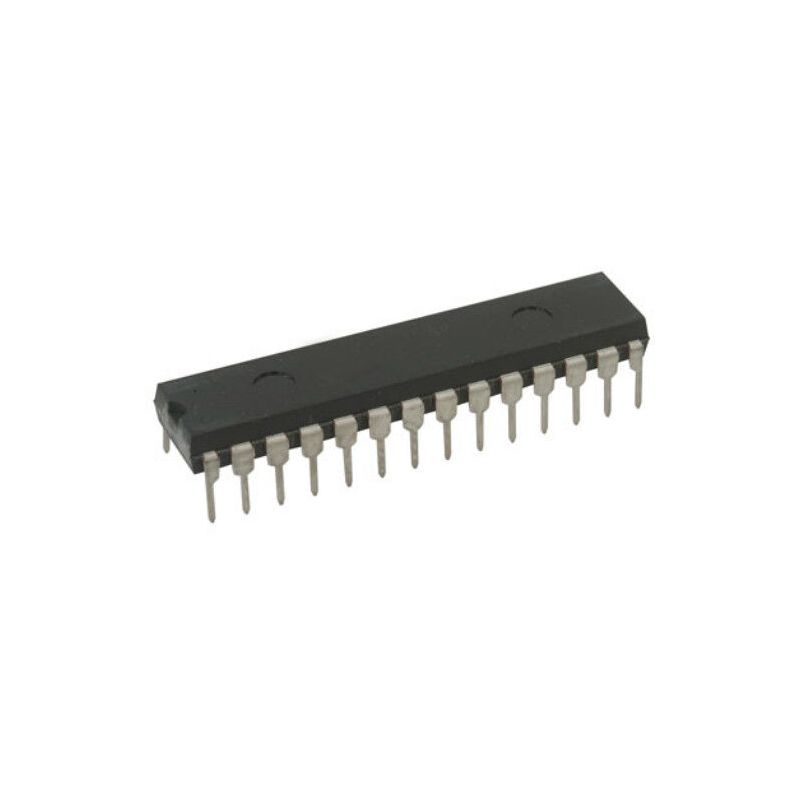
The SAA1099, often designated as SAA1099P due to its DIP package variant, is a sound generator integrated circuit originally designed by General Instrument and later popularized by Philips. This IC is renowned for its versatility in creating a wide array of audio effects, making it a favorite among vintage computer and arcade game enthusiasts. The SAA1099 features six independent sound channels, each with its own programmable frequency, volume, and envelope settings. This allows for the creation of complex and layered audio textures. The DIP package of the SAA1099 facilitates easy prototyping and experimentation on breadboards and through-hole PCBs, making it accessible to hobbyists and retrocomputing enthusiasts alike. This IC is capable of generating a wide variety of sound effects, including square waves, noise, and pseudo-random tones.
Its programmable envelope generator allows for the creation of dynamic and evolving sounds. The SAA1099 is frequently used in retro gaming consoles, arcade machines, and vintage synthesizers. Its unique sound characteristics have contributed to the distinctive audio landscapes of many classic games. This sound chip is highly prized for its distinctive sound and programmability. It allows for creative audio designs and sound effect creations. The SAA1099 IC is a popular choice for chiptune artists and retro gaming enthusiasts.
The versatile sound chip produces a unique 8-bit sound that cannot be replicated with modern sound cards. Whether you're restoring a classic arcade machine or experimenting with chiptune music, the SAA1099 offers the unique sound and versatility you need. The SAA1099 brings a piece of audio history to your projects. Add this iconic sound generator to your component inventory today and experience the magic of vintage audio. Order now and rediscover the sonic possibilities!
| Product Name | SAA1099P Programmable Stereo Sound Generator IC |
|---|---|
| SKU | 191882760401 |
| Price | £10.22 |
| SAA1099P Programmable Stereo Sound Generator IC Color | As per image |
| Category | Integrated Circuits |
| Brand | Nikko Electronics ltd |
| Product Code | 191882760401 |
| Availability | Yes |
Shipping cost is based on order value. Just add products to your cart and use the Shipping Calculator to see the shipping price. We want you to be 100% satisfied with your purchase. Items can be returned or exchanged within 30 days of delivery.
The SAA1099P Programmable Stereo Sound Generator IC is designed with a standard 8-bit parallel data bus interface, making it highly compatible with 5V logic microcontrollers like the ATmega series or classic Z80 systems. To interface the SAA1099P, you typically utilize the eight data lines (D0-D7), a Write Enable (/WR) pin, a Chip Select (/CS) pin, and an Address/Data select pin (A0). When A0 is low, the IC interprets the byte on the bus as data; when high, it is interpreted as a register address. Because this is a vintage-style NMOS/CMOS component, it operates strictly at a 5V VCC. If you are using a 3.3V microcontroller like an ESP32 or STM32, you must implement bi-directional level shifters on the data bus and uni-directional shifters on the control lines to prevent damaging the SAA1099P Programmable Stereo Sound Generator IC or experiencing communication failures. Additionally, ensuring a stable 8MHz master clock is provided to the CLK pin is essential for accurate pitch reproduction across its six independent sound channels.
The SAA1099P Programmable Stereo Sound Generator IC features a sophisticated frequency synthesis architecture that allows for a wide range of musical notes and sound effects. It organizes its frequency production into six independent generators, each capable of covering eight octaves. Each channel utilizes an 8-bit frequency word and a 3-bit octave select code. The master clock (typically 8MHz) is internally divided to produce the base frequencies. By manipulating the frequency registers of the SAA1099P Programmable Stereo Sound Generator IC, users can achieve fine-grained control over the pitch, allowing for complex polyphonic compositions. The internal dividers are designed to produce square waves, which give the IC its characteristic 'chiptune' sound. For developers working on MIDI-to-SAA1099 converters, it is important to calculate the register values based on the specific master clock frequency used, as any deviation from the standard 8MHz will shift the entire pitch map of the SAA1099P Programmable Stereo Sound Generator IC proportionally.
Yes, the SAA1099P Programmable Stereo Sound Generator IC is the exact component used in the early Creative Labs Game Blaster and CMS (Creative Music System) expansion cards. These cards typically utilized two of these ICs to provide a total of 12 voices. If you are repairing a vintage sound card or building a replica, the SAA1099P Programmable Stereo Sound Generator IC in the DIP-18 package is the correct form factor for through-hole mounting or socketing. When replacing these chips, it is vital to check the surrounding electrolytic capacitors and the master oscillator on the host board, as timing issues or power ripples can often be mistaken for IC failure. The SAA1099P Programmable Stereo Sound Generator IC is robust, but like many vintage components, it is sensitive to static discharge during installation. Using an IC socket is highly recommended for these chips to allow for easy troubleshooting and to protect the silicon from excessive heat during the soldering process on double-sided vintage PCBs.
Unlike many of its contemporaries that were strictly monophonic, the SAA1099P Programmable Stereo Sound Generator IC offers genuine stereo output capabilities. Each of the six sound channels features independent 4-bit amplitude control for both the left and right output pins. This means that for every channel, you can define a 16-level volume setting for the left side and a 16-level volume setting for the right side simultaneously. This hardware-level panning allows the SAA1099P Programmable Stereo Sound Generator IC to create immersive spatial audio effects, moving sounds across the stereo field without taxing the host CPU. When designing the analog output stage for this IC, it is important to remember that the outputs are current-source based. You will need a proper operational amplifier buffer or a transistor-based pre-amplifier circuit to convert these signals into a standard line-level voltage suitable for modern audio equipment or speakers, ensuring the high-fidelity 'stereo' nature of the SAA1099P Programmable Stereo Sound Generator IC is preserved.
The SAA1099P Programmable Stereo Sound Generator IC is equipped with two dedicated noise generators and two sophisticated envelope controllers, which significantly expand its sound design palette beyond simple square waves. The noise generators can be mapped to specific channels to create percussive sounds like snares, hi-hats, or environmental effects like explosions. These noise sources have three programmable frequencies or can be set to follow the frequency of a tone generator. Furthermore, the SAA1099P Programmable Stereo Sound Generator IC features envelope generators on channels 2 and 5. These envelopes provide various waveforms, including attack-decay and repetitive cycles, which modulate the amplitude automatically. This is particularly useful for creating complex instrumental timbres without constant register updates from the microcontroller. By combining the noise and envelope features of the SAA1099P Programmable Stereo Sound Generator IC, designers can achieve much more organic and dynamic audio textures compared to more basic programmable sound generators (PSGs) of the same era.
The SAA1099P Programmable Stereo Sound Generator IC is a relatively low-power device, typically drawing between 40mA and 75mA during active operation at 5V. Because it is housed in a DIP-18 package, it has sufficient surface area to dissipate the small amount of heat generated during normal operation without the need for external heat sinking. However, in enclosed retro-computing builds or arcade cabinets where ambient temperatures can rise, it is important to ensure adequate airflow. The SAA1099P Programmable Stereo Sound Generator IC is rated for standard commercial temperature ranges. When designing the power supply rail for this IC, it is critical to include a 0.1uF ceramic decoupling capacitor as close as possible to the VCC (Pin 18) and GND (Pin 9) pins. This minimizes digital switching noise from the internal logic from leaking into the analog audio outputs, which is a common issue in poorly designed circuits utilizing the SAA1099P Programmable Stereo Sound Generator IC.
The raw audio output from the SAA1099P Programmable Stereo Sound Generator IC contains significant high-frequency quantization noise and switching artifacts inherent to its digital-to-analog conversion process. To achieve clean, professional-grade audio, a low-pass filter (LPF) is essential. A simple passive RC filter with a cutoff frequency around 15kHz to 20kHz is usually sufficient for hobbyist projects, but for high-fidelity applications involving the SAA1099P Programmable Stereo Sound Generator IC, an active Sallen-Key filter using a low-noise op-amp (like the TL072 or NE5532) is preferred. This filter not only removes unwanted ultrasonic frequencies but also provides the necessary impedance matching for the IC's outputs. Furthermore, because the SAA1099P Programmable Stereo Sound Generator IC outputs have a DC offset, output coupling capacitors (typically 1uF to 10uF electrolytic or film) must be used to block DC from reaching the next stage of the audio chain, preventing pops and potential damage to downstream amplifiers.