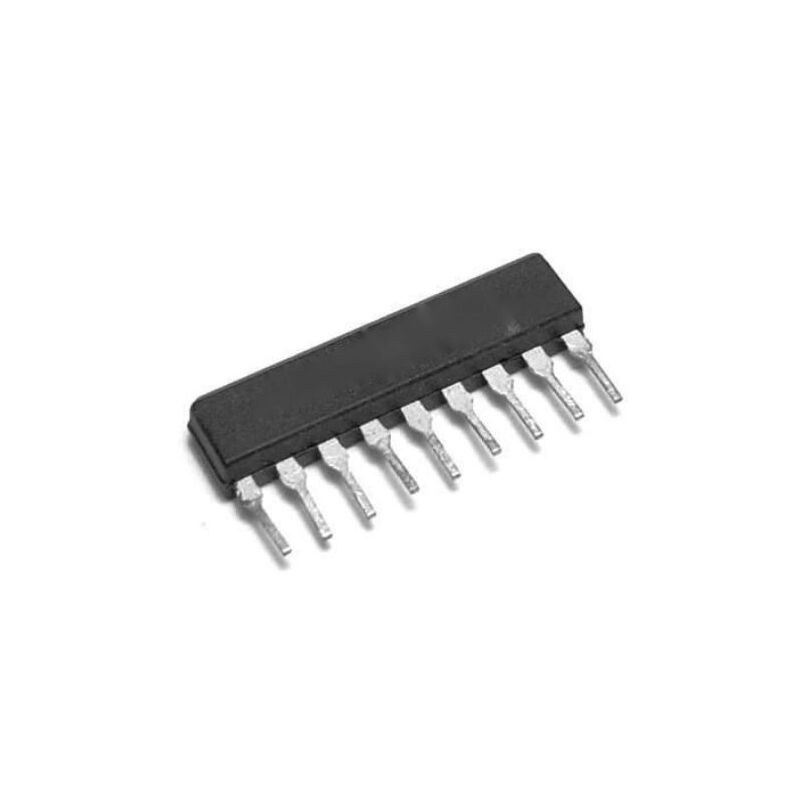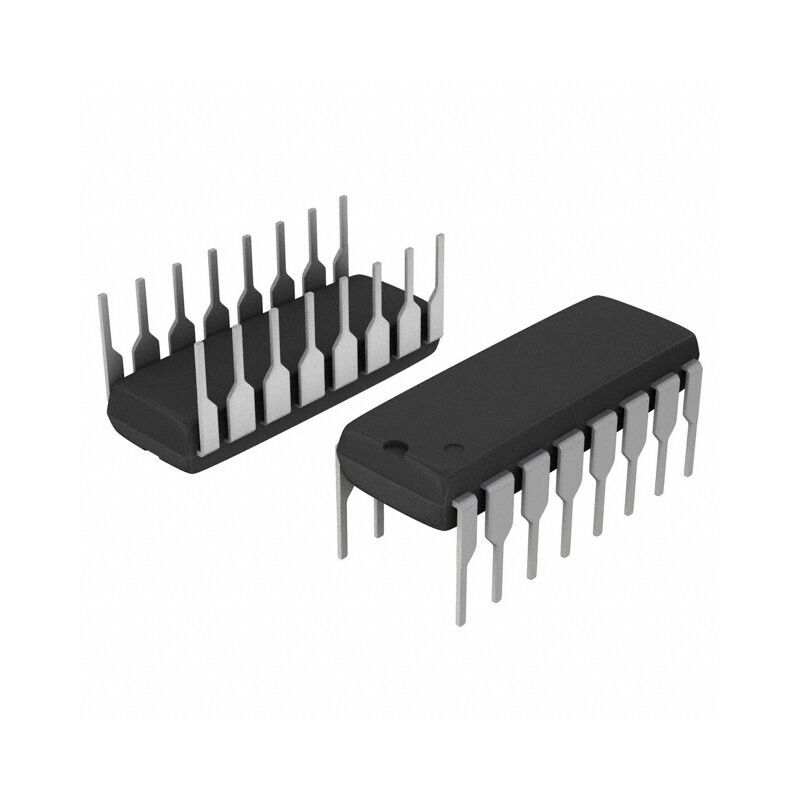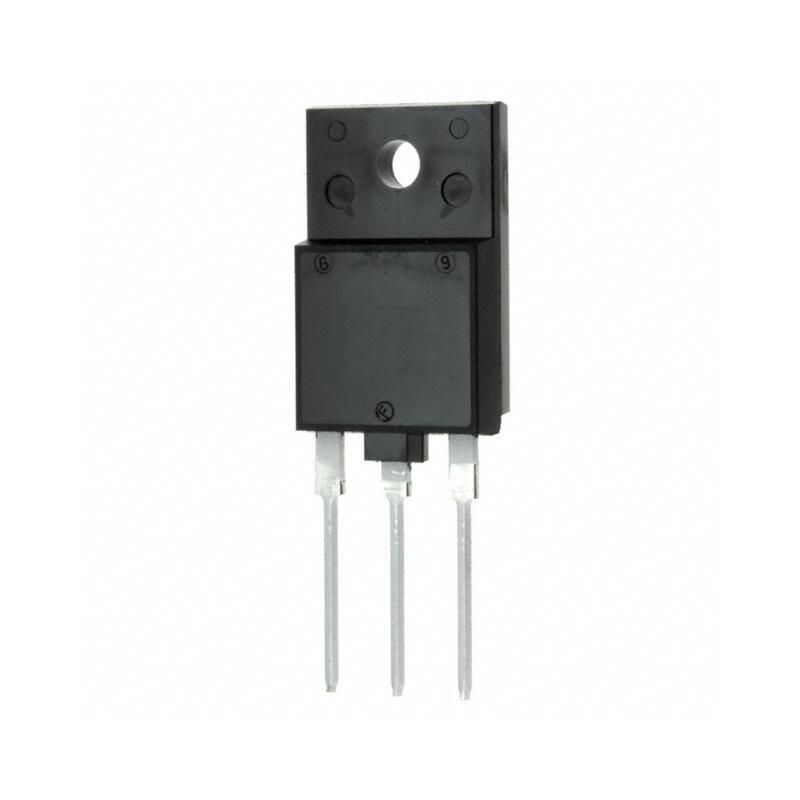


SAA5010 Teletext Decoder IC DIP-24
33 people are viewing this right now
In Stock
SKU
191869943376
£3.25
Safe Checkout, Guaranteed

Safe Checkout, Guaranteed
The SAA5010 integrated circuit, presented in a DIP-24 (Dual In-line Package), served a specific and significant role in the history of television technology. Primarily known as a Teletext decoder, the SAA5010 was a key component in enabling viewers to access text-based information services broadcast alongside regular television signals. This IC allowed televisions to display news, weather updates, subtitles, and other data transmitted via the Teletext system, a precursor to modern interactive TV services. The DIP-24 package provided a standard and reliable way to integrate the SAA5010 into television sets and other compatible devices. The IC typically contained all the necessary circuitry to receive, decode, and display Teletext information. This included a tuner to select the Teletext signal, a decoder to extract the text data from the signal, and a display controller to format and display the text on the screen.
The SAA5010 also often included features such as page storage, allowing viewers to browse through multiple pages of Teletext information. It usually provided support for various character sets and display modes, ensuring compatibility with different Teletext standards. The integration of the SAA5010 into television sets revolutionized the way viewers accessed information, providing a convenient and interactive way to stay informed. While Teletext technology has largely been superseded by the Internet and other digital services, the SAA5010 remains a significant piece of television history. Its role in enabling Teletext services paved the way for the interactive television experiences we enjoy today. For those interested in vintage electronics or the history of television technology, the SAA5010 represents a fascinating example of early integrated circuit design.
The DIP-24 package allows for easy experimentation and reverse engineering, making it a valuable component for hobbyists and researchers alike. Understanding the SAA5010 and its role in Teletext technology provides insights into the evolution of television and the development of interactive media. Its legacy continues to influence the design of modern television systems and digital information services. Discover the history of television technology with the SAA5010 Teletext decoder IC. Explore the origins of interactive TV and the evolution of information access. Order yours today and own a piece of television history.
Add it to your cart now and delve into the fascinating world of vintage electronics. Invest in a piece of technological history; invest in the SAA5010 integrated circuit. Experience the ingenuity and innovation that shaped the television landscape.
| Product Name | SAA5010 Teletext Decoder IC DIP-24 |
|---|---|
| SKU | 191869943376 |
| Price | £3.25 |
| SAA5010 Teletext Decoder IC DIP-24 Color | As per image |
| Category | Integrated Circuits |
| Brand | Nikko Electronics ltd |
| Product Code | 191869943376 |
| Availability | Yes |
Shipping cost is based on order value. Just add products to your cart and use the Shipping Calculator to see the shipping price. We want you to be 100% satisfied with your purchase. Items can be returned or exchanged within 30 days of delivery.
When sourcing a replacement SAA5010 Teletext Decoder IC DIP-24, technicians must ensure the television chassis utilizes the World System Teletext (WST) standard, as this IC was specifically designed for that protocol. The SAA5010 Teletext Decoder IC DIP-24 is an N-channel MOS integrated circuit, making it sensitive to electrostatic discharge (ESD) during installation. It is frequently found in classic Philips, Grundig, and Mullard television sets from the late 1970s and 1980s. Before installation, verify that the existing socket is free of corrosion, as the DIP-24 package relies on high-integrity pin contact for data slicing accuracy. You should also check for any revisions; while the SAA5010 Teletext Decoder IC DIP-24 is a standard part, some later boards might have moved to the SAA5012 or integrated versions, so matching the exact part number is vital for timing synchronization. Furthermore, ensure the surrounding passive components, particularly the decoupling capacitors, are within tolerance, as the NMOS architecture of the SAA5010 Teletext Decoder IC DIP-24 can be sensitive to power supply ripple which leads to character corruption on the display.
The SAA5010 Teletext Decoder IC DIP-24 requires a precise external clock frequency to accurately sample the data bits embedded within the Vertical Blanking Interval (VBI) of the composite video signal. Typically, the SAA5010 Teletext Decoder IC DIP-24 operates in conjunction with a 6 MHz crystal or an external oscillator circuit that provides the necessary reference for the internal timing generator. This clock is essential for the IC to identify the 'clock run-in' and 'framing code' at the start of each Teletext line. If the clock frequency drifts, the SAA5010 Teletext Decoder IC DIP-24 will fail to lock onto the data stream, resulting in missing pages or garbled text. In professional repair scenarios, it is recommended to use an oscilloscope to verify the 6 MHz sine or square wave at the clock input pins of the SAA5010 Teletext Decoder IC DIP-24. Because this IC handles high-speed data slicing at approximately 6.9375 Mbits/s, even minor jitter in the timing circuit can cause significant decoding errors, making the stability of the clock circuit as important as the IC itself.
The internal data slicer of the SAA5010 Teletext Decoder IC DIP-24 is a sophisticated analog-to-digital interface designed to extract digital pulses from the analog video signal. The SAA5010 Teletext Decoder IC DIP-24 looks for pulses specifically located in the VBI lines, typically between lines 7 and 22 of the television field. The data slicer must dynamically adjust its slicing level—the voltage threshold that distinguishes a logic '0' from a logic '1'—to compensate for variations in signal strength and noise. If the composite video input to the SAA5010 Teletext Decoder IC DIP-24 is too weak or suffers from multi-path interference (ghosting), the data slicer will produce parity errors, causing the IC to discard the data packets. When troubleshooting, ensuring a clean, 1V peak-to-peak video signal reaches the input pin of the SAA5010 Teletext Decoder IC DIP-24 is paramount. Technicians often find that aging electrolytic capacitors in the video IF stage degrade the signal quality enough to prevent the SAA5010 Teletext Decoder IC DIP-24 from functioning, even if the IC itself is in perfect working condition.
Yes, the SAA5010 Teletext Decoder IC DIP-24 is a popular choice for hobbyists and engineers working on retro-computing or 'teletext-art' projects. Since the SAA5010 Teletext Decoder IC DIP-24 outputs standard RGB signals along with a blanking (fast switch) signal, it can be used as a standalone character generator to create a 1980s-style aesthetic for OSD (On-Screen Display) applications. To interface the SAA5010 Teletext Decoder IC DIP-24 with a modern microcontroller like an Arduino or ESP32, you must simulate the VBI data stream by bit-banging the Teletext protocol into the IC's video input pin. This requires precise timing to match the expected line rate. The SAA5010 Teletext Decoder IC DIP-24 is particularly valued in this context because it handles the character ROM and display RAM internally, reducing the overhead on the primary processor. However, developers must remember that the SAA5010 Teletext Decoder IC DIP-24 operates on a 5V logic level, so level shifters are required when connecting to 3.3V modern controllers to prevent damaging the legacy SAA5010 Teletext Decoder IC DIP-24 hardware.
The SAA5010 Teletext Decoder IC DIP-24 features dedicated pins for Red, Green, and Blue (RGB) video outputs, which are designed to drive the video matrix of a CRT television. These outputs are typically TTL-compatible but require external buffering or impedance matching depending on the specific television's video amplifier circuit. A crucial feature of the SAA5010 Teletext Decoder IC DIP-24 is the 'Fast Blanking' or 'Y' output pin. This signal tells the television's video processor to instantly switch from the broadcast video signal to the internally generated Teletext characters. This switching happens at a very high speed to allow for text overlays and transparent backgrounds. When testing the SAA5010 Teletext Decoder IC DIP-24, if you see the TV screen flicker but no text appears, it often indicates that the RGB signals are present but the Fast Blanking signal is failing to trigger the TV's internal video switch. High-quality restoration of vintage sets involving the SAA5010 Teletext Decoder IC DIP-24 requires checking the peak voltage of these output pins to ensure they meet the drive requirements of the downstream chroma ICs.
The SAA5010 Teletext Decoder IC DIP-24 typically operates from a single +5V DC power rail (Vcc). As an older NMOS device, the SAA5010 Teletext Decoder IC DIP-24 has a higher power consumption compared to modern CMOS equivalents, which results in noticeable heat generation during prolonged operation. It is normal for the SAA5010 Teletext Decoder IC DIP-24 to feel warm to the touch. However, excessive heat can lead to internal timing drift and eventual failure. When integrating the SAA5010 Teletext Decoder IC DIP-24 into a design, ensure there is adequate airflow around the DIP-24 package. From a power stability perspective, the SAA5010 Teletext Decoder IC DIP-24 is sensitive to voltage drops; if the 5V rail dips below 4.75V, the digital logic may become unstable, leading to erratic page selection or memory corruption. It is highly recommended to place a 100nF ceramic decoupling capacitor as close as possible to the Vcc and Ground pins of the SAA5010 Teletext Decoder IC DIP-24 to filter out high-frequency switching noise that can interfere with the sensitive data slicing circuitry.
Troubleshooting a non-functional SAA5010 Teletext Decoder IC DIP-24 starts with verifying the three pillars of its operation: Power, Clock, and Signal. First, use a multimeter to confirm a stable +5V at the Vcc pin of the SAA5010 Teletext Decoder IC DIP-24. Second, use an oscilloscope to check for the 6 MHz oscillation at the clock input pins; without this, the IC's internal state machine will not advance. Third, verify that the composite video signal (CVBS) is reaching the input pin of the SAA5010 Teletext Decoder IC DIP-24 and that the VBI data pulses are visible on the waveform. If these three are present but the SAA5010 Teletext Decoder IC DIP-24 still fails to output text, check the 'Sandcastle' pulse or horizontal/vertical sync inputs, as the IC needs these to know exactly when to start the display scan. Finally, inspect the page selection bus; if the SAA5010 Teletext Decoder IC DIP-24 is not receiving the correct commands from the TV's central microcontroller, it may remain in a standby or 'video-only' mode, appearing as though the SAA5010 Teletext Decoder IC DIP-24 is defective when the issue is actually control-logic related.