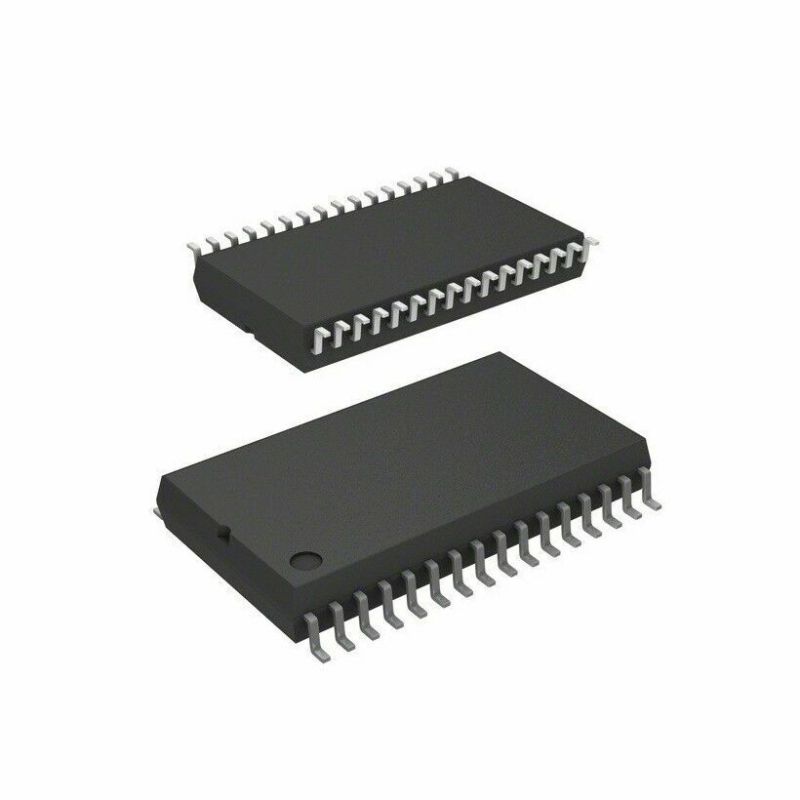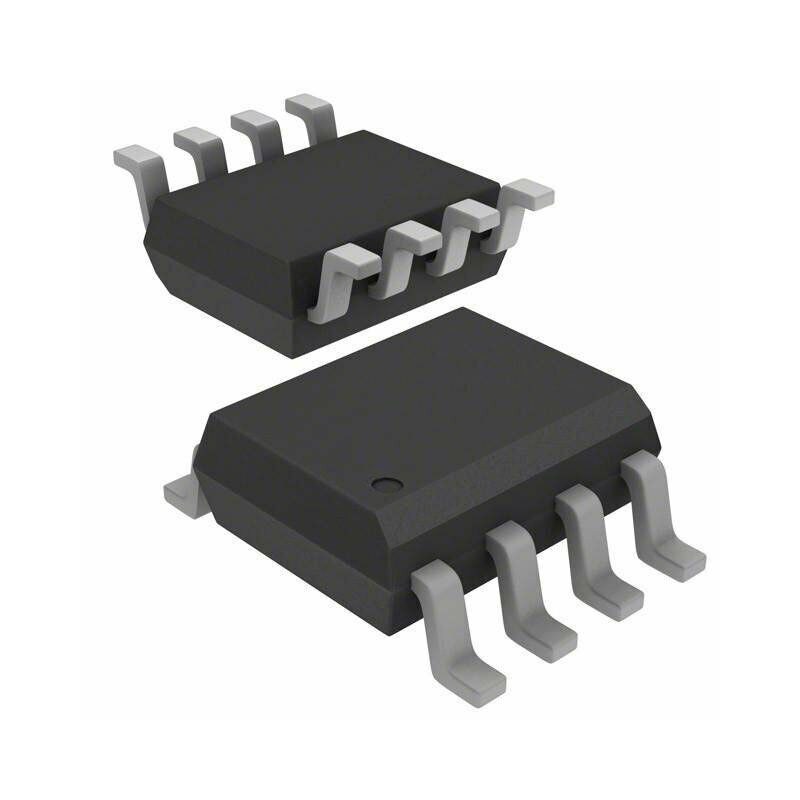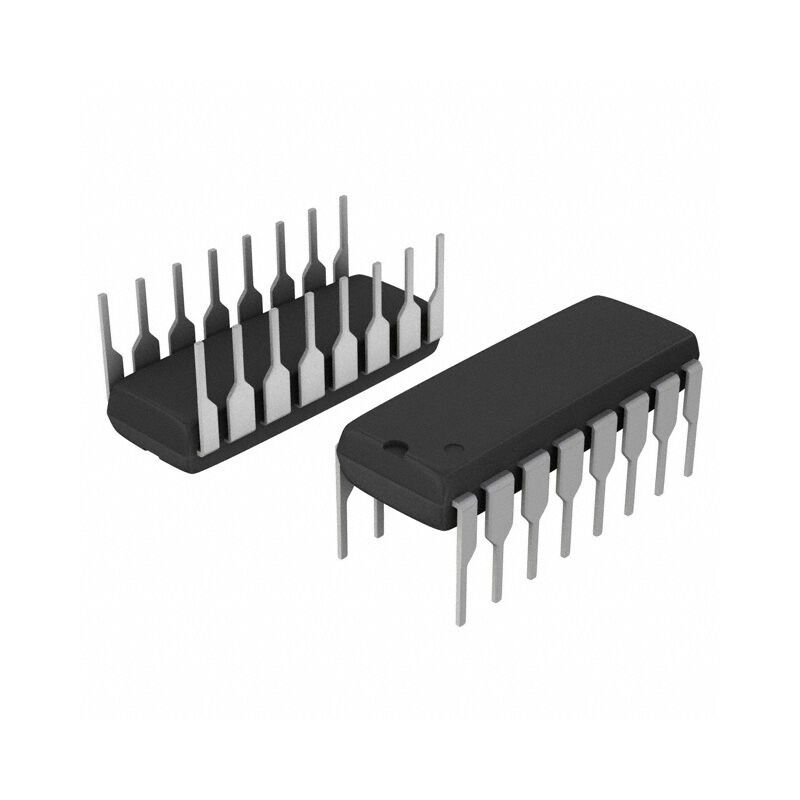


SN74ALS169BD 4-Bit Synchronous Up/Down Binary Counter
34 people are viewing this right now
In Stock
SKU
191822803048
£6.99
Safe Checkout, Guaranteed

Safe Checkout, Guaranteed
The SN74ALS169BD is a synchronous 4-bit binary up/down counter integrated circuit, meticulously crafted to deliver high-speed performance and reliable operation in a wide range of digital logic applications. Encased in a compact 16-SOIC (Small Outline Integrated Circuit) package, this counter offers a space-saving solution without compromising functionality. Designed with advanced low-power Schottky (ALS) technology, the SN74ALS169BD minimizes power consumption while maintaining impressive speed characteristics. This makes it an ideal choice for battery-powered devices and other applications where energy efficiency is crucial. The SN74ALS169BD functions as a versatile binary counter, capable of counting both upwards and downwards. Its synchronous operation ensures that all four bits change state simultaneously, eliminating the risk of glitches and race conditions.
The counter features parallel load capability, allowing for easy initialization and preset operations. This is particularly useful in applications where the counter needs to start from a specific value. The device also includes carry-look-ahead circuitry, which significantly reduces the propagation delay associated with cascading multiple counters. This enables the creation of larger counters with minimal performance degradation. Key features of the SN74ALS169BD include synchronous counting, up/down functionality, parallel load capability, carry-look-ahead circuitry, and low power consumption. These features make it suitable for various applications, including frequency dividers, address generators, and timing circuits.
The 16-SOIC package offers excellent thermal performance and is easy to mount on printed circuit boards. Its small size makes it ideal for densely populated boards where space is limited. The SN74ALS169BD is widely used in digital systems, microprocessors, and embedded systems for counting events, generating timing signals, and implementing control logic. Its robust design and reliable performance ensure stable operation in demanding environments. Whether you're designing a microcontroller-based system, a frequency synthesizer, or a digital timer, the SN74ALS169BD provides the ideal counting solution. Its combination of high speed, low power consumption, and versatile functionality makes it a valuable asset to any digital design.
Consider the SN74ALS169BD for your next digital project and experience the benefits of its superior performance and reliability. This integrated circuit provides an efficient and reliable solution for various counting and timing needs. Its robust design and ease of integration make it a popular choice among engineers and hobbyists. Upgrade your digital systems with the SN74ALS169BD and experience enhanced counting capabilities. Don't settle for less; choose the SN74ALS169BD for your demanding applications. Order yours now and unlock the full potential of your digital designs.
Enhance your circuit designs with this reliable binary counter, optimizing for timing accuracy and efficiency.
| Product Name | SN74ALS169BD 4-Bit Synchronous Up/Down Binary Counter |
|---|---|
| SKU | 191822803048 |
| Price | £6.99 |
| SN74ALS169BD 4-Bit Synchronous Up/Down Binary Counter Color | As per image |
| Category | Integrated Circuits |
| Brand | Nikko Electronics ltd |
| Product Code | 191822803048 |
| Availability | Yes |
Shipping cost is based on order value. Just add products to your cart and use the Shipping Calculator to see the shipping price. We want you to be 100% satisfied with your purchase. Items can be returned or exchanged within 30 days of delivery.
The SN74ALS169BD 4-Bit Synchronous Up/Down Binary Counter offers significant performance benefits over asynchronous alternatives because all state changes occur simultaneously on the rising edge of the clock signal. In asynchronous or ripple counters, the clock pulse must propagate through each flip-flop stage, leading to cumulative delays and potential 'glitches' or transient states that can cause errors in downstream logic. By contrast, the SN74ALS169BD 4-Bit Synchronous Up/Down Binary Counter ensures that all four output bits (QA-QD) transition at the exact same time, provided the setup and hold times are met. This synchronous operation is critical for high-frequency applications where timing margins are tight. Furthermore, because the SN74ALS169BD 4-Bit Synchronous Up/Down Binary Counter is built using Advanced Low-power Schottky (ALS) technology, it provides a superior speed-to-power ratio compared to standard TTL or LS-TTL components. This makes it an ideal choice for complex state machines and high-speed data processing units where reliability and predictable timing are non-negotiable requirements for system stability.
Cascading multiple units of the SN74ALS169BD 4-Bit Synchronous Up/Down Binary Counter for n-bit counting requires a specific configuration of the Enable P (ENP) and Enable T (ENT) pins. To achieve high-speed 'look-ahead' carry counting, the ENT pin of the first stage is typically used to control the Ripple Carry Output (RCO). When cascading, the RCO of the least significant SN74ALS169BD 4-Bit Synchronous Up/Down Binary Counter should be connected to both the ENP and ENT inputs of the succeeding stage. This ensures that the next counter in the chain only increments or decrements when the previous counter has reached its terminal count (15 for up-counting or 0 for down-counting) and a clock pulse occurs. The ENT input is particularly important because it is internally gated with the counter's state to produce the RCO signal. By utilizing this look-ahead carry feature of the SN74ALS169BD 4-Bit Synchronous Up/Down Binary Counter, designers can create 8-bit, 12-bit, or 16-bit counters without the significant propagation delays associated with ripple-carry configurations, maintaining synchronous performance across the entire multi-chip array.
The SN74ALS169BD 4-Bit Synchronous Up/Down Binary Counter features a fully synchronous load capability, which distinguishes it from counters with asynchronous resets or loads. When the LOAD input is pulled low, the data present at the parallel inputs (A, B, C, D) is transferred to the counter's internal flip-flops on the next positive-going transition of the clock. Because this load operation is synchronized to the clock, it eliminates the risk of partial state changes that can occur with asynchronous controls. When the LOAD input is high and the enable pins (ENP and ENT) are low, the SN74ALS169BD 4-Bit Synchronous Up/Down Binary Counter performs its primary counting function. The direction of the count is determined by the U/D (Up/Down) pin; a high level initiates an upward count, while a low level initiates a downward count. This architectural design allows the SN74ALS169BD 4-Bit Synchronous Up/Down Binary Counter to transition seamlessly between counting and preset loading, which is essential for applications like programmable dividers, frequency synthesizers, and complex digital timers where precise starting values are required.
The SN74ALS169BD 4-Bit Synchronous Up/Down Binary Counter utilizes Texas Instruments' proprietary ALS technology, which was specifically engineered to bridge the gap between high-speed bipolar logic and low-power requirements. In a typical digital system, the SN74ALS169BD 4-Bit Synchronous Up/Down Binary Counter consumes significantly less power than standard 74-series or 74S-series logic while offering comparable or better propagation delays. This is achieved through optimized transistor geometries and internal circuitry that reduces the power-clock frequency product. For engineers designing battery-operated equipment or high-density PCB assemblies, the SN74ALS169BD 4-Bit Synchronous Up/Down Binary Counter provides a way to maintain high-speed synchronous counting without the thermal overhead associated with faster, more power-hungry logic families. Additionally, the ALS process provides improved noise immunity and better drive capabilities for the outputs, ensuring that the SN74ALS169BD 4-Bit Synchronous Up/Down Binary Counter can drive multiple TTL loads or long PCB traces without signal degradation, further contributing to overall system efficiency and reliability.
When integrating the SN74ALS169BD 4-Bit Synchronous Up/Down Binary Counter into a system controlled by a high-speed microprocessor or FPGA, designers must pay close attention to the setup, hold, and propagation delay specifications. The setup time for the LOAD, ENP, ENT, and U/D control lines relative to the rising edge of the clock is vital; for the SN74ALS169BD 4-Bit Synchronous Up/Down Binary Counter, these signals must be stable before the clock transition to ensure the correct operation is latched. Similarly, the hold time must be respected to prevent data corruption. The propagation delay from the clock edge to the Q outputs and the RCO signal is another critical factor, especially if the counter's output is used as feedback for the processor's interrupt logic or as an address for memory. Because the SN74ALS169BD 4-Bit Synchronous Up/Down Binary Counter is an ALS device, it typically features a maximum clock frequency (fmax) that is well-suited for modern digital buses, but designers should always consult the switching characteristics in the datasheet to account for temperature and voltage variations in their specific environment.
The Ripple Carry Output (RCO) of the SN74ALS169BD 4-Bit Synchronous Up/Down Binary Counter is a combinational output derived from the internal state of the counter and the ENT input. While the counter itself is synchronous, the RCO signal can occasionally exhibit brief 'glitches' or 'spikes' during state transitions because of the internal logic propagation delays within the SN74ALS169BD 4-Bit Synchronous Up/Down Binary Counter. These glitches are most common when the counter is used in complex decoding logic or when the RCO is directly driving an asynchronous input of another device. To mitigate this, it is standard practice to either use the RCO signal only to drive synchronous inputs (like the ENT/ENP of the next SN74ALS169BD 4-Bit Synchronous Up/Down Binary Counter stage) or to pass the RCO through a flip-flop to 're-sync' the signal to the system clock. This ensures that any transient noise generated during the internal transition of the SN74ALS169BD 4-Bit Synchronous Up/Down Binary Counter is ignored by the rest of the system, resulting in a clean and reliable carry signal for n-bit expansions.
The SN74ALS169BD 4-Bit Synchronous Up/Down Binary Counter is housed in a 16-SOIC package, which is a surface-mount form factor designed for automated assembly and high-density PCB layouts. From a layout perspective, it is essential to place a 0.1µF ceramic decoupling capacitor as close as possible to the VCC and GND pins of the SN74ALS169BD 4-Bit Synchronous Up/Down Binary Counter. This minimizes the impact of switching noise, which can be significant in ALS-series devices due to their fast edge rates. Regarding thermal management, while the SN74ALS169BD 4-Bit Synchronous Up/Down Binary Counter is a low-power device, operating it at its maximum rated frequency for extended periods in a high-ambient temperature environment can lead to localized heating. Ensuring a solid ground plane and sufficient trace widths for the power lines will help dissipate heat and maintain signal integrity. Additionally, designers should keep the high-speed clock trace to the SN74ALS169BD 4-Bit Synchronous Up/Down Binary Counter as short and direct as possible to avoid electromagnetic interference (EMI) and signal reflection issues that could compromise the counter's performance.