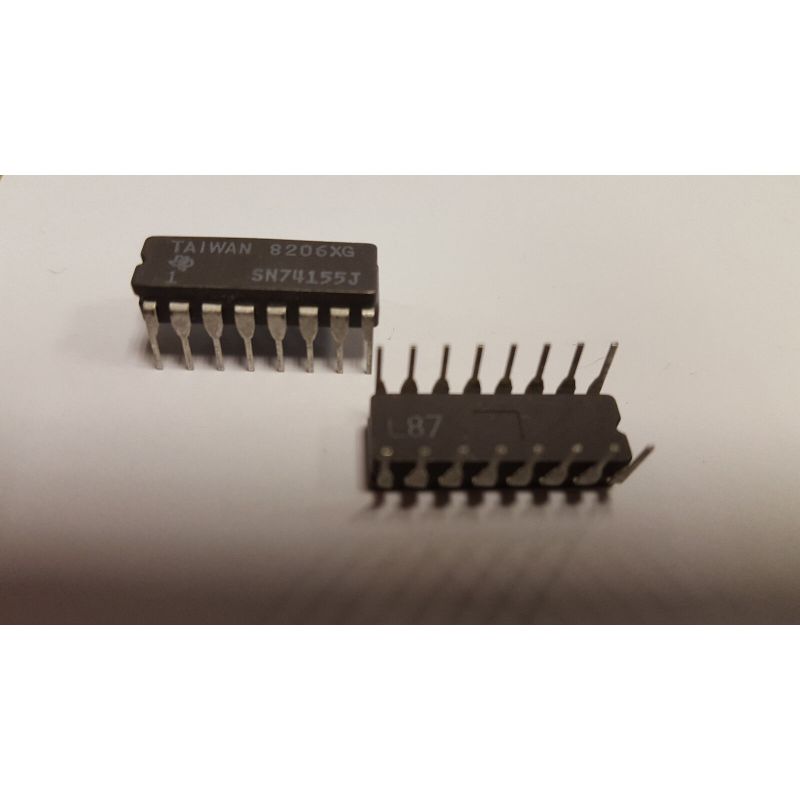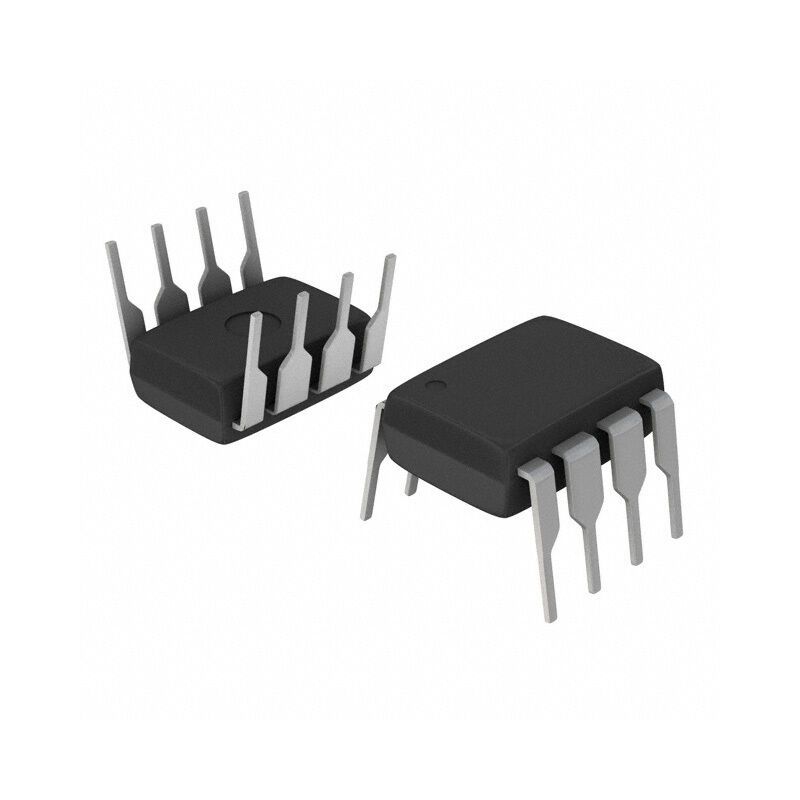


SN74HC148N 8-to-3 Priority Encoder IC (16-DIP)
29 people are viewing this right now
In Stock
SKU
191297212169
£2.99
Safe Checkout, Guaranteed

Safe Checkout, Guaranteed
The KTC3203Y is a versatile NPN bipolar junction transistor (BJT) manufactured by KEC Semiconductor, housed in a TO-92 package. This transistor is designed for general-purpose amplification and switching applications in a wide range of electronic circuits. Its key features include a high current gain (hFE), low saturation voltage, and fast switching speed, making it a reliable choice for both small-signal amplification and moderate switching tasks. The NPN configuration of the KTC3203Y allows for efficient switching and amplification of positive signals, making it a versatile component in various electronic circuits. The TO-92 package provides ease of use and compatibility with standard prototyping boards and through-hole soldering techniques, making it accessible for both hobbyists and professional engineers. The KTC3203Y is commonly used in audio amplifiers, signal processing circuits, and switching circuits.
Its high current gain allows for efficient amplification of weak signals, while its fast switching speed enables rapid switching in digital circuits. The transistor's low saturation voltage minimizes power losses during switching, contributing to higher overall efficiency. The KTC3203Y is designed for easy integration into existing circuits, with standard pinout and mounting configurations. Its robust construction ensures long-term reliability, even in demanding operating conditions. The KTC3203Y is a popular choice among electronics enthusiasts and engineers due to its excellent performance characteristics and ease of use. Its high current gain, low saturation voltage, and fast switching speed make it a valuable component in any electronic project.
Consider the KTC3203Y for your next project requiring general-purpose amplification or switching. Its combination of high performance and ease of use makes it an ideal choice for a wide range of applications. Upgrade your electronic designs with the KTC3203Y and experience enhanced performance and reliability. Order yours today and unlock the potential of efficient amplification and switching in your electronic circuits. Explore the possibilities and elevate your projects with this dependable and versatile transistor. Don't miss out on the opportunity to enhance your designs with the KTC3203Y.
Add it to your cart now and experience the difference in performance and reliability. Its applications extend to LED drivers, sensor interfaces, and logic gates, showcasing its versatility in various electronic systems. The KTC3203Y's ability to perform both amplification and switching tasks efficiently makes it a fundamental building block in many electronic designs.
| Product Name | SN74HC148N 8-to-3 Priority Encoder IC (16-DIP) |
|---|---|
| SKU | 191297212169 |
| Price | £2.99 |
| SN74HC148N 8-to-3 Priority Encoder IC (16-DIP) Color | As per image |
| Category | Integrated Circuits |
| Brand | Nikko Electronics ltd |
| Product Code | 191297212169 |
| Availability | Yes |
Shipping cost is based on order value. Just add products to your cart and use the Shipping Calculator to see the shipping price. We want you to be 100% satisfied with your purchase. Items can be returned or exchanged within 30 days of delivery.
Cascading the SN74HC148N 8-to-3 Priority Encoder IC (16-DIP) is a common requirement for systems needing more than eight priority inputs, such as 16-to-4 or 32-to-5 encoders. To achieve this, you utilize the Enable Input (EI) and Enable Output (EO) pins. In a 16-input configuration, you would use two SN74HC148N chips. The higher-priority IC (handling inputs 8-15) has its EI grounded to remain permanently active. Its EO pin is then connected to the EI pin of the lower-priority IC (handling inputs 0-7). When any input on the higher-priority chip is active, its EO goes high, effectively disabling the lower-priority chip. If no inputs on the higher-priority chip are active, the EO goes low, enabling the second chip to process its inputs. The Group Signal (GS) outputs from both chips, along with the binary outputs, are typically combined using external logic gates (like OR or NAND gates) to form a complete 4-bit binary sequence. This modularity makes the SN74HC148N 8-to-3 Priority Encoder IC (16-DIP) highly flexible for complex interrupt-driven architectures.
The SN74HC148N 8-to-3 Priority Encoder IC (16-DIP) belongs to the High-speed CMOS (HC) family, which offers a wide operating voltage range from 2.0V to 6.0V. This versatility allows the IC to be used in both legacy 5V systems and modern low-power 3.3V microcontroller environments. When operating at 5V, the logic high input threshold (VIH) is typically 3.5V, while the logic low threshold (VIL) is 1.5V. It is important to note that the SN74HC148N 8-to-3 Priority Encoder IC (16-DIP) features active-low inputs and outputs. This means that a 'low' signal (0V) represents an active state, and a 'high' signal (VCC) represents an inactive state. Designers should ensure that unused inputs are tied to VCC to prevent floating states, which can cause increased power consumption or erratic logic behavior. The low power consumption of the CMOS process makes this encoder ideal for battery-operated devices where maintaining a small current footprint is critical.
The defining characteristic of the SN74HC148N 8-to-3 Priority Encoder IC (16-DIP) is its internal priority circuitry. Unlike a standard encoder that might produce an error or invalid code when multiple inputs are triggered, the SN74HC148N specifically identifies and encodes only the highest-order active input. For example, if inputs 2, 5, and 7 are all pulled low (active) simultaneously, the IC will ignore inputs 2 and 5 and provide the binary output corresponding to input 7. This internal arbitration is performed via a series of look-ahead gates, ensuring that the highest numerical input always takes precedence. This feature is indispensable in microprocessor systems for interrupt priority management, where the system must respond to the most critical task first. The SN74HC148N 8-to-3 Priority Encoder IC (16-DIP) ensures deterministic behavior in multi-signal environments, providing a reliable 3-bit active-low binary representation of the highest active input line without the need for complex external software polling.
Understanding the status pins is vital for correctly implementing the SN74HC148N 8-to-3 Priority Encoder IC (16-DIP) in a circuit. The Group Signal (GS) and Enable Output (EO) serve distinct purposes. The GS pin is an active-low output that indicates whether any of the eight inputs are currently active. If at least one input is low (and the chip is enabled via EI), GS will drop to a low state. This is often used as a 'Data Valid' signal or to trigger a processor interrupt. Conversely, the EO pin is used primarily for cascading. It remains low only when the EI is low AND none of the eight inputs (0-7) are active. If any input becomes active, EO goes high to signal downstream encoders to remain idle. In summary, use the GS pin of the SN74HC148N 8-to-3 Priority Encoder IC (16-DIP) to detect activity on the current chip, and use the EO pin to pass the 'enable' permission to the next chip in a multi-stage encoding chain.
The SN74HC148N 8-to-3 Priority Encoder IC (16-DIP) is designed for high-speed performance, making it suitable for real-time signal processing. At a standard VCC of 4.5V, the typical propagation delay from an input to the binary outputs (A0, A1, A2) is approximately 15 to 25 nanoseconds. The delay from Input to the Group Signal (GS) or Enable Output (EO) is similarly optimized. These speeds allow the IC to operate in systems with clock frequencies in the tens of megahertz range. However, designers should be aware that propagation delay increases as the supply voltage decreases; at 2.0V, the delay can exceed 100ns. When designing high-speed logic arrays with the SN74HC148N 8-to-3 Priority Encoder IC (16-DIP), it is crucial to account for these timing parameters to avoid race conditions, especially when cascading multiple stages where cumulative delays can impact the total system setup time. Proper decoupling with a 0.1µF ceramic capacitor near the VCC pin is recommended to maintain signal integrity during fast transitions.
Yes, the SN74HC148N 8-to-3 Priority Encoder IC (16-DIP) is an excellent choice for simplifying keyboard or switch matrix scanning. In a typical application, eight individual buttons or switches can be connected to the inputs. Because the inputs are active-low, the switches should be configured to pull the input to ground when pressed. The SN74HC148N then converts the button press into a 3-bit binary code, which significantly reduces the number of I/O pins required on the host microcontroller—from eight pins down to just three (or four if using the GS pin as an interrupt). The priority feature of the SN74HC148N 8-to-3 Priority Encoder IC (16-DIP) also provides a hardware-level 'n-key rollover' solution, where the highest-numbered key is always recognized first if two keys are pressed at once. This hardware-based encoding offloads the processing burden from the CPU, allowing for more efficient code execution and faster response times in user interface designs.
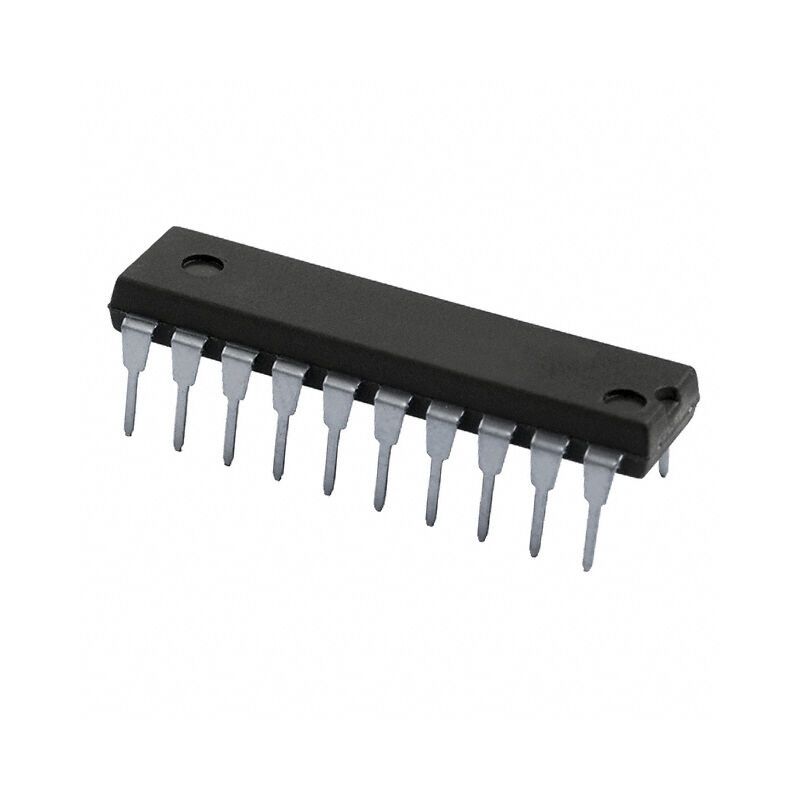
The SN74HC148N 8-to-3 Priority Encoder IC (16-DIP) is housed in a standard 16-pin Dual In-line Package (DIP), which is optimized for through-hole mounting. This package is highly robust and provides excellent mechanical stability for industrial applications. Thermally, the SN74HC148N operates within a standard industrial temperature range, typically from -40°C to +85°C, making it suitable for equipment used in non-climate-controlled environments. Since it is a CMOS device, it generates very little internal heat; however, it is still important to ensure that the surrounding ambient temperature does not exceed the maximum ratings. For high-reliability applications, using a high-quality IC socket with the SN74HC148N 8-to-3 Priority Encoder IC (16-DIP) can facilitate easy replacement and testing. The 16-DIP form factor is also ideal for prototyping on breadboards or stripboards, providing a user-friendly experience for engineers developing priority-based logic systems or educational logic trainers.