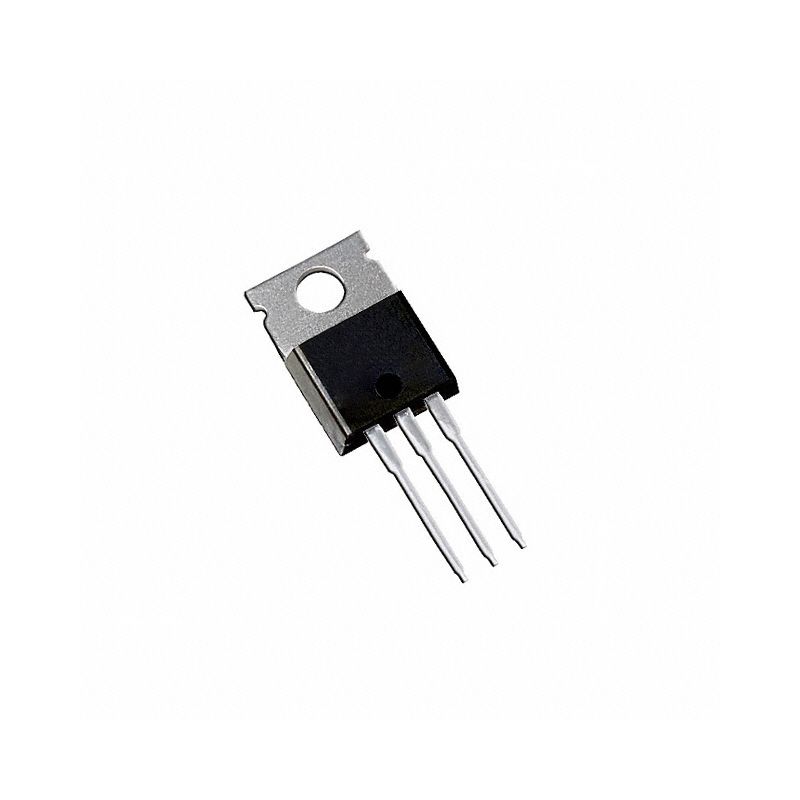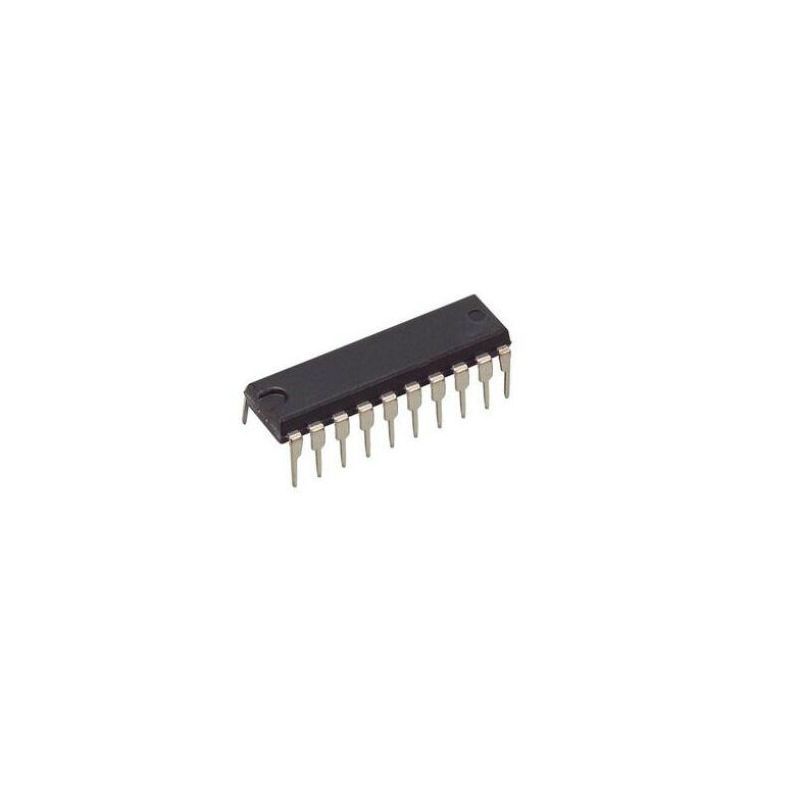


SN74HCT14N Hex Schmitt-Trigger Inverter IC (DIP-14)
32 people are viewing this right now
In Stock
SKU
191778011091
£3.99
Safe Checkout, Guaranteed

Safe Checkout, Guaranteed
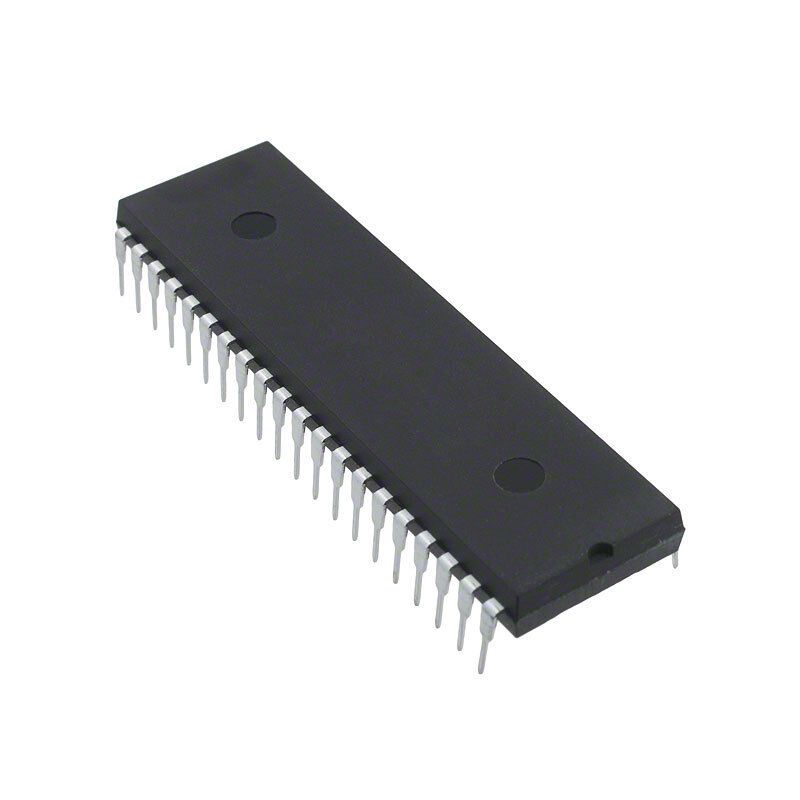
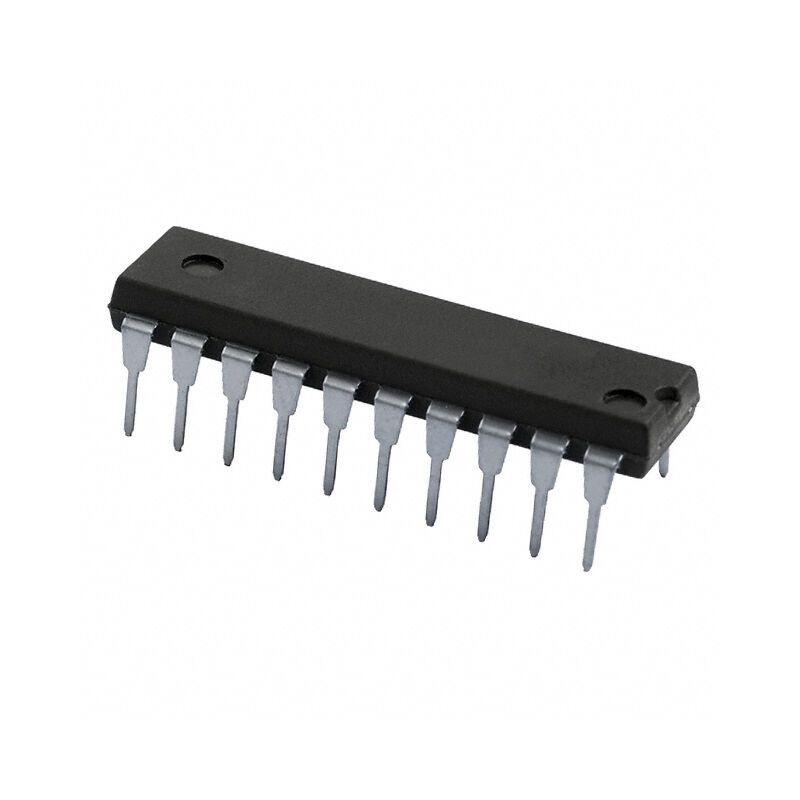
The SN74HCT14N is a Hex Schmitt-Trigger Inverter Integrated Circuit packaged in a 14-DIP (Dual In-line Package). This IC features six independent inverters, each with Schmitt-trigger inputs, making it exceptionally useful for signal conditioning, noise reduction, and waveform shaping in digital logic circuits. The DIP-14 package allows for easy through-hole mounting, making it an ideal choice for breadboarding, prototyping, and educational purposes. It's also suitable for legacy designs where through-hole components are preferred. The SN74HCT14N provides six independent inverters, each of which inverts the input signal. When the input is high, the output is low, and vice versa.
The Schmitt-trigger inputs provide hysteresis, meaning that the switching threshold for a rising input is different from the switching threshold for a falling input. This hysteresis makes the SN74HCT14N highly resistant to noise and prevents oscillations that can occur with standard inverters when the input signal is noisy. These inverters are designed to improve noise immunity and enhance signal integrity in complex digital systems. Its compatibility with TTL voltage levels guarantees easy integration in various circuits and systems. It is used for cleaning noisy signals and creating defined digital edges from slow-changing analog signals. The SN74HCT14N is commonly used in clock oscillators, pulse shapers, and edge detectors.
It can also be used to implement simple logic gates, such as NAND and NOR gates, by combining multiple inverters. The HCT designation indicates that it has TTL-compatible input thresholds, meaning it can be easily interfaced with TTL logic circuits. This makes it a suitable replacement for older TTL devices in many applications. Detailed datasheets provide complete specifications for the SN74HCT14N, including its electrical characteristics, timing diagrams, and application notes. These resources enable designers to effectively utilize the IC's features and optimize its performance. The SN74HCT14N is a versatile and reliable component that is essential for any digital designer's toolkit.
It is robust and designed for general usage. Clean up your noisy signals with ease. Add the SN74HCT14N to your cart now and experience the power of Schmitt-trigger inverters in your electronic circuits!
| Product Name | SN74HCT14N Hex Schmitt-Trigger Inverter IC (DIP-14) |
|---|---|
| SKU | 191778011091 |
| Price | £3.99 |
| SN74HCT14N Hex Schmitt-Trigger Inverter IC (DIP-14) Color | As per image |
| Category | Integrated Circuits |
| Brand | Nikko Electronics ltd |
| Product Code | 191778011091 |
| Availability | Yes |
Shipping cost is based on order value. Just add products to your cart and use the Shipping Calculator to see the shipping price. We want you to be 100% satisfied with your purchase. Items can be returned or exchanged within 30 days of delivery.
The primary difference between the SN74HCT14N Hex Schmitt-Trigger Inverter IC (DIP-14) and the 'HC' version lies in the input logic level thresholds. The 'HCT' designation indicates that this IC is specifically designed with TTL-compatible inputs while maintaining CMOS output characteristics. While a standard SN74HC14 requires an input voltage of approximately 70% of VCC to register a logic high, the SN74HCT14N Hex Schmitt-Trigger Inverter IC (DIP-14) can reliably interpret a 2.0V signal as 'High' when operating at a 5V VCC. This makes the SN74HCT14N Hex Schmitt-Trigger Inverter IC (DIP-14) an essential component for engineers who need to interface 5V CMOS logic with older TTL components or microcontrollers that output lower voltage logic levels. It effectively acts as a level translator and signal conditioner in one. However, designers should note that because of this TTL compatibility, the SN74HCT14N Hex Schmitt-Trigger Inverter IC (DIP-14) is restricted to a narrow operating voltage range of 4.5V to 5.5V, unlike the broader 2V to 6V range of the standard HC series.
The SN74HCT14N Hex Schmitt-Trigger Inverter IC (DIP-14) is engineered to provide superior noise immunity through its internal Schmitt-trigger architecture. Each of the six inverters features a distinct positive-going threshold (VT+) and negative-going threshold (VT-). At a typical 5V supply, the hysteresis voltage—which is the difference between these two thresholds—is generally between 0.5V and 1.1V. This internal gap ensures that the SN74HCT14N Hex Schmitt-Trigger Inverter IC (DIP-14) will not oscillate or produce multiple transitions at the output even if the input signal is noisy or has a very slow rise time. For professional applications like industrial sensor interfacing or debouncing mechanical switches, the SN74HCT14N Hex Schmitt-Trigger Inverter IC (DIP-14) is indispensable. It cleans up 'ragged' edges and provides a sharp, clean square wave output. This characteristic is particularly useful in preventing 'double-triggering' in clock distribution networks or interrupt-driven systems where signal integrity is critical for reliable operation.
Yes, the SN74HCT14N Hex Schmitt-Trigger Inverter IC (DIP-14) is frequently used by designers to implement simple and cost-effective RC relaxation oscillators. Because of the well-defined hysteresis thresholds on the inputs, you can connect a resistor from the output back to the input and a capacitor from the input to ground to create a stable square-wave generator. The SN74HCT14N Hex Schmitt-Trigger Inverter IC (DIP-14) is particularly favored for this because its Schmitt-trigger inputs handle the slow charging and discharging ramps of the capacitor without the high current consumption or instability seen in standard inverters. When calculating the frequency for an oscillator using the SN74HCT14N Hex Schmitt-Trigger Inverter IC (DIP-14), engineers must account for the specific VT+ and VT- values provided in the datasheet, as the time constant is dependent on these switching points. It is a highly efficient way to generate local clock signals or PWM pulses in prototypes and legacy logic designs where a dedicated crystal oscillator might be overkill or too expensive.
The SN74HCT14N Hex Schmitt-Trigger Inverter IC (DIP-14) offers high-speed performance comparable to the 74LS series but with significantly lower power consumption. At a standard 5V VCC and a load capacitance of 50pF, the typical propagation delay (tPD) for the SN74HCT14N Hex Schmitt-Trigger Inverter IC (DIP-14) is approximately 20ns. While this is fast enough for most general-purpose logic and signal conditioning tasks, designers working on high-frequency timing circuits should account for this delay to avoid race conditions. The propagation delay of the SN74HCT14N Hex Schmitt-Trigger Inverter IC (DIP-14) is sensitive to the supply voltage and temperature; as the voltage increases toward 5.5V, the delay typically decreases. However, compared to standard CMOS inverters, the Schmitt-trigger architecture of the SN74HCT14N Hex Schmitt-Trigger Inverter IC (DIP-14) adds a slight overhead to the switching time. In high-speed digital pipelines, it is essential to ensure that the cumulative delay through multiple stages of the SN74HCT14N Hex Schmitt-Trigger Inverter IC (DIP-14) does not exceed the system's clock cycle requirements.
The SN74HCT14N Hex Schmitt-Trigger Inverter IC (DIP-14) is designed to drive standard logic loads efficiently. It typically features a balanced output drive, capable of sourcing or sinking approximately 4mA to 6mA at a 5V supply while maintaining valid logic levels. In terms of fan-out, the SN74HCT14N Hex Schmitt-Trigger Inverter IC (DIP-14) can drive up to 10 LSTTL loads. Because it is a CMOS-based device, the input current is extremely low (typically 1µA), which means it places almost no DC load on the preceding stage. However, when driving long PCB traces or high-capacitance loads, the dynamic current consumption increases, and the transition times will lengthen. For applications requiring higher current, such as driving LEDs or small relays directly, the SN74HCT14N Hex Schmitt-Trigger Inverter IC (DIP-14) should be followed by a dedicated buffer or transistor driver. For most standard digital logic interfacing, the SN74HCT14N Hex Schmitt-Trigger Inverter IC (DIP-14) provides more than enough drive strength to ensure reliable signal propagation across a circuit board.
Proper termination of unused inputs is critical when working with the SN74HCT14N Hex Schmitt-Trigger Inverter IC (DIP-14). Because the inputs are high-impedance CMOS, leaving them 'floating' can lead to several issues, including increased power consumption, induced noise, and even thermal damage to the IC. Floating inputs on the SN74HCT14N Hex Schmitt-Trigger Inverter IC (DIP-14) can pick up stray electromagnetic interference (EMI), causing the internal transistors to enter a partially-on state where they draw excessive supply current (ICC). To prevent this, every unused input of the SN74HCT14N Hex Schmitt-Trigger Inverter IC (DIP-14) must be tied directly to either VCC or GND. The choice of tying to high or low depends on the desired state of the corresponding output pin, though tying to GND is a common practice to minimize noise. Additionally, a 0.1µF ceramic decoupling capacitor should be placed as close as possible to the VCC pin (Pin 14) and GND pin (Pin 7) of the SN74HCT14N Hex Schmitt-Trigger Inverter IC (DIP-14) to filter out high-frequency switching noise from the power supply rail.
In many cases, the SN74HCT14N Hex Schmitt-Trigger Inverter IC (DIP-14) is an excellent modern replacement for the aging 74LS14 bipolar logic IC. Since the SN74HCT14N Hex Schmitt-Trigger Inverter IC (DIP-14) features TTL-compatible inputs, it will correctly interpret the output levels produced by 74LS series chips. The DIP-14 package is also pin-compatible, meaning it can often be dropped directly into an existing socket. The primary advantage of switching to the SN74HCT14N Hex Schmitt-Trigger Inverter IC (DIP-14) is the dramatic reduction in quiescent power consumption; while a 74LS14 draws significant current even when idle, the HCT version draws almost negligible current in a static state. However, there are two important considerations: first, the SN74HCT14N Hex Schmitt-Trigger Inverter IC (DIP-14) has a narrower voltage range (4.5V-5.5V) than some variations of LS logic, and second, its CMOS outputs have different rise/fall characteristics. In extremely sensitive timing circuits designed specifically for the propagation delays of bipolar logic, the SN74HCT14N Hex Schmitt-Trigger Inverter IC (DIP-14) should be tested to ensure the faster CMOS transitions do not introduce unexpected ringing or EMI issues.