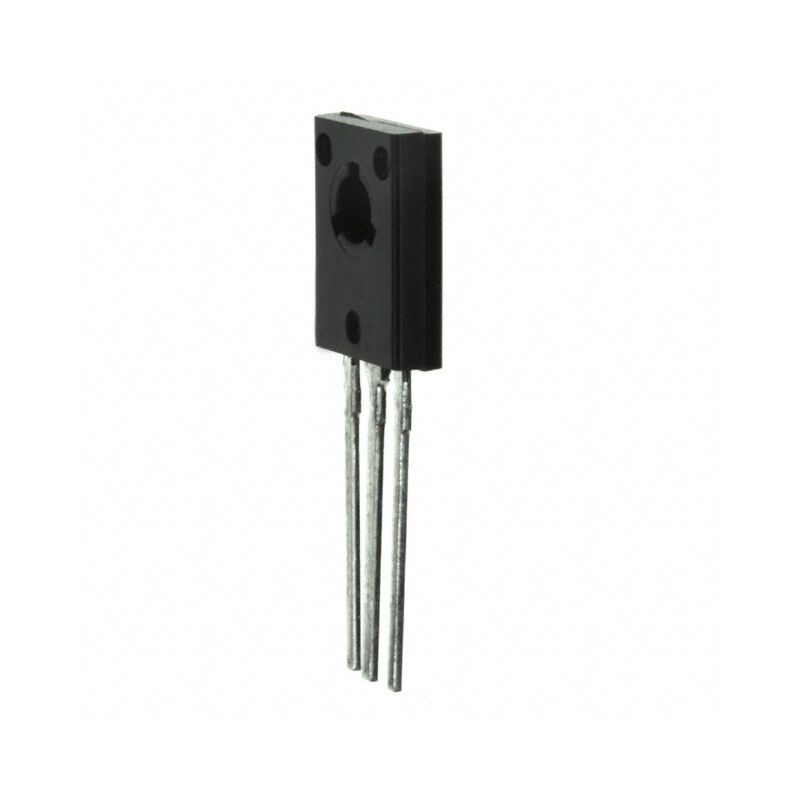


SPW15N60C3 N-Channel MOSFET
24 people are viewing this right now
In Stock
SKU
190980390288
£4.99
Safe Checkout, Guaranteed

Safe Checkout, Guaranteed
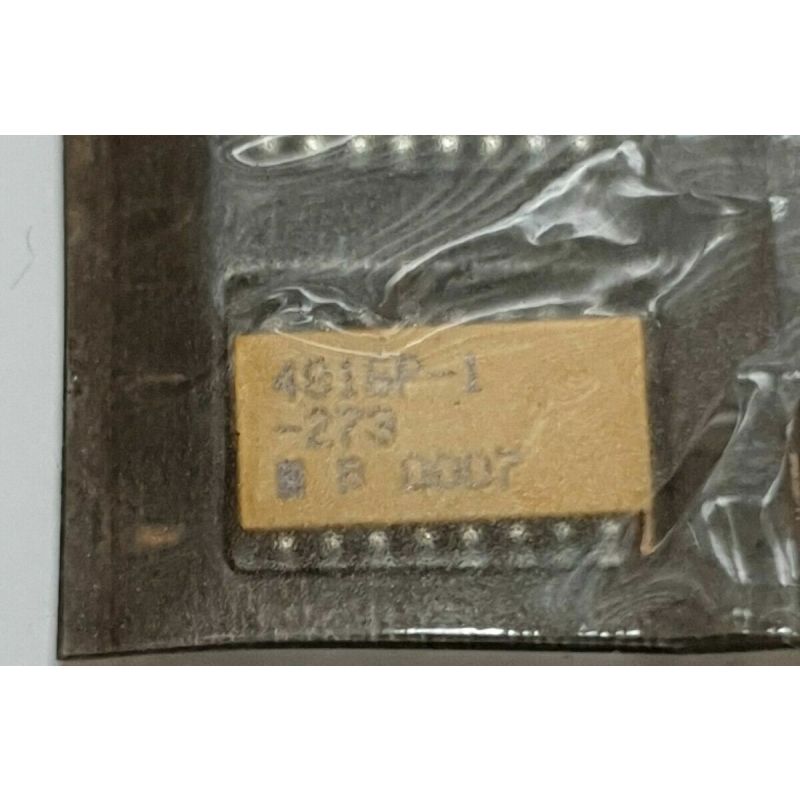
The ML4821CP is a versatile and high-performance pulse width modulation (PWM) controller IC designed for boost converter applications. Encased in an 18-pin DIP (Dual In-line Package), this integrated circuit provides the necessary control and protection features for efficient and reliable boost converter designs. The ML4821CP is ideal for use in power supplies, battery chargers, and LED drivers where a stable and regulated output voltage is required. This IC utilizes a current-mode control architecture, which offers inherent advantages such as improved line regulation, load regulation, and transient response. The current-mode control also simplifies the design of the compensation network, making it easier to achieve stable operation. The ML4821CP features a wide input voltage range, allowing it to operate from various DC sources.
It also includes built-in protection features such as overvoltage protection (OVP), undervoltage lockout (UVLO), and overcurrent protection (OCP), ensuring the safety and reliability of the boost converter. The 18-pin DIP package is easy to handle and solder, making it suitable for both prototyping and production environments. The through-hole mounting style provides a secure and reliable connection to the printed circuit board (PCB). Key features of the ML4821CP include its adjustable switching frequency, soft-start capability, and synchronization input. The adjustable switching frequency allows the designer to optimize the converter's performance for different applications. The soft-start capability reduces inrush current during startup, preventing stress on the components.
The synchronization input allows multiple converters to be synchronized to a common clock, reducing noise and improving overall system performance. In power supplies, the ML4821CP can be used to boost the input voltage to a higher level, providing a stable and regulated output voltage for various electronic devices. Its protection features ensure the safety and reliability of the power supply. In battery chargers, the ML4821CP can be used to charge batteries efficiently and safely. Its current-mode control and protection features prevent overcharging and damage to the battery. In LED drivers, the ML4821CP can be used to drive LEDs with a constant current, ensuring consistent brightness and long lifespan.
Its adjustable switching frequency allows the designer to optimize the driver's performance for different LED types. When selecting a PWM controller IC for your application, it's important to consider the input voltage range, output voltage range, switching frequency, and protection features requirements of your design. The ML4821CP is a versatile IC that can be used in a wide range of applications, but it's essential to ensure that it meets the specific requirements of your design. The ML4821CP is a reliable and high-performance PWM controller IC that can help you achieve your desired results. Its current-mode control, protection features, and adjustable parameters make it an ideal choice for demanding applications. Upgrade your power electronics designs with the ML4821CP.
Add it to your cart today and experience the difference in performance and reliability!
| Product Name | SPW15N60C3 N-Channel MOSFET |
|---|---|
| SKU | 190980390288 |
| Price | £4.99 |
| SPW15N60C3 N-Channel MOSFET Color | As per image |
| Category | FET |
| Brand | Nikko Electronics ltd |
| Product Code | 190980390288 |
| Availability | Yes |
Shipping cost is based on order value. Just add products to your cart and use the Shipping Calculator to see the shipping price. We want you to be 100% satisfied with your purchase. Items can be returned or exchanged within 30 days of delivery.
The SPW15N60C3 N-Channel MOSFET, housed in a TO-247 package, is designed for high-power applications, making thermal management crucial for its long-term reliability and optimal performance. The TO-247 package offers excellent thermal conductivity compared to smaller surface-mount alternatives, featuring a low thermal resistance from junction to case (RthJC). For a 650V, 15A MOSFET operating at significant power levels, it is imperative to utilize an appropriate heatsink to dissipate heat effectively. Designers should calculate the total power dissipation, considering both conduction losses (I² * Rds(on)) and switching losses, and then select a heatsink with a thermal resistance (RthSA) that keeps the junction temperature below the maximum specified limit (typically 150°C). Proper thermal interface material (TIM) and airflow are also essential to maximize the heatsink's efficiency and prevent thermal runaway in demanding environments.
The on-resistance, Rds(on), of the SPW15N60C3 N-Channel MOSFET is a critical parameter directly affecting conduction losses and overall system efficiency, especially in its target 650V, 15A applications. A lower Rds(on) minimizes the voltage drop across the MOSFET when it's fully 'on', thereby reducing the power dissipated as heat (P_conduction = I_drain² * Rds(on)). While the exact Rds(on) value for the SPW15N60C3 would be specified in its datasheet, a typical value for a 650V, 15A device in a TO-247 package would be in the range of a few hundred milliohms or less. Optimizing for a low Rds(on) is vital in applications like power factor correction (PFC) circuits, DC-DC converters, and motor drives where efficiency is paramount. Higher Rds(on) values lead to increased heat generation, necessitating larger heatsinks and potentially derating the device, which can impact system cost and size.
The gate charge (Qg) parameters of the SPW15N60C3 N-Channel MOSFET are fundamental for designing an efficient and reliable gate driver circuit, especially in high-frequency switching applications. Total gate charge (Qg), gate-source charge (Qgs), and gate-drain charge (Qgd, or Miller charge) dictate the amount of current and energy required to turn the MOSFET on and off within a desired timeframe. A 650V, 15A MOSFET like the SPW15N60C3 will have a significant Qg, requiring a robust gate driver capable of sourcing and sinking sufficient current to charge and discharge the gate capacitance quickly. High Qg values can lead to increased switching losses if the gate driver is insufficient, resulting in slower turn-on/turn-off times and greater power dissipation. Therefore, designers must carefully select a gate driver with appropriate peak output current capabilities to fully exploit the switching performance of the SPW15N60C3 and minimize dynamic losses.
The repetitive avalanche energy (EAS) rating is a critical robustness parameter for the SPW15N60C3 N-Channel MOSFET, particularly in applications involving inductive loads where voltage spikes can exceed the breakdown voltage. A MOSFET's EAS rating quantifies its ability to safely dissipate energy during an unclamped inductive switching (UIS) event without permanent damage. For a 650V, 15A N-Channel MOSFET like the SPW15N60C3, a robust EAS rating indicates its resilience against transient overvoltages that might occur due to parasitic inductances or load switching. While the precise EAS value would be detailed in the datasheet, devices of this class are typically designed to offer a substantial single-pulse and repetitive avalanche capability. This feature enhances the reliability of the SPW15N60C3 in applications such as switched-mode power supplies (SMPS) and motor control, reducing the need for extensive external snubbing circuits in certain fault conditions and simplifying design.
The SPW15N60C3 N-Channel MOSFET, with its robust 650V breakdown voltage and 15A continuous drain current rating, is ideally suited for a wide range of demanding power electronics applications. Its voltage rating makes it suitable for operation in offline power supplies that rectify 230VAC mains (which can peak over 325V) with significant safety margins, as well as higher voltage industrial bus applications. Typical applications include power factor correction (PFC) stages in high-power SMPS, resonant converters (e.g., LLC, half-bridge, full-bridge), hard-switched converters, and inverter stages for motor drives or solar inverters. The 15A current capability in a TO-247 package ensures it can handle substantial power delivery with effective thermal management. Its characteristics are well-suited for industrial power supplies, server power supplies, welding equipment, and high-power LED lighting where efficiency and reliability at high voltages are critical design factors.
The reverse recovery characteristics of the intrinsic body diode within the SPW15N60C3 N-Channel MOSFET are crucial for efficiency and electromagnetic interference (EMI) performance, particularly in hard-switched power converter topologies like boost, buck-boost, or full-bridge circuits. When the MOSFET turns off, its body diode may conduct briefly, and upon reverse biasing, it undergoes a reverse recovery process, characterized by reverse recovery time (trr) and reverse recovery charge (Qrr). During this recovery, a significant current spike can occur, leading to increased switching losses, especially at higher frequencies. A 'soft' recovery (lower Qrr and trr) is desirable as it minimizes these losses and reduces voltage overshoots and current oscillations, thus mitigating EMI. Designers should consider these parameters when evaluating the SPW15N60C3 for applications where the body diode is frequently commutated, as they directly impact overall system efficiency and the complexity of EMI filtering.
The SPW15N60C3 N-Channel MOSFET is designed to offer enhanced dv/dt ruggedness and reliability, crucial attributes for high-voltage switching applications. Modern MOSFETs, including the SPW15N60C3, typically incorporate advanced cell designs and optimized gate oxide structures to improve their immunity to spurious turn-on caused by rapid voltage changes (dv/dt) across the drain-source terminals. High dv/dt can induce transient currents through the gate-drain capacitance (Cgd), potentially triggering unintended turn-on, which can lead to shoot-through currents and device failure. Manufacturers often employ techniques such as shielded gate structures or specific termination designs to minimize the impact of the Miller effect and increase the dv/dt withstand capability. These design enhancements ensure that the SPW15N60C3 N-Channel MOSFET maintains stable and reliable operation even in noisy or fast-switching environments, contributing to the robustness required for industrial and high-power applications.