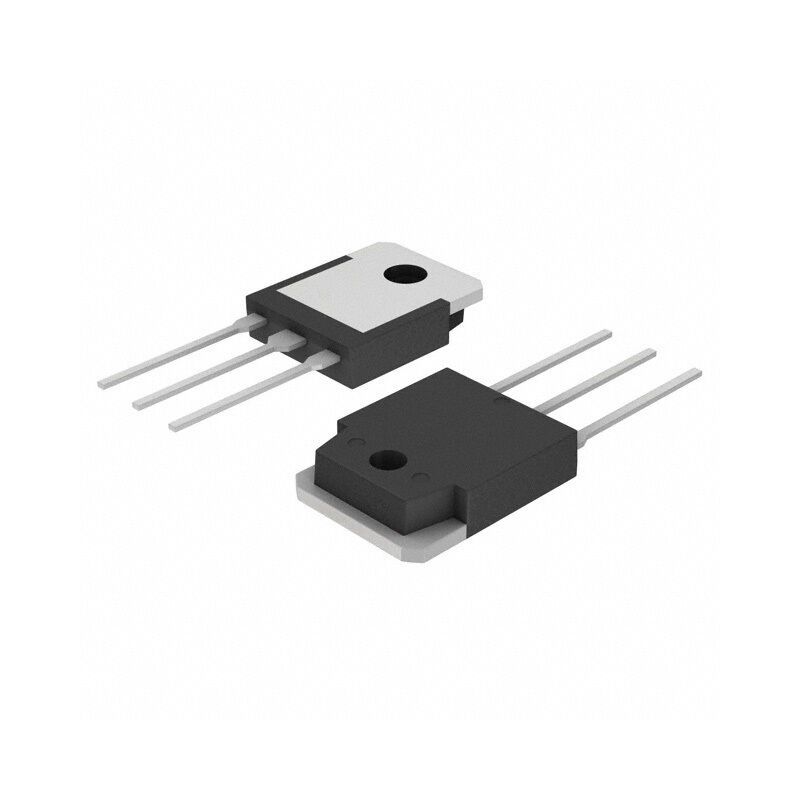


TCST2202 Slotted Optical Sensor with Phototransistor Output
35 people are viewing this right now
In Stock
SKU
191778011838
£4.90
Safe Checkout, Guaranteed

Safe Checkout, Guaranteed
The TCST2202 is a compact and reliable slotted optical sensor designed for a wide range of object detection, position sensing, and motion control applications. This sensor consists of an infrared (IR) emitting diode and a phototransistor, precisely aligned in a slotted configuration. When an object interrupts the IR beam passing through the slot, the phototransistor detects the change in light intensity and triggers an output signal. The 3.1mm slot width provides ample clearance for a variety of target objects. Its through-hole mounting design ensures easy integration into printed circuit boards and other electronic assemblies. The TCST2202 is ideally suited for applications such as end-of-travel detection, optical switches, rotary encoders, and non-contact object sensing.
The compact size and robust construction make it ideal for use in harsh environments. When an object moves in to block the beam, the output changes, providing a reliable signal for microcontrollers or other control circuitry. Because the sensing method does not involve physical contact with the monitored object, the sensor can be used in applications with delicate or moving parts. The TCST2202 offers high sensitivity and fast switching speeds, allowing for precise and responsive detection of objects. Its wide operating temperature range ensures reliable performance in various environmental conditions. The device is designed for straightforward integration, typically requiring minimal external components to operate effectively.
The sensor has several usage cases: position detection, where it can precisely detect the position of a moving object or component in automated machinery; rotary encoders that utilize the sensor to detect the rotation of a shaft or wheel, providing feedback on speed and position; and industrial controls for detecting object presence and triggering control actions. Detailed datasheets provide complete specifications for the TCST2202, including its electrical characteristics, optical characteristics, and application notes. These resources enable designers to effectively utilize the sensor's features and optimize its performance. Its reliability, high sensitivity, and ease of use make it ideal for various industrial and commercial applications. Improve your object detection accuracy today. Add the TCST2202 to your cart now and experience the precision and reliability of this slotted optical sensor in your next project!
| Product Name | TCST2202 Slotted Optical Sensor with Phototransistor Output |
|---|---|
| SKU | 191778011838 |
| Price | £4.90 |
| TCST2202 Slotted Optical Sensor with Phototransistor Output Color | As per image |
| Category | Transistors |
| Brand | Nikko Electronics ltd |
| Product Code | 191778011838 |
| Availability | Yes |
Shipping cost is based on order value. Just add products to your cart and use the Shipping Calculator to see the shipping price. We want you to be 100% satisfied with your purchase. Items can be returned or exchanged within 30 days of delivery.
When integrating the TCST2202 Slotted Optical Sensor with Phototransistor Output, calculating the correct current-limiting resistor for the infrared emitting diode is critical for long-term reliability. The forward voltage (Vf) typically ranges around 1.25V at a forward current (If) of 20mA. To ensure optimal switching without overdriving the component, you should target a current well below the absolute maximum rating of 60mA. For a standard 5V logic system, using a 180-ohm to 220-ohm resistor will provide a safe operating current of approximately 17mA to 20mA. It is important to remember that as the LED ages, its light output efficiency may decrease slightly; therefore, designing for a mid-range current ensures that the TCST2202 Slotted Optical Sensor with Phototransistor Output maintains a high enough signal-to-noise ratio over its entire operational lifespan. Always verify the power dissipation of the resistor, although at these current levels, a standard 1/8W or 1/4W resistor is more than sufficient for most industrial or consumer electronic applications.
The switching performance of the TCST2202 Slotted Optical Sensor with Phototransistor Output is highly dependent on the value of the load resistor connected to the phototransistor's collector. There is an inherent trade-off between sensitivity and speed. A larger load resistor (e.g., 10k ohms) will provide a higher output voltage swing and better sensitivity for detecting thin or semi-transparent objects, but it will significantly increase the rise and fall times due to the RC constant formed by the resistor and the phototransistor’s internal capacitance. If your application involves high-speed rotary encoders or fast-moving targets, you should aim for a lower load resistance (e.g., 1k ohm or less) to achieve faster switching frequencies. In high-speed scenarios, the TCST2202 Slotted Optical Sensor with Phototransistor Output can achieve microsecond response times, but you must ensure the driving IR LED current is sufficient to saturate the transistor at these lower resistance values. Engineers often use an oscilloscope to fine-tune this resistance to find the 'sweet spot' for their specific timing requirements.
The Current Transfer Ratio (CTR) of the TCST2202 Slotted Optical Sensor with Phototransistor Output represents the ratio of the collector current (Ic) to the forward LED current (If). For this specific model, the minimum CTR is typically rated around 10% under standard test conditions (Vce = 5V, If = 20mA). This means if you drive the LED with 20mA, you can expect at least 2mA of collector current when the optical path is unobstructed. When designing your interface circuit, you must account for the minimum CTR rather than the typical value to ensure worst-case scenario functionality. If the TCST2202 Slotted Optical Sensor with Phototransistor Output is used to drive a logic gate directly, the pull-up resistor must be sized so that the 2mA of collector current can pull the voltage low enough to meet the logic '0' threshold (Vil). Failure to account for CTR variations across temperature and component batches can lead to intermittent switching issues, especially in high-volume production environments.
While the TCST2202 Slotted Optical Sensor with Phototransistor Output features a black polycarbonate housing designed to block visible light, intense ambient infrared radiation from sunlight or halogen lamps can still cause false triggering or reduced contrast. To mitigate this, the TCST2202 Slotted Optical Sensor with Phototransistor Output should be physically shielded or recessed within the enclosure to limit the 'field of view' of the phototransistor to only the IR LED. Electrically, you can implement a modulated signal approach where the IR LED is pulsed at a specific frequency (e.g., 10kHz) and the output is passed through a high-pass filter or processed by a microcontroller to ignore DC offsets caused by steady ambient light. Additionally, ensuring that the target object is completely opaque to infrared light (950nm) is vital. Some plastics that appear opaque to the human eye are actually transparent to IR, which can lead to unreliable detection when using the TCST2202 Slotted Optical Sensor with Phototransistor Output.
The TCST2202 Slotted Optical Sensor with Phototransistor Output features a 3.1mm slot width, which provides a generous physical clearance for target flags, encoder disks, or edge-of-paper detection. The internal aperture of the sensor is approximately 0.5mm, which defines the effective resolution of the device. For high-precision positioning, the target object should pass as close to the center of the slot as possible to maintain a consistent optical path. When using the TCST2202 Slotted Optical Sensor with Phototransistor Output for rotary encoding, the width of the slots and teeth on the encoder wheel should ideally be larger than the 0.5mm aperture to ensure a full transition from the 'on' to 'off' state. If the target is too thin or moves too far from the optical axis, the transition edge may become 'soft' or noisy. Utilizing a Schmitt trigger or a comparator circuit following the TCST2202 Slotted Optical Sensor with Phototransistor Output can help clean up these transitions for digital processing.
Yes, the TCST2202 Slotted Optical Sensor with Phototransistor Output is fully compatible with 3.3V systems, provided the biasing resistors are adjusted accordingly. Since the forward voltage of the IR LED is approximately 1.25V, a 3.3V supply leaves roughly 2.05V across the current-limiting resistor. A 100-ohm to 120-ohm resistor would be appropriate to achieve a standard 15-20mA drive current. On the output side, the phototransistor can easily switch a 3.3V signal. One advantage of the TCST2202 Slotted Optical Sensor with Phototransistor Output in low-power designs is the ability to pulse the LED only when a reading is required, significantly reducing the average current draw. However, when operating at lower voltages, you must be more precise with your resistor selection to ensure the phototransistor reaches saturation. If the collector current is too low because of the reduced voltage swing, the TCST2202 Slotted Optical Sensor with Phototransistor Output might not reliably trigger the input pins of a 3.3V CMOS microcontroller without an external buffer.
The TCST2202 Slotted Optical Sensor with Phototransistor Output is a through-hole component designed for standard PCB mounting. To ensure optimal performance, the sensor must be mounted flush against the board to maintain the correct height for the optical path. During soldering, it is important to adhere to standard lead-free profiles, typically avoiding temperatures exceeding 260°C for more than 10 seconds. Excess heat can warp the plastic housing or damage the internal alignment of the LED and phototransistor. If the TCST2202 Slotted Optical Sensor with Phototransistor Output is used in a high-vibration environment, consider adding a small amount of non-conductive adhesive or ensuring the lead bends provide some mechanical strain relief. Furthermore, because the TCST2202 Slotted Optical Sensor with Phototransistor Output relies on an unobstructed optical path, ensure that no flux residue or conformal coating enters the 3.1mm slot during the manufacturing process, as this could attenuate the IR beam and lead to sensor failure or degraded sensitivity.