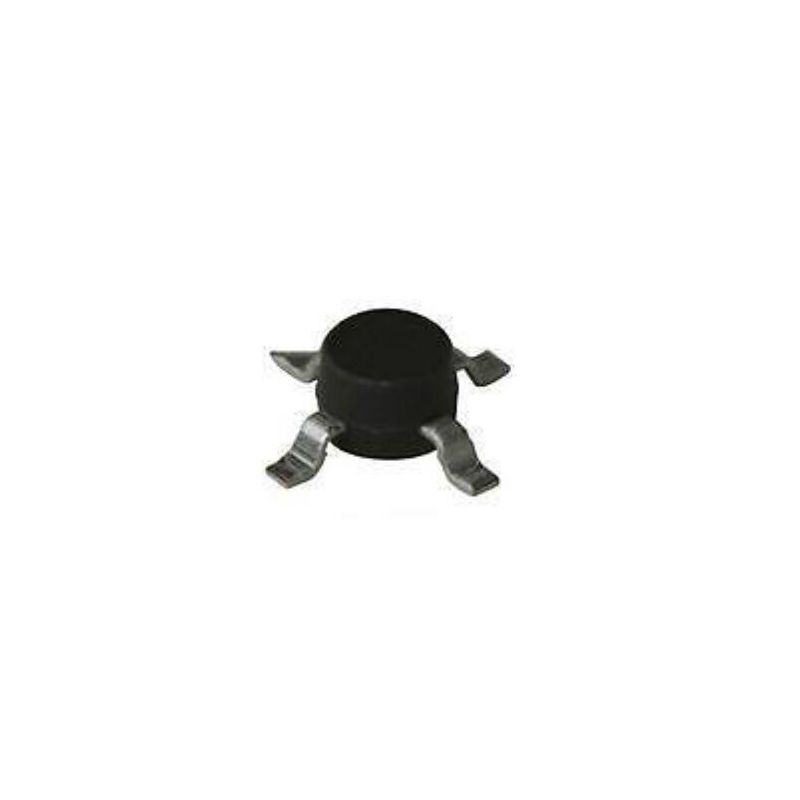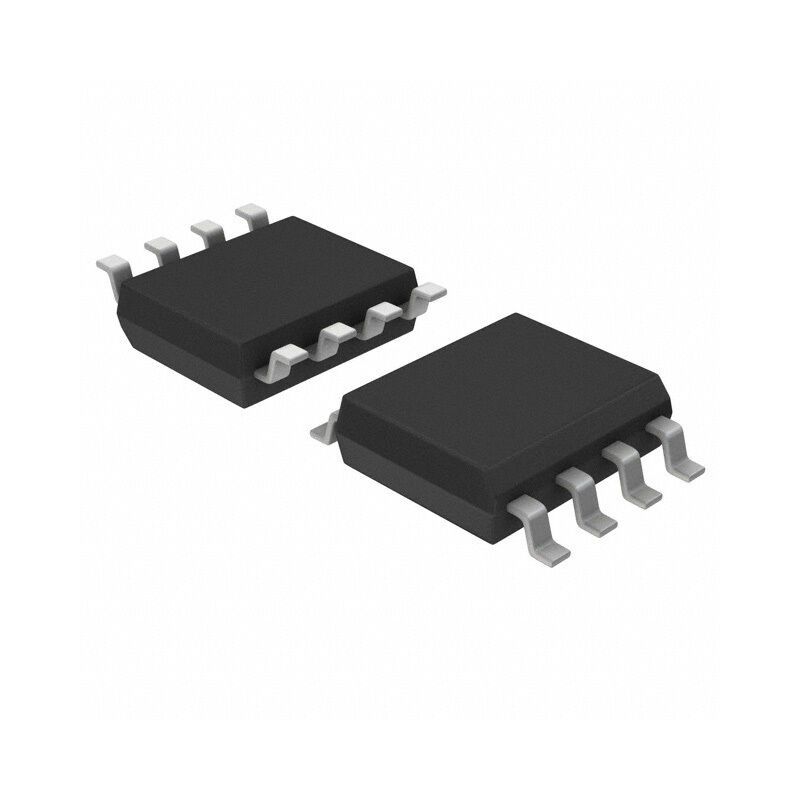


TDA1041 Phase Control Integrated Circuit DIP-8
44 people are viewing this right now
In Stock
SKU
191887014065
£9.00
Safe Checkout, Guaranteed

Safe Checkout, Guaranteed
The TDA1041 is a phase control integrated circuit designed for a variety of applications, most notably in light dimmers and motor speed controllers. Offered here as a lot of two, this IC provides an economical solution for controlling AC power to resistive or inductive loads. Encased in a DIP-8 (Dual In-Line Package with 8 pins), the TDA1041 is easy to integrate into existing and new designs, especially on prototyping boards and simpler PCB layouts. Its primary function is to regulate the power delivered to a load by adjusting the firing angle of a triac or thyristor, effectively controlling the amount of AC voltage applied. This makes it highly suitable for adjusting the brightness of incandescent lamps or controlling the speed of universal AC motors, as found in many household appliances. One key advantage of the TDA1041 lies in its simplicity.
It requires only a few external components to create a functional phase control circuit. This simplicity reduces both design time and the overall cost of the project. The DIP-8 package allows for straightforward insertion into breadboards and PCBs, making it ideal for both hobbyists and professionals. It features built-in hysteresis, which helps to prevent flickering or erratic behavior when used as a light dimmer. The TDA1041 provides a stable and reliable control signal, ensuring smooth and consistent operation. It's designed to operate over a wide range of AC line voltages, making it suitable for use in different regions.
You can incorporate the TDA1041 into a simple light dimmer circuit for adjusting the brightness of incandescent lamps in your home or workshop. Alternatively, it can be used to control the speed of a drill or other power tool equipped with a universal AC motor. The availability of two ICs in this lot ensures you have a spare for troubleshooting or future projects. This is especially valuable during prototyping and experimentation. The TDA1041's robust design ensures reliable operation even under demanding conditions. Its compact size and ease of use make it a valuable addition to any electronics enthusiast's toolkit.
Enhance your control over AC power with the TDA1041 phase control IC. Don't miss this opportunity to add a reliable and versatile component to your collection. Click 'Add to Cart' now and start building your own light dimmers and motor speed controllers!
| Product Name | TDA1041 Phase Control Integrated Circuit DIP-8 |
|---|---|
| SKU | 191887014065 |
| Price | £9.00 |
| TDA1041 Phase Control Integrated Circuit DIP-8 Color | As per image |
| Category | Integrated Circuits |
| Brand | Nikko Electronics ltd |
| Product Code | 191887014065 |
| Availability | Yes |
Shipping cost is based on order value. Just add products to your cart and use the Shipping Calculator to see the shipping price. We want you to be 100% satisfied with your purchase. Items can be returned or exchanged within 30 days of delivery.
The TDA1041 Phase Control Integrated Circuit DIP-8 is exceptionally well-suited for controlling both resistive and inductive AC loads, making it highly versatile for various applications. For resistive loads, such as incandescent lamps or heating elements, the IC provides stable and linear power adjustment, allowing precise control over brightness or temperature. When dealing with inductive loads, like universal AC motors found in drills or fans, the TDA1041 Phase Control Integrated Circuit DIP-8 accurately adjusts the motor's speed by varying the AC voltage. It achieves this by controlling the firing angle of an external triac or thyristor. Careful consideration of the load's power factor and potential back-EMF is crucial when designing circuits for inductive loads to ensure stable operation and prevent premature component failure. The IC’s robust design ensures reliable performance across a wide range of typical household and industrial AC power applications.
The TDA1041 Phase Control Integrated Circuit DIP-8 precisely adjusts the firing angle through an internal timing circuit synchronized with the AC line voltage's zero-crossing point. It generates a trigger pulse at a variable delay after the zero-crossing, which is then used to fire an external power control device like a triac or thyristor. The delay is typically controlled by an external potentiometer and RC timing components, allowing for continuous adjustment of the AC voltage delivered to the load. When selecting a triac or thyristor for the TDA1041 Phase Control Integrated Circuit DIP-8's gate drive, several factors are critical: the device's voltage rating (VDRM/VRRM) must exceed the peak AC line voltage, its current rating (IT(RMS)) must be sufficient for the maximum load current, and its gate trigger current (IGT) and voltage (VGT) should be compatible with the TDA1041's output capabilities. Ensuring proper gate current for reliable firing across the full temperature range is essential for stable power regulation.
To construct a robust dimmer or motor speed control circuit using the TDA1041 Phase Control Integrated Circuit DIP-8, several essential external components are required. A key component is a potentiometer, which allows users to manually adjust the phase angle and thus the output power. This potentiometer forms part of an RC timing network alongside a capacitor and resistors, which determine the delay for the triac/thyristor firing pulse. A crucial element is the power-handling device, typically a triac for AC loads, or a thyristor pair, which is triggered by the TDA1041's output to switch the main AC current. Additionally, a small smoothing capacitor and resistors are often used to create a stable DC supply for the TDA1041 Phase Control Integrated Circuit DIP-8 from the AC line, often derived through a series resistor and a Zener diode. Protection components like fuses and snubber networks (RC in series) across the triac are also vital to suppress voltage transients and protect the circuit from inductive spikes, ensuring reliability and longevity.
Achieving optimal stability and linearity when using the TDA1041 Phase Control Integrated Circuit DIP-8 in demanding AC power applications depends on several design considerations. Firstly, a stable and well-filtered power supply for the TDA1041 itself is crucial to prevent fluctuations that could affect its internal timing. Secondly, the selection of high-quality, temperature-stable timing components (resistors and capacitors) in the RC network is paramount, as their values directly influence the firing angle and thus the linearity of the control response. Variations in these components due to temperature or aging can lead to non-linear behavior. Thirdly, proper zero-crossing detection and synchronization with the AC line are fundamental for consistent phase control; any inaccuracies here can introduce flicker or instability. Finally, for inductive loads, careful design of the snubber network across the triac/thyristor is essential to manage commutation effects and voltage transients, which helps maintain stable operation and prevents spurious firing, ensuring smooth and predictable power regulation with the TDA1041 Phase Control Integrated Circuit DIP-8.
The DIP-8 (Dual In-Line Package with 8 pins) form factor of the TDA1041 Phase Control Integrated Circuit DIP-8 offers significant advantages for rapid prototyping and integration into existing PCB layouts, especially for hobbyists, educational purposes, or low-volume production. Its through-hole design allows for easy insertion into breadboards and perfboards, facilitating quick circuit experimentation and verification without specialized soldering equipment. For existing PCB layouts, DIP-8 components are generally easier to hand-solder and desolder compared to their Surface Mount Device (SMD) counterparts, which often require fine-pitch soldering techniques and specialized tools. This ease of handling reduces assembly time and complexity, making the TDA1041 Phase Control Integrated Circuit DIP-8 an economical and practical choice for projects where manufacturing volume doesn't necessitate high-density SMD components or where repairability is a key concern. The larger pin spacing also simplifies troubleshooting and component replacement.
While the TDA1041 Phase Control Integrated Circuit DIP-8 excels at regulating incandescent lamps and universal AC motors, its reliable use with modern LED lighting systems requires careful consideration. The TDA1041 is designed for phase-cut dimming, which works by chopping the AC waveform. Incandescent lamps are simple resistive loads, and universal motors are inductive, both of which respond well to this method. However, most modern LED lighting systems incorporate complex electronic drivers that convert AC to DC and often include power factor correction (PFC) circuitry. These drivers may not be compatible with phase-cut dimming, potentially leading to issues such as flickering, limited dimming range, buzzing, or even damage to the LED driver. While some 'dimmable' LED bulbs are designed to work with traditional phase-cut dimmers, their performance can vary. For optimal results with LED lighting, dedicated LED dimming solutions or LED drivers specifically designed for phase-cut dimming are generally recommended over direct application of the TDA1041 Phase Control Integrated Circuit DIP-8 without thorough compatibility testing.
Designing the power supply and zero-crossing synchronization circuit is critical for the reliable operation of the TDA1041 Phase Control Integrated Circuit DIP-8 in any AC control application. For the power supply, the TDA1041 typically requires a stable DC voltage, often derived directly from the AC line using a series current-limiting resistor, a Zener diode for voltage regulation, and a small filter capacitor. Ensuring this supply is adequately filtered and regulated prevents AC line noise or voltage fluctuations from affecting the IC's internal timing. The zero-crossing synchronization circuit is equally vital; it provides the TDA1041 Phase Control Integrated Circuit DIP-8 with a precise reference point at each AC cycle's zero-crossing. This is commonly achieved using a high-value resistor in series with a diode or optocoupler to detect the zero-crossing without drawing excessive current. Accurate and noise-free zero-crossing detection is fundamental for consistent phase control, preventing erratic firing, and ensuring a smooth, flicker-free output, especially in dimmer applications or precise motor speed control scenarios.