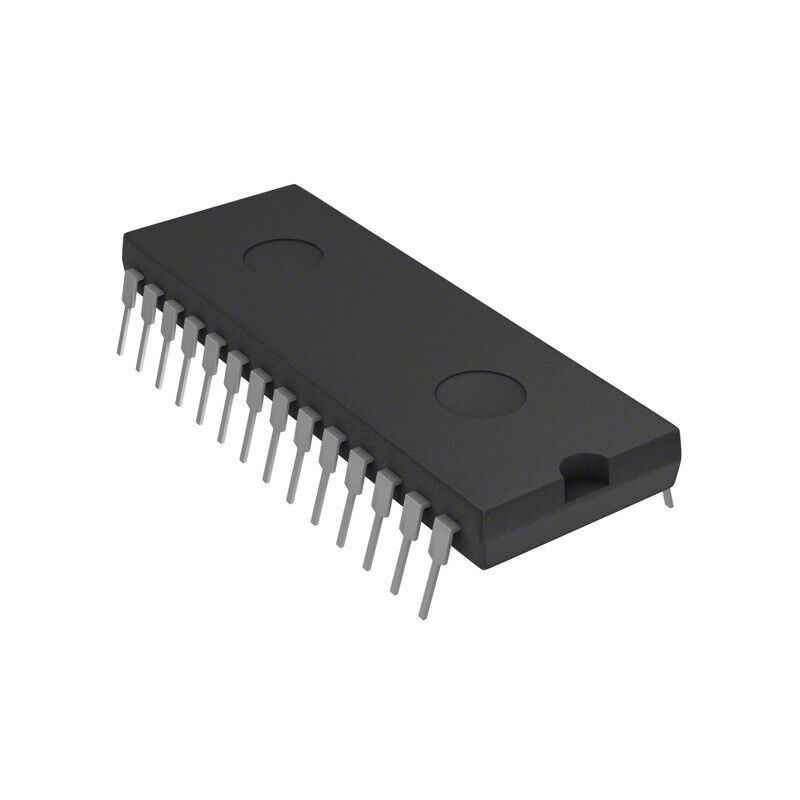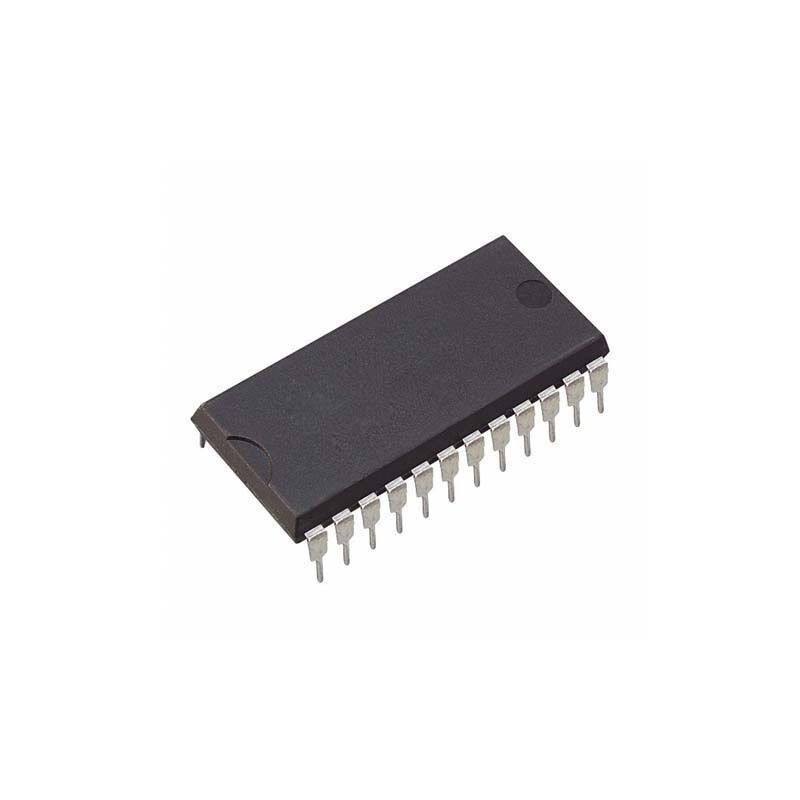


TIL153 Darlington Output Optocoupler (DIP-6)
36 people are viewing this right now
In Stock
SKU
191774752812
£4.75
Safe Checkout, Guaranteed

Safe Checkout, Guaranteed
The TIL153 Integrated Circuit, housed in a durable and easily implementable DIP-6 (Dual In-line Package, 6-pin) form factor, represents a cornerstone component for a wide array of electronic circuit designs. This versatile IC offers seamless integration into both prototyping and finished product configurations, allowing designers of all skill levels to rapidly deploy functional solutions. The TIL153's key attribute lies in its robust performance and reliability, enabling consistent operation across a diverse spectrum of applications. Its design prioritizes simplicity, making it exceptionally straightforward to incorporate into existing and novel circuit architectures. The DIP-6 package further contributes to this ease of use, facilitating quick and secure mounting on breadboards, perfboards, and printed circuit boards alike. One of the primary use cases for the TIL153 lies in signal isolation and control.
It can function as an optocoupler, providing electrical isolation between different circuit sections while allowing signals to pass unimpeded. This capability is crucial in scenarios where protecting sensitive circuitry from voltage spikes or ground loops is paramount. Consider using the TIL153 in power supplies, where it can isolate the primary and secondary sides, enhancing safety and preventing equipment damage. Furthermore, the TIL153 shines in industrial control systems, where it can isolate control signals from high-voltage machinery, ensuring operator safety and preventing equipment malfunction. Its fast switching speed allows for precise control of actuators and relays, essential for maintaining optimal process efficiency. The TIL153's robust design ensures reliable performance even in harsh industrial environments.
Beyond isolation, the TIL153 can also be utilized as a simple switching element. By applying a control signal to the input, you can rapidly switch the output on or off, making it suitable for tasks such as driving LEDs, controlling small motors, or enabling and disabling other circuit components. Its compatibility with a wide range of voltage levels further enhances its versatility. For hobbyists and students, the TIL153 provides an excellent platform for learning about optocouplers and circuit isolation techniques. Its simplicity and readily available documentation make it easy to experiment with different circuit configurations and explore the fundamentals of electronics. Its rugged construction also makes it forgiving to accidental misconnections, allowing beginners to learn without fear of immediately damaging the component.
The TIL153 is more than just a component; it's a gateway to understanding essential electronic principles. Don't hesitate to integrate this reliable IC into your next project. Whether you're building a sophisticated industrial controller, a safety-critical medical device, or a simple hobby circuit, the TIL153 offers the performance, reliability, and ease of use you need. Unlock new possibilities and achieve your design goals with confidence. Purchase your TIL153 Integrated Circuit DIP-6 today and experience the peace of mind that comes with using a high-quality, dependable component. Add it to your cart now and bring your electronic visions to life.
| Product Name | TIL153 Darlington Output Optocoupler (DIP-6) |
|---|---|
| SKU | 191774752812 |
| Price | £4.75 |
| TIL153 Darlington Output Optocoupler (DIP-6) Color | As per image |
| Category | Integrated Circuits |
| Brand | Nikko Electronics ltd |
| Product Code | 191774752812 |
| Availability | Yes |
Shipping cost is based on order value. Just add products to your cart and use the Shipping Calculator to see the shipping price. We want you to be 100% satisfied with your purchase. Items can be returned or exchanged within 30 days of delivery.
The primary advantage of the TIL153 Darlington Output Optocoupler (DIP-6) lies in its exceptionally high Current Transfer Ratio (CTR). By utilizing a Darlington pair configuration on the output stage, this component can achieve significantly higher current gain than standard single-transistor optocouplers. This high sensitivity allows the TIL153 Darlington Output Optocoupler (DIP-6) to be driven by very low input currents, often in the range of 1mA to 5mA, while still being capable of switching relatively large output loads. This makes it an ideal choice for interfacing low-power microcontrollers or CMOS logic directly with higher-power peripherals like relays, small motors, or high-current indicator lamps. While standard optocouplers might require additional amplification stages to drive such loads, the TIL153 Darlington Output Optocoupler (DIP-6) simplifies circuit design by providing sufficient gain within a single DIP-6 package, effectively reducing the overall component count and saving valuable PCB real estate in dense electronic assemblies.
The isolation voltage is a critical specification for the TIL153 Darlington Output Optocoupler (DIP-6), as it defines the component's ability to protect sensitive low-voltage control circuitry from high-voltage transients on the load side. In industrial power supply designs, the TIL153 Darlington Output Optocoupler (DIP-6) acts as a safety barrier, preventing ground loops and protecting users and equipment from potentially lethal voltages. Typically rated for several kilovolts of dielectric breakdown strength, this optocoupler ensures that even if a catastrophic failure occurs on the high-voltage side, the fault current will not propagate back to the logic controller. When implementing the TIL153 Darlington Output Optocoupler (DIP-6), engineers must also consider creepage and clearance distances on the PCB to maintain the integrity of this isolation. The DIP-6 form factor provides sufficient physical spacing between the input LED pins and the output Darlington pins to meet most standard industrial safety requirements, making it a reliable choice for feedback loops in switch-mode power supplies (SMPS) and motor drive isolation.
When designing with the TIL153 Darlington Output Optocoupler (DIP-6), it is vital to understand the inherent trade-off between its high gain and its switching frequency. Because the Darlington configuration involves two cascaded transistors, the cumulative storage time and junction capacitance are higher than those of a single transistor. Consequently, the TIL153 Darlington Output Optocoupler (DIP-6) exhibits slower rise and fall times, typically in the range of 50 to 100 microseconds, depending on the load resistance and bias conditions. This means that while the TIL153 Darlington Output Optocoupler (DIP-6) is excellent for DC switching, low-frequency PWM, or status signaling, it may not be suitable for high-speed data communication protocols like high-speed SPI or fast RS-485. Engineers can slightly improve the turn-off time by utilizing the base-access pin (Pin 6) if available, connecting a high-value resistor between the base and emitter to help bleed off stored charge. However, for most applications requiring the high current capability of the TIL153 Darlington Output Optocoupler (DIP-6), the switching speed is generally sufficient for relay control and general-purpose I/O isolation.
Yes, the TIL153 Darlington Output Optocoupler (DIP-6) is frequently used to drive 24V industrial relays due to its robust output characteristics. The collector-emitter breakdown voltage (VCEO) of the TIL153 Darlington Output Optocoupler (DIP-6) is typically rated high enough to handle standard 24V DC rails with a comfortable safety margin. Because the Darlington output can sink significant current—often up to 100mA or more—it can easily energize the coils of most small to medium-sized signal and power relays without the need for an external driver transistor. However, when driving inductive loads like relay coils, it is mandatory to place a flyback diode (such as a 1N4148 or 1N4007) in parallel with the relay coil to protect the TIL153 Darlington Output Optocoupler (DIP-6) from high-voltage back-EMF spikes generated during turn-off. Using the TIL153 Darlington Output Optocoupler (DIP-6) in this manner provides excellent electrical isolation between the noisy relay power bus and the sensitive digital control logic, ensuring system stability and longevity.
In the TIL153 Darlington Output Optocoupler (DIP-6), Pin 6 often provides external access to the base of the first transistor in the Darlington pair. In high-noise industrial environments, this pin is a powerful tool for fine-tuning the device's performance. Leaving Pin 6 floating makes the TIL153 Darlington Output Optocoupler (DIP-6) highly sensitive, but also potentially susceptible to false triggering from electromagnetic interference (EMI) or capacitive coupling. By connecting a resistor (typically between 100kΩ and 1MΩ) from Pin 6 to the emitter (Pin 4), you can significantly improve the noise immunity and the thermal stability of the component. This resistor provides a path for leakage currents and induced noise to bypass the base-emitter junction, preventing unintended turn-on. Additionally, this technique can be used to decrease the turn-off time of the TIL153 Darlington Output Optocoupler (DIP-6) by allowing the stored base charge to dissipate more rapidly. For most standard applications, Pin 6 can be left unconnected, but for precision timing or electrically noisy environments, utilizing this pin is a recommended best practice.
Operating the TIL153 Darlington Output Optocoupler (DIP-6) at or near its maximum current ratings requires careful attention to thermal management. The total power dissipation of the device is the sum of the power dissipated by the input LED and the power dissipated by the output Darlington pair. Because the Darlington output has a higher saturation voltage (VCE(sat)) compared to a single transistor—typically around 1.0V to 1.2V—it generates more heat during conduction. If the TIL153 Darlington Output Optocoupler (DIP-6) is switching 100mA, it could be dissipating over 100mW in the output stage alone. In high-ambient temperature environments, this can lead to junction temperatures exceeding the maximum limits. To ensure reliability, it is advisable to derate the TIL153 Darlington Output Optocoupler (DIP-6) if the ambient temperature is expected to rise above 50°C. Proper PCB layout, including adequate copper traces to act as heat sinks for the pins, can help manage thermal energy. Always refer to the power derating curves in the datasheet to ensure the TIL153 Darlington Output Optocoupler (DIP-6) operates within its safe operating area (SOA).
The TIL153 Darlington Output Optocoupler (DIP-6) is fully compatible with 3.3V logic levels, which is a common requirement for modern ARM Cortex or ESP32-based designs. Since the input stage is a standard Gallium Arsenide (GaAs) infrared LED, it typically has a forward voltage (VF) of approximately 1.2V to 1.5V. When driving the TIL153 Darlington Output Optocoupler (DIP-6) from a 3.3V GPIO pin, you must select an appropriate current-limiting resistor to achieve the desired forward current (IF). Given the high gain of the Darlington output, you can often operate the input LED at a very low current, such as 2mA, while still achieving full saturation of the output. This low-current operation is highly beneficial for 3.3V systems where GPIO current sourcing capabilities might be limited. The TIL153 Darlington Output Optocoupler (DIP-6) effectively bridges the gap between low-voltage logic and higher-voltage peripherals, providing a robust interface that protects the microcontroller from external voltage spikes and ground noise commonly found in mixed-signal environments.