

2N4991 DIAC Bidirectional Trigger Diode TO-92 (Lot of 25)
46 people are viewing this right now
In Stock
SKU
191685524477
£18.75
Safe Checkout, Guaranteed

Safe Checkout, Guaranteed
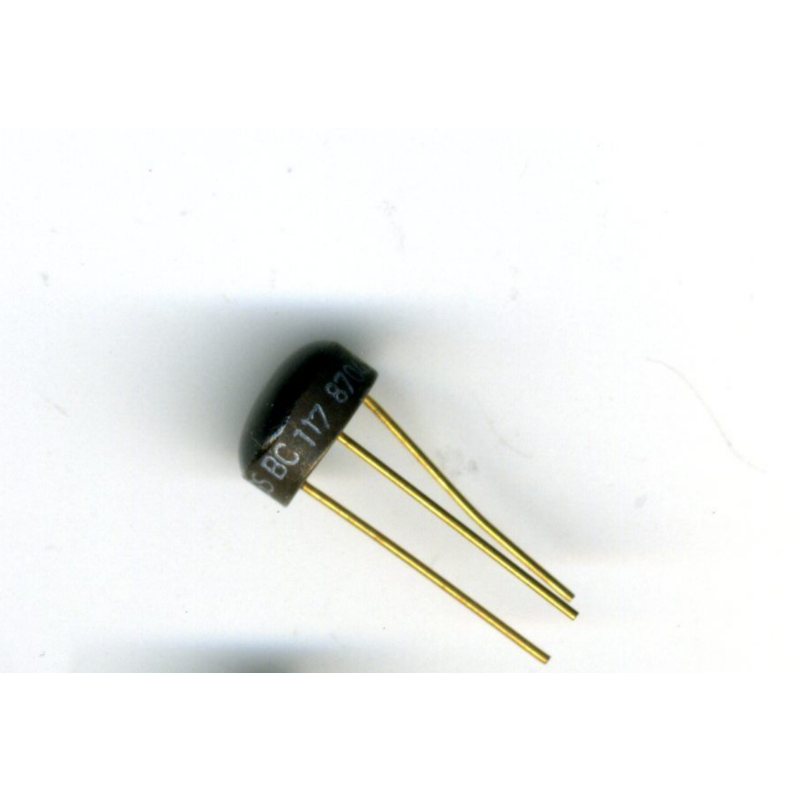
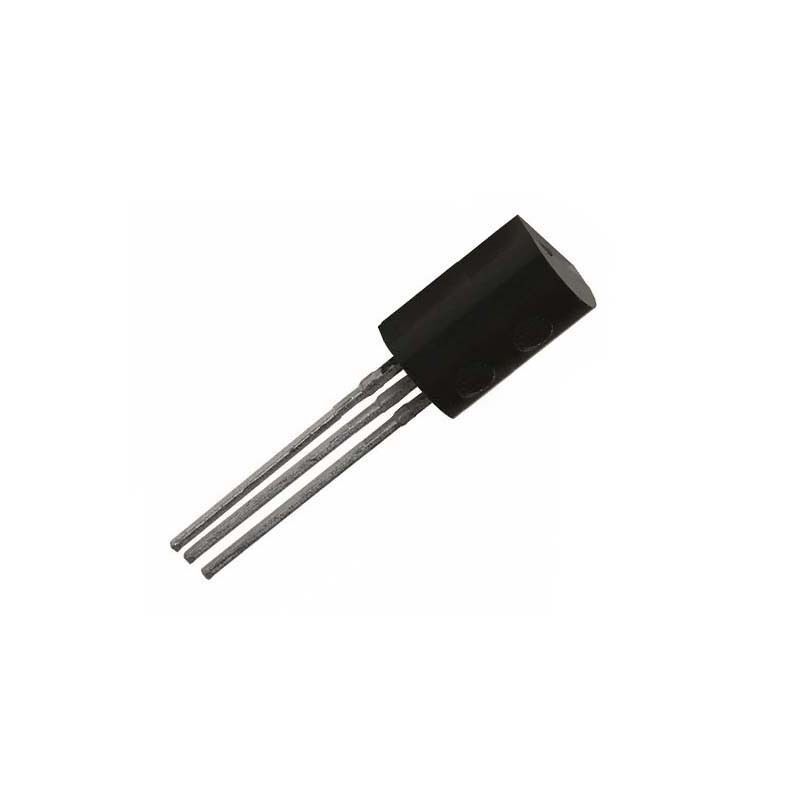
Unlock precise triggering and switching capabilities with the 2N4991 DIAC, housed in the compact and versatile TO-92 package. This bidirectional avalanche diode (DIAC) is designed for use in a wide range of applications, including phase control circuits, lamp dimmers, and trigger circuits for silicon controlled rectifiers (SCRs) and triacs. Whether you're an experienced electronics engineer, a dedicated hobbyist, or a student exploring the world of power electronics, the 2N4991 DIAC offers exceptional performance and reliability. The 2N4991 DIAC is characterized by its breakover voltage, the voltage at which it switches from a high-impedance off-state to a low-impedance on-state. This precise switching characteristic makes it ideal for controlling the firing angle of SCRs and triacs, enabling precise control of AC power. Its TO-92 package allows for easy mounting on printed circuit boards (PCBs) and breadboards, simplifying prototyping and experimentation.
The small size of the TO-92 package makes it suitable for compact electronic designs. When incorporating the 2N4991 DIAC into your projects, consider its breakover voltage and holding current to ensure proper operation. Explore online resources and datasheets for detailed electrical characteristics, application circuits, and design considerations. This DIAC is a crucial component in many power control circuits, providing a reliable and cost-effective solution for triggering and switching applications. Benefit from the precision and reliability of the 2N4991 DIAC in your electronic designs. Each diode undergoes rigorous quality control to ensure consistent performance and adherence to industry standards.
Upgrade your electronics toolkit with this essential component. Order your 2N4991 DIAC today and unlock a world of power control possibilities. Don't wait – add this versatile diode to your cart now and elevate your electronics projects!
| Product Name | 2N4991 DIAC Bidirectional Trigger Diode TO-92 (Lot of 25) |
|---|---|
| SKU | 191685524477 |
| Price | £18.75 |
| 2N4991 DIAC Bidirectional Trigger Diode TO-92 (Lot of 25) Color | As per image |
| Category | Transistors |
| Brand | Nikko Electronics ltd |
| Product Code | 191685524477 |
| Availability | Yes |
Shipping cost is based on order value. Just add products to your cart and use the Shipping Calculator to see the shipping price. We want you to be 100% satisfied with your purchase. Items can be returned or exchanged within 30 days of delivery.
The 2N4991 DIAC Bidirectional Trigger Diode TO-92 (Lot of 25) is characterized by its precise breakover voltage (V_BO), typically ranging from 28V to 36V, and a breakover current (I_BO) usually in the microampere range. This V_BO is the critical voltage at which the device transitions from a high-impedance blocking state to a low-impedance conducting state, exhibiting negative resistance. The low breakover current ensures efficient triggering with minimal power loss. Designers primarily use these specifications to accurately set the firing angle of associated SCRs or triacs in phase control applications. For instance, selecting appropriate RC timing components in a relaxation oscillator circuit allows precise control over when the capacitor charges to the 2N4991 DIAC's V_BO, thereby determining the trigger point for the power control device. Consistency in V_BO across units in the 2N4991 DIAC Bidirectional Trigger Diode TO-92 (Lot of 25) is crucial for predictable circuit performance in high-volume applications like dimmers or motor speed controllers.
The 2N4991 DIAC Bidirectional Trigger Diode TO-92 (Lot of 25) is a cornerstone component in AC phase control circuits, primarily used to reliably trigger SCRs and triacs. It is typically connected in series with the gate of the triac or SCR, forming part of a relaxation oscillator circuit. This circuit usually consists of a resistor-capacitor (RC) network that charges from the AC line. When the capacitor voltage reaches the 2N4991 DIAC's breakover voltage, the DIAC abruptly switches on, discharging the capacitor through its low impedance and delivering a sharp, high-current pulse to the gate of the triac or SCR. This precise and symmetrical triggering pulse ensures consistent firing on both positive and negative half-cycles of the AC waveform. Advantages of using the 2N4991 DIAC in these applications include its bidirectional switching capability, inherent voltage-threshold triggering, and robust performance, which simplify circuit design for lamp dimmers, motor speed controls, and heater controls by providing a stable and repeatable trigger point.
For the 2N4991 DIAC Bidirectional Trigger Diode TO-92 (Lot of 25), thermal management is crucial, even though DIACs typically dissipate less power than the power devices they trigger. The maximum power dissipation (P_D) for a TO-92 package is generally in the range of 300 to 500 mW, depending on ambient temperature and mounting. While the DIAC itself only conducts for a very short duration during each half-cycle to generate a trigger pulse, repeated triggering can lead to localized heating, especially if the peak pulse current is high or if it's operating in a high ambient temperature environment. Designers must consider the junction-to-ambient thermal resistance (R_thJA) of the TO-92 package. Ensuring adequate airflow and avoiding excessive operating temperatures will prevent premature device degradation. Operating the 2N4991 DIAC within its specified temperature range, typically -40°C to +125°C, and observing the maximum power dissipation ratings, ensures long-term reliability and stable breakover voltage characteristics for the 2N4991 DIAC Bidirectional Trigger Diode TO-92 (Lot of 25).
The 2N4991 DIAC Bidirectional Trigger Diode TO-92 (Lot of 25) is primarily designed and optimized for AC line frequency control applications, typically operating at 50Hz or 60Hz. Its primary function is to provide a precise voltage threshold trigger for power control devices like SCRs and triacs. While a DIAC does exhibit switching behavior, its characteristics, such as switching speed and recovery time, are not optimized for high-frequency operation in the kilohertz or megahertz range. The internal dynamics, including charge storage and avalanche breakdown mechanisms, make it less suitable for applications requiring rapid, repetitive switching at high frequencies. For high-frequency switching, other specialized components like high-speed MOSFET drivers or dedicated pulse generators are typically employed. Therefore, for robust and reliable performance, the 2N4991 DIAC Bidirectional Trigger Diode TO-92 (Lot of 25) should be considered for its intended purpose in phase control and triggering circuits operating at standard AC line frequencies.
Breakover voltage symmetry is a crucial characteristic for the 2N4991 DIAC Bidirectional Trigger Diode TO-92 (Lot of 25), indicating how closely its positive and negative breakover voltages match. For the 2N4991, typical symmetry is excellent, meaning |V_BO+| ≈ |V_BO-|. This symmetrical behavior is paramount in bidirectional AC power control circuits where the DIAC triggers a triac for both positive and negative half-cycles of the AC waveform. Good symmetry ensures that the triac fires at the same voltage point in both directions, leading to a balanced output waveform. Poor symmetry would result in an uneven trigger point, causing harmonic distortion, DC offset, and potentially audible hum in loads like motors or incandescent lamps. When designing precise dimmers or motor speed controllers with the 2N4991 DIAC Bidirectional Trigger Diode TO-92 (Lot of 25), engineers rely on this inherent symmetry to achieve smooth, consistent, and distortion-minimized control over the AC power delivered to the load.
When designing a relaxation oscillator trigger circuit using the 2N4991 DIAC Bidirectional Trigger Diode TO-92 (Lot of 25), careful selection of external resistors (R) and capacitors (C) is essential for precise control. The RC time constant primarily determines the charging rate of the capacitor and, consequently, the delay until the capacitor voltage reaches the DIAC's breakover voltage (V_BO). For the resistor, ensure its power rating can handle the peak voltage and current from the AC line, especially during initial charging. The capacitor's voltage rating must exceed the peak AC line voltage and ideally be non-polar for AC applications. Both R and C should have stable temperature coefficients to prevent drift in the trigger point over varying ambient conditions. Also, the capacitor's discharge current through the 2N4991 DIAC must be sufficient to reliably trigger the gate of the connected triac or SCR. Using high-quality, stable components alongside the 2N4991 DIAC Bidirectional Trigger Diode TO-92 (Lot of 25) ensures consistent and predictable phase control performance.
To ensure long-term reliability of the 2N4991 DIAC Bidirectional Trigger Diode TO-92 (Lot of 25), several common failure modes and stress factors must be considered during design. Exceeding the maximum peak inverse voltage (V_DRM or V_RRM) can lead to irreversible breakdown and device failure. Similarly, operating beyond the specified maximum peak pulse current, even for short durations, can cause thermal damage to the junction. Sustained operation at elevated junction temperatures, often due to high ambient temperatures or insufficient heat dissipation, accelerates degradation and can lead to shifts in breakover voltage or complete failure. Electrical overstress from transient voltage spikes (e.g., lightning strikes or inductive load switching) can also damage the device. Proper circuit protection, such as snubbers or MOV (Metal Oxide Varistor) protection on the AC line, can mitigate these transients. Adhering to all datasheet maximum ratings and ensuring robust thermal management are critical for maximizing the lifespan and consistent performance of the 2N4991 DIAC Bidirectional Trigger Diode TO-92 (Lot of 25) in any application.